
Key Takeaways
1. Afeni's Revolutionary Spirit Forged Tupac's Path
"As a Black woman in this country, born with short hair and Negroid features and a strong personality, if it hadn’t been for the Black Panther Party, I don’t know where I’d be today. They saved me because they armed me. They celebrated me."
A Revolutionary Upbringing. Tupac's life was profoundly shaped by his mother, Afeni Shakur, a former Black Panther. Her experiences with racism, poverty, and the justice system instilled in him a deep understanding of systemic oppression and a fierce commitment to social justice from birth. Afeni's own defiance, exemplified by her self-defense during the Panther 21 trial, became a blueprint for Tupac's confrontational approach to injustice.
Lessons in Resistance. Afeni taught Tupac to question authority and fight for what was right. She exposed him to Black history, leaders like Malcolm X, and the realities of COINTELPRO, fostering a "trust nobody" mentality. These early lessons, though sometimes leading to his own run-ins with the law, formed the bedrock of his activism and artistic expression.
Legacy of Strength. Even through her personal struggles, Afeni remained Tupac's hero, embodying resilience and a dedication to her community. Her unwavering spirit, despite the "war" she felt against the government, inspired Tupac to use his platform to advocate for the marginalized and to carry on her fight for equality and Black pride.
2. Poverty and Instability Fueled Tupac's Drive
"If there was no money and everything depended on your moral standards, and the way you behaved and the way that you treated people, we’d be millionaires. We’d be rich. But since it’s not like that, then we’re stone broke…. [The] only thing that I’m bitter about is growin’ up poor, ’cause I missed out on a lot of things."
A Childhood of Scarcity. Tupac's early life was marked by constant financial hardship and frequent moves, from crowded Bronx tenements to freezing Baltimore apartments. He experienced firsthand the indignities of poverty, from relying on welfare cheese to having utilities cut off, which fueled his determination to escape and provide for his family.
The Weight of Responsibility. As a young boy, Tupac quickly assumed a protective role for his younger sister, Sekyiwa, and felt the burden of contributing to the household. This early sense of duty, combined with his mother's struggles with addiction, solidified his resolve to achieve success and ensure his family's financial security.
Bitterness and Drive. The stark contrast between his impoverished reality and the affluence he witnessed in places like Marin City intensified his bitterness about growing up poor. This bitterness, however, transformed into an unyielding drive to make money and use his platform to highlight the systemic issues that trapped Black communities in similar cycles of deprivation.
3. Art as Tupac's Outlet for Truth and Pain
"I caught the bug…but really I just enjoyed expressing myself—and anytime I can express myself I can let some of the pain go from a childhood like mine."
Early Creative Spark. From a young age, Tupac gravitated towards creative expression as a means to process his tumultuous upbringing. He wrote poetry, inspired by haiku and the works of Langston Hughes, and found solace in music, memorizing lyrics and crafting his own songs like "First Step."
Theatrical Beginnings. His first major acting role as Travis in "A Raisin in the Sun" at the Apollo Theater ignited his passion for performance. Later, at the Baltimore School for the Arts, he honed his craft, surprising teachers with his dramatic range and emotional depth, as seen in his poignant performance inspired by Don McLean's "Vincent."
Voice of the Voiceless. Whether through rap, poetry, or acting, Tupac used his art to tell stories that needed to be heard. His lyrics became a mirror reflecting the harsh realities of urban life, police brutality, and systemic racism, allowing him to channel his personal pain into a powerful voice for his community.
4. "Thug Life" as a Misunderstood Call for Unity
"T. H. U. G. L. I. F. E. The. Hate. U. Gave. Little. Infants. F-u-c-k. Everybody. Meaning, what you feed us as seeds, grows and blows up in your face."
Reclaiming a Label. After his incarceration, Tupac sought to redefine the derogatory term "thug" into a symbol of pride and unity for marginalized Black men. He envisioned "Thug Life" as a movement to empower those society had cast aside, believing that if organized, these individuals could become a force for positive change.
A Code of Conduct. To counter potential misinterpretations and address "horizontal aggression" within the community, Tupac, with Mutulu Shakur's guidance, developed a "Thug Life" code. This doctrine included rules against:
- Carjacking and slinging in schools
- Abusing old folks
- Senseless brutality and rape
- Harming children
The Cost of Misunderstanding. Despite his intentions to foster self-worth and address societal neglect, the "Thug Life" slogan was often misconstrued as glorifying violence. This misunderstanding, fueled by media sensationalism and political attacks, became a source of deep frustration for Tupac, who felt blamed for societal ills he merely sought to diagnose.
5. Unwavering Defiance Against Systemic Injustice
"This system and this country has tore apart my family and our families. You can’t have a Black family and be together."
Confronting Authority. From his mother's Black Panther teachings, Tupac developed a profound distrust of law enforcement and a readiness to challenge perceived injustices. This conviction led to numerous confrontations with police, from his "jaywalking" arrest in Oakland to his shooting of off-duty officers in Atlanta, where he refused to back down.
Fighting Censorship. When politicians like Vice President Dan Quayle targeted his music, blaming rap lyrics for societal problems, Tupac vehemently defended his art. He argued that his songs were not inciting violence but rather reflecting the brutal realities and frustrations experienced by young Black men in America.
A Voice for the Oppressed. Tupac saw himself as a "soldier" in a continuous war against systemic oppression. He used his platform to expose the hypocrisy of a society that celebrated white figures with guns while demonizing Black artists for depicting similar themes. His activism extended to advocating for education reform, anti-gun violence campaigns, and AIDS prevention, always striving to empower his community.
6. Betrayal and Paranoia Shaped Tupac's Later Years
"Trust nobody. My closest friends did me in. My homies. People who I took care of their whole family…turned on me. Fear is stronger than love."
The Quad Studios Shooting. The ambush at Quad Studios in New York, where Tupac was shot five times, marked a pivotal turning point, intensifying his paranoia and sense of betrayal. He suspected those close to him, including Biggie and Jacques Agnant, of involvement or knowledge, leading to fractured friendships and a deep-seated distrust.
The Price of Fame. As his star rose, Tupac found himself increasingly targeted, not just by the legal system but by individuals seeking to exploit his success. The constant scrutiny, coupled with the violence he experienced, led him to believe that his "big mouth" and outspoken nature would ultimately lead to his early demise.
Isolation and Distrust. The cumulative effect of these betrayals and attacks left Tupac feeling isolated, even amidst his growing fame. His "Trust Nobody" tattoo became a stark symbol of his hardened worldview, a defense mechanism against a world he felt was constantly trying to "set him up."
7. Relentless Ambition to Build an Artistic Empire
"I want to get into the head seat. I believe I’m a natural-born leader."
Unparalleled Work Ethic. Despite a chaotic personal life and constant legal battles, Tupac maintained an extraordinary work ethic, often spending 12-15 hours a day in the studio. He recorded albums at lightning speed, sometimes completing multiple songs in a single session, driven by an insatiable desire to create and express himself.
Visionary Entrepreneur. Beyond music and film, Tupac harbored grand ambitions to build a multifaceted empire. His plans included:
- Makaveli Records: His own record label.
- Restaurants: Concepts like Powamekka Café.
- Fashion Line: Dadanani, a partnership with Kidada.
- Production Company: 24/7, for music videos and films.
- Publishing: Books, magazines, and his autobiography.
- Youth Initiatives: "Youthanasia" softball league and a 1-800 call center for kids in need.
From Artist to Mogul. Tupac's move to Death Row Records, though controversial, was a strategic step towards gaining the financial leverage and industry connections needed to realize his vision. He aimed for complete independence, rerouting his film paychecks to his own company, Euphanasia, and surrounding himself with a trusted team to manage his burgeoning ventures.
8. Family as Tupac's Enduring Anchor and Motivation
"My moms is my homie. We went through our little…our stages, you know, where first we was mother and son then it was like drill sergeant and cadet. Then it was like dictator and little country."
Unconditional Love. Despite their tumultuous relationship, marked by Afeni's addiction and Tupac's rebellious phases, the bond between mother and son remained unbreakable. Tupac's "Dear Mama" song was a powerful testament to his enduring love and forgiveness, acknowledging her sacrifices and the profound impact she had on his life.
Protector and Provider. From a young age, Tupac felt a deep responsibility to care for his mother and sister, Sekyiwa. His success allowed him to fulfill this lifelong promise, buying Afeni a home in Georgia and ensuring their financial security. He cherished filling his homes with family, especially the children, creating a sense of belonging he often lacked in his own childhood.
A Circle of Support. His extended family, particularly Aunt Jean and his cousins, provided a constant source of love, humor, and stability. Even as his fame grew, these relationships remained his most reliable source of joy, offering a respite from the chaos of the entertainment industry and the pressures of his public life.
9. A Prophetic Sense of an Early, Fated Demise
"In the event of my demise / When my heart can beat no more / I hope I die for a principle / or a belief that I had lived 4 / I will die before my time."
Early Premonitions. From his teenage years, Tupac harbored a strong conviction that his life would be cut short. He openly discussed this fatalistic outlook, often citing statistics about young Black men not living past 25, and this belief permeated his poetry and lyrics, notably in "In the Event of My Demise."
The Shakur Curse. The tragic fates of his family members—Lumumba and Zayd dead, Mutulu and Assata imprisoned or in exile—reinforced his belief that an untimely end was a "Shakur curse." This sense of inherited destiny fueled his urgency to make an impact and leave a lasting legacy through his art.
A Desire for Meaningful Death. Despite his fear, Tupac expressed a noble desire for his death to serve a greater purpose. He wished to die for a principle or belief, like Malcolm X, rather than as a "thug." This aspiration reflected his deep commitment to his activism and his hope that his life, however short, would contribute to the liberation and empowerment of his people.
Review Summary
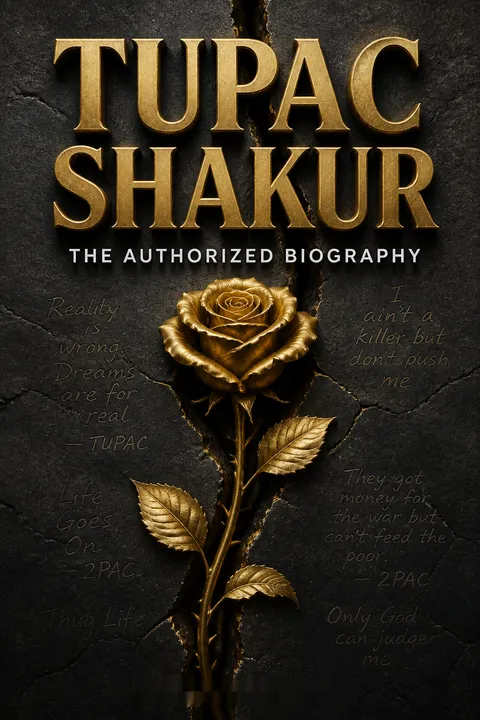
Tupac Shakur: The Authorized Biography receives overwhelmingly positive reviews (4.43/5) with readers praising Staci Robinson's authorized account commissioned by Tupac's mother, Afeni. Reviewers appreciate the balanced portrayal showing both strengths and flaws, extensive research through interviews with family and friends, and personal touches including handwritten notes and letters. The biography humanizes the legendary rapper, revealing surprising details like his love for Les Misérables and cooking. Some critics note bias favoring Tupac, but most find it emotionally compelling and the definitive biography, particularly valuable for understanding the complex artist who died at 25.
Download PDF
Download EPUB
.epub digital book format is ideal for reading ebooks on phones, tablets, and e-readers.








































