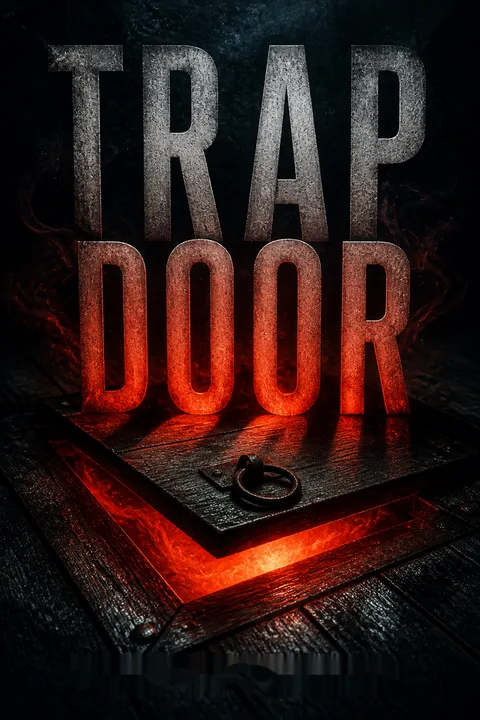

Plot Summary
Trap Door Opens
The novel opens with a chilling murder staged as an accident, the killer's mind racing to cover his tracks. A classic car garage is set ablaze, the body inside left to burn, and the killer's own life is claimed by the inferno. This prologue sets the tone: the boundary between guilt and innocence, the irreversible crossing of a moral line, and the haunting consequences of violence. The trap door—both literal and metaphorical—signals the hidden depths and secrets that will shape the story. The reader is thrust into a world where the past is never truly buried, and every action leaves a scar.
Desperate Interview, New Job
Rachel Jordan, desperate and on the brink of collapse, attends a job interview with Michael Barrington, a charismatic but enigmatic CEO. Her resume is a patchwork of half-truths, but Michael seems unconcerned with credentials, valuing loyalty and reliability above all. He offers her a one-month contract, promising salvation from her financial ruin. Rachel's relief is palpable, but a sense of unease lingers—if something seems too good to be true, it probably is. The job is a lifeline, but also a snare, drawing her into a web of secrets and manipulation.
Haunted Building, Hidden Past
Rachel's new office is in a brooding Victorian building, its façade blackened by time. A memorial plaque outside commemorates a century-old sweatshop fire that killed 22 garment workers. The building's atmosphere is oppressive, its history seeping into every corner. Rachel meets Joanie, Michael's PA, and is shown to her own office—a rare privilege. The building's mix of old and new, its roped-off private areas, and the ever-present sense of being watched, all contribute to Rachel's growing unease. The past is not just remembered here; it is alive, whispering through the walls.
Ghosts, Milk, and Memories
Rachel becomes obsessed with the building's haunted reputation, researching the tragic fire and the legend of Scrap the dog. Her first day is marred by a bizarre incident: she is violently sick after drinking tea with sour milk, but later finds the milk fresh. Michael and Joanie's whispered conversations about her heighten her paranoia. The boundaries between reality and imagination blur, as Rachel's anxieties and the building's ghosts seem to conspire against her. The sense of being an outsider, of not belonging, intensifies, and the trap door to the past creaks open a little wider.
Debt, Home, and Secrets
Rachel's financial desperation is laid bare as she visits her ruined home, gutted by tenants she trusted. She meets with Polly, a debt counselor, and confronts the mountain of red letters and legal threats. The shame of her situation is compounded by her inability to ask her wealthy father for help, fearing his disappointment and the exposure of deeper secrets. The job at Michael's firm is her only hope, but it comes with its own price. Rachel's rituals—filling the bath, keeping a bucket of water by her bed—hint at trauma and a need for escape, both physical and psychological.
Downstairs, Down Under
Rachel is reassigned to the basement, a windowless, claustrophobic space beneath the building, accessed by a literal trap door. She is introduced to Keats, a masked, silent, androgynous figure who communicates only by computer. The other workers are all men, indifferent and zombie-like. Rachel's fear of enclosed spaces and her mounting anxiety make the basement a personal hell. The building's history of fire and entrapment becomes a living nightmare, as Rachel struggles to breathe, to belong, and to understand the strange dynamics at play.
The Basement's Breath
Rachel's attempts to connect with Keats and the other workers are rebuffed. She is excluded from social rituals, locked in the basement during lunch, and subjected to psychological manipulation. The discovery of a funeral program for Philip—a figure from her past—on Keats's computer shatters her composure. The boundaries between work and punishment, reality and performance, are blurred. The basement becomes a stage for gaslighting, surveillance, and the reenactment of old traumas. Rachel's sense of self is eroded, and the trap door between past and present swings open.
Trapped by the Past
Rachel is haunted by memories of a summer job at Danny Hall's estate, arranged by her father after her mother's death. There, she met Philip, a kindred spirit who became her closest friend. The narrative flashes back to the events that led to Danny's death in a fire, Philip's apparent demise, and Rachel's lifelong guilt. The rituals of water and escape are revealed as responses to the trauma of being trapped and nearly killed. The past is not just a memory; it is a living force, shaping Rachel's every action and fear.
Father's Love, Daughter's Lies
Rachel's relationship with her father, Frank Jordan, is explored in depth. He is loving, supportive, and proud, but also secretive and controlling. Rachel cannot bring herself to confess the full truth of her situation or her past. Frank's own history is marked by ambition, ruthlessness, and a willingness to do whatever it takes to protect his family and reputation. The tension between love and disappointment, truth and deception, is palpable. The family's secrets are a trap door, waiting to be sprung.
Keats: The Masked Stranger
Rachel's persistent efforts to connect with Keats finally bear fruit. Keats is revealed to be a woman, hiding behind her mask to protect herself from a world that has always misunderstood her. She becomes Rachel's reluctant ally, using her digital skills to investigate Michael, Joanie, and the building's secrets. Their bond is forged in shared pain, outsider status, and a determination to uncover the truth. Keats's own story of abandonment and resilience mirrors Rachel's, and together they begin to piece together the puzzle of the past.
Pizza, Lock-In, and Discovery
Rachel is excluded from the team's social rituals, locked in the basement, and subjected to further psychological games. She discovers that the other workers are actors, hired to play roles in a twisted experiment orchestrated by Michael and Joanie. The haunted history of the building is a fabrication, designed to torment her. The funeral program for Philip is a key to the mystery, but it is protected by passwords and secrets. Rachel's quest for answers becomes a battle for survival, as the trap door between reality and performance is thrown wide open.
That Summer's Shadow
Flashbacks reveal the full horror of that summer: Danny's predatory behavior, his assault on Rachel, and Philip's intervention. In the struggle, Danny is killed, and Philip is badly burned in the fire that follows. Rachel is forced to flee, carrying the burden of guilt and secrecy for a decade. The fire, the trap door, and the rituals of escape are all rooted in this trauma. The past is not just a shadow; it is a living wound, infecting every relationship and decision.
Water, Rope, and Rituals
Rachel's rituals—filling the bath, keeping a rope by the window—are exposed to her housemates, leading to her eviction. The shame and isolation are compounded by the sense of being watched, judged, and misunderstood. The rituals are revealed as survival strategies, ways of coping with the ever-present threat of fire and entrapment. Rachel's world is shrinking, her options narrowing, as the trap door of the past threatens to swallow her whole.
Housemates and Exile
Rachel's confrontation with her housemates and Jed, her closest friend, leads to painful confessions and the loss of her last refuge. The boundaries between friend and foe, ally and adversary, are blurred. Rachel is forced to confront the reality of her situation: she is alone, hunted, and without a home. The trap door is no longer just a metaphor; it is a physical and psychological reality.
Smoke, Dog, and Night Whispers
Rachel is haunted by the sounds of a dog and a woman weeping in the building at night. She discovers hidden rooms, secret passageways, and the presence of Ray, Philip's dog. The supernatural and the psychological intertwine, as the building becomes a labyrinth of memory, guilt, and unresolved trauma. The dog is both a guide and a symbol, leading Rachel toward the truth and the possibility of redemption.
Passwords and Funeral Files
With Keats's help, Rachel cracks the password to the funeral program and uncovers the truth about Philip's fate. The program is a patchwork of clues, photos, and literary references, including Faust—a story of bargains, damnation, and the price of knowledge. The connections between Michael, Joanie, and Rachel's father are revealed, and the web of lies begins to unravel. The trap door is now a gateway to the truth, but also to danger.
The Truth About Philip
Rachel learns that Michael and Philip are her half-brothers, Joanie is her father's former lover, and the entire ordeal has been orchestrated as revenge for Danny's death. The haunted history, the workplace theatre, and the psychological games were all designed to punish Rachel and her father. The final confrontation in the basement brings all the characters together, their secrets and motivations laid bare. The trap door is both a prison and a stage for the ultimate reckoning.
Family Ties, Family Lies
The truth about Frank Jordan's role in Danny's death, his manipulation of Rachel, and his betrayal of his secret family is revealed. Philip, dying and seeking redemption, sacrifices himself to save Rachel and end the cycle of violence. The basement is set ablaze, and Frank perishes in the fire he helped create. Joanie's grief is overwhelming, but there is a sense of closure. The trap door is finally shut, the past consumed by flames.
The Final Fire
In the aftermath of the fire, Rachel visits Keats in the hospital, makes peace with Michael and Joanie, and lays Philip to rest. The rituals of water and escape are replaced by new bonds, new possibilities, and a tentative hope for the future. The olive tree planted in Philip's memory is a symbol of growth, forgiveness, and the endurance of love. The trap door is no longer a threat, but a reminder of the journey from darkness to light.
Celebration and Farewell
The novel ends with a celebration of Philip's life, a gathering of survivors, and the planting of an olive tree. Rachel, Keats, Michael, and Joanie come together to honor the past and embrace the future. The scars remain, but there is healing, understanding, and the possibility of joy. The trap door is closed, but the story continues, a testament to resilience, forgiveness, and the power of truth.
Analysis
Trap Door is a masterful psychological thriller that uses the conventions of the haunted house and family drama to explore the enduring impact of trauma, the corrosive power of secrets, and the possibility of redemption. At its core, the novel is about the ways in which the past shapes the present, and how the stories we tell—about ourselves, our families, and our histories—can both imprison and liberate us. The literal and metaphorical trap doors that populate the narrative are symbols of the thresholds we must cross to confront the truth, to escape the prisons of guilt and shame, and to find healing. The novel's nonlinear structure, unreliable narration, and rich symbolism create a tapestry of suspense, emotion, and revelation. Ultimately, Trap Door is a story about survival: the courage to face the darkness, the resilience to endure, and the grace to forgive. It is a testament to the power of truth, the necessity of confronting the past, and the enduring hope that, even in the aftermath of fire, new life can take root.
Review Summary
Trap Door receives mixed reviews averaging 3.74/5 stars. Readers praise its creepy atmosphere, particularly the claustrophobic basement setting, and gripping premise about Rachel working beneath a trap door in a building with a tragic past. Many found the first half compelling but felt the plot became convoluted with too many twists. Common criticisms include implausible character decisions, inconsistent logic, and an unrealistic storyline. Some readers struggled with Rachel's anxiety and contradictory behavior. However, fans appreciated the psychological suspense, unique premise, and unexpected revelations, with several calling it unputdownable despite its flaws.
Characters
Rachel Jordan
Rachel is a woman on the edge, burdened by debt, shame, and unresolved trauma from her youth. Her rituals—water, rope, escape—are coping mechanisms for a life shaped by fear and guilt. Rachel's relationship with her father is complex: he is both her protector and her betrayer. Her journey is one of self-discovery, as she confronts the ghosts of her past, the lies of her family, and the manipulations of her employers. Rachel's resilience, empathy, and determination drive the narrative, making her both a victim and a survivor. Her arc is one of transformation, from trapped and broken to empowered and free.
Frank Jordan
Frank is a self-made man, proud, ambitious, and fiercely protective of his daughter. His love is genuine, but it is also possessive and controlling. Frank's willingness to do whatever it takes to protect his reputation and interests leads him to betray those closest to him, including Rachel, Joanie, and his secret sons. His violence, both physical and psychological, is a legacy of his own upbringing and ambitions. Frank's ultimate downfall is a result of his inability to confront the truth, to accept responsibility, and to love unconditionally. He is both a victim and a perpetrator, a tragic figure undone by his own choices.
Michael Barrington
Michael is the architect of Rachel's ordeal, orchestrating the workplace theatre, psychological games, and revenge plot. His motivations are rooted in a sense of betrayal—by his father, by society, and by fate. Michael's charm masks a deep insecurity and a longing for recognition. His relationship with Joanie is fraught with resentment and loyalty, while his connection to Rachel is both adversarial and familial. Michael's arc is one of revelation and reckoning, as he confronts the consequences of his actions and the truth about his family.
Joanie (Joan Connor)
Joanie is a complex figure, torn between love for her sons, hatred for Frank, and a desire for justice. Her grief over Philip's suffering and death drives her to orchestrate Rachel's torment, but her actions are also a cry for recognition and validation. Joanie's relationship with Michael is co-dependent and fraught, while her interactions with Rachel oscillate between maternal concern and murderous rage. Joanie's arc is one of descent into madness, but also of eventual understanding and reconciliation.
Philip
Philip is the heart of the story, a gentle, creative soul destroyed by violence and betrayal. His friendship with Rachel is pure and transformative, but his life is marked by suffering—first at the hands of Danny, then by the fire, and finally by his family's secrets. Philip's decision to protect Rachel, to conceal the truth from his mother, and to sacrifice himself in the end, is both tragic and redemptive. He is a symbol of innocence lost, but also of the possibility of forgiveness and healing.
Keats (Priscilla Green)
Keats is a brilliant, eccentric, and deeply wounded woman who hides behind a mask to protect herself from a world that has always misunderstood her. Her alliance with Rachel is forged in shared pain and outsider status. Keats's digital skills are instrumental in uncovering the truth, but her real value is in her empathy, resilience, and refusal to be defined by others. Her arc is one of self-acceptance, friendship, and the courage to be seen.
Jed
Jed is Rachel's oldest friend, a musician with a heart of gold and a knack for getting into trouble. His loyalty is unwavering, even when Rachel's life spirals out of control. Jed's humor, warmth, and willingness to help provide a counterpoint to the darkness of the story. He is a reminder that friendship, though imperfect, can be a lifeline in times of crisis.
Sonia
Sonia is initially portrayed as an antagonist, jealous of Rachel's relationship with Jed and quick to judge her eccentricities. However, her skills as a software expert and her eventual willingness to help reveal the truth about the haunted building add depth to her character. Sonia represents the complexity of female relationships—competition, misunderstanding, but also solidarity.
Polly
Polly is Rachel's debt counselor, a pragmatic and compassionate guide through the labyrinth of financial ruin. Her advice is grounded in reality, but she also offers emotional support and encouragement. Polly's presence is a reminder that help is available, and that recovery—financial, emotional, and psychological—is possible.
Ray (the dog)
Ray is more than just a dog; he is a living connection to Philip, to the summer of trauma, and to the possibility of redemption. His presence in the building, his role in guiding Rachel through the darkness, and his survival are all symbolic of hope, loyalty, and the enduring power of love.
Plot Devices
Trap Door as Central Metaphor
The trap door is both a literal and symbolic device, representing the hidden depths of the building, the secrets of the past, and the psychological barriers that trap the characters. It is a gateway to the basement, to memory, and to truth. The repeated use of trap doors, secret passageways, and hidden rooms reinforces the themes of entrapment, revelation, and the difficulty of escape. The trap door is also a stage for performance, manipulation, and confrontation, blurring the lines between reality and theatre.
Gaslighting and Psychological Manipulation
Rachel is subjected to a campaign of gaslighting, orchestrated by Michael and Joanie, designed to make her doubt her own sanity. The haunted history of the building, the workplace theatre, and the manipulation of her environment all serve to destabilize her sense of self. This device is used to explore themes of trauma, memory, and the power of narrative to shape reality.
Flashbacks and Nonlinear Narrative
The story unfolds in a nonlinear fashion, with frequent flashbacks to the summer of trauma, the events leading to Danny's death, and Rachel's relationship with Philip. These flashbacks are triggered by sensory cues, rituals, and psychological stress, creating a tapestry of memory that is both fragmented and cumulative. The nonlinear structure allows for the gradual revelation of secrets, the layering of guilt and redemption, and the blurring of time.
Unreliable Narration and Misdirection
The narrative is marked by unreliable accounts, fabricated histories (such as the sweatshop fire), and shifting perspectives. Characters lie to themselves and to each other, and the reader is often left to piece together the truth from conflicting accounts. This device heightens suspense, deepens character complexity, and reinforces the themes of deception and self-discovery.
Symbolism and Motifs
Recurring symbols—water, fire, rope, and ritual—are used to anchor the characters' psychological states and to connect the past and present. Water represents both escape and cleansing; fire is both destruction and revelation; rope is both a lifeline and a noose. These motifs are woven throughout the narrative, providing emotional resonance and thematic unity.
Literary Allusions and Intertextuality
The novel is rich in literary allusions, particularly to Faust—a story of bargains, damnation, and the price of knowledge. The haunted house trope is subverted, with the real ghosts being those of memory, guilt, and family secrets. The power of story—who tells it, who believes it, and who is destroyed by it—is a central concern, reflected in the funeral program, the fabricated histories, and the characters' attempts to control the narrative.
Download PDF
Download EPUB
.epub digital book format is ideal for reading ebooks on phones, tablets, and e-readers.








































