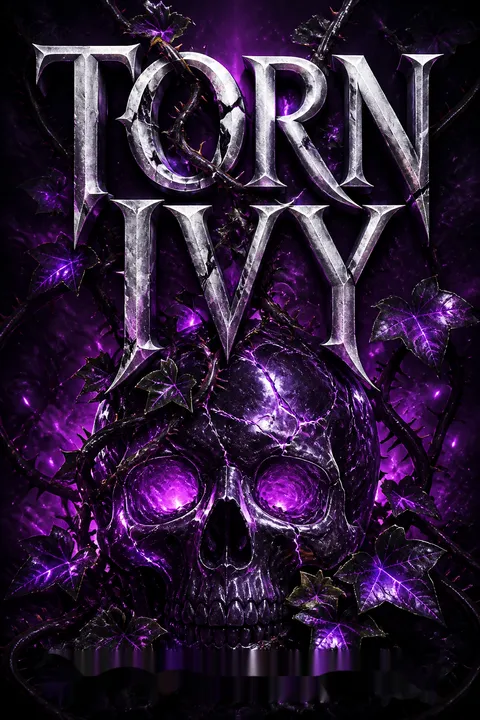

Plot Summary
Shattered Bonds, Hidden Truths
Ivy, a supernatural assassin, discovers her closest allies—Ramsey, Josh, and even her aunt Cathy—have been hiding a cosmic secret: she was meant to become Death, but rejected the role, making her a "glitch" in the system. The revelation that her entire life has been manipulated by The Syndicate and Death himself shatters her trust. Ivy's sense of self fractures as she learns her family line was engineered for this purpose, and that her own resistance to Death's power is unprecedented. The emotional weight of betrayal, confusion, and the burden of destiny sets the stage for her journey, as she's forced to question who she can trust and what her true purpose is.
Death's Ultimatum
Death, personified as a chilling, manipulative force, confronts Ivy with a cruel ultimatum: kill her three lovers—Tate, Torin, and Bram—or forfeit her own soul. The Syndicate, revealed as Death's tool for collecting souls, tightens its grip. Ivy's lovers are imprisoned in a realm where their powers are nullified, and Death's threat looms over all of them. Ivy's desperate attempts to protect those she loves only deepen her sense of isolation and guilt. The emotional stakes escalate as Ivy realizes that every action she takes could doom herself or the people she cares about, forcing her to confront the true cost of her power and her heart.
Chaos Awakens
Betrayed by her handler and best friend Ramsey, Ivy's fury triggers the awakening of her latent chaos magick—a wild, unpredictable force that defies the rules of the supernatural world. Her power manifests in violent, uncontrollable ways, shocking even her allies. The Resistance, a secret group of Death's "rejects," sees Ivy as their only hope to disrupt the corrupt cosmic order. Ivy's struggle to control her new abilities mirrors her internal chaos, as she's torn between her desire for vengeance, her need to save her lovers, and the fear of what she's becoming. The emotional intensity of her transformation is both liberating and terrifying.
Prisoners of the Underworld
Tate, Torin, and Bram awaken in Death's prison, stripped of their powers and forced to confront their own mortality. Their love for Ivy becomes both their strength and their vulnerability, as they realize she's being manipulated into becoming their executioner. The trio's dynamic is tested as secrets surface—Bram's hidden alliances, Torin's family ties, and Tate's deepening connection to Ivy. Their escape from the Underworld, aided by a mysterious orb and their combined wits, underscores the theme of found family and the lengths they'll go to for each other. The emotional arc is one of desperation, loyalty, and the hope of reunion.
Betrayals and Bloodlines
Ivy learns that her family's bloodline was engineered over centuries to create the perfect vessel for Death's power. Cathy reveals the truth about their heritage, and the Resistance's motives become clearer. Ivy's sense of agency is challenged as she grapples with the idea that her destiny was never her own. The revelation that her chaos magick is both a curse and a gift forces her to reconsider her place in the cosmic order. The emotional impact is profound—grief for her lost innocence, anger at her manipulation, and a growing determination to forge her own path.
The Resistance Revealed
Ivy is drawn deeper into the Resistance, a group of supernatural outcasts who oppose Death's tyranny. She's forced to confront the reality that not all rebels are trustworthy, and that betrayal can come from any side. The Resistance's plan to use Ivy as a weapon against Death puts her in the crosshairs of both cosmic forces. The emotional tension is heightened by the presence of her lovers, who are equally determined to protect her and wary of the Resistance's true intentions. Ivy's struggle to trust, to lead, and to accept her own power becomes central to her journey.
Training the Wildcard
Under the guidance of Cathy and the Resistance, Ivy begins training to control her chaos magick. The process is grueling and dangerous, as her power resists containment and threatens to consume her. The training sequences are as much about emotional growth as magical skill—forcing Ivy to confront her fears, her anger, and her desire for connection. Her relationships with Tate, Torin, and Bram deepen, each man serving as an anchor or catalyst for different aspects of her power. The emotional arc is one of vulnerability, resilience, and the slow rebuilding of trust.
Unleashing Chaos
Ivy's attempts to master her magick lead to catastrophic consequences. A training accident unleashes a wave of chaos that warps reality, summons creatures from other realms, and nearly destroys her home. Only the combined efforts of her lovers can stabilize her power, revealing that their bond is essential to her control. The emotional aftermath is raw—guilt, fear, and the realization that her power is both a blessing and a curse. Ivy's journey becomes one of learning to accept help, to share her burdens, and to redefine strength as interdependence rather than isolation.
The Price of Power
The cost of Ivy's power becomes clear as her magick begins to change those around her. Tate, acting as her anchor, finds his own magick and soul altered by repeated exposure to chaos. Bram's Fae heritage is awakened, and Torin's vampiric nature is tested by the overwhelming life force Ivy now channels. The trio's willingness to sacrifice for Ivy—and for each other—underscores the theme of love as both salvation and damnation. The emotional stakes are raised as each character must confront what they're willing to lose for the sake of balance, love, and survival.
The Ritual's Consequence
When Ivy's power tears her apart, scattering her essence across dimensions, her lovers perform a forbidden ritual to bring her back. The ritual demands three sacrifices: blood, power, and spirit. Torin offers his life force, Bram his magick, and Tate his love for Ivy. The ritual succeeds, but at a terrible cost—Ivy returns with no memory, Tate is emotionally hollow, Bram is magically depleted, and Torin is left bleeding. The emotional devastation is palpable, as the group must reckon with the consequences of their choices and the fragility of their bonds.
Torn Apart, Scattered Souls
Ivy's consciousness is fragmented, experiencing countless realities and lifetimes in the span of hours. She witnesses the rise and fall of empires, the birth and death of stars, and the infinite possibilities of existence. Her sense of self dissolves, and she becomes both everything and nothing. The emotional core of this chapter is existential—fear, loneliness, and the longing for connection. Ivy's journey through the multiverse is a metaphor for trauma and recovery, as she struggles to reclaim her identity and find her way home.
The Snake and the Anchor
Upon her return, Ivy is bonded to a mysterious snake—an embodiment of the sacrifices made during the ritual. The snake contains fragments of Tate's love, Bram's magick, and Torin's life force. The group realizes that to restore balance, they must "rewind" the ritual, returning the snake to its source and undoing the damage. The emotional tension is high as each character confronts what they've lost and what they're willing to risk to make things right. The snake becomes a symbol of both danger and hope, a living reminder of the price of power.
Fractured Realities
The group navigates a fractured reality, where nothing is as it seems and their bonds are tested at every turn. Ivy's memories return in fragments, and the others must prove their love and loyalty without the certainty of her affection. The world itself is unstable, reflecting the chaos within Ivy and the group. The emotional arc is one of rebuilding—trust, identity, and purpose. The test is not just magical, but deeply psychological, forcing each character to confront their deepest fears and desires.
The Test of Trust
As the group prepares to reverse the ritual, they must confront the true nature of their relationships. Ivy's trust is hard-won, and the others must accept that love is not possession, but choice. The ritual's reversal is both a magical and emotional trial, requiring each character to face what they've lost and what they hope to regain. The emotional climax is bittersweet—love is restored, but scars remain. The group emerges stronger, but forever changed by what they've endured.
Rewinding Fate
Using the snake and the power of their combined sacrifices, the group rewinds time to the moment before Ivy's catastrophic unleashing of chaos. Armed with knowledge and hard-won trust, they avert disaster by embracing chaos rather than fighting it. The perfect beings sent by Life are defeated not by force, but by overwhelming them with unpredictability. The emotional resolution is one of relief, gratitude, and a renewed sense of purpose. The group's unity is their greatest strength, and their willingness to adapt is what saves them.
Facing Life and Death
Life and Death are unmasked as ancient, opposing forces, each with their own agenda for Ivy and the world. Life's plan to create eternal, stagnant existence is revealed, as is Death's role as the necessary counterbalance. Ivy learns that her true purpose is not to destroy or replace Death, but to maintain equilibrium between creation and destruction. The emotional arc is one of acceptance—of power, of responsibility, and of the inevitability of change. Ivy's journey comes full circle as she embraces her role as the keeper of balance.
The Mantle of Death
In a final confrontation, Ivy accepts the mantle of Death, merging her essence with the ancient force and commanding an army of souls to stand against Life's reset. The cost is immense—her old life, her relationships, her very identity are forever altered. Yet, in embracing her destiny, Ivy finds a new kind of freedom and purpose. The emotional resolution is both triumphant and tragic—she saves reality, but at the price of her own humanity. The story ends with the promise of new challenges, new evolutions, and the enduring power of love and chaos.
Analysis
A dark, subversive meditation on power, trauma, and the necessity of balanceTorn Ivy reimagines the dark academy and reverse harem genres as a cosmic struggle for agency in a world shaped by manipulation, betrayal, and the burden of legacy. At its core, the novel is about the search for identity in the face of overwhelming external control—whether by family, fate, or cosmic forces. Ivy's journey from pawn to player, from victim to Death incarnate, is both a literal and metaphorical exploration of trauma, recovery, and the reclamation of self. The story's use of chaos magick as a metaphor for uncontrollable emotion, the ritual as a test of love and sacrifice, and the fractured realities as a reflection of psychological fragmentation, all serve to deepen its emotional resonance. Ultimately, Torn Ivy argues that true power lies not in domination or perfection, but in the willingness to embrace chaos, to accept help, and to fight for balance—even at the cost of everything you once were. The novel's modern relevance lies in its exploration of agency, the dangers of unchecked order or chaos, and the redemptive power of chosen family and love.
Review Summary
Torn Ivy receives mostly enthusiastic praise for its action-packed plot, steamy romance, and compelling character development. Readers highlight Ivy's growth, her relationships with Tate, Torin, and Bram, and unexpected twists involving villains and dimensions. Many appreciate connections to other series and the emotional depth, particularly regarding Death as a character. The cliffhanger ending left fans eager for more. Some criticism focuses on rushed pacing, confusing plot elements with time travel and dimensions, and excessive sex scenes that detract from story development.
People Also Read
Characters
Ivy Hammond (Poison)
Ivy is the heart of the story—a supernatural assassin whose life has been manipulated by cosmic forces since before her birth. Meant to become Death, she rejected the role, making her a unique anomaly. Ivy's journey is one of self-discovery, as she grapples with betrayal, the awakening of her chaos magick, and the burden of destiny. Her relationships with Tate, Torin, and Bram are both her greatest strength and vulnerability. Psychologically, Ivy is fiercely independent, deeply loyal, and haunted by the fear of losing herself or those she loves. Her development is marked by the acceptance of her power, the forging of trust, and the ultimate sacrifice of her old life to become Death and restore balance.
Tate Blackwell
Tate is Ivy's fated mate and the stabilizing force in her chaotic world. His magick is structured, making him the perfect anchor for Ivy's wild power. Tate's love for Ivy is profound, leading him to sacrifice his own soul and emotions to save her. Psychologically, Tate is driven by loyalty, protectiveness, and a deep sense of responsibility. His journey is one of loss and reclamation—losing his love for Ivy in the ritual, regaining it through sacrifice, and ultimately accepting that true strength lies in vulnerability and connection. His relationship with Ivy is both passionate and tragic, embodying the theme of love as both salvation and cost.
Torin Ashford
Torin is a vampire who exists between life and death, making him uniquely attuned to the story's themes of balance and transition. His relationship with Ivy is intense, marked by both physical passion and emotional depth. Torin's family ties and personal history add layers of complexity, as he struggles with loyalty, identity, and the fear of loss. Psychologically, Torin is both rebellious and protective, often serving as the group's realist and skeptic. His willingness to bleed for Ivy—literally and figuratively—underscores his commitment, and his development is one of embracing vulnerability and the power of chosen family.
Bram (Prince Bramwell)
Bram is a royal Fae with a lineage tied to ancient magick and the balance between realms. His connection to Ivy is both romantic and mystical, as his Fae heritage resonates with her chaos magick. Bram's journey is one of confronting his own darkness, accepting the weight of his ancestry, and sacrificing his magick to save Ivy. Psychologically, Bram is proud, passionate, and haunted by the expectations of his family and court. His development is marked by the acceptance of his own limitations, the forging of deep bonds, and the willingness to risk everything for love and balance.
Cathy Hammond
Cathy is Ivy's aunt and a key member of the Resistance. She serves as both a guide and a source of tough love, pushing Ivy to accept her power and destiny. Cathy's own history as a "Death reject" adds depth to her character, as she understands the burden Ivy carries. Psychologically, Cathy is pragmatic, fiercely protective, and unafraid to make hard choices. Her relationship with Ivy is complex—part mentor, part mother figure, part comrade-in-arms. Cathy's development is one of moving from secrecy to openness, and from manipulation to genuine support.
Death (David Beech)
Death is both antagonist and ally—a cosmic entity who has shaped Ivy's life for his own ends, but ultimately seeks balance rather than domination. His relationship with Ivy is fraught with manipulation, testing, and reluctant mentorship. Psychologically, Death is cold, calculating, and burdened by the weight of his role. His development is marked by the recognition that Ivy is not just a tool, but a necessary evolution in the cosmic order. In the end, he passes the mantle to Ivy, trusting her to maintain the balance he can no longer hold.
Life
Life is the story's ultimate antagonist—a force of creation that seeks to eliminate death and impose eternal, stagnant existence. Her manipulation of bloodlines, reality, and even Ivy herself is driven by a desire for control and perfection. Psychologically, Life is both nurturing and monstrous, embodying the dangers of unchecked growth and the refusal to accept change. Her relationship with Ivy is one of fascination and rivalry, as she sees Ivy as both a threat and a potential tool. Life's development is marked by increasing desperation and the realization that chaos cannot be contained.
Ramsey
Ramsey is Ivy's handler and best friend, whose betrayal is both personal and strategic. His actions are driven by a desire to protect Ivy, but also by his own secrets and loyalties. Psychologically, Ramsey is conflicted, guilt-ridden, and ultimately redemptive. His relationship with Ivy is marked by both love and manipulation, and his development is one of moving from secrecy to honesty, and from self-interest to genuine sacrifice.
Josh
Josh is a member of the Resistance and one of Death's "rejects." His role is to guide Ivy, but his own motives are often ambiguous. Psychologically, Josh is sardonic, independent, and driven by a desire for freedom from cosmic control. His relationship with Ivy is one of camaraderie and mutual respect, and his development is marked by the willingness to risk everything for the chance at true autonomy.
Vex
Vex is a mysterious figure with ties to both the Resistance and The Syndicate. His motives are often unclear, and his loyalties shift with the winds of opportunity. Psychologically, Vex is cunning, self-serving, and deeply knowledgeable about the supernatural world. His relationship with Ivy is one of flirtation, rivalry, and reluctant alliance. Vex's development is marked by the gradual revelation of his own vulnerabilities and the recognition that some causes are worth more than personal gain.
Plot Devices
Cosmic Manipulation and Bloodline Engineering
The narrative is driven by the revelation that Ivy's family—and many others—have been manipulated for generations to create the perfect vessel for Death's power. This device allows for deep exploration of fate versus free will, as Ivy struggles to reclaim agency in a world where her choices have been orchestrated since before her birth. The bloodline engineering also serves as a metaphor for generational trauma and the burden of legacy.
The Reverse Harem and Fated Bonds
The story's emotional core is the bond between Ivy and her three lovers, each of whom serves a unique role in her journey. The reverse harem structure allows for exploration of different facets of love—passion, loyalty, sacrifice, and trust. The fated mate bond, marked by magical tattoos, is both a source of strength and vulnerability, and becomes central to Ivy's ability to control her chaos magick.
Chaos Magick and Uncontrollable Power
Ivy's chaos magick is both a literal and symbolic device, representing the unpredictability of trauma, the fear of losing control, and the potential for transformation. The magick's resistance to containment mirrors Ivy's own struggle to accept her identity and power. The training sequences, accidents, and eventual mastery of chaos serve as milestones in her emotional and psychological growth.
Rituals, Sacrifice, and Reversal
The forbidden ritual to save Ivy—and its reversal—serves as the story's central plot device, forcing each character to confront what they're willing to lose for love. The ritual's demand for blood, power, and spirit sacrifices is both a magical and emotional trial, and its reversal becomes a metaphor for healing, forgiveness, and the reclamation of self.
Fractured Realities and Time Manipulation
The narrative structure employs fractured realities, alternate timelines, and the rewinding of fate to explore the consequences of trauma, the possibility of redemption, and the power of choice. These devices allow for deep psychological exploration, as characters must navigate worlds where nothing is certain and every action has unforeseen consequences.
Life and Death as Personified Forces
The personification of Life and Death as ancient, opposing forces allows for exploration of philosophical themes—creation versus destruction, order versus chaos, stagnation versus evolution. Their manipulation of Ivy and the world serves as both external conflict and internal metaphor, forcing the characters to confront the nature of existence, the inevitability of change, and the necessity of balance.
About the Author
Other books by Eve Newton
Download PDF
Download EPUB
.epub digital book format is ideal for reading ebooks on phones, tablets, and e-readers.








































