
Key Takeaways
1. Terminal Lucidity: A Glimpse of the Enduring Self
Terminal lucidity is the technical term for the unexpected return of cognitive clarity, self-awareness, memory, and lucid functioning of patients who were assumed to have permanently lost their mental capacities.
An extraordinary phenomenon. Terminal Lucidity (TL) describes a scientifically puzzling event where individuals suffering from severe, irreversible neurological disorders like advanced dementia or brain tumors unexpectedly regain full mental clarity, memory, and personality shortly before death. This "miraculous return" contradicts conventional medical understanding, as brain tissue degradation in such conditions is considered irreversible, making spontaneous healing or a return to a pre-morbid self medically impossible. Yet, witnesses describe these episodes as profoundly moving and beautiful, suggesting an enduring core self.
Historical and contemporary cases. Reports of TL date back centuries in medical literature, though it was long dismissed as a mere curiosity. Recent systematic research, including studies by Alexander Batthyány and Bruce Greyson, has begun to document contemporary cases globally, revealing remarkable similarities across diverse diagnoses. For instance, a patient who hadn't recognized family for a year might suddenly address each by name, recall shared memories, and engage in coherent conversation, only to pass away peacefully hours later.
A scientific enigma. The phenomenon challenges the prevailing materialist view that mind is solely a product of brain activity. If severe brain damage leads to the destruction of the self, how can this self "reappear" without any physiological reversal of the damage? The National Institute on Aging (NIA) has recognized TL as a significant area for research, seeking to understand its mechanisms and potential implications for treating severe dementias, even if it occurs only at the very end of life.
2. Dementia's Challenge to the Self: Materialism vs. Soul
If the integrity of my personhood is so dependent on the integrity of my brain function, does this not also clearly imply that myself, my mind, my personality are ultimately no more than products of my brain?
The materialist dilemma. Dementia and other neurological diseases present a profound challenge to our understanding of the self. When a loved one's personality, memories, and ability to communicate erode due to brain damage, it seems to confirm the materialist view: our mind, self, and consciousness are merely products of our brain. This perspective suggests that if the brain is damaged, the self is damaged or even destroyed, leaving no room for concepts like an indestructible "soul" or a destiny beyond biological existence.
Socrates and the soul. This modern scientific outlook stands in stark contrast to ancient wisdom traditions, exemplified by Socrates, who, facing his own death, emphasized the immortality of the soul and the importance of caring for it beyond earthly life. He believed the person was not the body, but the soul, and that true identity transcended physical decline. The modern "doubting Crito" struggles to reconcile such spiritual hopes with the observable biological dependency of the mind.
The "enchanted loom" debate. Neurophysiologist Sir John C. Eccles, a Nobel laureate, questioned the idea that the self is merely a product of biological processes, describing the brain as an "enchanted loom" but arguing that "without the self, there is no weaver." He believed in a conscious self transcending biology, a view challenged by cases like Mrs. D, whose personality drastically changed with Alzheimer's, seemingly proving the brain's absolute control over identity.
3. The "White Crow" Phenomenon: Challenging Mind-Brain Dependence
If you wish to upset the law that all crows are black, you mustn’t seek to show that all crows are black; it is enough if you prove one single crow to be white.
Challenging scientific dogma. Terminal lucidity acts as a "white crow" in the scientific understanding of the mind-brain relationship. Just as one white crow disproves the universal law that all crows are black, a single reliable instance of TL challenges the widely accepted proposition that conscious mind and self are entirely dependent on an intact, functioning brain. This phenomenon forces researchers to reconsider the limits of current theories and explore alternative models.
Beyond simple explanations. The unexpected return of complex cognitive functions in severely brain-damaged patients, without any known physiological reversal of damage, cannot be easily dismissed as misdiagnosis, confabulation, or wishful thinking, especially given the growing number of documented cases. Such observations compel a deeper inquiry into what truly happens to the self when the brain is compromised, suggesting that the self might be preserved or sheltered rather than destroyed.
Boundary conditions in science. Drawing an analogy from physics, where Newtonian mechanics breaks down at extreme conditions (like very small particles or very fast speeds), Bruce Greyson proposes that the mind-brain dependence observed in everyday life might also be a "limited case." Death, as an extreme biological condition, could be a "boundary condition" where the usual rules no longer fully apply, revealing aspects of consciousness not seen under normal circumstances.
4. Near-Death Experiences: Another Window into Mind at Death
NDEs represent phenomenologically rich experiences in the setting of a hypofunctioning brain.
A parallel phenomenon. Near-Death Experiences (NDEs) offer another compelling "white crow" phenomenon that parallels terminal lucidity. NDEs are complex, conscious experiences reported by individuals who have been resuscitated after clinical death (e.g., cardiac arrest), a state where brain function is severely compromised or even absent (flat-line EEGs). Like TL, NDEs present a paradox: heightened mental activity and vivid perceptions occurring when the brain is supposedly incapable of supporting consciousness.
From skepticism to acceptance. Initially met with skepticism and dismissed as hallucinations or confabulations, NDE research gained legitimacy due to the sheer volume of consistent reports across cultures and centuries. With millions of NDErs worldwide, and incidence rates as high as 18% in cardiac arrest survivors, the phenomenon can no longer be ignored, prompting systematic scientific investigation into its nature and implications.
The challenge of "mindsight." An even more striking, albeit rare, aspect of NDEs is "mindsight," where legally blind individuals report having visual experiences during their NDE. Some, blind from birth, describe seeing "thousands and millions and billions of books" or "perfect vision." While critics suggest confabulation, these accounts, if verified, would profoundly challenge the understanding of vision as solely a brain-dependent function, further supporting the idea of consciousness operating beyond physical limitations near death.
5. Enhanced Cognition and Perception Beyond Brain Function
I was a genius when I was dead.
Paradoxical clarity. Studies on NDEs reveal that a significant number of experiencers report not just consciousness, but enhanced cognition and perception during their near-death state. For instance, a study of 653 NDE reports found that:
- 83% reported normal or enhanced visual imagery (47% improved, 41% normal).
- 96% reported normal or enhanced alertness and logical thinking (35% improved, 61% normal).
This suggests that mental faculties can operate with extraordinary clarity and speed, even when the brain is in a state of severe physiological crisis.
Vivid memories and insights. NDErs frequently describe comprehensive "life reviews," recalling long-forgotten events with minute detail and experiencing the emotional impact of their actions on others. They often report a sense of expanded knowledge, faster processing, and profound insights into the nature of existence. One participant famously stated, "I was a genius when I was dead," highlighting the stark contrast between their NDE state and normal waking consciousness.
Veridical perceptions. Beyond subjective reports, some NDEs include veridical perceptions—accurate observations of events or details during resuscitation that the patient could not have known through normal sensory channels. Studies by cardiologists Michael Sabom and Penny Sartori found that NDErs accurately described CPR procedures, while control groups made significant errors. These objective corroborations strengthen the argument that consciousness can operate independently of a fully functioning brain near death.
6. The Brain as a Filter, Not a Generator, of Consciousness
But insofar as we are animals, our business is at all costs to survive. To make biological survival possible, Mind at Large has to be funneled through the reducing valve of the brain and nervous system.
Beyond generation. To reconcile the apparent contradiction between mind-brain dependence in daily life and mind-brain independence near death, philosophical models offer alternative perspectives. One such model, advocated by thinkers like Henri Bergson and Aldous Huxley, proposes that the brain acts not as a generator of consciousness, but as a "reducing valve" or filter. Its primary function is to limit our vast, potential "Mind at Large" to a manageable trickle necessary for biological survival in the physical world.
Releasing consciousness. In this "brain-as-filter" theory, neurological diseases or the process of dying might cause the filter to break down or loosen its grip. Instead of eliminating consciousness, this breakdown could "release" it, allowing for an expanded, heightened state of awareness. This explains why NDErs often describe cosmic, all-encompassing consciousness and why TL patients regain full access to their memories and personality—the inhibitory functions of the compromised brain are temporarily lifted.
The solar eclipse analogy. Physicist Avshalom Elitzur uses the analogy of a total solar eclipse: the moon (brain) normally covers the sun (soul/Mind at Large), making it seem as if only the moon exists. However, the coronal filaments (subtle hints of consciousness) are still visible. Near death, as the "eclipse subsides," we get a direct view of the sun, suggesting two distinct entities. This analogy helps visualize how a seemingly materialist reality can, under extreme conditions, reveal a deeper, non-material dimension of existence.
7. Witnessing Terminal Lucidity: A Profound, Ambivalent Gift
I had been blessed, but do you know how lonely it is to be given a gift and having no one who even believes in it?
Emotional complexity. Witnessing terminal lucidity is often described as a deeply profound and beautiful experience, yet it can also be profoundly confusing and isolating for family members and caregivers. After years of watching a loved one's decline, the sudden return of their "old self" is perceived as a "gift" or "miracle," offering a precious last opportunity for connection, forgiveness, and farewell. This reunion brings immense gratitude and peace, helping with the grieving process.
Loneliness and disbelief. However, the extraordinary nature of TL means that witnesses often struggle to find others who understand or believe their accounts. The lack of a common vocabulary or scientific explanation for such events can lead to feelings of loneliness, cognitive dissonance, and even guilt. Some families, accustomed to a rational worldview, choose to remain silent about the experience because it doesn't fit their established framework, further isolating those who witnessed it.
Uncertainty and hope. The unexpected nature of TL also brings uncertainty. Family members often ask if the lucidity signifies imminent death or a miraculous recovery, highlighting the emotional tightrope they walk. While researchers cannot offer medical prognoses, the advice remains to embrace the moment with love, listen, and make the most of the connection, whether it's a temporary reprieve or a final farewell, emphasizing kindness and compassion above all else.
8. The Sheltered Self: Unconditional Dignity and Meaning
This remainder that is left behind after everything else has been explained is, beyond all else, the final and decisive value of our world.
Beyond biological odds. The convergence of evidence from terminal lucidity and near-death experiences strongly suggests that the individual self, with its unique memories and identity, is not merely a fragile product of the brain destined for oblivion. Instead, these phenomena point to a "sheltered, preserved self" that endures against all biological odds, hinting at a dimension of mind that is scarcely understood but profoundly significant. This implies an inherent value and meaning to our individual existence.
The enduring biography. NDE life reviews, where individuals re-experience every detail of their lives and the impact of their actions on others, further corroborate this idea. They suggest that no moment, no interaction, no decision is too insignificant to be preserved. This "second memory store somewhere in the universe" implies that our personal biographies are not lost but are somehow anchored and protected, contributing to a larger, incomprehensible tapestry of existence.
Inherent human dignity. This research, though in its infancy, offers a powerful counter-narrative to reductionist views that diminish human worth. It suggests that life itself has imbued our individual existence with such profound value that mechanisms may exist to preserve our identity and memories even through illness and death. This inherent, unconditional dignity is woven into our very humanity, calling us to acknowledge and respect the unique personhood in ourselves and others, especially the frail and vulnerable.
9. Caring for the Soul: A Moral Imperative
For the soul takes with it to the other world nothing but its education and nurture, and these are said to benefit or injure the departed greatly from the very beginning of his journey thither.
Socrates' timeless wisdom. The implications of a sheltered, enduring self extend beyond scientific inquiry into moral and existential responsibility. Socrates' final teaching—that we must care for the soul by becoming as good and wise as possible—resonates deeply with the idea that what we cultivate within ourselves and how we treat others will ultimately define our enduring legacy. If nothing is truly lost, then our actions and choices carry profound weight, shaping not only our individual story but also our contribution to the world's history.
Frankl's psychiatric credo. Viktor Frankl, a Holocaust survivor, articulated a "psychiatric credo": an unconditional faith in the "trans-morbid" or incorruptible nature and dignity of the "inner" person, even in the face of severe psychophysical disorder. This view asserts that personhood is not defined by functional capacity but is an inherent quality to be acknowledged and honored. It stands as a powerful counterpoint to ideologies that reduce human beings to mere biological machines, emphasizing that dignity cannot be taken away, only denied.
Rehabilitating hope. In a world often grappling with cynicism and meaninglessness, the research on terminal lucidity and NDEs offers a compelling reason to rehabilitate hope. It suggests that our existence is greater than what meets the eye, and our lives are meaningful adventures wonderfully protected and preserved. This understanding fosters compassion, connection, and a renewed sense of responsibility to nurture our own souls and contribute positively to the world, recognizing that our hope is not a deficiency but a core characteristic of human nature.
Review Summary
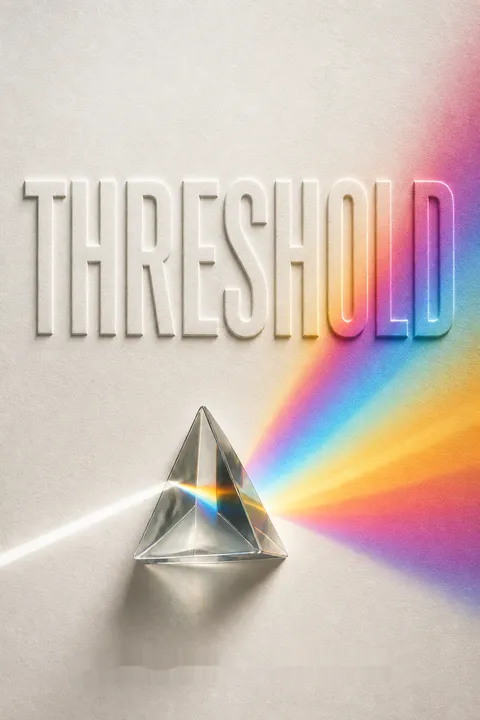
Threshold explores terminal lucidity—when dementia or brain-damaged patients near death suddenly regain clarity, memories, and personality before dying. Batthyány presents research, case studies, and surveys documenting this phenomenon. Reviews praise the fascinating subject matter and emotional impact of family testimonials. Some readers appreciate the humanist perspective and existential questions about consciousness beyond brain function. Criticisms include excessive length, reliance on anecdotal evidence, insufficient scientific hypothesis, and theological implications. Several reviewers note it's the first English book on terminal lucidity, making it groundbreaking but preliminary. Most found it thought-provoking despite limited conclusive answers.
People Also Read





Download PDF
Download EPUB
.epub digital book format is ideal for reading ebooks on phones, tablets, and e-readers.








































