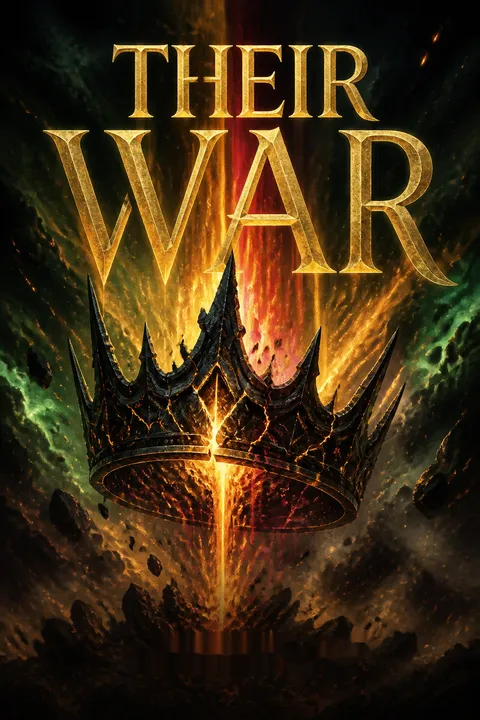

Plot Summary
War Rooms and Worries
Charlotte, bonded to Aziel, the King of Wrath, finds herself in the midst of demonic war councils and political intrigue. The threat of Mammon, Queen of Greed, and her alliance with the ogres puts everyone on edge. Charlotte's desire to help is stifled by her protectors, who see her as both a weakness and a strength. The bonds she shares with Aziel, Gray, and Silas are tested as strategies are drawn and vulnerabilities exposed. The emotional weight of looming violence, the pressure of leadership, and the uncertainty of alliances create a suffocating atmosphere. Charlotte's longing for agency and her struggle to be seen as more than a pawn set the tone for a story where love, power, and survival are inextricably linked.
Forbidden Alliances
As Mammon's forces threaten Wrath, Charlotte and her allies seek help from unlikely sources. The shifters, led by Chev and Kato, are courted for support, but their loyalty is conditional and their politics insular. Charlotte's initiative to retrieve Asmod's body—a key to Lust's throne—forces her into dangerous negotiations and tests her relationships. The lines between friend and foe blur as betrayals and old wounds surface. The cost of alliances becomes clear: trust is fragile, and every favor comes with a price. Charlotte's determination to contribute, despite her perceived weakness, marks her as both a liability and a catalyst for change.
The Body and the Bond
The retrieval of Asmod's body sets off a chain of events that will reshape the balance of power. Gray, Aziel's mate and the son of Asmod, must absorb his father's power to claim the throne of Lust. The process is agonizing, both physically and emotionally, exposing Gray's insecurities and the limits of his strength. The act binds Aziel and Gray in new ways, but also burdens them with secrets and guilt. The body, both literal and symbolic, becomes a vessel for legacy, trauma, and ambition. The bonds between the main characters are tested as they navigate the consequences of power transferred through blood and pain.
Power, Pain, and Politics
Aziel, Gray, and Silas are forced to balance personal desires with the demands of leadership. The war with Mammon escalates, and every decision carries the weight of potential loss. Charlotte's pregnancy adds another layer of vulnerability, making her both a symbol of hope and a target. The trio's struggle to protect her while maintaining control over their realms exposes the cracks in their unity. Political maneuvering, resource scarcity, and the ever-present threat of betrayal push them to their limits. The pain of leadership is matched only by the pain of love—each choice is a sacrifice, and every victory comes at a cost.
Secrets and Sacrifices
Secrets fester within the group: the true parentage of Charlotte's child, the nature of the bonds, and the personal histories that haunt each character. Silas, the fate, carries the heaviest burden, knowing more than he can say and suffering for it. The revelation of past betrayals and the fear of future loss drive the characters to desperate measures. Sacrifices are made—some willingly, others under duress. The emotional landscape is fraught with longing, regret, and the hope for forgiveness. The characters must confront their own failings and the reality that love cannot shield them from pain.
Shifting Loyalties
The alliances between Wrath, Lust, and the shifters are constantly in flux. Chev's rise to leadership, Rock's transformation from shadow to solid form, and the ever-present threat of Mammon force everyone to reevaluate their loyalties. Old friendships are strained, new bonds are forged, and the line between ally and adversary is never clear. Charlotte's role as both a bridge and a battleground for these shifting loyalties highlights the precariousness of peace. The characters must decide who to trust, knowing that betrayal could come from any direction.
The Price of Leadership
As the war intensifies, the burden of leadership grows heavier. Aziel, Gray, and Silas are forced to make impossible choices, balancing the needs of their people with the safety of their family. The cost of command is measured in lives lost, relationships strained, and the ever-present fear of failure. Charlotte's pregnancy becomes a focal point for hope and anxiety, her vulnerability a constant reminder of what's at stake. The leaders must confront their own limitations and the reality that they cannot save everyone.
Bloodlines and Betrayals
The absorption of Asmod's power by Gray cements his claim to Lust but also brings old rivalries and new dangers. Valentine, Gray's sister, challenges his right to rule, and the council of Lust demands proof of his strength. The feeding ceremony—a public display of dominance and desire—becomes a battleground for legitimacy. Bloodlines are both a source of power and a curse, binding the characters to destinies they cannot escape. Betrayals, both personal and political, threaten to unravel everything they have built.
The Ceremony of Claiming
The feeding ceremony is a crucible for Gray, Aziel, Silas, and Charlotte. Forced to perform their intimacy before the Lust council, they must navigate the intersection of love, power, and spectacle. The act is both a test and a trauma, exposing their deepest vulnerabilities and desires. The ceremony cements Gray's rule but leaves emotional scars. The public nature of their love, the demands of tradition, and the ever-present threat of failure push the group to their breaking point. The aftermath is a reckoning with what it means to be claimed, to claim, and to belong.
The Shifters' Bargain
With the war against Mammon reaching a critical point, the shifters' support becomes essential. Charlotte's diplomacy, Echo's leadership, and Chev's pragmatism shape a new alliance. The bargain is hard-won, requiring apologies, concessions, and the willingness to trust. The shifters' involvement tips the balance of power, but also introduces new complications. The cost of peace is high, and the characters must decide what they are willing to give up to achieve it.
The Feeding and the Fallout
The aftermath of the feeding ceremony leaves the group physically and emotionally drained. The demands of leadership, the expectations of their people, and the strain of their bonds push them to the edge. The lines between pleasure and pain, love and obligation, blur. The fallout is both personal and political, as the group must recover from the ordeal while continuing to fight for their future. The limits of endurance are tested, and the characters must find new ways to support each other.
Loss and Longing
Charlotte's miscarriage is a devastating blow, shattering the fragile peace the group has built. The loss exposes old wounds and forces the characters to confront their own fears and failures. Grief is a shared burden, but each character must find their own path to healing. The longing for what was lost is matched by the hope for renewal. The group must decide whether to retreat into their pain or to reach for each other and the possibility of new life.
The Elven Accord
The quest for a better future leads the group to the elves, whose technology is key to rescuing the remaining females. Charlotte's mother, now partnered with the elven leader Niven, becomes a bridge between worlds. The elven accord is a turning point, offering hope for large-scale change. The alliance is fragile, built on trust and the promise of mutual benefit. The characters must navigate new cultural norms, old prejudices, and the ever-present threat of betrayal.
The Female Project
With the elves' help, the group launches a massive effort to rescue and rehabilitate the purchased females. The project is fraught with logistical, ethical, and emotional challenges. The rescued women are traumatized, and the path to healing is long and uncertain. The group must balance the need for safety with the desire for autonomy, knowing that true freedom cannot be given—it must be claimed. The project becomes a symbol of hope, but also a reminder of the work still to be done.
Nesting and New Life
As Charlotte's pregnancy progresses, the household is consumed by preparations for the new arrivals. Nesting instincts, both human and demonic, take over. The group navigates the anxieties of impending parenthood, the challenges of blending families, and the ever-present fear of loss. The promise of new life is both a balm and a source of tension, as each character grapples with their own hopes and insecurities.
The Birth of Hope
The birth of Charlotte's twins is a moment of both agony and ecstasy. The pain of labor is matched by the overwhelming joy of new life. The group comes together to support Charlotte, each playing their part in the miracle of survival. The arrival of Valeria and David is a testament to resilience, love, and the power of hope. The family is forever changed, and the future, once uncertain, is now filled with possibility.
Family, Forgiveness, Future
In the aftermath of war, loss, and new beginnings, the group finds a new equilibrium. Forgiveness is hard-won, but essential. The bonds between Charlotte, Aziel, Gray, Silas, and their children are tested and strengthened. The challenges of leadership, the scars of the past, and the demands of the present are met with courage and compassion. The story ends with a vision of family—messy, imperfect, but fiercely loving. The legacy of their war is not just survival, but the creation of a future worth fighting for.
Analysis
Their War is a sweeping, emotionally charged fantasy that explores the intersections of love, power, trauma, and hope. At its core, the novel is about the struggle to build a better world in the aftermath of violence and betrayal. The characters are deeply flawed—wounded by the past, burdened by responsibility, and desperate for connection. The story does not shy away from the pain of loss, the cost of leadership, or the messiness of healing. Instead, it insists that true strength lies in vulnerability, that forgiveness is both necessary and hard-won, and that hope is a choice made every day. The novel's treatment of trauma—both personal and collective—is nuanced and compassionate, refusing easy answers or quick fixes. The bonds between Charlotte, Aziel, Gray, and Silas are a microcosm of the larger world: fragile, hard-won, and fiercely defended. The ultimate lesson is that survival is not enough; to truly live, one must risk love, embrace change, and fight for a future where everyone has the chance to heal. Their War is a testament to the power of found family, the necessity of forgiveness, and the enduring hope that even in the darkest times, new life is possible.
Review Summary
Their War receives mixed reviews, with readers criticizing its lack of plot and overabundance of explicit content. Common complaints include the absence of the promised war storyline, repetitive scenes, plot holes, and the protagonist Charlie being annoying or insufferable. Many felt the series declined after a strong first book. Positive aspects mentioned include the likable male characters (Gray, Silas, Aziel), steamy scenes, and some wholesome family moments. Trigger warnings for miscarriage and cheating are noted. Overall, readers found it entertaining but disappointing.
People Also Read



Characters
Charlotte
Charlotte is the emotional and narrative center of the novel—a human woman thrust into the world of demons, shifters, and political intrigue. Her relationships with Aziel, Gray, and Silas are both her greatest strength and her deepest vulnerability. Charlotte's journey is one of agency: she fights to be seen as more than a pawn, to contribute meaningfully, and to claim her own desires. Her pregnancy, loss, and eventual motherhood are deeply felt, shaping her identity and her bonds. Charlotte is both a bridge between worlds and a battleground for competing loyalties. Her resilience, compassion, and stubbornness drive the story forward, making her a symbol of hope and change.
Aziel
Aziel, King of Wrath, is a study in contrasts: fierce, commanding, and often emotionally stunted, yet deeply devoted to his mates. His leadership is both a burden and a calling, and he struggles to balance the demands of his people with the needs of his family. Aziel's bond with Charlotte softens him, exposing vulnerabilities he would rather hide. His relationship with Gray and Silas is complex—marked by rivalry, desire, and a shared sense of responsibility. Aziel's journey is one of learning to trust, to forgive, and to accept that strength is not just about power, but about love and sacrifice.
Gray
Gray is the embodiment of desire—an incubus whose need for connection is both literal and metaphorical. His ascension to the throne of Lust is fraught with insecurity, legacy, and the weight of expectation. Gray's relationships are marked by longing, jealousy, and a desperate need to be seen and valued. His bond with Charlotte is passionate and possessive, while his dynamic with Aziel and Silas is a mix of rivalry and deep affection. Gray's journey is one of self-acceptance, learning to balance his needs with those of his family, and finding strength in vulnerability.
Silas
Silas is the most enigmatic of the group—a fate burdened with knowledge he cannot always share. His role as secret-keeper isolates him, and his struggle with guilt and self-doubt is a recurring theme. Silas's love for Charlotte is quiet but profound, and his relationships with Aziel and Gray are marked by both camaraderie and tension. His journey is one of learning to forgive himself, to trust others with his pain, and to accept that he cannot control everything. Silas is both a healer and a wounded soul, seeking redemption through love and service.
Chev
Chev rises to leadership among the shifters, navigating the demands of tradition, loyalty, and the need for change. His alliance with Aziel and the others is hard-won, marked by negotiation, compromise, and the willingness to challenge old ways. Chev's friendship with Aziel is a source of both strength and friction, and his role as a bridge between the shifters and the other realms is crucial. Chev is pragmatic, loyal, and willing to do what it takes to protect his people—even when it means making uncomfortable choices.
Rock
Rock's transformation from shadow to solid form mirrors his journey from outsider to integral member of the group. His loyalty to Charlotte is unwavering, and his role as tutor, confidant, and occasional troublemaker adds levity to the story. Rock's outsider perspective allows him to see things others miss, and his willingness to challenge authority is both a strength and a source of tension. He is a symbol of change—proof that even the most unlikely can find a place to belong.
Echo
Echo is a fierce advocate for the rescued females, using her position among the shifters to push for change. Her friendship with Charlotte is a source of support and inspiration, and her leadership is marked by empathy and determination. Echo's own scars make her uniquely qualified to help others heal, and her willingness to challenge both tradition and authority is essential to the success of the female project.
Valentine
Valentine, Gray's sister, is both a personal and political adversary. Her challenge to Gray's rule forces him to confront his own insecurities and the legacy of their father. Valentine embodies the old ways of Lust—power through pleasure, dominance through spectacle—and her defeat marks a turning point for the kingdom. She is a reminder that the past is never truly gone, and that every victory comes with a cost.
Mammon
Mammon is the primary antagonist—a queen whose ambition, grief, and rage drive much of the conflict. Her alliance with the ogres, her vendetta against Aziel, and her willingness to sacrifice everything for power make her a formidable foe. Yet beneath her ruthlessness is a woman shaped by loss, betrayal, and the impossible demands of leadership. Mammon is both a cautionary tale and a mirror for the other characters, showing what happens when love curdles into hate.
Patricia (Charlie's Mother)
Patricia's journey from captive to partner of the elven leader Niven is a testament to resilience and the possibility of new beginnings. Her relationship with Charlotte is both a source of comfort and a reminder of what has been lost. As a bridge between humans and elves, Patricia plays a crucial role in the final alliance. She is a symbol of hope, proof that healing is possible even after unimaginable trauma.
Plot Devices
Multi-perspective Narrative
The story is told through multiple perspectives—primarily Charlotte, Aziel, Gray, and Silas—allowing readers to experience the emotional and psychological complexity of each character. This device deepens the narrative, providing insight into motivations, fears, and desires that would otherwise remain hidden. The shifting viewpoints also create dramatic irony, as readers know more than any one character, heightening tension and empathy.
Bonding and Power Transfer
The bonds between Charlotte and her mates are both literal and metaphorical, granting immunity, strength, and emotional connection. The transfer of power—especially through the absorption of Asmod's legacy—serves as both a plot catalyst and a source of conflict. The bonds are a double-edged sword: they protect, but also expose vulnerabilities and force characters to confront uncomfortable truths.
Political Intrigue and War
The war with Mammon, the shifting alliances, and the struggle for control of the female project provide a backdrop for the characters' personal battles. Political maneuvering, betrayals, and negotiations mirror the emotional stakes, making every victory and loss deeply personal. The external conflict is never just about territory or power—it is always tied to the characters' deepest fears and hopes.
Public Rituals and Ceremonies
The feeding ceremony, public apologies, and other rituals serve as crucibles for the characters, forcing them to perform their love, power, and vulnerability before an audience. These spectacles are both tests of strength and sources of trauma, exposing the characters to judgment, desire, and the risk of failure. The public nature of these rituals heightens the stakes and deepens the emotional impact.
Foreshadowing and Fate
Silas's role as a fate, the recurring dreams, and the ever-present sense of impending loss create a sense of inevitability. The story is laced with foreshadowing—hints of betrayal, the risk of miscarriage, the possibility of new life. Fate is both a comfort and a curse, shaping the characters' choices and reminding them that not everything can be controlled.
Healing and Rehabilitation
The rescue of the purchased females is not the end, but the start of a long, difficult process of healing. The rehabilitation facilities, the struggle for autonomy, and the slow rebuilding of trust are central to the story's second half. The project is both a symbol of hope and a reminder of the work still to be done. Healing is messy, nonlinear, and deeply personal.
About the Author



Download PDF
Download EPUB
.epub digital book format is ideal for reading ebooks on phones, tablets, and e-readers.








































