
Key Takeaways
1. Worship is God-Initiated and Biblically Grounded
What comes into our minds when we think about God is the most important thing about us . . . [as] no religion has ever been greater than its idea of God.
God as footing. Christian worship begins with God's nature, not human desires. Our understanding of God—who He is, His expectations, and His initiative—forms the bedrock for all worship. The Scriptures serve as the primary source for discerning God's vision, allowing us to evaluate worship by His criteria, not our own.
God initiates. Worship is an invitation from God, not a human invention. God actively seeks worshipers, calling us out of our busy lives to encounter Him. This divine initiative transforms church from a mere meeting of minds into a profound encounter with the living God, fostering anticipation and reverence.
Biblical principles. Worship is rooted in six foundational biblical principles:
- Centered in God's acts of salvation (Exodus, Christ Event).
- Patterned in revelation and response (God speaks, we reply).
- Covenantal in nature (formal relationship between God and His people).
- Corporate in nature (unified body of Christ, not individualistic).
- Trinitarian in essence (Father, Son, Holy Spirit mutually glorified).
- A transformational journey (from confusion to recognition, like Emmaus).
2. Christ is the Cornerstone of All Christian Worship
Worship that is anything less than Christocentric within the framework of Divine Triunity may be something, but it is certainly not ‘Christian.’
Christ's priority. Jesus Christ is the non-negotiable cornerstone of Christian worship, determining its authenticity. His priority fulfills God the Father's intentions, as God desires the exaltation of the Son. Early Christians demonstrated this by worshiping and praying in Jesus' name and by gathering on the Lord's Day to commemorate His resurrection.
Welcoming presence. Worship is an occasion to experience the real, incarnational presence of the risen Lord. Like the Emmaus disciples, we are called to recognize Christ's presence as He greets us, teaches us, and breaks bread with us. This understanding shifts worship from being about Christ to being to Christ, fostering a subjective experience of an objective reality.
Priestly role. Christ functions as our great High Priest, mediating and leading our worship. He purifies our imperfect offerings, translating our prayers and transforming our human efforts into something perfectly acceptable to God. This humbling truth liberates us from the burden of performing perfectly, allowing us to worship God in full abandon.
Passion for the world. Christ-centered worship engenders His passion for the world, leading to transformation and increased obedience. True worship results in discipleship, connecting right worship with right living, justice, and compassion. It turns our worship outward, inspiring us to serve the needy world.
3. Christian Worship Follows a Dialogical, Fourfold Structure
The shaping of the worship event . . . is not something imposed from the outside but is inherent in the nature of the event itself.
Effective form. Every worship tradition, whether acknowledged or not, utilizes some form or structure. The question is not if form is used, but what type of form and why. Effective form is inherent in the nature of worship itself, guiding the flow of engagement from surface exchanges to deeper encounters with God.
Dialogical approach. Worship is fundamentally a dialogue between God and His people, mirroring biblical encounters where God reveals and humanity responds. This pattern of revelation and response forms the core of Christian worship, ensuring a mutual exchange rather than a one-sided program.
Four movements. This dialogical pattern naturally leads to a fourfold order of worship, often called "movements" like a symphony:
- Gathering: God approaches, inviting us into His presence.
- Word: God speaks through Scripture and sermon.
- Table (or Response): We respond to God's message.
- Sending: God empowers us to live out our faith in the world.
Gospel narrative. Each time this fourfold order is followed, it subtly tells the gospel story—God's plan of salvation. This underlying rhythm proclaims God's narrative, offering a consistent metanarrative in a world of competing stories, and grounding worship in truth.
4. The Gathering Unites and Prepares the Community for God's Word
It makes a great difference who initiates worship, for God’s call transforms church from a meeting of the minds to a meeting with the living God.
God gathers us. The gathering acknowledges that God initiates worship, calling us out of our fragmented lives to meet with Him. This divine invitation transforms our perspective, fostering expectancy, reverence, and joy as we respond to the Creator. Our opening words should reflect this divine call, moving beyond casual greetings.
Purpose of gathering. The gathering serves two crucial purposes:
- To unite our spirits in God's presence, bringing diverse individuals into a focused, corporate mindset.
- To prepare us to hear the proclaimed Word of God, guiding our attention and hearts toward receptivity.
Spirit and movement. The spirit of the gathering is typically one of praise, joy, and celebration for God's character and saving acts, especially the risen presence of Christ. The movement progresses from general praise to more specific focus, gradually shifting in tone from spirited celebration to quiet reflection, preparing worshipers for the Word.
Practical elements. Worship architects use various elements to facilitate the gathering:
- Calls to worship, greetings, invocations.
- Songs (psalms, hymns, spiritual songs) of general praise.
- Confession of sin and assurance of pardon.
- Creeds, acclamations, and responsive readings.
- Silence, prelude, and liturgical movement.
Announcements are best placed before or after the service to avoid disrupting the sacred dialogue.
5. The Word is God's Proclamation, Demanding Active Listening and Formation
The purpose of the service of the Word is so people may be addressed by God through the Holy Scriptures and thereby changed for God’s glory and kingdom.
Historical precedence. The public reading and interpretation of Scripture have been central to worship since Moses' time, evident in Old Testament convocations and synagogue practices. Early Christians continued this tradition, with Paul urging attention to public Scripture reading and lectionaries systematizing readings for centuries.
Purpose and spirit. The service of the Word is dedicated to God speaking to us through Scripture and sermon, aiming for formation rather than mere information. It's a time for listening to God's voice and submitting to His will. The spirit is characterized by quietness, reflection, openness, and commitment, creating an atmosphere conducive to hearing God.
Movement and elements. The movement of the Word is primarily from God to humans, with God delivering a message and us actively listening. Key elements include:
- Prayers for illumination, seeking divine assistance to understand.
- Multiple Scripture readings (Old Testament, Psalms, Epistle, Gospel).
- The sermon or homily, interpreting the texts.
- Silence, songs of receptivity, and artistic expressions reflecting the Word.
Organic liturgy. Worship leaders are challenged to permeate the entire service with Scripture, transposing biblical texts into liturgical acts like calls to worship, prayers of confession, or offertory sentences. This "organic liturgy" ensures the whole worship event proclaims God's story, making the service a common experience rooted in the biblical texts.
6. The Table (or Alternative Response) is the Community's Essential Reply to God's Word
Word (revelation) and Table (response) form the centerpiece of Christian worship.
Normative response. For centuries, communing at the Lord's Table has been the normative response to the proclaimed Word, enacting and celebrating God's saving work in Christ. It dramatizes the gospel through symbolic action, inviting intimate fellowship with Christ and believers.
Purpose and spirit. The Table's purpose is to engage in acts of worship that celebrate Christ's victory over death and His offer of forgiveness, healing, and power. Its spirit is multifaceted, captured by three biblical terms:
- Lord's Supper: Solemn remembrance of Christ's suffering and death.
- Eucharist: Joyful thanksgiving for Christ's resurrection and victory.
- Communion: Emphasizes the unity and supernatural fellowship of believers in Christ.
Movement and elements. The movement is primarily from humans to God, as the community responds to the proclaimed truth. Essential elements include:
- Invitation to the Table.
- Confession of sin and assurance of pardon.
- Prayer of thanksgiving (Great Thanksgiving).
- Consecration of elements, words of institution, distribution.
- Songs of approach, devotion, or conclusion.
- Creeds, prayers of surrender, or offerings for the poor.
Alternative response. When the Table is not celebrated weekly, an intentional "alternative response" is crucial to maintain the dialogical nature of worship. This response allows the community to surrender to God's purposes and commit to living out the gospel, fostering emotional, spiritual, symbolic, and action-oriented engagement. Responses can invite worshipers to "resound" (echo truth), "resign" (relinquish claims), or "resolve" (determine new intentions).
7. The Sending Empowers Worshipers for Mission in the World
The benediction was one of the high points in the worship of the temple.
God sends us. Just as God calls us to worship, He also sends us from the gathered community. The sending is the final, significant movement of worship, where God blesses and commissions us to live out our faith in the world. It's a crucial transition from "gathered community before God" to "scattered community serving God."
Purpose of sending. The purpose is for worshipers to be empowered by a blessing (benediction) to do God's will (charge). The benediction, a pronouncement of God's favor, assures us of His presence and care. The charge, a statement of intent, commissions us to live proactively as citizens of God's kingdom, connecting blessing with service.
Spirit and movement. The spirit of the sending is typically joy, inspiration, and authority. Joy for having met with God, inspiration to live out commitments made in response to the Word, and authority for fulfilling God's commands. The movement is from being gathered to being deployed, scattering us to live out God's presence in the world.
Practical elements. The sending, though brief, is intentional and includes:
- Scriptural benedictions, pronounced with a raised hand.
- A clear charge or challenge for mission.
- Congregational hymns or brief choruses.
- Announcements framed as mission opportunities.
- Recessionals or postludes to inspire departure.
Leaders should be pastoral, prepared, and enthusiastic, speaking God's good words directly into the souls of worshipers.
8. Prayer is the Heart of Worship, a Corporate and Trinitarian Dialogue with God
public prayer is not private prayer said publicly.
Worship as prayer. The entire liturgy should be viewed as one comprehensive prayer, a public offering for the world, Christ's church, and ourselves. This holistic understanding elevates prayer from a mere component to the very essence of worship, fulfilling the biblical mandate for a prayerful church.
Essential considerations. Corporate prayer is guided by several principles:
- Remembrance: Recalling God's past saving acts to claim His faithfulness in the present.
- Corporate: The unified community offering one prayer, often through a leader, affirmed by a congregational "Amen."
- Multidirectional: Moving upward to God and outward to a broken world, including lament.
- Silence: Intentional stillness to hear God speak, not just for personal reflection.
- Written & Spontaneous: Both prepared and extemporaneous prayers are valuable, offering structure and freedom.
- Trinitarian: Prayers acknowledge and address Father, Son, and Holy Spirit.
- Formational: Prayer shapes belief and life, leading to spiritual transformation.
Particular prayers. Various types of prayers facilitate the worship dialogue:
- Intercession: Central prayer for one another, often as "prayers of the people" or "pastoral prayer."
- Invocation: Opening prayer welcoming God's presence.
- Confession: Corporate admission of sin, followed by assurance of pardon.
- Illumination: Seeking divine assistance to understand God's Word.
- Benediction: A blessing pronounced upon the people, sending them with God's presence.
Leading prayers. Public prayer is a sacred responsibility, requiring leaders to be relevant, concise, and imaginative. Avoid clichés, excessive repetition, and using prayer to instruct. Leaders disciple others in prayer, modeling sincerity, passion, and truthfulness, ensuring prayers are for the community, not just personal expression.
9. Congregational Song is Indispensable for Telling God's Story and Shaping Faith
Singing is not an option; it is a commandment.
Purpose of song. Congregational song's primary purpose is to tell God's story—His acts of creation, redemption in Christ, and the establishment of His eternal kingdom. It's a glorious, unceasing occupation of all created beings, from before creation to the eternal realm.
Necessity of song. Singing is indispensable for Christian worship for several reasons:
- Biblical mandate: The church was born in song, with Old and New Testaments commanding corporate singing.
- Communal activity: It breaks down individualism, fostering togetherness and expressing the corporate nature of the body of Christ.
- Inclusive: Suitable for all ages, musical abilities, and backgrounds.
- Expresses faith: Songs testify to what we believe, embedding doctrine deep within us through repetition.
- Inspires: Meaningful texts, beautiful melodies, and combined voices inspire faith, hope, and courage.
Evaluating songs. Pastoral musicians hold significant power in shaping congregational theology through song selection. Songs must be evaluated for:
- Theological strength: Utterly true, consistent with tradition, biblical, trinitarian, and doctrinally developed.
- Lyrical strength: Well-constructed, clear, poetic, imaginative, and understandable.
- Musical strength: Memorable, accessible, interesting, and fitting for the text.
Cultural context is also crucial, ensuring songs resonate with the specific community.
Role and function. Congregational song facilitates the worship dialogue, serving as either revelation (proclaiming truth) or response (expressing how truth is received). Songs fulfill specific liturgical functions:
- Proclamation: Announcing God's truth, work, and doctrinal essentials.
- Prayer: Articulating petitions, confessions, laments, or invocations to God.
- Praise: Exalting God for His nature, character, and saving work.
- Exhortation: Encouraging believers toward deeper discipleship.
- Call to action: Expressing resolve to live out faith in service to others.
10. The Christian Year Narrates God's Full Story and Guides Our Spiritual Pilgrimage
The Christian year is arranged for the proclamation of the gospel over the course of a calendar year.
Meaning of time. The Christian year, or liturgical calendar, marks time according to God's activities, not ours. It's a commingling of kairos (God's critical moments) and chronos (calendar time), where kairos gives chronos its meaning. Through anamnesis (active remembrance), we claim God's past acts are still efficacious in the present.
Purpose and development. Observing the Christian year serves two main purposes:
- It tells the full story of God's miraculous interventions, especially the Christ Event (birth, life, death, resurrection, ascension, return).
- It guides our spiritual pilgrimage, shaping our journey to mirror Christ's.
Rooted in ancient Israel's feasts and the weekly Lord's Day, the Christian year developed over centuries, with major seasons established by the late fourth century.
Benefits of observance. Observing the Christian year offers significant value:
- Doctrinal: Reveals the larger narrative, presents systematic truth of Christ, is innately Christocentric, and views all time as sacred.
- Practical: Allows for advanced planning, ensures balanced gospel communication, and keeps Christ as the focal point over civil observances.
- Evangelical: Proclaims the good news of Jesus Christ, creating opportunities for conversion and deeper discipleship.
Overview of seasons. The Christian year comprises six major seasons plus Ordinary Time, each with specific themes and symbolic colors:
- Advent: Coming of Christ (purple/blue/white).
- Christmas: Birth of Jesus (white).
- Epiphany: Manifestation of Jesus as Messiah (green).
- Lent: Recollection of Christ's passion, call to repentance (purple).
- Easter: Celebration of resurrection, new life (white/gold).
- Pentecost: Gift of Holy Spirit, birth of church (red).
- Ordinary Time: Ongoing mission of the church (green).
Observing the whole calendar, even simply, ensures a complete telling of God's story.
11. Worship Style is a Contextual Expression, while Convergence is a Holistic Model for Authentic Engagement
Style in worship is the way a certain faith community expresses the content of its worship (liturgy) as a result of its given context.
Myths about style. Many misconceptions surround worship style:
- Style is content: Style is how we express, not what we express.
- Style is structure: Structure is the order of content; style is the manner of expression.
- Style is only music: Style encompasses all worship elements, not just musical preferences.
- Style brings people together: Style issues have often been divisive, with Christian community being the true unifier.
- Style impacts church growth positively: No particular style guarantees growth; the spirit of the service matters more.
What style is. Worship style is the indigenous language and idioms a faith community uses to express its worship, flowing naturally from its unique context (neighborhood, history, denomination, ethnicity, etc.). It's about finding a church's authentic "worship voice" rather than adopting foreign trends or preferences.
Convergence as a model. Convergence worship is a holistic model, not merely a style. It combines the historical and contemporary at every level of worship—structure, content, and expression—to maximize engagement with God's presence. It values biblical and historically validated practices alongside fresh, culturally relevant expressions.
Convergence vs. blended. Unlike "blended worship," which often focuses on a musical quota of hymns and choruses as a compromise, convergence is a dynamic integration. It seeks to celebrate the God of Tradition in ways relevant to contemporary worshipers, fostering a deep connection between past, present, and future saints. This model is particularly relevant for postmodern generations seeking ancient-future paradigms and authentic, experiential engagement.
12. Hospitable Leadership Fosters Active, Multisensory Participation in Worship
Biblical worship is participative. In fact, I would argue that without participation there is no worship.
The host's role. The worship leader acts as a host, ensuring every attendee feels welcomed, included, and actively engaged in the worship dialogue. Just as a good host monitors guest comfort, a worship leader guides the congregation from passive observation to active participation.
Biblical participation. Scriptural words for "worship" are inherently active:
- Shachah (Hebrew): To prostrate oneself, bow down.
- Proskuneo (Greek): To prostrate oneself, do reverence, kiss toward.
- Abad (Hebrew): To work, serve, minister (priestly duties).
- Leitourgia (Greek): Service, work, ministry (spiritual worship).
- Koinonia (Greek): To participate, share, partner (fellowship in the gospel).
Biblical narratives consistently depict highly participatory worship, from Ezra's reading of the law to the Pentecost response.
Moving from passive to participatory. To shift from passivity to engagement, leaders should:
- Recognize generational desire: This generation seeks experiential, hands-on participation.
- Foster connection: Design services that encourage partnering and connecting with others.
- Encourage engagement: Provide opportunities and encouragement for all to participate, overcoming shyness.
- Redistribute activity: Shift focus from platform performance to congregational action (gestures, movements, postures).
- Expect investment: View worship as work, inviting high investment from worshipers.
- Guide response: Intentionally lead worshipers toward appropriate responses to God's presence and Word.
Program vs. participatory. Moving away from "program worship" (about God, passive, inviting judgment) to "participatory worship" (to God, active, fostering encounter) requires intentional design. This means planning for God as the source, involving people in significant ways, and shifting emphasis from personal pleasure to God's pleasure.
Review Summary
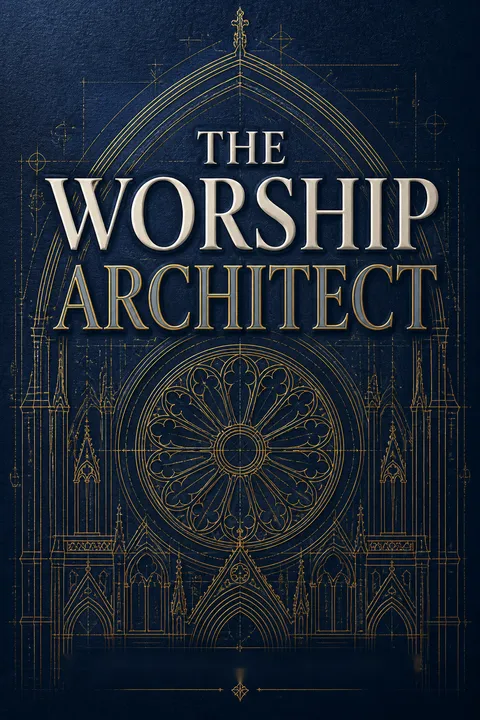
The Worship Architect receives generally positive reviews (4.02/5), praised for its theological grounding and practical application. Readers appreciate Cherry's fourfold worship structure (Gathering, Word, Table, Sending), detailed treatment of music and prayer, and helpful questions for reflection. The book advocates for Christocentric, participatory worship combining historical and contemporary elements. Critics note it can be wordy, repetitive, and overly performance-oriented. Some find it better suited for traditional churches and intellectual readers. Many reviewers value its thoroughness in covering corporate worship design, though a few desire more theological depth and disagree with certain emphases.
People Also Read

Download PDF
Download EPUB
.epub digital book format is ideal for reading ebooks on phones, tablets, and e-readers.








































