
Résumé de l'intrigue
The Gambler's Last Coin
Raphael de Valentin, a young man on the brink of suicide, enters a gambling house with his last coin. The atmosphere is thick with the misery and hope of those who have nothing left but chance. Raphael's loss is swift and absolute, leaving him with nothing but the weight of his own despair. Wandering through Paris, he contemplates ending his life, feeling invisible among the city's indifferent crowds. His journey is marked by fleeting encounters—a beggar, a beautiful woman, the cold river—each underscoring his isolation and the futility of his dreams. The city's grandeur and squalor mirror his internal chaos, setting the stage for a fateful encounter that will alter the course of his existence.
The Talisman's Fatal Promise
Seeking distraction before his planned suicide, Raphael enters a curiosity shop filled with relics of lost civilizations. The enigmatic shopkeeper offers him a strange piece of shagreen—wild ass's skin—inscribed with a promise: it will grant any wish, but with each fulfilled desire, the skin and Raphael's life will shrink. The old man warns that only a life without desire can preserve him. Dismissing the warning, Raphael impulsively wishes for a night of pleasure and is swept away to a lavish banquet. The talisman's power is real, but its cost is hidden. Raphael's fate is sealed by his own longing, and the pact is made: every wish will consume his remaining days.
Visions in the Curiosity Shop
Before the talisman's revelation, Raphael is overwhelmed by the shop's chaotic treasures—artifacts from every era and culture, each a testament to human striving and folly. He is drawn into a feverish reverie, seeing the rise and fall of empires, the fleetingness of beauty, and the futility of ambition. The shop becomes a mirror of his own soul: filled with potential, yet haunted by decay. The old shopkeeper, both godlike and diabolical, embodies the wisdom and cynicism of age. This vision foreshadows Raphael's journey—a life that will burn brightly, but briefly, as he chases fulfillment in a world that offers only illusions.
The Pact and the Banquet
Raphael's first wish is granted with uncanny precision: he is swept into a night of revelry, surrounded by Paris's brightest minds and most beautiful women. The banquet is a microcosm of society—brilliant, cynical, and hungry for sensation. Raphael is both participant and observer, intoxicated by pleasure yet aware of its emptiness. The talisman's magic is subtle but inexorable; with each wish, the skin contracts imperceptibly. The night's excesses leave Raphael with a sense of foreboding. The fulfillment of desire, he senses, is inseparable from loss. The pact is no longer abstract; it is a living force, shaping his destiny with every passing moment.
The Woman Without a Heart
Raphael becomes obsessed with Foedora, a beautiful and enigmatic countess whose heart seems impervious to love. He pursues her with all the fervor of a man who believes happiness lies just beyond his grasp. Foedora is a mirror to his own longing—elegant, untouchable, and ultimately empty. Despite his sacrifices and confessions, she remains unmoved, her affections reserved for herself alone. Raphael's passion turns to bitterness as he realizes that some desires can never be satisfied. Foedora's indifference is both a personal wound and a symbol of a society that prizes appearances over feeling. Her rejection drives Raphael deeper into despair and self-destruction.
The Scholar's Solitude
After Foedora's rejection, Raphael withdraws from society, embracing a life of ascetic study in a garret. He survives on meager rations, pouring his energy into a philosophical treatise on the will. His only solace comes from the quiet presence of Pauline, the landlady's daughter, whose gentle care sustains him. Raphael's intellectual ambitions are both a refuge and a torment; he dreams of greatness but is haunted by the futility of effort in a world governed by chance and indifference. The solitude sharpens his awareness of the gap between desire and reality, preparing him for the tragic bargain he has made with the talisman.
Pauline's Quiet Devotion
Pauline, humble and devoted, becomes Raphael's silent guardian. She tends to his needs, supports him with small acts of kindness, and loves him without hope of return. Her affection is pure, untainted by ambition or vanity. In contrast to Foedora's coldness, Pauline's love is selfless and sustaining. She represents the possibility of happiness rooted in simplicity and mutual care, yet Raphael, blinded by grander desires, fails to recognize her worth. Pauline's quiet presence is a counterpoint to the tumult of Raphael's passions—a reminder that true fulfillment may lie in the overlooked and ordinary.
Foedora's Enigma
Foedora remains an enigma—desired by many, possessed by none. Raphael's pursuit of her becomes a metaphor for the endless chase after unattainable ideals. Her beauty and charm are masks for a profound emptiness; she is incapable of love, and her relationships are transactional. Raphael's infatuation with Foedora drains his spirit and resources, leading him to the brink of ruin. The more he desires her, the more elusive she becomes. Foedora's role in Raphael's life is that of a siren, luring him toward self-destruction. Her coldness is both a personal tragedy and a commentary on the hollowness of social ambition.
Descent into Debauchery
In the aftermath of heartbreak, Raphael plunges into a life of excess—gambling, feasting, and sensual indulgence. The talisman grants his every wish, but each pleasure is tinged with anxiety, as he watches the skin shrink with every gratification. The pursuit of sensation becomes a desperate attempt to escape the emptiness at his core. Raphael's companions are equally lost, their brilliance masking a deep cynicism. The more he consumes, the less satisfied he becomes. The cycle of desire and fulfillment accelerates his decline, and the talisman's curse becomes inescapable. Pleasure, once a promise of happiness, is revealed as a path to annihilation.
The Curse of Fulfilled Wishes
An unexpected inheritance makes Raphael fabulously wealthy, but the talisman's curse intensifies. Every wish—no matter how trivial—shortens his life. He becomes obsessed with preserving the skin, attempting to live without desire, but finds it impossible. Science and reason offer no escape; the skin resists all attempts to stretch or destroy it. Raphael's existence becomes a paradox: surrounded by luxury and power, he is a prisoner of his own wishes. The more he tries to control his fate, the more it slips away. The curse is not in the talisman, but in the nature of desire itself.
The Inheritance and the Shrinking Skin
Desperate to escape his doom, Raphael consults scientists, doctors, and philosophers, seeking a rational solution to the talisman's power. Each expert offers a different theory, but none can alter the skin's relentless contraction. The limits of human knowledge are laid bare; the mysteries of life and death remain unsolved. Raphael's attempts to live without desire are futile—every impulse, every wish, even the wish not to wish, consumes him. The inheritance that once promised freedom becomes a gilded cage. The shrinking skin is both a literal and symbolic measure of his dwindling time.
Pauline's Return
In the midst of despair, Raphael is reunited with Pauline, now wealthy and independent. Her love offers a brief respite from the curse; for a moment, he believes he can escape fate through genuine affection. Their reunion is tender and passionate, filled with the hope of a shared future. Pauline's devotion rekindles Raphael's desire for life, but also accelerates the talisman's contraction. The paradox is complete: the very happiness he seeks hastens his end. Pauline's love is both salvation and doom, a final test of whether fulfillment can coexist with mortality.
The Final Embrace
Raphael and Pauline's love reaches its consummation, but the cost is immediate and fatal. The last wish, the final embrace, exhausts the talisman's power and Raphael's life. In their union, pleasure and death become inseparable. Pauline's grief is absolute; her love, which might have saved him, instead becomes the instrument of his destruction. The tragedy is complete: the pursuit of desire, even in its purest form, leads inexorably to loss. The final moments are both ecstatic and harrowing, a testament to the impossibility of reconciling infinite longing with finite existence.
The Death Agony
Raphael's final days are marked by physical decline and existential torment. Surrounded by doctors, friends, and the trappings of wealth, he is isolated by the knowledge of his impending death. Science, philosophy, and religion offer no comfort; the mystery of life's brevity remains unsolved. Pauline's presence is both a balm and a torment, as every moment of happiness is paid for with a piece of his life. In the end, Raphael succumbs not to illness, but to the inexorable logic of his own wishes. His death is both a personal tragedy and a universal parable about the limits of human desire.
The Epilogue of Desire
After Raphael's death, the narrative turns reflective, questioning the meaning of his story. Pauline's fate is left ambiguous, her love transformed into legend. Foedora becomes a symbol of society's endless, empty pursuit of novelty. The wild ass's skin is revealed as a metaphor for the human condition: every wish, every act of consumption, diminishes the self. The novel closes with a meditation on the paradox of desire—how the pursuit of fulfillment leads to exhaustion, and how only by renouncing the chase can one find peace. The story lingers as a cautionary tale, urging readers to consider the true cost of their longings.
Analysis
A modern parable of desire and mortalityThe Wild Ass's Skin is a profound meditation on the nature of desire, the limits of fulfillment, and the inescapability of death. Through the story of Raphael, Balzac explores the paradox that the pursuit of happiness—when defined as the satisfaction of every wish—inevitably leads to exhaustion and despair. The talisman is both a supernatural device and a metaphor for the human condition: every act of consumption, every fulfilled longing, diminishes the self. The novel critiques the illusions of modernity—scientific progress, social ambition, and romantic idealism—revealing their inability to provide lasting meaning. Pauline's selfless love offers a glimpse of redemption, but even this is ultimately consumed by the logic of desire. The narrative's shifting tones—by turns ironic, sentimental, and philosophical—invite readers to question their own assumptions about happiness and success. In an age obsessed with limitless possibility, Balzac's cautionary tale remains strikingly relevant, reminding us that true contentment may lie not in the endless pursuit of more, but in the acceptance of limits and the cultivation of genuine connection.
Résumé des avis
Readers of The Wild Ass's Skin largely appreciate Balzac's rich prose, sharp social critique, and philosophical depth, though some find the protagonist Raphaël unlikeable and self-absorbed. The novel's fantastical premise — a magical talisman granting wishes at the cost of the owner's lifespan — draws comparisons to Faust and Dorian Gray. Many praise Balzac's panoramic portrayal of Parisian society and timeless insights into human desire, ambition, and mortality, while others find the lengthy descriptions and digressions tedious despite acknowledging the author's undeniable literary genius.
Les lecteurs ont aussi lu


Characters
Raphael de Valentin
Raphael is the novel's tragic protagonist, a young man of immense potential whose life is consumed by longing. Orphaned and impoverished, he oscillates between intellectual ambition and sensual craving. His psychological complexity is rooted in a deep sense of inadequacy and a desperate need for love and recognition. The talisman amplifies his fatal flaw: an inability to moderate desire. Raphael's relationships—with Foedora, Pauline, and society—mirror his internal struggle between idealism and cynicism. As the skin shrinks, so does his capacity for hope, until he is left with nothing but regret. His journey is a meditation on the destructive power of unchecked longing and the impossibility of escaping one's own nature.
Pauline Gaudin
Pauline is Raphael's quiet savior, a figure of unwavering devotion and gentle strength. Raised in poverty, she supports her mother and later Raphael with humility and grace. Her love is unconditional, expressed through small acts of care rather than grand gestures. Pauline's psychological resilience contrasts with Raphael's volatility; she finds meaning in service and connection. As the story unfolds, her affection becomes both a source of hope and a catalyst for tragedy. Pauline's ultimate sacrifice—her willingness to die for Raphael—underscores the novel's exploration of love's redemptive and destructive capacities. She is the heart of the narrative, representing the possibility of happiness rooted in simplicity and mutual care.
Foedora
Foedora is the object of Raphael's obsessive desire, a beautiful and enigmatic countess whose allure lies in her emotional inaccessibility. She is a master of social performance, captivating men with her wit and charm while remaining fundamentally detached. Foedora's psychological makeup is defined by vanity, self-sufficiency, and a fear of vulnerability. Her relationships are transactional, and she is incapable of genuine intimacy. Foedora serves as both a personal tormentor to Raphael and a symbol of a society that values appearance over substance. Her coldness is a mirror to Raphael's own emptiness, and her rejection propels him toward self-destruction.
Jonathas
Jonathas is Raphael's faithful steward, embodying the virtues of loyalty, discretion, and practical wisdom. Having served Raphael's family for years, he becomes the intermediary between Raphael and the world, managing his affairs with meticulous care. Jonathas's devotion is unwavering, even as he watches his master's decline with helpless sorrow. Psychologically, he represents the stability and continuity that Raphael lacks. His presence is a reminder of the value of constancy and the tragedy of witnessing a loved one's self-destruction. Jonathas's silent suffering adds a layer of pathos to the narrative, highlighting the collateral damage of Raphael's choices.
The Antique Dealer
The antique dealer is a figure shrouded in ambiguity—part sage, part trickster, part Mephistopheles. He offers Raphael the talisman, setting the story's central conflict in motion. His psychological detachment and cryptic wisdom suggest a deep understanding of human nature and the dangers of desire. The dealer's warnings are both sincere and mocking, challenging Raphael to confront the consequences of his wishes. He serves as a narrative device, embodying the supernatural element of the story and forcing the protagonist to grapple with the limits of free will. The dealer's role is that of a catalyst, initiating the tragic chain of events that follow.
Émile
Émile is one of Raphael's companions, a journalist whose wit and skepticism provide a counterpoint to the protagonist's intensity. He is quick with a joke, adept at navigating the social world, and largely immune to the deeper currents of passion that drive Raphael. Psychologically, Émile represents the modern, disenchanted intellect—brilliant but detached, capable of analyzing everything and committing to nothing. His friendship with Raphael is marked by both camaraderie and incomprehension; he cannot fully grasp the depth of Raphael's suffering. Émile's presence in the narrative highlights the contrast between irony and sincerity, and the limitations of intellect in matters of the heart.
Madame Gaudin
Pauline's mother, Madame Gaudin, is a woman marked by hardship and resilience. She manages the boarding house where Raphael lives during his period of poverty, providing a stable, if modest, environment. Her psychological strength lies in her ability to endure adversity with dignity and hope. She supports her daughter's education and well-being, embodying the virtues of sacrifice and perseverance. Madame Gaudin's relationship with Raphael is one of quiet support, and her eventual rise in fortune mirrors the novel's theme of the unpredictability of fate. She represents the enduring power of maternal love and the possibility of redemption through steadfastness.
Rastignac
Rastignac is a recurring figure in Balzac's universe, here serving as Raphael's worldly friend and advisor. He is pragmatic, charming, and adept at navigating the complexities of Parisian society. Rastignac's psychological makeup is defined by ambition and adaptability; he is willing to bend principles to achieve success. His relationship with Raphael is both supportive and cautionary—he encourages risk-taking but also exemplifies the dangers of compromise. Rastignac's presence in the story underscores the tension between idealism and pragmatism, and the seductive allure of social advancement.
The Scientists and Doctors
A parade of scientists, doctors, and philosophers attempt to explain or cure the talisman's power, each representing a different school of thought—materialism, vitalism, skepticism. Their psychological profiles are marked by confidence in their respective disciplines, but ultimately, they are powerless in the face of the supernatural. Their failure to help Raphael exposes the limits of human knowledge and the inadequacy of reason in confronting the mysteries of existence. These characters serve as a collective foil to the novel's metaphysical themes, illustrating the gap between theory and reality.
Aquilina and Euphrasie
Aquilina and Euphrasie are courtesans who populate the world of Parisian pleasure. They are embodiments of sensuality, wit, and survival, navigating the dangers and opportunities of their environment with skill. Psychologically, they are both victims and agents of the society that exploits and discards them. Their interactions with Raphael and his circle highlight the transactional nature of desire and the fleetingness of pleasure. Aquilina's tragic past and Euphrasie's cynicism add depth to their portrayals, making them more than mere caricatures. They serve as reminders of the costs of a life devoted to sensation and the vulnerability of those who live on society's margins.
Plot Devices
The Talisman (Wild Ass's Skin)
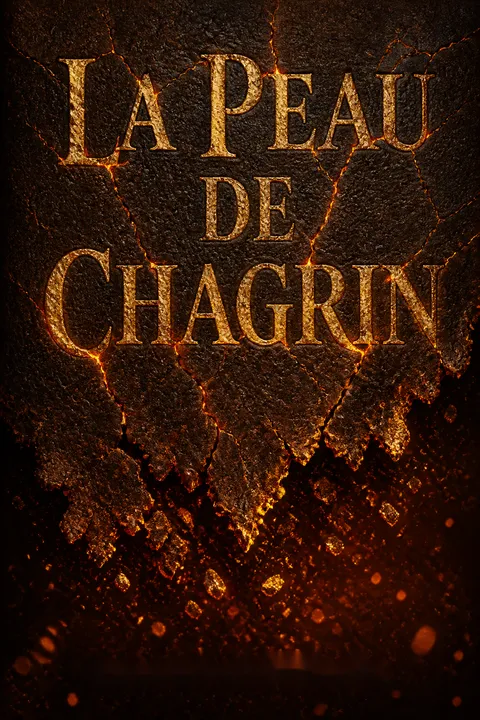
The talisman is the novel's central plot device—a magical piece of wild ass's skin that grants its owner's every wish, shrinking with each fulfillment and thus shortening his life. It serves as both a literal and symbolic representation of desire's double-edged nature. The talisman externalizes Raphael's internal struggle, making the consequences of longing immediate and visible. Its inexorable contraction creates narrative tension, as every choice becomes a matter of life and death. The talisman also functions as a critique of consumer culture and the illusion of limitless fulfillment. Its supernatural qualities force characters and readers alike to confront the paradox that the pursuit of happiness may be self-defeating.
Framing Narrative and Confession
The novel employs a complex narrative structure, alternating between third-person narration and Raphael's first-person confession. This layering allows for both ironic distance and emotional intimacy, inviting readers to judge and empathize with the protagonist. The confession serves as a psychological case study, revealing Raphael's motivations, regrets, and self-deceptions. The framing device also enables Balzac to comment on the act of storytelling itself, blurring the lines between reality and fantasy, author and character. The narrative's self-awareness deepens its philosophical inquiry, making the reader complicit in the search for meaning.
Foreshadowing and Symbolism
Balzac weaves foreshadowing throughout the novel, using recurring images—such as the shrinking skin, the river, and the curiosity shop—to hint at future developments. Symbolism is pervasive: the talisman represents the finite nature of life; Foedora embodies unattainable ideals; Pauline symbolizes redemptive love. The city of Paris itself is a character, reflecting the protagonist's inner turmoil. These devices create a sense of inevitability, reinforcing the novel's themes of fate, mortality, and the limits of human agency. The interplay of symbols and narrative events invites readers to look beyond the surface and consider the deeper implications of desire and fulfillment.
Satire and Social Critique
The novel is rich in satire, targeting the pretensions of Parisian society, the emptiness of social ambition, and the inadequacies of science and philosophy. Banquets, salons, and scientific consultations are depicted with biting irony, exposing the gap between appearance and reality. Characters are often caricatured, their flaws exaggerated to highlight broader social ills. This satirical lens allows Balzac to critique not only individual failings but also the cultural forces that shape desire and identity. The humor is both playful and dark, serving as a counterpoint to the novel's tragic elements and deepening its philosophical resonance.
La Comédie Humaine Série


Télécharger le PDF
Télécharger l'EPUB
.epub digital book format is ideal for reading ebooks on phones, tablets, and e-readers.








































