
Plot Summary
Haunted by False Memories
Rachel, institutionalized since childhood, is tormented by the belief that she killed her mother and caused her father's suicide. Her memories are vivid but unreliable, haunted by visions of holding a rifle over her mother's body. The world, including her therapists and the ever-present spider in her room, doubts her confession. Rachel's life is a cycle of regret, punishment, and isolation, her identity shaped by a crime she's certain she committed but no one else believes. The emotional weight of her supposed actions keeps her locked in a mental hospital, unable to move forward, her sense of self-worth shattered by the past.
The Locked-Away Years
Inside the mental hospital, Rachel's world is bleak and regimented. She forms a rare friendship with Scotty, a gentle, childlike patient, and harbors a crush on his brother Trevor, who visits and eventually interviews her. Rachel's days are marked by routine, loneliness, and the constant presence of guilt. She is disconnected from her family, especially her sister Diana, and her only solace comes from small comforts—her stuffed bear, cigarettes, and the company of spiders. The hospital is both her punishment and her refuge, a place where she can hide from the world and her own memories.
A Shattering Revelation
During Trevor's interview, Rachel is confronted with the police report: the rifle that killed her mother was too large for an eleven-year-old to fire. The medical examiner's findings exonerate her physically—she could not have pulled the trigger. This revelation upends everything Rachel believed about herself. Fifteen years of self-imposed punishment are suddenly rendered meaningless. The emotional impact is devastating; Rachel is left adrift, questioning her memories, her identity, and the purpose of her suffering. The truth is both liberating and destabilizing, forcing her to reconsider her entire life.
Seeds of Darkness
In flashbacks, Jenny, Rachel's mother, recounts the family's move to an isolated lodge after a neighbor's child drowns in their pool—an event Jenny suspects her daughter Diana was involved in. Jenny's unease grows as Diana's disturbing behaviors escalate: tantrums, lies, and a chilling lack of empathy. The family's attempt to start anew in the wilderness is shadowed by Jenny's fear that something is fundamentally wrong with Diana. The isolation intended to heal the family instead becomes a crucible for darkness, as Jenny's maternal instincts clash with denial and hope.
Exile to the Wilderness
The Cunninghams' move to the Upper Peninsula is both an escape and a trap. Jenny and Peter, both wildlife biologists, immerse themselves in research, while Diana's behavior becomes increasingly erratic. The wilderness, meant to be a sanctuary, amplifies the family's dysfunction. Diana's manipulations, Jenny's exhaustion, and Peter's withdrawal create a tense, volatile environment. The isolation strips away social constraints, exposing the family's vulnerabilities and setting the stage for tragedy. The lodge, surrounded by forest and secrets, becomes both a fortress and a prison.
The Bear and the Gun
Rachel's childhood is marked by her love for bears and her uneasy relationship with guns. Under the influence of her aunt Charlotte and her sister Diana, Rachel learns to shoot, despite her parents' disapproval. The gun range becomes a site of both bonding and betrayal. Diana's fascination with power and control is evident in the games she plays, often at Rachel's expense. The pivotal moment—Rachel's coerced shooting of White Bear, the rare albino bear she loves—becomes a traumatic memory, manipulated by Diana and later conflated with her parents' deaths.
Sisterhood and Survival
The sisters' relationship is fraught with rivalry, manipulation, and moments of twisted intimacy. Diana dominates Rachel, orchestrating dangerous games and psychological torment. Rachel, desperate for approval and connection, becomes complicit in Diana's schemes, even as she suffers under her cruelty. Their shared isolation intensifies their bond, making it both inescapable and destructive. The line between victim and accomplice blurs, as Rachel's longing for love is weaponized by Diana's psychopathy. The emotional landscape is one of fear, dependency, and suppressed rage.
The Psychopath's Mask
Jenny and Peter, desperate for answers, seek help for Diana. The diagnosis—childhood psychopathy—offers both explanation and despair. Diana's manipulations, lack of remorse, and calculated cruelty are confirmed by professionals, but the family struggles to accept the implications. Jenny is torn between love and fear, unable to reconcile her daughter's charm with her capacity for harm. The family's attempts at therapy, discipline, and hope are ultimately futile. Diana's condition is immutable, her mask of normalcy slipping only in moments of calculated violence.
Games in the Shadows
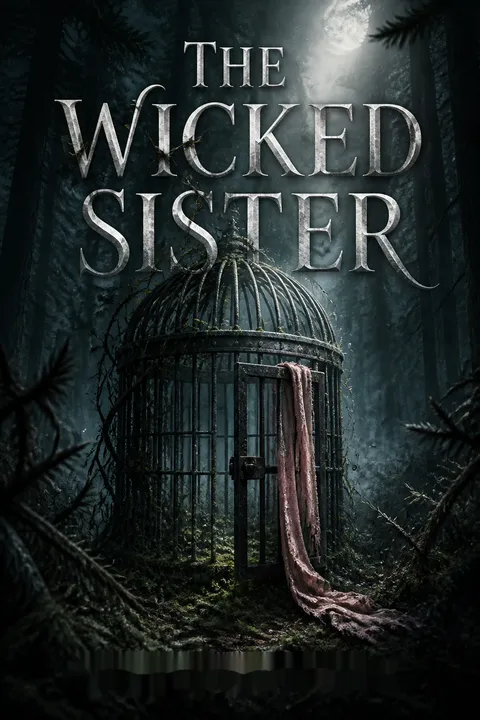
Diana's obsession with fairy tales manifests in dangerous reenactments. She locks Rachel in a cage, playing Hansel and Gretel with chilling literalness, and prepares to kill her sister under the guise of a game. Jenny's timely intervention saves Rachel, but the incident exposes the depth of Diana's depravity and Charlotte's enabling. The family's internal alliances shift, as Jenny realizes the threat Diana poses is existential. The lodge, once a place of safety, becomes a stage for horror, its fairy-tale trappings masking real danger.
The Cage and the Knife
The aftermath of the cage incident is a turning point. Jenny confronts Peter and Charlotte, demanding accountability and action. Diana's punishment is temporary and ineffective; her rage simmers beneath the surface. The family fractures further, with Charlotte siding with Diana and Jenny isolated in her fear. The threat of violence becomes ever-present, as Diana's games escalate from psychological torment to physical danger. The knife, both a tool and a symbol, represents the thin line between play and murder in Diana's hands.
The Roadside Secret
A family picnic at a roadside park becomes a moment of horror when a young girl goes missing and is later found dead. Rachel's recovered memories reveal that she and Diana were complicit in the girl's death—Diana orchestrated it, and Rachel, under her sister's sway, helped. The event is a microcosm of the sisters' dynamic: Diana's predatory nature and Rachel's desperate need for approval leading to tragedy. The secret festers, poisoning Rachel with guilt and further entangling her in Diana's web.
The Return Home
Armed with the knowledge that she did not kill her mother, Rachel leaves the hospital and returns to the lodge. Her goal is to uncover the truth about her parents' deaths and confront Diana. The homecoming is fraught with danger—Diana and Charlotte are plotting to have Rachel recommitted and to sell the family land. Rachel hides within the house, gathering evidence and piecing together her fragmented memories. The lodge is both a battleground and a labyrinth, filled with ghosts, secrets, and the looming threat of violence.
The Spider's Warning
Rachel's ability to communicate with animals and insects becomes a source of guidance and warning. The spider's cryptic message—"things are not as they seem"—alerts Rachel to hidden dangers. Diana escalates her psychological warfare, leaving Rachel tokens of past crimes and reminders of her complicity. The supernatural elements blur the line between reality and hallucination, heightening the sense of paranoia and dread. Rachel's struggle is as much internal as external, as she battles both her sister and her own fractured psyche.
The Dead Girl's Scarf
Rachel's memories of the roadside park resurface, along with the pink scarf—a symbol of her complicity in the girl's death. Diana's taunts become more direct, culminating in a deadly game of cat and mouse. Rachel's guilt is overwhelming, but so is her determination to survive and expose the truth. The sisters' final confrontation is inevitable, as the past and present collide in a struggle for justice and redemption. The scarf, once a token of innocence, becomes an emblem of loss and reckoning.
The Family's Undoing
Rachel's recovered memories reveal the full extent of Diana and Charlotte's crimes: the murder of their parents, the framing of Rachel's father, and the cover-up that followed. The family's undoing is complete—love twisted into hatred, loyalty into betrayal. The lodge, once a symbol of sanctuary, is now a mausoleum of secrets. Rachel's quest for truth is both a personal and moral imperative, as she seeks to honor her parents and free herself from the cycle of violence.
The Final Hunt
Rachel and Trevor, now allies, attempt to escape the lodge as Diana and Charlotte hunt them through the wilderness. The chase is both physical and psychological, with Rachel drawing on her survival skills and her connection to the natural world. The bear's den, once a place of refuge, becomes the site of the final confrontation. The boundaries between hunter and hunted blur, as Rachel is forced to confront the darkness within herself and her family. The climax is brutal, cathartic, and inevitable.
Truth in the Den
In the bear's den, Rachel's memories return in full: the coerced shooting of White Bear, witnessing her parents' murders, and the realization of Charlotte's complicity. The truth is both devastating and liberating. Rachel survives the final confrontation, killing Diana in self-defense and exposing the family's crimes. The cycle of violence is broken, but at great cost. Rachel's journey from victim to survivor is complete, her identity reclaimed through truth and action.
The End and After
In the aftermath, Rachel struggles to rebuild her life. The lodge is both a place of trauma and potential healing. With Trevor's support, she begins to envision a future beyond guilt and fear. The legal consequences for Diana and Charlotte are resolved, and Rachel is finally free from their shadow. The process of healing is slow and uncertain, but hope emerges from the wreckage. Rachel's connection to the natural world, her love for bears, and her newfound agency offer the possibility of redemption.
A New Beginning
Years later, Rachel has built a new life at the lodge with Trevor, their daughter, and Scotty. The ghosts of the past linger, but they no longer define her. Rachel honors her parents' legacy through her research and her family, choosing to live in the present rather than the past. The lodge, once a site of horror, is transformed into a home filled with love and possibility. Rachel's story ends not with vengeance, but with forgiveness, resilience, and the hope of a happy ending.
Analysis
Karen Dionne's The Wicked Sister is a masterful exploration of trauma, memory, and the corrosive effects of unchecked evil within a family. Through its dual timelines and psychologically rich characters, the novel interrogates the nature of guilt, complicity, and the desperate human need for love and belonging. At its core, the story is a dark fairy tale—one that subverts the tropes of innocence and wickedness, revealing the complexity of both victim and villain. The wilderness setting amplifies the sense of isolation and danger, while also offering the possibility of healing and transformation. The novel's use of unreliable memory, supernatural symbolism, and psychological suspense creates a narrative that is both gripping and deeply unsettling. Ultimately, The Wicked Sister is a meditation on the power of truth to break cycles of violence and shame, and on the resilience required to reclaim one's life from the shadows of the past. Its lessons are both cautionary and hopeful: that evil, left unchallenged, will destroy, but that even in the darkest of forests, there is a path to redemption and peace.
Review Summary
Reviews for The Wicked Sister are generally positive, averaging 3.79/5. Readers praise Karen Dionne's atmospheric writing, particularly her vivid descriptions of Michigan's Upper Peninsula wilderness. The dual timeline narrative, alternating between Rachel's present-day psychiatric journey and her mother Jenny's past, is widely appreciated. Many enjoyed the dark, fairy-tale-like quality and psychological tension. Common criticisms include predictability, underdeveloped characters, and disturbing animal cruelty scenes. Fans of The Marsh King's Daughter frequently note that earlier novel remains superior, though most found this an engaging, unsettling read.
People Also Read





Characters
Rachel Cunningham
Rachel is the novel's protagonist, a woman whose life is defined by trauma, guilt, and the search for redemption. As a child, she believed she killed her mother and caused her father's suicide, leading to fifteen years in a mental institution. Rachel is deeply empathetic, sensitive, and intelligent, but also vulnerable to manipulation—especially by her older sister, Diana. Her psychological journey is one of unraveling false memories, confronting the reality of her family's dysfunction, and reclaiming her agency. Rachel's relationships—with her parents, her sister, her aunt, and later Trevor—are marked by longing, betrayal, and the desperate need for connection. Her development is a hard-won transformation from victim to survivor, her identity forged in the crucible of truth and self-acceptance.
Diana Cunningham
Diana is Rachel's older sister and the novel's central antagonist. From childhood, Diana exhibits classic signs of psychopathy: lack of empathy, manipulativeness, charm, and a chilling capacity for violence. She dominates Rachel, orchestrates dangerous games, and is implicated in multiple deaths—including those of her parents and a young girl. Diana's relationship with Rachel is both intimate and predatory, her love expressed through control and cruelty. Her alliance with Aunt Charlotte amplifies her power, creating a toxic dynamic that endangers everyone around her. Diana's psychological complexity lies in her ability to mask her true nature, presenting a facade of normalcy while harboring dark intentions. Her ultimate downfall is precipitated by her own hubris and Rachel's determination to break free.
Jenny Cunningham
Jenny, Rachel and Diana's mother, is a wildlife biologist whose love for her family is matched only by her growing dread of her eldest daughter. Jenny's narrative, told in flashbacks, reveals a woman struggling to reconcile maternal love with the reality of Diana's psychopathy. Her attempts to protect Rachel and save Diana are ultimately futile, her denial and hope weaponized against her. Jenny's psychological arc is one of increasing isolation, fear, and helplessness, culminating in her murder. Her legacy is both a cautionary tale and a source of strength for Rachel, whose journey is shaped by her mother's love and sacrifice.
Peter Cunningham
Peter, Jenny's husband and the girls' father, is a gentle, intelligent man overwhelmed by the family's dysfunction. His retreat into research and passivity leaves Jenny isolated and Rachel vulnerable. Peter's inability to confront Diana's behavior or support Jenny's fears contributes to the family's unraveling. His love for his daughters is genuine, but his denial and avoidance are ultimately fatal. Peter's tragic arc underscores the dangers of inaction in the face of evil, his death a catalyst for the novel's climax.
Charlotte
Charlotte, Jenny's sister and the girls' aunt, is initially a source of warmth and support. Over time, her alliance with Diana becomes toxic, fueled by her own need for belonging and purpose. Charlotte enables Diana's behavior, undermines Jenny's authority, and ultimately becomes complicit in murder. Her psychological profile is one of dependency, denial, and moral blindness. Charlotte's transformation from loving aunt to accomplice is both shocking and believable, her final actions a tragic testament to the power of manipulation and misplaced loyalty.
Trevor
Trevor, Scotty's brother and a journalist, enters Rachel's life as an interviewer but becomes her confidant and eventual partner. His curiosity, empathy, and determination to uncover the truth make him both a catalyst for Rachel's transformation and a target for Diana's wrath. Trevor's outsider perspective allows him to see the family's dysfunction clearly, and his support is instrumental in Rachel's survival and healing. His relationship with Rachel is marked by mutual respect, trust, and the possibility of love—a stark contrast to the toxic dynamics of her family.
Scotty
Scotty, a gentle, developmentally disabled patient at the mental hospital, is Rachel's only true friend during her years of institutionalization. His innocence, kindness, and acceptance provide Rachel with a rare sense of belonging and comfort. Scotty's vulnerability highlights the cruelty of the world Rachel inhabits, and his eventual rescue and inclusion in Rachel's new family symbolize hope and redemption.
White Bear
White Bear, the rare albino bear Rachel befriends as a child, is both a literal and symbolic figure. His death, orchestrated by Diana and executed by Rachel under duress, becomes the central trauma of Rachel's life—conflated with her parents' deaths and the loss of innocence. White Bear's presence haunts Rachel, his memory a source of both pain and guidance. His forgiveness, real or imagined, is crucial to Rachel's healing.
Jenny's Unborn Son
The death of Jenny's unborn son, caused by Diana's actions, is a silent but powerful undercurrent in the family's story. His loss deepens Jenny's grief, amplifies the sense of injustice, and underscores the generational consequences of unchecked evil.
The Spider and the Raven
The spider and the raven, with whom Rachel communicates, serve as both literal and metaphorical guides. Their cryptic messages—warnings, omens, and prompts to remember—reflect Rachel's fractured psyche and the novel's fairy-tale undertones. They embody the interplay between nature, memory, and the supernatural, guiding Rachel toward truth and survival.
Plot Devices
Dual Timelines and Unreliable Memory
The novel employs a dual timeline structure, alternating between Rachel's present-day quest for truth and Jenny's flashbacks to the family's unraveling. This structure creates suspense, gradually revealing the events that led to the tragedy. Rachel's unreliable memory is a central device—her visions, dreams, and recovered memories blur the line between reality and fantasy, mirroring the psychological impact of trauma. The gradual restoration of memory, aided by supernatural elements (the spider and the raven), drives the narrative toward revelation and catharsis.
Fairy Tale Motifs and Symbolism
The use of fairy tale motifs—Hansel and Gretel, Snow White, the wicked sister—infuses the narrative with a sense of mythic inevitability. Diana's games literalize these stories, turning play into peril. The lodge itself, with its fairy-tale architecture and isolation, becomes a character, both enchanted and cursed. Symbols such as the bear, the rifle, the scarf, and the knife recur throughout, embodying innocence, violence, guilt, and the possibility of redemption.
Psychological Suspense and Gaslighting
The novel's suspense is rooted in psychological manipulation—Diana's gaslighting of Rachel, the family's denial, and the shifting alliances within the household. The reader, like Rachel, is kept off-balance, unsure of what is real and what is imagined. Foreshadowing, misdirection, and the gradual unveiling of secrets create a sense of mounting dread, culminating in a series of confrontations that force the truth into the open.
Nature as Mirror and Refuge
The Upper Peninsula's wilderness is both setting and symbol—a place of beauty, danger, and transformation. The natural world mirrors the family's internal chaos, while also offering refuge and guidance to Rachel. Her survival skills, connection to animals, and eventual return to the forest are integral to her journey. The bear's den, in particular, serves as both a literal and metaphorical sanctuary, a place where truth is confronted and healing begins.
Justice, Redemption, and the Cycle of Violence
The novel interrogates the nature of justice—legal, moral, and personal. Rachel's journey is one of breaking the cycle of violence and complicity that has defined her family. The final confrontations, marked by self-defense and the exposure of past crimes, offer the possibility of redemption—not through vengeance, but through truth, accountability, and the choice to build a new life.
Download PDF
Download EPUB
.epub digital book format is ideal for reading ebooks on phones, tablets, and e-readers.








































