
Key Takeaways
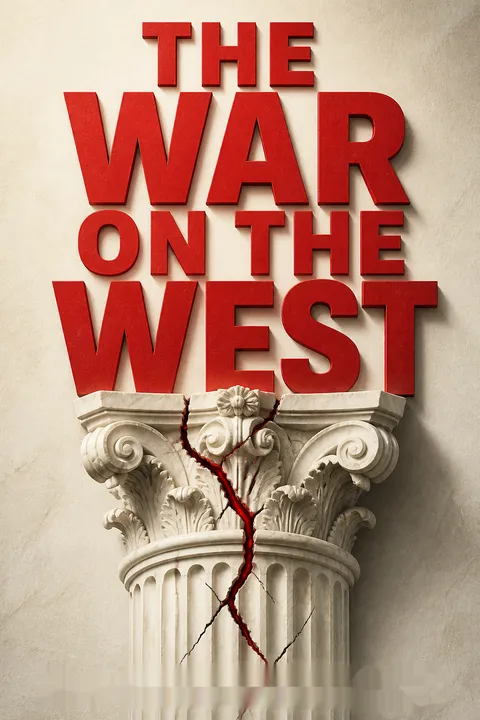
1. The West is under a cultural war of self-hatred.
In recent years it has become clear that there is a war going on: a war on the West.
A cultural conflict. This war is not fought with armies but culturally, targeting the very roots and positive productions of the Western tradition. Initially subtle, it has become overtly clear, corrupting language where "equality" means unequal rights, "anti-racism" sounds racist, and "justice" implies revenge. This assault encompasses the West's past, present, and future, trapping it in a cycle of unending punishment.
Unbalanced criticism. The author notes a consistent pattern across Western countries—Europe, America, Canada, Australia—where they are uniquely pressured to alter their demographic makeup and question their legitimacy. This pressure stems from a "barely disguised loathing" for these nations, suggesting they have committed wrongs for which they must atone, positioning the West as "the problem" and its dissolution as "a solution." Other nations, like China, are expected to remain as they are.
Erosion of identity. This cultural war extends to identity politics, breaking down Western societies by sex, sexuality, and race, replacing national identity with divisive group affiliations. Minorities who integrate or admire the West are often labeled "race traitors," while radicals are venerated. This creates a warped perception where, despite significant progress in racial equality, the situation is presented as worse than ever, pushing societies into "racial ultra-awareness" rather than color blindness.
2. "Whiteness" is being demonized, creating a new form of racism.
To delegitimize the West, it appears to be necessary first to demonize the people who still make up the racial majority in the West.
Targeting the majority. The cultural war explicitly targets white people, normalizing what the author describes as the only acceptable form of racism in Western societies. This demonization is evident in public reactions, such as studio audiences cheering the decline in the number of white people in America, or public figures dismissing individuals based on their "white male" identity, regardless of their achievements or service.
Dismissal by race. The author recounts an incident where a decorated four-star general's lifetime of service was dismissed by an opponent simply because he was a "white man." This illustrates a shift from treating individuals based on merit to reducing them to their racial group, a practice previously condemned as racism. The ideal of a color-blind society, championed by figures like Martin Luther King Jr., has been replaced by a new "racial ultra-awareness."
New racial categories. This new form of racism extends to creating new, often contradictory, racial categories and accusations. For example, the concept of "multiracial whiteness" emerged to explain minority votes for Republican candidates, effectively turning "black" and "white" into synonyms for "good" and "bad." This framework ensures that love for one's society is treated as a negative, and any dissent from the new racial orthodoxy is labeled as "racist."
3. Critical Race Theory (CRT) has infiltrated institutions, redefining racism.
Critical race theory (CRT) emerged over decades in academic seminars, papers, and publications.
Academic origins and spread. CRT originated in academia from the 1970s, with scholars like Derrick Bell and Kimberlé Crenshaw interpreting nearly everything through a racial lens. It asserted that race is the most significant factor in society, viewing progress in race relations as an "illusion" and claiming that whites consciously or unconsciously maintain dominion. This framework quickly spread beyond law into all fields of education.
Redefining evidence and racism. A distinguishing mark of CRT is its reliance on "lived experience" over traditional evidence or data, making assertions difficult to challenge. It redefines racism as "prejudice plus power," axiomatically stating that only white people have power, and therefore, only white people can be racist. Black individuals who disagree with CRT are accused of "internalizing whiteness" or enacting "whiteness," effectively silencing dissent within minority groups.
Activist dimension. CRT is openly described by its adherents as a "movement" with an "activist dimension," aiming not just to understand society but to "transform it." It questions the very foundations of the liberal order, including equality theory, legal reasoning, Enlightenment rationalism, and neutral principles. This revolutionary approach has led to widespread adoption of its concepts, such as "white fragility," where denying racism is seen as further proof of it, creating an inescapable logical trap.
4. Western history is being rewritten as a narrative of shame and oppression.
The 1619 project was a deliberate transposing of American history into a minor key.
Reframing national origins. The New York Times' "1619 Project" exemplifies this historical revisionism, aiming to reframe America's founding from 1776 to 1619, the year the first slaves arrived. This project sought to root the American story in an "original sin" of slavery, transforming a narrative of liberty and heroism into one of oppression and shame. Despite historical inaccuracies and criticisms from leading scholars, the project gained significant traction.
Ignoring historical context. The project made bold, often unsubstantiated, claims, such as asserting that a primary reason for American independence was to protect slavery, while dismissing the stated reasons in the Declaration of Independence. It also attempted to smear capitalism by linking its origins directly to slavery, ignoring broader historical developments and misrepresenting sources. This approach prioritizes a predetermined ideological narrative over factual accuracy and nuanced historical understanding.
Iconoclasm and erasure. This revisionist narrative fueled a wave of iconoclasm, with statues of historical figures—from Confederates to Founding Fathers like George Washington and Thomas Jefferson—being defaced or removed. The author notes that even figures who opposed slavery were targeted, suggesting the aim was to erase American history in its entirety. This movement, often justified by the "1619 Project," reflects a desire to dismantle the national narrative, leading to a sense of historical erasure and societal disorientation.
5. Double standards apply: The West is uniquely condemned, others excused.
No societies outside the West are engaged in the same self-scouring enterprise.
Unilateral self-criticism. While the West engages in intense self-criticism and self-abasement, other global powers, particularly China, exploit this weakness. The author highlights China's extensive human rights abuses—such as the internment and forced sterilization of Uighurs, and the historical one-child policy's forced abortions—which receive minimal attention compared to the West's historical wrongs.
Weaponizing Western flaws. China and other authoritarian regimes actively weaponize Western self-criticism, using it to deflect attention from their own ongoing atrocities and to undermine the West's moral authority on the international stage. Chinese officials, for instance, have publicly cited American racial issues like Black Lives Matter to counter U.S. criticisms of China's human rights record, effectively turning Western self-flagellation into a diplomatic tool.
Historical illiteracy. This double standard thrives on a profound historical ignorance within the West, not only of its own complex past but also of the histories and present-day realities of non-Western nations. The author argues that this vacuum of knowledge allows "malign intent" to rewrite history, portraying the West as uniquely evil and ignoring the universal prevalence of historical wrongs, as well as the positive contributions of Western civilization.
6. Western institutions are actively dismantling their own foundations.
The drive to make math when done correctly into a symbol of white supremacy means that standards in the subject, as in any and all other subjects, will be lowered or expunged altogether.
Erosion of academic standards. The "war on the West" has permeated academic institutions, leading to the "decolonization" of curricula and the redefinition of foundational concepts. In mathematics, for example, "equitable math" initiatives label objectivity, individualism, and even the idea of a single correct answer as "white supremacist," advocating for "multiple ways of knowing" that risk lowering educational standards in the name of anti-racism.
"Woke" churches and self-condemnation. Religious institutions, particularly the Church of England and the Episcopal Church in the U.S., have embraced this self-critical agenda, declaring themselves "institutionally racist" and investing heavily in "racial audits." This leads to calls for quotas, "anti-racist learning programs," and the "decolonization" of theology, often at the expense of their core mission and traditional teachings, alienating existing congregations.
Practical consequences of ideological capture. The author provides examples of this ideological capture leading to tangible harm:
- Buffalo public schools showing kindergarteners videos of dead black children to teach "police brutality."
- California's ethnic studies curriculum calling for "counter-genocide" against white Christians.
- Sandia National Laboratories forcing white male employees into "reeducation retreats" to apologize to "imagined women of color."
- Coca-Cola training employees to "be less white."
- The CDC prioritizing non-white groups for COVID vaccines, even if it meant "letting more white people die."
These instances demonstrate how theoretical "anti-racism" translates into divisive and discriminatory practices.
7. Foundational Western thought and culture are under attack.
To lambaste the ancient Greeks as well as the Christian tradition. To go for Aristotle as well as the Bible.
Assault on philosophical pillars. The pillars of Western thought, from ancient Greek philosophy to the Enlightenment, are systematically attacked and dismissed as "racist." Figures like Aristotle are labeled the "father of scientific racism," and Enlightenment thinkers like Kant and Hume are condemned for isolated comments or perceived "white supremacy," leading to the renaming of buildings and the rejection of their profound contributions to reason, tolerance, and human rights.
Literary and artistic "decolonization." Western literature and art are subjected to the same "decolonization" efforts. Shakespeare's plays are deemed "problematic" for "racialized dynamics," and authors like Oscar Wilde and George Orwell are blacklisted by institutions like the British Library for tenuous historical connections to slavery or colonialism. This process often involves misrepresenting historical context and intent, reducing complex works to simplistic accusations of bigotry.
Music and "cultural appropriation." Even classical music is targeted, with calls to end "blind auditions" in orchestras to prioritize race over merit, and to "decolonize" musical notation itself as a "colonialist representational system." The concept of "cultural appropriation" is used to condemn Western artists for drawing inspiration from other cultures, ignoring centuries of cultural exchange and admiration that enriched Western art, such as Tippett's use of African American spirituals or Mahler's use of Chinese poetry.
8. A pervasive lack of gratitude fuels destructive resentment.
My best emotions, such as gratitude, for example, are formally forbidden me solely on account of my social position.
The devil's denial of gratitude. Drawing on Dostoyevsky's "The Brothers Karamazov," the author highlights the devil's inability to feel gratitude, suggesting that a denial of this emotion is central to destructive impulses. This metaphor illustrates how a lack of gratitude for one's inheritance—cultural, historical, or societal—can lead to a "marketplace of blame," where individuals and groups endlessly seek to assign fault and demand recompense.
Resentment as a destructive force. The author invokes Nietzsche's concept of "ressentiment," a yearning for revenge motivated by a desire to "anaesthetize pain through emotion" by blaming others. This mindset transforms "justice" into "revenge" and "equality" into a desire for the destruction of those perceived to embody "higher values." It thrives on reopening old wounds and making people feel perpetually wronged, preventing genuine healing or progress.
Deconstruction without creation. This pervasive resentment manifests as an obsession with "deconstruction," where everything from the past is picked apart and destroyed without creating anything new. Art, architecture, and historical figures are relentlessly scrutinized through a hostile lens, focusing solely on perceived flaws and ignoring beauty, labor, and universal human achievement. This process is endless, offering a "career for life" for deconstructionists but yielding only destruction and demoralization.
9. The consequences of self-loathing weaken the West internally and externally.
The West must have done something right for this to be the case.
Societal fragmentation. The pervasive self-loathing and internal "war" on the West lead to deep societal fragmentation. The author points to the celebration of demographic decline in white populations and the introduction of racially divisive policies, such as a "Black National Anthem" at NFL games, as signs of a nation being deliberately split along racial lines. This creates an environment of permissible bigotry against the majority population.
Practical harm and lowered standards. The implementation of "anti-racist" policies has tangible, negative consequences. Examples include:
- Dropping half of an opera orchestra's players to prioritize "diversity" based on race.
- Eliminating standardized testing in schools, despite its role in meritocracy, in the name of "equity."
- Forced increases in white student numbers and decreases in Asian students at selective schools to achieve racial mirroring.
These actions, driven by ideological fervor, often result in lowered standards and new forms of discrimination, harming individuals and institutions.
Vulnerability to external threats. This internal self-inflicted "sclerosis" weakens the West against external challenges. While the West is consumed by self-criticism and internal divisions, competitors like China continue to expand their influence globally. The author questions whether a culture so intent on tearing itself down can effectively compete or even survive, highlighting the danger of an "unwinnable game" that distracts from real-world threats and opportunities.
10. Defending Western civilization is crucial for its universal contributions.
The best of human knowledge and culture must be transferable and understandable across racial and social lines.
Beyond racial categories. The author argues against reducing individuals to racial categories and instead advocates for seeing people as individuals, celebrating diverse accomplishments, and fostering common values. This perspective, often dismissed as "white privilege" by critics, is presented as the only path to genuine understanding and harmony, rejecting the divisive framework of "whiteness" and "blackness" as metaphysical categories.
Universal value of Western achievements. The author asserts that Western civilization has contributed a disproportionate number of advancements that benefit the entire world, including:
- Medical and scientific breakthroughs.
- Foundational educational institutions and the written word.
- Successful free-market capitalism, lifting billions from poverty.
- Principles of representative government, political liberty, and civil rights.
- Unparalleled artistic and cultural achievements (e.g., Bach, Bernini, Michelangelo).
These contributions are presented not as products of "white people" but as an inheritance for all humankind, worthy of gratitude and preservation.
Openness and shared culture. Unlike cultures that cordon themselves off, Western art and thought have historically been characterized by an insatiable curiosity, openness, and admiration for other cultures, leading to mutual enrichment. The author emphasizes that the ability to transcend divisions lies in forging a "civic culture that respects both differences and commonalities" through education, recognizing that "any human being sufficiently curious and motivated can fully possess another culture." This vision offers a path forward, contrasting with the destructive, self-hating trajectory of the current "war on the West."
Review Summary
Reviews of The War on the West are sharply divided. Supporters praise Murray's thorough research, wit, and courage in challenging anti-Western narratives, calling it essential reading on race, history, religion, and culture. Critics argue the book is hyperbolic, factually unreliable, and relies on cherry-picked anecdotes rather than representative evidence. Some accuse Murray of double standards and selective outrage. The book's overall Goodreads rating of 4.26 reflects its polarizing nature, resonating strongly with conservative readers while drawing pointed criticism from those who find its arguments reductive and intellectually dishonest.
People Also Read



About the Author
Download PDF
Download EPUB
.epub digital book format is ideal for reading ebooks on phones, tablets, and e-readers.








































