
Plot Summary
The Ball Over the Wall
Saul, a boy living in the Israeli settlement of Amarias, loses his prized football over a mysterious, forbidden wall. The wall, a constant presence, divides his town from the unseen, demonized "other side." His friend David refuses to help retrieve the ball, and Saul's frustration and curiosity are piqued. The wall is more than a physical barrier; it's a symbol of the separation, suspicion, and fear that define his world. Saul's longing for his ball becomes a metaphor for his yearning to understand what lies beyond the boundaries imposed on him, setting the stage for his journey into forbidden territory.
Forbidden Ruins Discovered
Determined to retrieve his ball, Saul sneaks into the off-limits "building site" and discovers not construction, but the ruins of a demolished Palestinian home. The site is eerily silent, filled with the remnants of a family's life—clothes, toys, furniture—frozen in the moment of destruction. Saul is both fascinated and unsettled, sensing the violence and loss that linger in the air. The forbidden ruins challenge everything he's been told about the other side, awakening empathy and a sense of guilt. This moment marks the beginning of Saul's transformation from a sheltered child to someone who questions the narratives of his community.
The Tunnel Beneath Barriers
While exploring the ruins, Saul stumbles upon a hidden tunnel leading under the wall. The tunnel, clearly hand-dug and dangerous, is a lifeline for those desperate to cross the divide. Saul's decision to enter the tunnel is impulsive, driven by a mix of fear, excitement, and a desire to uncover the truth. Crawling through darkness, he is acutely aware of the risk, but also of the possibility of connection. The tunnel becomes a powerful symbol of both hope and peril, representing the lengths people will go to bridge the chasms created by politics and prejudice.
Crossing Into the Unknown
Emerging on the other side, Saul finds himself in a bustling, impoverished Palestinian town. The contrast with Amarias is stark: the streets are crowded, chaotic, and alive, but also marked by hardship. Saul is both fascinated and frightened, acutely aware of his outsider status. He is quickly spotted by local boys, who chase him with hostility. The threat is real—he is the enemy here, just as those on this side are the enemy in his own town. Saul's journey becomes a test of survival, but also an awakening to the humanity and complexity of those he's been taught to fear.
Chased and Rescued
Fleeing his pursuers, Saul is saved by Leila, a Palestinian girl who hides him in her home. Leila's act of compassion is risky; her family could face severe consequences for helping an Israeli. Inside her cramped, humble apartment, Saul experiences both hospitality and the stark reality of life under occupation. Leila's family is wary but not unkind, and Saul is struck by their dignity and resilience. The encounter shatters his preconceptions, planting the seeds of empathy and responsibility. He realizes that the wall does not just keep people out—it keeps understanding and compassion at bay.
Leila's Kindness
Leila helps Saul disguise himself and guides him back toward the tunnel, risking her own safety. Their brief connection is charged with mutual curiosity, gratitude, and the awkwardness of two worlds colliding. Leila's request for food, made almost in passing, exposes the deprivation her family faces. Saul is haunted by her thinness and pride, and by his own inability to help. Their parting is abrupt, but the encounter leaves a deep mark on Saul. He returns home changed, burdened by guilt and a sense of debt to the girl who saved him.
The Debt of Survival
Back in Amarias, Saul is consumed by guilt over his escape and Leila's hunger. He becomes obsessed with the idea of repaying her kindness. He secretly gathers food and, after careful planning, risks another journey through the tunnel to deliver it. The act is both a gesture of gratitude and an attempt to atone for his complicity in the suffering he has witnessed. Saul's sense of responsibility grows, even as he realizes the limits of what he can do. The delivery is fraught with danger, and the encounter with Leila's family is tense, marked by suspicion and fear.
Secrets and Guilt
Saul's secret journeys and mounting guilt isolate him from his family and friends. He cannot confide in anyone, especially not his mother or stepfather, Liev, whose rigid worldview and simmering anger make him both a protector and a threat. Saul's relationship with his mother is strained by her grief and dependence on Liev, while his friendship with David is eroded by mistrust and ideological differences. The burden of secrecy and the fear of discovery weigh heavily on Saul, who feels increasingly alienated from the world he once took for granted.
The Olive Grove Promise
Leila's father, grateful yet wary, asks Saul to care for the family's olive grove—now cut off by the wall and accessible only to Israelis. Saul accepts, seeing it as a way to make amends and to keep a fragile connection alive. The olive grove becomes a sanctuary, a place where Saul finds purpose and solace. He labors to revive the neglected trees, learning the rhythms of the land and the meaning of stewardship. The work is both physically demanding and spiritually restorative, offering Saul a sense of agency in a world defined by powerlessness and division.
Divided Lives, Divided Towns
As Saul tends the grove, the contrast between his life and Leila's becomes ever more stark. Amarias is orderly, privileged, and insulated, while the Palestinian town is beset by poverty and violence. The wall, checkpoints, and military presence are constant reminders of the conflict. Saul witnesses the dehumanizing effects of occupation on both sides: the fear, resentment, and casual cruelty that shape daily life. His own family is fractured by grief and ideology, and Saul struggles to reconcile his love for his mother with his growing disillusionment with Liev and the settlement project.
The Crackdown and Consequences
A military crackdown intensifies the atmosphere of fear and suspicion. Leila's father is brutally beaten after helping Saul, and the olive grove is threatened with destruction. Saul's efforts to help are met with suspicion and, ultimately, betrayal. The tunnel is discovered and sealed, cutting off the last link between the two worlds. Saul's attempts at compassion have unintended, often tragic consequences, and he is forced to confront the limits of his power to effect change. The violence and injustice he witnesses leave him traumatized and desperate.
Betrayal and the Tunnel's End
Saul's secret is discovered by Liev and his mother, leading to a violent confrontation. Under pressure, Saul reveals the location of the tunnel, which is then destroyed by the military. The act is both a betrayal of Leila's trust and a survival instinct, forced by the threat of violence from Liev. Saul is left feeling complicit in the destruction of the only bridge he had to the other side. The consequences are immediate and devastating: Leila's family is endangered, and Saul's sense of self is fractured.
The Price of Compassion
In a final attempt to help, Saul risks everything to deliver medicine to Leila's ailing father. He smuggles himself across the wall, but is caught in the crossfire of stone-throwing boys and Israeli soldiers. Saul is shot and gravely wounded, paralyzed from the waist down. The price of his compassion is permanent injury and the loss of his old life. The violence he sought to transcend has claimed him, and he is left to reckon with the consequences of his choices.
Violence and Escape
Saul's long recovery in the hospital is marked by pain, frustration, and a growing sense of clarity. His mother, finally awakened to the reality of Liev's abuse and the moral bankruptcy of their life in Amarias, decides to leave. Together, they escape the settlement, leaving behind the walls—both physical and psychological—that have defined their existence. Saul's injury is a constant reminder of the cost of crossing boundaries, but also of the necessity of trying.
The Grove Destroyed
Saul learns that the olive grove, the symbol of his connection to Leila's family and to hope itself, has been destroyed by bulldozers. The loss is devastating, but Saul clings to the memory of the grove and the seeds he saved. The destruction of the grove is emblematic of the larger tragedy of the conflict: the erasure of history, the uprooting of lives, and the fragility of hope in the face of overwhelming force.
Wounds, Recovery, and Resolve
In a new town by the sea, Saul and his mother begin to rebuild their lives. Saul's physical limitations are matched by a new sense of determination. He refuses to forget what he has seen and experienced, vowing to return one day to help those he left behind. The memory of Leila, her family, and the olive grove becomes a source of strength and purpose. Saul's journey is not one of closure, but of ongoing responsibility and hope.
Leaving Amarias
Saul and his mother's departure from Amarias is both an escape and an act of defiance. They leave behind the lies, violence, and complicity that defined their lives in the settlement. The journey is bittersweet, marked by loss but also by the possibility of renewal. Saul's relationship with his mother is transformed by their shared ordeal, and together they face an uncertain future with courage.
Memory, Hope, and Return
In the final chapter, Saul reflects on the enduring impact of his experiences. The memory of the wall, the tunnel, and the olive grove remains vivid, shaping his sense of self and his understanding of justice. He resolves to return to the zone of conflict, not as a settler or a soldier, but as someone committed to healing and reconciliation. The story ends not with resolution, but with the promise of continued struggle and the hope that compassion can survive even in the harshest of circumstances.
Analysis
A modern fable of empathy and divisionThe Wall is a searing exploration of the psychological and moral costs of living in a world defined by barriers—physical, ideological, and emotional. Through Saul's journey, the novel interrogates the narratives that sustain conflict and the possibility of crossing boundaries, both literal and figurative. The story refuses easy answers, showing how acts of compassion can have unintended consequences, and how the desire to help can be both redemptive and destructive. The wall, the tunnel, and the olive grove are not just settings but living symbols of the choices we face: to build, to destroy, to remember, or to forget. Sutcliffe's narrative is a call to empathy, urging readers to see the humanity on both sides of the divide and to recognize the cost of indifference. In a world increasingly marked by walls—real and imagined—The Wall challenges us to ask what it means to be a neighbor, a friend, and a human being.
Review Summary
The Wall by William Sutcliffe is a powerful novel that explores the Israeli-Palestinian conflict through the eyes of a 13-year-old boy named Joshua. Set in a fictional town divided by a wall, it follows Joshua's journey of discovery as he finds a tunnel to the other side. Readers praised the book's emotional depth, complex characters, and thought-provoking themes. While some found the beginning slow, many appreciated its realistic portrayal of the conflict and its impact on individuals. The novel is recommended for both young adults and adults, offering valuable insights into a complex real-world issue.
People Also Read



Characters
Saul (Joshua)
Saul is a sensitive, curious, and increasingly disillusioned Israeli boy living in the settlement of Amarias. Haunted by the loss of his father and the emotional distance of his mother, Saul is both shaped and stifled by the rigid, fearful world around him. His journey from innocence to painful awareness is marked by acts of courage, guilt, and compassion. Saul's psychological arc is defined by his struggle to reconcile the narratives of his community with the reality he discovers beyond the wall. His relationships—with his mother, stepfather, and Leila—are fraught with longing, betrayal, and the search for connection. Saul's development is a testament to the possibility of empathy in a world built on division.
Leila
Leila is a Palestinian girl whose courage and kindness save Saul's life. Living in poverty and under constant threat, Leila is both proud and vulnerable, fiercely protective of her family. Her relationship with Saul is complex, marked by suspicion, gratitude, and a fleeting, unspoken affection. Leila's hunger and resilience expose the stark inequalities of the conflict, while her willingness to help an enemy child reveals the possibility of humanity transcending politics. Leila's presence haunts Saul, becoming the embodiment of the debt he feels and the hope he clings to.
Saul's Mother
Saul's mother is a woman paralyzed by loss and fear, seeking solace in religion and her marriage to Liev. Her relationship with Saul is strained by her inability to protect him or herself from the violence and lies that define their lives. She is both victim and enabler, complicit in the system that harms her son. Her eventual decision to leave Amarias is an act of courage and love, a belated recognition of the truth Saul has been trying to show her. Her psychological journey is one of awakening, guilt, and the painful process of breaking free.
Liev
Liev, Saul's stepfather, is a rigid, authoritarian figure whose devotion to the settlement project masks deep insecurity and rage. He is both protector and oppressor, enforcing the boundaries—literal and figurative—that keep Saul and his mother in line. Liev's worldview is binary: us versus them, safety versus threat. His violence towards Saul is the culmination of his need for control and his inability to tolerate dissent. Liev embodies the psychological cost of living in a world defined by fear and the justification of cruelty in the name of security.
David
David is Saul's only friend in Amarias, a boy whose loyalty is undermined by his uncritical acceptance of the settlement's narratives. David's excitement about military service and his casual cruelty reveal the ways in which children are shaped by the ideologies of their environment. His relationship with Saul is marked by competition, betrayal, and the gradual erosion of trust. David serves as a foil to Saul, highlighting the choices that define their divergent paths.
Leila's Father
Leila's father is a proud, wounded man whose life has been upended by the wall and the loss of his land. His request that Saul care for the olive grove is both an act of trust and a desperate attempt to preserve a legacy. He is wary of Saul, but ultimately grateful for his help. His beating at the hands of his own community, and his declining health, underscore the vulnerability of those caught between opposing forces. He represents the endurance of hope in the face of relentless adversity.
Leila's Family
Leila's family—her mother, brothers, and father—are emblematic of the Palestinian experience under occupation: resourceful, proud, and constantly at risk. Their interactions with Saul are marked by suspicion, gratitude, and the ever-present threat of punishment. The family's dynamics reveal the ways in which ordinary people are forced to navigate impossible choices, balancing survival with dignity.
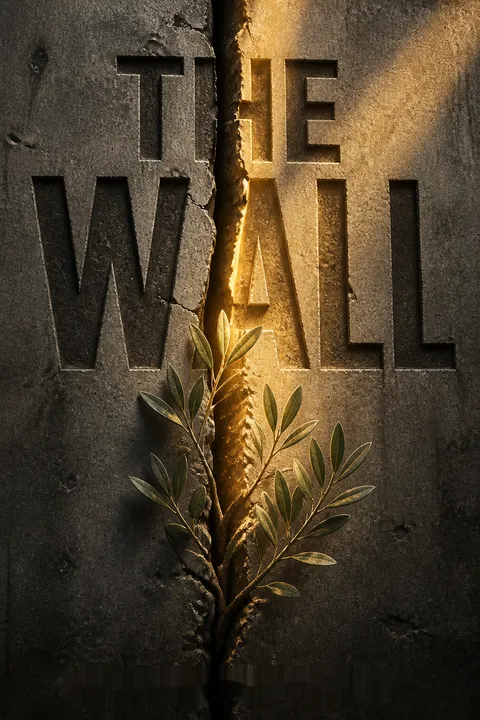
The Wall
The wall is more than a backdrop; it is a living presence that shapes every aspect of the characters' lives. It divides, isolates, and dehumanizes, but also becomes the site of transgression, connection, and hope. The wall's psychological impact is profound, instilling fear, suspicion, and a sense of inevitability. It is both a barrier and a challenge, a symbol of everything that must be overcome.
The Olive Grove
The olive grove is a place of beauty, history, and longing. It represents the possibility of renewal and the persistence of memory in the face of destruction. For Saul, it becomes a sanctuary and a mission; for Leila's family, it is a link to the past and a hope for the future. Its destruction is a profound loss, but the seeds Saul saves become a metaphor for the endurance of hope.
The Tunnel
The tunnel is both a literal and symbolic bridge between the divided towns. It is a site of danger, possibility, and transformation. For Saul, it is the means by which he crosses boundaries—physical, psychological, and moral. Its discovery and destruction mark the arc of the story, from curiosity to connection to loss.
Plot Devices
The Wall as Central Metaphor
The wall is the book's most potent symbol, representing not only the physical separation of Israelis and Palestinians but also the psychological barriers—fear, prejudice, and ignorance—that sustain the conflict. Its presence is constant, shaping the characters' movements, relationships, and sense of self. The wall's duality—as both protector and prison—mirrors the internal conflicts of the characters, especially Saul.
The Tunnel as Liminal Space
The tunnel is a classic liminal device, a space of transition and danger where identities are blurred and new possibilities emerge. It allows Saul to move between worlds, but at great personal risk. The tunnel's discovery, use, and eventual destruction structure the narrative, marking the stages of Saul's journey from innocence to painful awareness.
Parallel Lives and Mirrored Worlds
The book uses parallelism to highlight the similarities and differences between life in Amarias and the Palestinian town. The mirrored experiences of Saul and Leila—both children, both vulnerable, both shaped by forces beyond their control—underscore the arbitrariness of the divisions that separate them. The olive grove, the ruined house, and the family dynamics on both sides serve as points of connection and contrast.
Foreshadowing and Irony
The narrative is laced with foreshadowing, from the initial loss of the ball to the repeated warnings about the dangers of crossing boundaries. The irony of Saul's attempts to help—often resulting in unintended harm—underscores the complexity of moral action in a world defined by violence and suspicion. The destruction of the olive grove, the sealing of the tunnel, and Saul's injury are all foreshadowed by earlier events and choices.
First-Person Perspective and Unreliable Narration
The story is told through Saul's eyes, allowing readers to experience his confusion, guilt, and gradual awakening. His perspective is limited and often unreliable, shaped by the narratives of his community and his own emotional turmoil. This device invites readers to question not only Saul's understanding but also their own assumptions about the conflict.
Symbolism of the Olive Grove and Seeds
The olive grove and the seeds Saul saves are powerful symbols of resilience and the possibility of regeneration. They represent the persistence of memory and the hope that, even in the face of destruction, something can endure and grow. The act of planting, caring, and saving seeds becomes a metaphor for the work of reconciliation and healing.
Download PDF
Download EPUB
.epub digital book format is ideal for reading ebooks on phones, tablets, and e-readers.








































