
Plot Summary
Shadows Over Comoros
The story opens with Comoros under threat from the northern Naestors and the secretive Victus, who manipulate events from the shadows. Maia, the king's daughter, is both a symbol of hope and a pawn in a larger game. The Victus, led by Corriveaux, plot to destroy the mastons and seize power, using ancient magic and political intrigue. The kingdom's spiritual and political fabric is fraying, and the fate of Comoros hangs in the balance as enemies gather and the Medium—the world's mystical force—remains silent. The stage is set for a struggle that will test the limits of faith, loyalty, and destiny.
Daughter and Heir Imprisoned
Maia, the king's illegitimate daughter, is imprisoned in Pent Tower, accused of treason and threatened with execution. She is isolated, her only companions her loyal friend Suzenne and the memory of her late mother. The king's court is divided, and Maia's enemies seek to break her spirit. Despite her fear, Maia draws strength from her maston training and her connection to the Medium. She refuses to sign away her claim or betray her beliefs, even as the threat of death looms. Her resolve inspires those around her, but the darkness of the tower and the machinations of her father's council test her faith and courage.
The Hetaera's Brand
Maia is subjected to a humiliating examination by her enemies, who seek proof of her connection to forbidden magic. The discovery of the hetaera's brand on her shoulder—a mark of ancient, dangerous power—exposes her to public condemnation and supernatural attack. The Myriad Ones, malevolent spirits, attempt to possess her, but Suzenne's intervention and Maia's inner strength repel them. The ordeal leaves Maia physically and emotionally drained, but also more determined. The brand becomes both a curse and a symbol of her unique destiny, setting her apart from friend and foe alike.
Gallows and Rescue
Maia is led to the gallows, condemned to die as a traitor. The city is in turmoil, and her enemies hope her death will secure their power. At the last moment, the kishion—an enigmatic assassin once sent to kill her—reveals himself as her unlikely protector. In a daring and violent rescue, he disrupts the execution, spiriting Maia away through chaos and smoke. The escape is both a physical and spiritual turning point, as Maia realizes that her survival is tied to forces beyond her understanding, and that her fate is inseparable from the kingdom's.
The Kishion's Oath
The kishion, once Maia's would-be killer, now pledges himself to her cause, driven by a complex mix of duty, guilt, and growing devotion. He helps Maia evade her pursuers and brings her to Simon Fox, a double agent and ally. The city is on the verge of revolution, and Maia's miraculous escape galvanizes the people. As the king dies and the old order collapses, Maia is thrust into the role of leader. The kishion's loyalty is both a blessing and a danger, as his violent past and ambiguous motives shadow Maia's ascent.
The King's Daughter Rises
Maia, now free, is swept up by the city's groundswell of support. The people, weary of tyranny and inspired by her courage, acclaim her as their queen. She is reunited with her friends and allies, including her husband Collier, the King of Dahomey, whose love and transformation mirror her own. Maia's humility and resolve set her apart from the corrupt rulers before her. She refuses to rule by fear or spectacle, choosing instead to serve her people and restore the kingdom's spiritual foundation. The coronation approaches, but new threats gather on every side.
The People's Queen
Maia's coronation is a moment of triumph and vulnerability. She rides through the city in a servant's gown, symbolizing her commitment to humility and service. The people's adoration is matched by the lingering resentment of the old nobility and the ever-present threat of the Victus. Maia's first acts as queen are to feed the hungry and pardon her enemies, setting a tone of mercy and justice. Yet, the city remains tense, and Maia's every move is watched by those who would see her fail. The Medium's presence is felt, but its will remains mysterious.
Council and Coronation
Maia's first Privy Council is fraught with tension. Old loyalties and ambitions clash as she seeks to build a government rooted in faith and compassion. The coronation ceremony is both a spiritual and political event, marked by ancient rituals and the revelation of Maia's secret shame. The anointing with Chrism oil exposes her hetaera's mark, but the Medium's power affirms her right to rule. The city celebrates, but the threat of rebellion and invasion looms. Maia's resolve is tested as she navigates the treacherous waters of power, tradition, and personal vulnerability.
The Maston's Test
Maia's journey to Muirwood Abbey and her mastery of the maston test deepen her connection to the Medium and her understanding of true leadership. She is joined by Aldermaston Wyrich and the refugees from Assinica, whose gifts and humility enrich the kingdom. Maia's choice of Richard Syon as chancellor signals a new era of spiritual and political renewal. The city is cleansed, both physically and morally, as Maia insists on justice for the poor and mercy for her enemies. Yet, the Victus and their agents continue to plot, and the specter of war grows ever closer.
Poison and Betrayal
Maia's reign is threatened by poison, assassination, and betrayal. The deaths of her father and Chancellor Crabwell are traced to the kishion, whose actions blur the line between protector and murderer. The Privy Council is divided, with some members plotting rebellion and others wavering in their loyalty. Maia's forgiveness of Caspur and her insistence on due process mark her as a different kind of ruler, but also expose her to new dangers. The Victus manipulate events from afar, sowing discord and preparing for the Naestor invasion.
Partings and Promises
Maia and Collier are forced to part as he returns to Dahomey to defend his kingdom. Their love is tested by distance, uncertainty, and the machinations of their enemies. Maia's dreams are haunted by visions of death and betrayal, and the threat of the kishion's obsession grows. The Privy Council is riven by ambition and fear, and Maia must rely on her faith and the loyalty of a few trusted friends. The kingdom braces for war, and Maia's resolve is steeled by the knowledge that her choices will determine the fate of many.
The Privy Council Divided
The council is torn by Caspur's ambition and Schuyler's open rebellion. Maia's refusal to be goaded into rash action frustrates her enemies, but her patience and wisdom begin to win over her allies. The city's defenses are tested as the threat of invasion becomes imminent. Maia's insistence on mercy and justice, even for her enemies, sets her apart from the rulers before her. The Medium's guidance is subtle but persistent, and Maia's faith is both her shield and her greatest vulnerability.
The Victus' Web
Corriveaux and the Victus tighten their grip, unleashing kystrels and manipulating the ambitions of nobles and mastons alike. Walraven, once Maia's mentor, is imprisoned and tortured, his fate a warning to all who would defy the Victus. The kishion's divided loyalties and growing obsession with Maia add a layer of danger and unpredictability. The web of intrigue stretches across kingdoms, and the Medium's will is tested against the cunning of men. Maia's enemies hope to break her spirit, but her compassion and faith continue to inspire those around her.
The Champion's Duel
A challenge to Maia's right to rule erupts into a duel between her champion and a maston loyal to the rebels. The fight is brutal, but Maia's insistence on mercy prevents bloodshed. The kishion's presence in the rafters is a reminder of the ever-present threat of assassination. The duel becomes a symbol of the struggle between the old order and Maia's new vision for the kingdom. Her ability to forgive and her refusal to be ruled by fear mark her as a true queen, but also make her a target for those who thrive on violence.
Rebellion and Treachery
Caspur's betrayal and alliance with Schuyler threaten to topple Maia's reign. The city is besieged, and the people's loyalty is tested. Maia's faith in the Medium and her refusal to abandon her people inspire acts of courage and sacrifice. The kishion's warnings of the Naestors' ruthlessness add urgency to the defense. The rebellion is crushed not by force, but by the power of the Leerings and the unity of the people. Maia's mercy toward Caspur and her insistence on justice over vengeance begin to heal the wounds of civil war.
Counsel and Conspiracy
Maia's circle of trust narrows as the Victus' plots are exposed. Sabine, the High Seer, warns of Corriveaux's machinations and the coming armada. Messages from Dahomey and Hautland bring both hope and new threats, as Maia's marriage is annulled by the Dochte Mandar and a new suitor arrives. The murder of Simon Fox and the spread of the kystrel's power signal a new phase in the Victus' war. Maia's resolve is tested as she faces the loss of her grandmother and the looming threat of annihilation.
The Naestor Threat
The Naestor armada arrives, bringing with it the full force of the Victus' terror. The city is evacuated, but many refuse to leave, clinging to the hope that the walls will protect them. Maia's appeals to mercy and reason are met with stubbornness and fear. The kishion's warnings of the Naestors' savagery and the futility of resistance add to the sense of impending doom. The kingdom braces for a battle that will test the limits of faith, courage, and the power of the Medium.
The Battle of Ludgate
As the Naestor army besieges Comoros, Maia invokes the power of the Leerings to sow terror among the attackers. The gates are opened, and the defenders—many of them former prisoners—rout the invaders without bloodshed. The victory is seen as a miracle, a sign of the Medium's favor. The city is saved, but the threat is not ended. Maia's leadership and the unity of the people are tested as new dangers arise. The battle becomes a symbol of hope and the possibility of redemption, even for the most unlikely.
Forgiveness and Remorse
The city celebrates its deliverance, but Maia's heart is heavy with the cost of victory. She pardons Caspur, who confesses his pride and begs forgiveness. The act of mercy begins to heal the wounds of betrayal and sets a new standard for leadership. The kingdom is still threatened by the Victus and the armada, but Maia's insistence on forgiveness and justice inspires her people. The Medium's presence is felt more strongly, and the possibility of a new covenant begins to take shape.
The Kystrel's Return
Corriveaux returns to Comoros, bringing with him the kystrel and the promise of destruction. Murer, Maia's stepsister, is given the kystrel and becomes a new hetaera, bent on revenge. The Victus' plan to unleash a Void—a total annihilation—comes closer to fruition. Maia's enemies are both within and without, and the power of the kystrel threatens to undo all she has built. The Medium's guidance is subtle, and Maia must rely on her faith and the loyalty of her friends to survive.
The Armada Arrives
The armada lands, and the final battle for Comoros begins. Allies from Dahomey, Paeiz, and Avinion arrive, but the odds are still against Maia. The kishion's obsession leads him to abduct Maia, taking her to the lost abbey in Dahomey. Collier is gravely wounded but survives, protected by an ancient curse. The fate of the kingdom and the world hangs on Maia's ability to confront the darkness within herself and her enemies.
The Queen's Garden
Maia, grieving and nearly broken, finds solace in the Queen's Garden and the memory of her love for Collier. The news of his survival brings hope, but the threat of the Victus and the kystrel remains. Sabine returns, and the possibility of a new covenant among the kingdoms emerges. Maia's journey has transformed her, and she is now ready to face the final test of her faith and leadership.
The Lost Abbey
Maia is taken by the kishion to the lost abbey, the site of her greatest suffering and the origin of the hetaera's curse. The journey is both physical and spiritual, as Maia confronts the darkness within herself and the legacy of the Victus. The kishion's love and obsession are revealed as both a danger and a source of redemption. The Medium's guidance leads Maia to a final confrontation with Murer and the power of the kystrel.
The Hetaera's Lair
Maia faces Murer in the heart of the lost abbey, where the hetaera's Leering still burns. The battle is both physical and spiritual, as Maia struggles to save her stepsister and herself from the grip of Ereshkigal, the Queen of the Unborn. The power of forgiveness and the Medium's light prove stronger than hatred and revenge. Murer's death and confession bring closure to Maia's long journey of suffering and redemption.
The Sun Stands Still
Maia returns to Muirwood in time to prevent the execution of Richard Syon and the destruction of the abbey. She invokes the power of the Leerings to halt the setting of the sun, creating a miracle that terrifies the Naestors and breaks the power of the Dochte Mandar. The choir's song and the unity of the people invoke the Medium's protection, and the threat of annihilation is averted. The kingdom is saved, and a new era of peace and covenant begins.
Covenant of Muirwood
The Naestors and the other kingdoms gather at Muirwood to make a covenant of peace. Maia's insistence on forgiveness and mercy sets a new standard for leadership. The Dochte Mandar are banished, and the kystrels are destroyed. The Medium's will is affirmed, and the kingdom is united under Maia's rule. The wounds of war begin to heal, and the promise of a better future emerges.
Irrevocare Sigil
Maia and Collier are married by irrevocare sigil in a ceremony that unites the kingdoms and fulfills the ancient prophecies. The Medium's blessings are invoked, and the couple's love becomes a symbol of hope and renewal. The leaders of the realms bow to Maia, recognizing her as the true queen. The story ends with the promise of a new era, forged in faith, forgiveness, and the enduring power of love.
Analysis
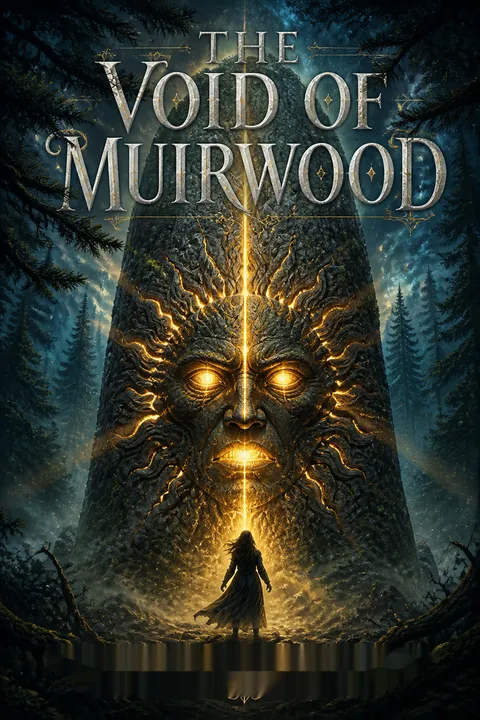
A tale of faith, forgiveness, and the forging of a new orderThe Void of Muirwood is a sweeping fantasy that explores the intersection of personal suffering, spiritual growth, and political transformation. At its heart is Maia, a heroine whose journey from victim to queen is marked by humility, resilience, and an unwavering commitment to mercy. The novel interrogates the nature of power—contrasting the Victus' philosophy of domination and fear with Maia's vision of service and unity. The use of magical devices like the kystrel and the Leerings serves as both plot engine and metaphor, illustrating the dangers of forcing the Medium and the redemptive potential of faith. The story's structure—alternating between political intrigue, spiritual trial, and miraculous deliverance—mirrors the tumultuous process of societal renewal. In a modern context, the book's lessons are clear: true leadership is rooted in compassion, justice, and the willingness to forgive; the most enduring change comes not from violence or coercion, but from the quiet strength of hope and the courage to serve. The Void of Muirwood ultimately affirms that even in the darkest times, the light of faith and love can remake the world.
Review Summary
People Also Read
Characters
Maia (Marciana Soliven)
Maia is the illegitimate daughter of the King of Comoros, raised in the shadow of her mother's disgrace and the kingdom's decline. Intelligent, compassionate, and fiercely principled, she is marked by the hetaera's brand—a symbol of both shame and unique power. Maia's journey is one of suffering, resilience, and spiritual awakening. She is tested by betrayal, loss, and the burden of leadership, but her faith in the Medium and her refusal to rule by fear set her apart. Her relationships—with Suzenne, Collier, the kishion, and her grandmother Sabine—reveal her capacity for love, forgiveness, and sacrifice. Maia's arc is one of transformation from victim to queen, from pawn to leader, and from isolation to unity.
Collier (King Gideon of Dahomey)
Collier is Maia's husband and the King of Dahomey, a man shaped by violence, pride, and the scars of captivity. Initially a captor and adversary, he is changed by Maia's compassion and the spiritual renewal of Muirwood. His journey is one of humility, self-discovery, and devotion. Collier's willingness to sacrifice power and pride for love and unity mirrors Maia's own arc. His immunity to the hetaera's curse and his eventual mastery of the maston test make him both a symbol of hope and a bridge between kingdoms. His love for Maia is steadfast, and his actions—both cunning and selfless—help secure the future of the realm.
The Kishion
The kishion is a mysterious, deadly figure, trained from childhood to kill without mercy. Initially Maia's would-be murderer, he becomes her protector, driven by a complex mix of duty, guilt, and a growing, obsessive love. His psychological torment and longing for redemption are central to his arc. The kishion's actions blur the line between savior and villain, and his ultimate fate is a testament to the power of compassion and the possibility of change. His relationship with Maia is fraught with danger, longing, and the hope of forgiveness.
Corriveaux Tenir
Corriveaux is the leader of the Victus and the architect of the kingdom's destruction. Brilliant, ruthless, and consumed by the desire for power, he wields the kystrel and manipulates both magic and men. His psychological insight and lack of empathy make him a formidable antagonist. Corriveaux's actions are driven by a belief in the supremacy of will and the futility of compassion. He is both a symbol of the old order's corruption and a warning of the dangers of unchecked ambition.
Sabine (High Seer)
Sabine is Maia's grandmother and the High Seer of the mastons. She is a source of wisdom, comfort, and guidance, embodying the virtues of patience, humility, and faith. Sabine's role is both personal and political, as she works to unite the kingdoms and restore the Medium's influence. Her relationship with Maia is one of deep love and mutual respect, and her sacrifices and counsel are crucial to Maia's success. Sabine's arc is one of endurance, vision, and the quiet power of spiritual leadership.
Suzenne
Suzenne is Maia's closest friend and confidante, a maston whose gentleness and courage provide emotional support throughout the story. Her relationship with Dodd and her unwavering loyalty to Maia highlight the importance of friendship and community. Suzenne's struggles with fear, loss, and forgiveness mirror Maia's own journey, and her presence is a constant reminder of the power of compassion and hope.
Richard Syon
Richard is the Aldermaston of Muirwood and later Maia's chancellor. Patient, wise, and deeply principled, he serves as a mentor and father figure to Maia. His guidance is rooted in the maston tomes and the Medium's teachings. Richard's humility and integrity set a standard for leadership, and his willingness to forgive and serve is a model for the new order Maia seeks to build. His arc is one of quiet strength and enduring faith.
Jon Tayt
Jon Tayt is a Pry-rian Evnissyen, a skilled hunter and loyal friend. His earthy humor, courage, and resourcefulness make him an indispensable companion. Jon's devotion to Maia and his willingness to risk everything for her safety are central to his character. His rivalry with the kishion and his role in the final battles highlight the importance of loyalty, sacrifice, and the bonds of chosen family.
Murer
Murer is Maia's stepsister, manipulated by Corriveaux and transformed into a hetaera through the kystrel. Her jealousy, ambition, and longing for love make her both a victim and a villain. Murer's arc is one of corruption, suffering, and ultimately, tragic redemption. Her final confession and death bring closure to Maia's journey and underscore the destructive power of envy and the possibility of forgiveness.
Aldermaston Wyrich
Wyrich is the Aldermaston of Assinica, a wise and compassionate leader who brings his people to Muirwood. His humility, creativity, and spiritual strength enrich the kingdom and provide a model for the new order. Wyrich's role in the final defense and his leadership of the young mastons highlight the importance of faith, service, and the power of community.
Plot Devices
The Medium and the Leerings
The Medium is the mystical force that governs the world, responding to faith, intention, and the purity of one's heart. Leerings—magical stones carved with faces—serve as conduits for the Medium's power, enabling everything from light and heat to protection and destruction. The interplay between the Medium and the Leerings is central to the narrative structure, providing both the means of salvation and the tools of oppression. The story uses the Leerings as symbols of both tradition and innovation, and their activation or silencing often marks key turning points. The Medium's will is revealed through subtle guidance, miracles, and the consequences of choices, reinforcing the themes of faith, humility, and the dangers of forcing power.
The Kystrel and the Hetaera's Curse
The kystrel is an ancient amulet that grants its wearer access to immense magical power, but at the cost of corruption and spiritual peril. The hetaera's brand, a mark of shame and supernatural danger, is both a curse and a source of unique strength for Maia. The kystrel's power is seductive, and its use is often accompanied by physical and psychological consequences. The curse of the hetaera—transmitted through a kiss—serves as both a plot device and a symbol of the dangers of unchecked desire and the importance of self-mastery. The breaking and redemption of the curse are central to Maia's arc and the story's resolution.
Political Intrigue and Rebellion
The narrative is structured around a series of political crises—imprisonment, rebellion, assassination, and invasion. The Privy Council, the Victus, and the various kingdoms serve as arenas for the testing of Maia's leadership and the values she embodies. Betrayal, forgiveness, and the struggle for power are recurring motifs, and the story uses council meetings, duels, and public ceremonies to dramatize the tension between the old order and Maia's new vision. The interplay of personal and political stakes heightens the emotional impact and reinforces the story's themes.
Miracles and the Power of Faith
The story's climax hinges on acts of faith and the invocation of miracles—the halting of the sun, the defeat of the Naestors, and the forging of a new covenant. These moments are foreshadowed by earlier acts of mercy, forgiveness, and spiritual renewal. The narrative structure uses these miracles to resolve seemingly intractable conflicts and to affirm the power of humility, compassion, and unity. The story's resolution is both a fulfillment of prophecy and a testament to the enduring strength of hope.
About the Author

Download PDF
Download EPUB
.epub digital book format is ideal for reading ebooks on phones, tablets, and e-readers.








































