
Plot Summary
Ashes of the Old World
Fifty years after cataclysmic disasters and a failed hunger-suppressant drug, England is a wasteland crawling with undead. The last of humanity survives behind the walls of The Haven, ruled by the religious order of The Verity and the Sands family. The world outside is a graveyard, and inside, life is rigidly controlled. Children are "donated" to the Sainted Army, trained from birth to fight the undead. The old world's comforts are gone, replaced by strict laws, rationed food, and a constant threat of death. Yet, in the midst of ruin, a new generation of warriors rises, determined to reclaim their world, even as the cost of survival grows ever steeper.
Cadets on the Brink
Scarlett, Cass, Tee, Winder, Titan, and Flash—orphans forged into a found family by hardship—prepare for their last test before graduation. Each is marked by trauma, skill, and fierce loyalty. Their camaraderie is laced with banter and anxiety as they await the signal to begin. The test is more than a rite of passage; it's a crucible that will determine their futures, their ranks, and even their survival. The bonds between them are tested as much as their combat skills, and the looming threat of failure means reassignment, disgrace, or death. For Scarlett, the youngest and most driven, this is not just a test—it's her seventeenth birthday, and the day her fate will be sealed.
Death or Glory
The cadets launch their assault on a derelict factory, facing waves of undead "targets." Each kill is counted, every move scrutinized by the Elders and the enigmatic Grey Coats. Scarlett's reckless joy in battle contrasts with the terror and hesitation of others, especially Flash. The test escalates when a mishap draws a horde, and the group must fight for their lives. Scarlett's leadership and skill shine, but the cost is high—blood is spilled, and the line between thrill and terror blurs. The motto "Death or Glory" is no longer just a phrase; it's a reality, as the cadets prove themselves or perish.
The Final Test
As the cadets clear the factory, Flash's cowardice nearly dooms them, and Scarlett's injury puts the group at risk. The test's true nature is revealed when a deadly Class Two undead is unleashed, forcing Scarlett and Cass to fight alone. Scarlett's ingenuity and Cass's loyalty are pushed to the limit. The aftermath is bittersweet: records are broken, but trust is fractured. The Elders praise Scarlett, but the group's unity is shaken. The test is not just of skill, but of character, and the consequences of fear and betrayal will echo long after the blood is washed away.
Blood and Betrayal
Scarlett reflects on the world's collapse and the rise of The Verity. The price of survival is steep: children are torn from families, and the army's ranks are filled with the unwilling. The lottery looms—a chance for girls to escape the army by marrying Lord Noah Sands, the new leader. Tee, Scarlett's closest friend, dreams of this escape, while Scarlett recoils from the idea. The system is revealed as both sanctuary and prison, and the cadets' bonds are tested by ambition, fear, and the ever-present threat of the undead. The scars of the past are everywhere, and the future is a battleground of hope and despair.
The Lottery's Shadow
As graduation nears, the lottery becomes a focal point. Tee pleads with Scarlett to enter, hoping for a future free from violence. Scarlett refuses, determined to earn a Red Coat and lead on her own terms. Noah Sands, the young and charismatic leader, reveals his obsession with Scarlett, demanding her submission. When she refuses, he turns violent, lashing her publicly and threatening her friends. The lottery, once a symbol of hope, becomes a weapon of control. Scarlett's defiance sets her on a collision course with power, and the cost of saying "no" is pain, isolation, and the risk of losing everything she loves.
Walls and Wounds
Scarlett returns to The Haven, battered and wary. The Academy is abuzz with preparations for Noah's visit and the lottery. Tensions flare among the cadets—old wounds are reopened, and new ones inflicted. Cass and Scarlett's relationship is strained by pride, jealousy, and unspoken feelings. The cadets' unity is threatened by ambition and fear, and the ever-watchful Grey Coats enforce order with violence. Scarlett's wounds—physical and emotional—are slow to heal, and the walls that protect The Haven also imprison its people. The price of safety is obedience, and the cost of defiance is pain.
The Lord's Demand
Noah confronts Scarlett in secret, confessing his love and demanding she enter the lottery. When she refuses, he turns violent, assaulting her and threatening her friends. His power is absolute—he can grant or destroy futures with a word. Scarlett's resistance is met with brutality, and her world narrows to survival. The personal becomes political, as Noah's obsession endangers not just Scarlett, but everyone she cares about. The line between protector and predator is erased, and Scarlett must navigate a world where love is a weapon and power is enforced with pain.
The Price of Refusal
Scarlett makes an impossible choice: to save her friends from Noah's wrath, she volunteers for the Canaries—a near-suicidal unit sent beyond the wall. Her sacrifice ensures her friends' safety and their chosen ranks, but at the cost of her own future. She leaves without goodbyes, carrying only her resolve and her pain. The Canaries are outcasts, criminals, and the expendable. Scarlett's new unit is a motley crew, each marked by loss and desperation. Exile is both punishment and liberation, and the wilds beyond the wall are as dangerous as the politics within it.
Exile and Sacrifice
Life as a Canary is brutal—constant danger, scarce resources, and the ever-present threat of death. Scarlett's skills and leadership are tested as she guides her unit through the wasteland. Bonds are forged in blood and hardship, and the group becomes a new kind of family. The world outside is not as dead as it seems—nature is reclaiming the land, and hope flickers in unexpected places. Scarlett's past haunts her, but her resolve hardens. The pain of exile is matched by the freedom to fight on her own terms, and the dream of a better world is rekindled.
Canaries in the Wild
The Canaries stumble upon the Eden Project, a vast, overgrown greenhouse teeming with life. The discovery is a revelation—proof that the world can heal, and that new beginnings are possible. But the wild is not without peril: undead hordes, human traps, and the ever-present threat of betrayal. Scarlett's leadership is tested as she navigates both external dangers and internal conflicts. The unit's survival depends on trust, ingenuity, and the willingness to fight for each other. The seeds of rebellion are sown, and the dream of a new Haven takes root.
The Eden Discovery
Inside the Eden Project, the Canaries find not just food and water, but the possibility of a future beyond The Verity's control. The greenhouse is a paradise, but also a cage—surrounded by undead, with no easy escape. The group's unity is tested by exhaustion, grief, and the trauma of loss. Scarlett's leadership is both a burden and a gift, as she guides her unit through peril and possibility. The discovery of new resources is a beacon of hope, but also a target for those who would control or destroy it. The dream of freedom is fragile, and the cost of survival is high.
Loss and Revelation
Tragedy strikes when Elder Eight, Scarlett's mentor and secret father, is killed in a trap set by unknown enemies. The loss shatters the group, and Scarlett is forced to confront the truth of her parentage and the betrayals that have shaped her life. The revelation is both wound and balm—explaining old scars and opening new ones. The group's resolve is tested as they face the reality of treachery within their own ranks. The fight is no longer just against the undead, but against the corruption and cruelty of their own leaders.
Traps and Treason
The Canaries discover that the traps which killed Elder Eight and others were set by humans—proof of treason within The Haven. The realization that their own leaders are willing to kill their own to maintain power is a breaking point. Scarlett and her unit vow to return home, expose the truth, and spark a rebellion. The dream of a new Haven, free from The Verity's tyranny, becomes a mission. The cost of truth is high, but the price of silence is higher. The spark of rebellion is lit, and there is no turning back.
The Return Home
Scarlett and her unit return to The Haven, bearing the body of Elder Eight and the weight of their discoveries. The reunion with Tee is bittersweet—joy at survival, grief at loss, and dread at what awaits. Cass, once Scarlett's closest friend and love, is consumed by anger and betrayal. The walls that once protected now imprison, and the Grey Coats enforce order with violence. Scarlett is arrested, accused of desertion, and sentenced to death. The cost of truth is her life, but the rebellion she has sparked cannot be extinguished.
The Executioner's Welcome
Scarlett is brutalized by the Grey Coats, her fate sealed by Noah's vengeance. The system she fought to protect now turns on her, and the price of defiance is death. Yet, even in chains, Scarlett's spirit is unbroken. Her friends rally, the truth spreads, and the seeds of rebellion take root. The execution is set, but the story is not over. The will to resist is stronger than fear, and the dream of freedom cannot be killed. The end of Scarlett's journey is the beginning of a revolution.
The Spark of Rebellion
Scarlett's sacrifice ignites a movement. The truth of The Verity's corruption, the cruelty of Noah, and the possibility of a new Haven inspire others to rise. The bonds of family, forged in blood and pain, become the foundation of a new world. The fight is far from over, but hope endures. The ashes of the old world give birth to the promise of something better—a world where freedom, love, and justice are possible. The story ends, not with death, but with the spark of rebellion, and the promise that the fight for a better world has only just begun.
Analysis
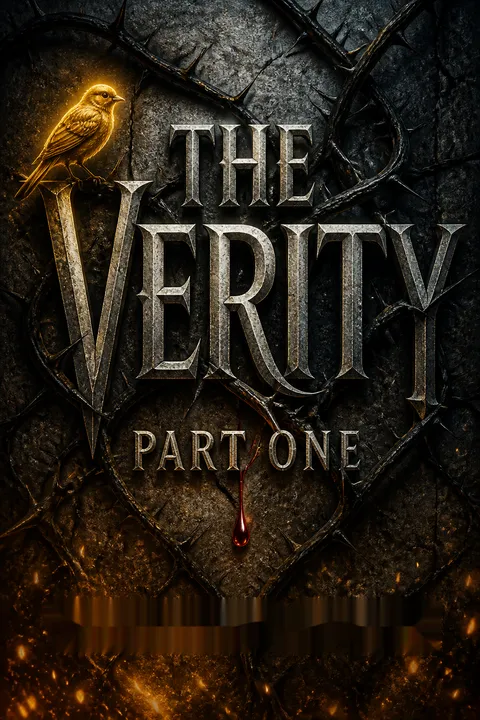
A modern dystopian epic of trauma, agency, and rebellionThe Verity: Part One is a searing exploration of power, trauma, and the search for agency in a world built on control and sacrifice. Through Scarlett's eyes, we witness the cost of survival—not just in blood, but in the loss of innocence, trust, and self. The novel interrogates the structures that demand obedience—religion, patriarchy, and militarism—and exposes the ways they exploit love, loyalty, and fear. Scarlett's journey is both deeply personal and profoundly political: her refusal to submit to Noah's demands, her willingness to sacrifice for her friends, and her ultimate decision to rebel are acts of radical agency. The story's emotional core is the found family—the bonds forged in pain and joy, the love that survives even betrayal. The novel's lesson is clear: true leadership is not about power, but about the courage to choose others' freedom over one's own comfort. In a world where hope is a dangerous act, The Verity insists that rebellion is not just possible, but necessary.
Review Summary
The Verity receives overwhelmingly positive reviews (4.36/5 stars), praised for its strong female protagonist Scarlett, a fierce warrior in a post-apocalyptic zombie world. Readers appreciate the brutal, action-packed narrative, excellent world-building, and complex characters. The dystopian setting features a walled Haven controlled by religious zealots, where children are trained as soldiers. Most reviewers loved Scarlett's strength and the emotional depth, though some found romance lacking and plot twists predictable. The ending's cliffhanger left readers eager for the sequel. Minor criticisms include juvenile writing style and pacing issues.
People Also Read
Characters
Scarlett
Scarlett is the heart and blade of her unit—a warrior forged by loss, trauma, and relentless training. Orphaned and "donated" to the Sainted Army, she is both a product and a critic of The Verity's system. Her psychological complexity is rooted in her need for control, her fear of vulnerability, and her desperate loyalty to her chosen family. Scarlett's love for battle masks deep wounds, and her refusal to submit to authority—especially Noah—drives the story's central conflict. Her journey is one of self-discovery, sacrifice, and the painful realization that true leadership means choosing others' freedom over her own happiness. Her relationships with Cass, Tee, and Elder Eight reveal her capacity for love, guilt, and ultimately, rebellion.
Cass
Cass is the unit's co-leader, a master of blades and strategy. His calm exterior hides a storm of emotions—pride, jealousy, and a deep, unspoken love for Scarlett. Their relationship is a dance of rivalry and longing, complicated by ambition and the trauma of their upbringing. Cass's need for control and recognition mirrors Scarlett's, and their conflicts are as much about identity as affection. His loyalty is absolute, but his inability to express vulnerability leads to misunderstandings and heartbreak. Cass's journey is one of learning to trust, to forgive, and to fight not just for survival, but for something greater.
Tee (Q-Tee)
Tee is Scarlett's emotional anchor—a gentle soul in a brutal world. Her skill with the bow is unmatched, but her heart is not in the fight. Tee dreams of escape, of a life beyond violence, and the lottery represents both hope and fear. Her relationship with Scarlett is sisterly, marked by love, frustration, and the pain of impossible choices. Tee's psychological struggle is between duty and desire, safety and loyalty. Her vulnerability is her strength, and her willingness to sacrifice for others is both her gift and her curse.
Winder
Winder is the group's humor and heart—a source of levity in a world of darkness. His banter masks deep loyalty and a willingness to fight for his friends. Winder's relationship with Cass and Scarlett is brotherly, marked by teasing and fierce protection. His love for his unit is unwavering, and his willingness to follow Scarlett into exile reveals a depth of character beneath the jokes. Winder's psychological resilience is a model for survival, and his presence is a reminder that laughter is a weapon against despair.
Titan
Titan is strength tempered by kindness—a formidable fighter who would rather protect than destroy. His love for Flash is forbidden, and their relationship is a quiet act of rebellion against The Verity's rigid rules. Titan's psychological struggle is between duty and desire, strength and vulnerability. His loyalty to his unit, especially Flash, is absolute, and his willingness to sacrifice for love is both his strength and his weakness.
Flash
Flash is the unit's weakest link—a skilled fighter in training, but paralyzed by fear in the field. His cowardice nearly dooms the group, and his survival is a source of guilt and resentment. Flash's relationship with Titan is his only act of bravery, and his psychological struggle is between self-preservation and loyalty. Flash represents the cost of fear, the pain of failure, and the possibility of redemption.
Elder Eight
Elder Eight is the cadets' mentor, a gruff but loving guide who hides a secret: he is Scarlett's father. His wisdom, humor, and skill are the backbone of the unit, and his loss is a shattering blow. Elder Eight's psychological complexity is rooted in guilt, love, and the burden of secrets. His sacrifice is both personal and political, and his death is the catalyst for Scarlett's transformation from soldier to rebel. Elder Eight embodies the cost of leadership, the pain of love, and the hope of a better world.
Noah Sands
Noah is the new Lord of The Verity—a young, skilled swordsman whose charm masks a deep cruelty. His obsession with Scarlett drives him to violence, manipulation, and abuse. Noah's psychological profile is marked by entitlement, insecurity, and a need for control. He is both protector and predator, using love as a weapon and power as a shield. Noah's actions are the engine of the story's conflict, and his downfall is the goal of the rebellion.
Sky
Sky is a later addition to Scarlett's unit—a quirky, creative soul marked by trauma and resilience. Her oddness is both armor and vulnerability, and her loyalty to Scarlett is fierce. Sky's psychological complexity is rooted in her need for acceptance, her fear of abandonment, and her willingness to fight for those she loves. Her presence brings both chaos and comfort, and her journey is one of healing and belonging.
Loom
Loom is a volunteer Canary, marked by guilt and a need for atonement. His past is shadowed by abuse and violence, and his decision to join the Canaries is both escape and penance. Loom's psychological struggle is between self-loathing and hope, and his loyalty to Scarlett is a path to redemption. His presence in the unit is a reminder that survival is not just about fighting the undead, but about healing the wounds inflicted by the living.
Plot Devices
Post-apocalyptic coming-of-age, power and control, found family.
The novel employs a classic coming-of-age arc set against a post-apocalyptic backdrop, using the cadets' final test as both literal and metaphorical crucible. The story is told primarily through Scarlett's perspective, blending action with introspection. Foreshadowing is used to hint at betrayals and the true nature of The Verity's power. The lottery serves as a plot device to explore gender, agency, and the abuse of authority. The motif of "Death or Glory" recurs, symbolizing the thin line between heroism and sacrifice. The found family trope is central, with the unit's bonds tested by external threats and internal conflicts. The discovery of the Eden Project and the traps set by humans introduce the theme of rebellion, shifting the narrative from survival to revolution. The story's structure mirrors Scarlett's psychological journey—from obedience to defiance, from soldier to leader.
About the Author
Download PDF
Download EPUB
.epub digital book format is ideal for reading ebooks on phones, tablets, and e-readers.








































