
Key Takeaways
1. Disasters reveal our true, often surprisingly hopeful, human nature.
What Prince discovered in Halifax was that our disaster personalities can be quite different from the ones we expect to meet.
Challenging assumptions. Contrary to popular belief, disasters rarely lead to widespread panic or "every-man-for-himself" brutality. Instead, they often reveal a more interesting and hopeful side of human nature, where people are remarkably orderly, polite, and helpful to strangers. This "disaster personality" is often unexpected but consistently observed.
Ordinary heroes. The first responders in any major catastrophe are almost always ordinary citizens. In the 1992 Guadalajara sewer explosions, the vast majority of rescues were performed by regular people using car jacks and garden hoses, long before official search-and-rescue teams arrived. This highlights the critical, yet often overlooked, role of civilians.
Hopeful reality. The author's journey, sparked by interviewing 9/11 survivors, revealed that people glimpse a part of the human condition most never see. Survivors often express a desire to share what they learned, emphasizing that understanding our "disaster personalities" can lead to better outcomes and reduce anxiety.
2. Denial is our brain's initial, often dangerous, coping mechanism.
We have a tendency to believe that everything is OK because, well, it almost always has been before.
Normalcy bias. When faced with an unexpected threat, our brains tend to interpret new information through familiar patterns, leading to a "normalcy bias." This causes people to delay action, as seen in the World Trade Center on 9/11, where survivors waited an average of six minutes before evacuating, some as long as forty-five.
Milling and gathering. During this denial phase, people engage in "milling"—seeking information from others—and "gathering"—collecting personal items. On 9/11, thousands made phone calls, checked news, and even shut down computers before leaving, behaviors that, while seemingly irrational, are attempts to restore a sense of control and normalcy.
Dual nature of denial. While delay can be fatal, denial also serves a protective function. It can create "blinders" for the brain, allowing individuals to process overwhelming information in manageable chunks, preventing immediate psychological collapse and enabling a step-by-step path to safety.
3. Our perception of risk is profoundly shaped by emotion, not just logic.
Risk = Probability × Consequence × Dread/Optimism
The dread equation. Our assessment of risk is not a purely rational calculation of probability and consequence. It's heavily influenced by "dread," an emotional factor encompassing uncontrollability, unfamiliarity, imaginability, suffering, scale of destruction, and perceived unfairness. This explains why we fear plane crashes more than car crashes, despite the latter being statistically far deadlier.
Experience vs. facts. Past experience can be a poor teacher. Many elderly New Orleans residents, like Patrick Turner, refused to evacuate for Hurricane Katrina because they had survived previous storms like Betsy and Camille, underestimating how environmental changes had increased vulnerability. Their personal history overrode official warnings.
Emotional intelligence. Neurologist Antonio Damasio's work with patient Elliot showed that without emotion, rational decision-making is impaired. Emotions, while seemingly irrational, are integral to navigating risk, guiding us toward appropriate actions. The challenge is to capitalize on dread, not suppress it, by providing clear, motivating information.
4. Fear profoundly alters our mind and body, but can be managed through preparation.
For every gift the body gives us in a disaster, it takes at least one away—sometimes bladder control, other times vision.
Primitive response. Fear is a fundamental, primitive response, triggering immediate physiological changes like increased heart rate, blood pressure, and natural painkillers, while simultaneously impairing higher reasoning, perception, and fine-motor skills. This "survival mode" prioritizes gross motor functions over complex thought.
Perceptual distortions. Under extreme stress, people often experience "tachypsychia" (time slowing down), tunnel vision, or auditory blunting. Diplomat Diego Asencio, held hostage, recalled time distortion and an odd detachment, while police officers in shootings reported seeing "beer cans" (shell casings) floating slowly. These are the brain's attempts to cope with overwhelming data.
Training for control. Realistic, repeated training can "stretch" an individual's "survival zone," where performance is optimal (heart rate 115-145 bpm). Techniques like "combat breathing" (tactical breathing) can consciously de-escalate the primal fear response, allowing for clearer thinking and more effective action, even in high-stress situations.
5. Resilience is a complex interplay of genetics, experience, and mindset.
Trauma, like beauty, is in the eye of the beholder.
Beyond demographics. While factors like physical ability, gender, and socioeconomic status influence survival odds, individual resilience varies significantly. People with a belief in their ability to influence events, a tendency to find purpose in turmoil, and a conviction to learn from experiences tend to fare better.
The "self-enhancer" advantage. Surprisingly, individuals who are "self-enhancers"—those who think more highly of themselves than others do—often exhibit greater resilience and recover more easily from trauma. Their confidence acts as a psychological buffer, reducing stress hormone levels and improving coping mechanisms.
Biological predispositions. Studies on Special Forces soldiers reveal a biological component to resilience, with higher levels of neuropeptide Y, a compound that aids focus under stress. Research on identical twins discordant for combat exposure suggests that a smaller hippocampus, a brain region involved in memory and danger processing, may predate trauma, indicating a predisposition to PTSD.
6. Groups are crucial for survival, often fostering cooperation over chaos.
People die the same way they live, with friends, loved ones, and colleagues, in communities.
Solidarity in crisis. Disasters typically foster strong group cohesion, not anarchy. People tend to stick together, offering mutual support and guidance. This "groupthink" minimizes conflict and can be seen in chimpanzees, who huddle and touch when threatened, and in humans, who often become more polite and helpful than usual.
The power of leadership. In a crisis, people instinctively seek and follow leaders, even if they are strangers or low in a social hierarchy, as seen with busboy Walter Bailey in the Beverly Hills Supper Club fire. Clear, decisive instructions, even shouted commands, can break through paralysis and direct collective action, as demonstrated in successful plane evacuations.
Evolutionary advantage. Group behavior, even seemingly altruistic acts, often has evolutionary roots in "reciprocity" or the "selfish herd" principle. Helping others can build reputation or increase individual survival odds by being part of a larger, more intimidating unit, making cooperation a deeply ingrained adaptive strategy.
7. Panic is a rare, often misunderstood, and largely preventable phenomenon.
Panic is one of those words that change shape depending on the moment.
Physics over psychology. Stampedes and crowd crushes, often mislabeled as "panic," are primarily a function of physics: too many people in too small a space, moving too quickly. When density exceeds one square yard per person, individuals lose control, and small lurches amplify into dangerous pressure, leading to asphyxiation, not trampling.
Recipe for panic. True panic, characterized by irrational, self-destructive behavior, requires three conditions: a feeling of potential entrapment, a sensation of great helplessness, and profound isolation. Without these, even in high-stress situations like the London Blitz or the Three Mile Island accident, people tend to remain orderly.
Preventable tragedies. Crowd crushes are almost always preventable through better design and management, such as wider pathways, one-way traffic flow, and constant monitoring. The Hajj stampedes, for instance, have been mitigated by structural changes and religious edicts that spread out pilgrims, demonstrating that "panic" is a problem of design, not inherent human irrationality.
8. Paralysis is a common, involuntary, and ancient survival default.
In a nutshell, it’s been documented in crustaceans, amphibians, frogs, lizards, snakes, birds, even mammals—wild boars to cows to primates to rats to rabbits.
Animal hypnosis. "Animal hypnosis" or tonic immobility, observed across countless species, is an involuntary shutdown response to extreme fear and entrapment. The body goes limp, heart rate drops, and pain perception diminishes, a strategy to deter predators who prefer struggling prey.
Human default. In modern disasters, paralysis is far more common than panic or heroism. Victims may appear conscious but unresponsive, as seen in the Virginia Tech shooting where Clay Violand played dead, or on the sinking Estonia ferry where many passengers remained motionless. This is often a "misfire" of an ancient, adaptive response in situations where a predator is not present.
Breaking the stupor. Paralysis can be overcome. Loud, sudden noises can "snap" an animal or person out of the trance. Human examples include a husband's shouted command to his paralyzed wife on a burning plane, or flight attendants screaming at passengers to jump, demonstrating that external stimuli and clear leadership can override this involuntary response.
9. Heroism, while admirable, often stems from a deep-seated self-interest.
If you didn’t get anything out of it, I mean flat-out nothing, you wouldn’t do it.
Incomprehensible grace. Heroism, like Roger Olian jumping into the freezing Potomac River to save strangers, often appears irrational and self-sacrificing. However, heroes themselves frequently state they "had no choice" or "couldn't have lived with myself" if they hadn't acted, suggesting a powerful internal motivation to avoid self-disappointment or cowardice.
Profile of a rescuer. Studies of Holocaust rescuers and Carnegie Hero Medal recipients reveal common traits: healthier relationships with parents, greater empathy, and an "internal locus of control" (belief in shaping one's destiny). They often identify as "helpers" in everyday life, viewing heroic acts as consistent with their self-perception.
Evolutionary roots. From an evolutionary perspective, heroism can be seen as a form of "selfish altruism." Men, more often heroes, may accrue reproductive benefits or enhance their genetic legacy through their family's reputation. This doesn't diminish the moral impulse but suggests that grace, in a way, is also good for the individual.
10. We can "rewire" our brains for modern survival through deliberate practice.
The best way to get the brain to perform under extreme stress is to repeatedly run it through rehearsals beforehand.
New instincts. Our brains are remarkably plastic, capable of changing structure and function throughout life. While our primal fear responses are ancient, we can continually upgrade them for modern challenges through deliberate, realistic training, creating "subconscious programming" that bypasses conscious thought in a crisis.
Mastering the unexpected. Ronn Langford's MasterDrive school, born from personal tragedy, teaches drivers to handle skids and avoid "potholism" (steering towards what you fear) by repeatedly simulating loss of control in a safe environment. This trains the brain to react correctly in milliseconds, transforming dangerous situations into manageable ones.
Beyond physical drills. Training isn't just physical; it's mental. Visualization techniques, like those used by race-car drivers, can "pretrain" the brain. Even simple acts like taking the stairs in a new hotel or reading safety cards can build mental shortcuts, making us more adaptable and less likely to freeze when the unexpected occurs.
11. Self-sufficiency and proactive training are our most vital defenses.
If we understand dread, we can starve it.
The Flight 93 narrative. The passengers of United Flight 93, informed of their plane's fate, quickly moved past denial, deliberated as a group, and acted decisively, changing the course of history. This exemplifies that informed, empowered civilians are the most potent defense against threats like terrorism, which thrives on fear and a sense of powerlessness.
Overcoming systemic failures. Fear of liability often prevents officials from sharing vital information or implementing effective drills, creating a "devolution" in preparedness. This distrust between authorities and the public is a significant barrier to collective survival, as seen in delayed evacuations or neglected driver's education.
Personal responsibility. The solution lies in individuals and communities taking proactive steps: understanding local risks, seeking factual data over media hype, and conducting regular, realistic drills. The Samoa tsunami drill, where residents practiced evacuating, demonstrated that self-organized community preparedness is effective and fosters a powerful sense of collective resilience.
Review Summary
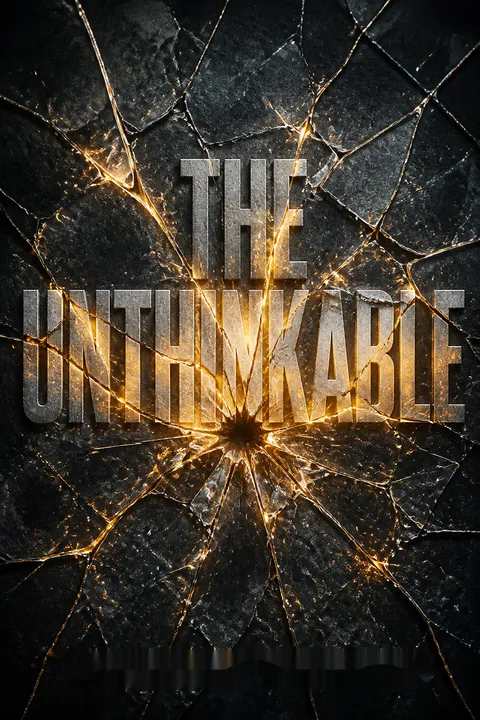
The Unthinkable receives strong praise (4.19/5 average) as a fascinating exploration of human behavior during disasters. Readers appreciate Ripley's blend of scientific research, survivor interviews, and practical advice. The book examines why people freeze, panic, or act heroically, covering events like 9/11, Hurricane Katrina, and plane crashes. Reviewers value insights on denial, risk assessment, and preparation strategies. While some critics note a lack of concrete "do this" guidance and over-reliance on anecdotes versus hard data, most find it engaging, informative, and potentially life-saving. The book empowers readers with understanding of disaster psychology and actionable preparedness tips.
People Also Read

About the Author
Other books by Amanda Ripley

Download PDF
Download EPUB
.epub digital book format is ideal for reading ebooks on phones, tablets, and e-readers.








































