
Plot Summary
Blood and Blue Eyes
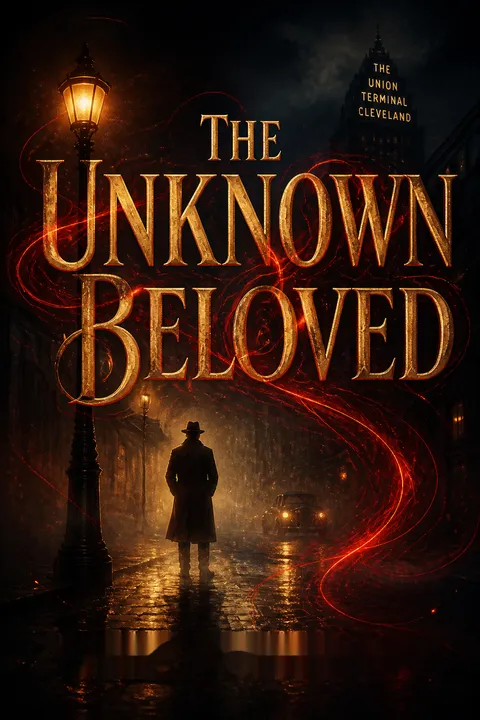
In 1923 Chicago, ten-year-old Dani Flanagan's life is upended when she returns home to find her parents murdered. The chaos of police, neighbors, and grief is filtered through her unique perspective—one eye blue, one brown, and a strange gift for sensing stories in cloth. Officer Michael Malone, a young patrolman haunted by his own losses, comforts her and becomes a silent witness to her trauma. Their brief connection, forged in tragedy, leaves a mark on both: Dani is sent to Cleveland to live with her aunts, and Malone, changed by the encounter, finds a new sense of purpose in a world that suddenly feels colder and more dangerous.
The Day Innocence Died
Fifteen years later, 1938 Cleveland is gripped by fear. A serial killer, the Mad Butcher of Kingsbury Run, stalks the city, leaving headless, dismembered bodies in his wake. Michael Malone, now a seasoned federal agent, is drawn back into the city's shadows at the request of Eliot Ness. The murders are senseless, the victims nobodies, and the city's wounds run deep. Malone, still carrying the scars of his past, is tasked with finding a killer who seems to thrive on chaos and anonymity, even as the city's own divisions and secrets threaten to swallow him whole.
Haunted by the Past
Malone takes a room in the Kos household, now run by Dani and her elderly aunts. Neither recognizes the other at first, but the past soon surfaces. Dani, grown into a perceptive, quietly haunted woman, still possesses her uncanny ability to "read" the history of cloth. Their reunion is awkward, charged with unspoken memories and the weight of what was lost. As Malone settles into the rhythms of the house, the city's violence seeps into their lives, and the boundaries between past and present blur, drawing them together in unexpected ways.
The Butcher's Shadow
The investigation into the Butcher's crimes reveals a city on edge. Malone and Ness navigate a web of corruption, poverty, and despair, where the killer's victims are the forgotten and the lost. The murders are brutal, the clues few, and the city's elite are more concerned with appearances than justice. Malone's outsider status allows him to see what others miss, but the darkness he uncovers is as much within the city as it is in the killer. The Butcher's presence is everywhere and nowhere, a specter haunting the city's underbelly.
Unlikely Boarders
Dani's home is a haven of old-world traditions and quiet resilience. Her aunts, Zuzana and Lenka, are fiercely protective, wary of outsiders, and deeply superstitious. Malone's arrival disrupts their routines, but necessity—and Dani's gentle insistence—forces them to accept him. The house becomes a microcosm of the city: a place of secrets, grief, and unexpected warmth. As Malone and Dani navigate the awkwardness of shared space, their connection deepens, and the lines between duty and desire begin to blur.
Secrets in the Cloth
Dani's ability to sense the stories in fabric becomes both a blessing and a curse. She uses her gift to bring dignity to the city's indigent dead, preparing bodies for burial and writing eulogies for the forgotten. Malone, skeptical but intrigued, witnesses her process and begins to understand the depth of her empathy—and her isolation. Their shared experiences of loss and survival draw them closer, even as the city's violence threatens to consume them both. Dani's gift becomes a tool in the hunt for the Butcher, but it also exposes her to dangers she cannot foresee.
A City in Fear
As more bodies are discovered, panic spreads. The press hounds Ness, politicians posture, and the city's poor are left to fend for themselves. Malone's investigation leads him into the heart of Kingsbury Run, a shantytown teeming with desperation and secrets. He befriends outcasts, listens to rumors, and begins to see patterns in the chaos. Dani, meanwhile, becomes a quiet force for good, tending to the dead and the living alike. The city's fear is palpable, and the Butcher's shadow looms over every street and home.
The Ties That Bind
Dani's family history is as tangled as the city's streets. Her aunts' old-world wisdom and superstitions clash with modern realities, and the memory of her parents' murder lingers. Malone's own past—his failed marriage, lost children, and years undercover—haunts him. Their growing intimacy is tested by secrets, misunderstandings, and the ever-present threat of violence. As they confront their own demons, they find solace in each other, even as the world around them unravels.
The Language of the Dead
Dani's work at the morgue becomes central to the investigation. Her ability to "read" the dead through their clothing provides Malone with insights no one else can access. Together, they piece together the stories of the Butcher's victims, giving names to the nameless and dignity to the discarded. The process is harrowing, and the toll on Dani is immense, but her compassion and determination drive her forward. Malone, too, is changed by the experience, his cynicism tempered by Dani's unwavering belief in the value of every life.
The Dance of Trust
As the investigation deepens, so does the bond between Malone and Dani. Their relationship is a dance of trust and fear, each wary of being hurt again. The city's violence mirrors their own internal struggles, and the risk of loving—and losing—becomes ever more real. They find moments of joy and connection amid the darkness, but the threat of the Butcher, and the secrets they both carry, threaten to tear them apart. In the end, it is their willingness to be vulnerable that becomes their greatest strength.
Names for the Nameless
Dani's mission to name the dead becomes a quiet act of rebellion against the city's indifference. With Malone's support, she uses her gift to identify victims, write their stories, and ensure they are not forgotten. The process brings her into direct conflict with the Butcher, who seems to delight in erasing identities. The act of naming becomes an act of love, a way to reclaim what violence has stolen. For Malone, it is a reminder of the power of compassion in a world that too often values power over mercy.
The Madman's Game
The investigation narrows, and suspicion falls on Dr. Francis Sweeney, a brilliant but troubled physician with political connections. Ness and Malone, hamstrung by bureaucracy and corruption, struggle to bring him to justice. Sweeney's madness is both a shield and a weapon, and his crimes are protected by the city's elite. Dani's gift becomes the key to unmasking him, but the cost is high. The Butcher's final act is a personal attack, targeting Dani and forcing Malone to confront the limits of his own strength and the depth of his love.
Love in the Ruins
Dani's abduction by Sweeney is a crucible for both her and Malone. Trapped and alone, she draws on her inner reserves of courage and hope, refusing to be defined by fear. Malone, desperate and relentless, risks everything to find her. Their reunion is both a rescue and a reckoning, as they confront the trauma of survival and the possibility of healing. The city, too, is changed by the ordeal, its wounds laid bare but not yet healed.
The Trap Closes
The city's response to the Butcher's end is as murky as the case itself. Sweeney disappears, presumed dead, but the truth is buried beneath politics and expediency. Ness is scapegoated, the press moves on, and the city's poor are displaced in the name of safety. Malone and Dani, forever changed, must decide what kind of life they can build amid the ruins. The line between justice and vengeance blurs, and the cost of knowing the truth becomes clear.
The Price of Knowing
Malone is called away, forced to choose between duty and love. Dani, left behind, grapples with grief, anger, and the ache of unfinished longing. Their separation is a test of faith and endurance, each struggling to find meaning in absence. Letters are exchanged, hope flickers, and the possibility of reunion remains uncertain. The lessons of loss and love are hard-won, and the future is anything but guaranteed.
The Last Victim
A final crisis brings Malone back to Cleveland, where Dani's life hangs in the balance. The city's wounds are reopened, and the cost of indifference is laid bare. In the aftermath, Malone and Dani must decide what they owe to the dead, to the living, and to each other. The act of choosing—each other, a home, a future—becomes an act of redemption, a way to honor the unknown beloveds who shaped their lives.
The End of the Run
With the Butcher gone and the city forever changed, Malone and Dani build a life together amid the ruins. The past is not forgotten, but it is no longer a prison. Their love, forged in suffering and sustained by hope, becomes a testament to the power of compassion and the possibility of healing. The city, too, begins to heal, its scars a reminder of what was lost and what was found. In the end, it is love—imperfect, hard-won, and enduring—that endures.
The Unknown Beloved
In the quiet aftermath, Malone and Dani find peace in the ordinary joys of life: a shared meal, a walk through the city, a night at the movies. The ghosts of the past linger, but they are no longer feared. The unknown beloveds—the lost, the forgotten, the unnamed—are honored in memory and in love. The story ends not with triumph, but with tenderness: a promise that even in a world of violence and loss, love is never truly lost.
Analysis
Amy Harmon's The Unknown Beloved is a meditation on the power of compassion in a world marked by violence, loss, and indifference. Through the intertwined stories of Dani and Malone, the novel explores the ways in which trauma shapes identity, the necessity of naming and remembering the forgotten, and the redemptive potential of love. The supernatural element—Dani's ability to "read" cloth—serves as both a plot device and a metaphor for empathy, reminding readers that true understanding requires both vulnerability and courage. The novel's historical setting, rooted in the real-life Cleveland Torso Murders, grounds its themes in the gritty realities of poverty, corruption, and social upheaval, while its focus on the ordinary acts of care—naming the dead, sharing a meal, holding a hand—elevates the everyday to the level of heroism. Ultimately, The Unknown Beloved is a story about the costs and rewards of bearing witness: to suffering, to injustice, and to love. It suggests that even in a world where evil often goes unpunished and the innocent are forgotten, the act of remembering—of loving the unknown beloved—is itself a form of resistance, a way to reclaim humanity from the darkness.
Review Summary
The Unknown Beloved is a historical fiction novel blending romance, mystery, and true crime. Set in 1930s Cleveland, it follows Michael Malone, an undercover agent, and Dani Flanagan, a woman with a supernatural gift, as they investigate a serial killer. Readers praise Harmon's writing style, character development, and seamless integration of historical facts. The slow-burn romance and atmospheric setting are highlights. Some found the pacing slow and the graphic descriptions disturbing. Overall, most reviewers enjoyed the unique blend of genres and Harmon's storytelling ability.
People Also Read



Characters
Dani Flanagan (Kos)
Dani is the emotional heart of the story—a woman marked by childhood trauma, gifted (or cursed) with the ability to sense the history of cloth, and driven by a need to bring dignity to the forgotten dead. Raised by her aunts after her parents' murder, she is both deeply rooted in family and profoundly alone, her difference setting her apart. Dani's compassion is her strength and her vulnerability; she is drawn to the city's lost souls, determined to give them names and stories. Her relationship with Malone is a slow-burning, transformative love that challenges her to risk her heart again. Over the course of the novel, Dani grows from a quietly suffering caretaker to a woman who claims her own worth and demands to be seen—not just by others, but by herself.
Michael Malone
Malone is a man shaped by loss: the death of his children, the collapse of his marriage, the violence he has witnessed and perpetrated in the name of justice. His exterior is gruff, his humor dry, and his sense of duty unyielding. Yet beneath the surface, he is deeply sensitive, capable of great tenderness and loyalty. Malone's journey is one of learning to trust—not just others, but himself. His connection with Dani reawakens his capacity for hope and love, even as the darkness of his work threatens to consume him. He is both protector and penitent, seeking absolution in action and, ultimately, in love.
Eliot Ness
Ness is the public face of the city's fight against the Butcher—a man of principle caught in the crossfire of politics, press, and public fear. He is both admired and scapegoated, his successes overshadowed by the city's failures. Ness's friendship with Malone is a source of strength and frustration; he recognizes in Malone a kindred spirit, but also a reminder of the costs of their chosen path. Ness's struggle is not just with the killer, but with the system that enables such evil to flourish. His integrity is both his armor and his Achilles' heel.
Zuzana Kos
Zuzana is one of Dani's aunts, a woman hardened by grief and fiercely loyal to family. Her sharp tongue and superstitions mask a deep vulnerability; she fears abandonment above all else and is wary of outsiders. Zuzana's relationship with Dani is complex—she loves her fiercely but struggles to let her go. Her arc is one of reluctant acceptance, learning to trust that love does not always mean possession.
Lenka Kos
Lenka, Dani's other aunt, is the softer counterpoint to Zuzana's severity. She is nurturing, optimistic, and open-hearted, often serving as a bridge between Dani and the world. Lenka's wisdom is understated, her humor gentle, and her love unconditional. She encourages Dani to seek happiness, even when it means letting go.
Francis Sweeney (The Butcher)
Sweeney is the novel's antagonist—a physician with a troubled mind, protected by political connections and his own cunning. His crimes are both personal and impersonal: he preys on the city's most vulnerable, erasing their identities and reveling in the chaos he creates. Sweeney's madness is both genuine and performative, a shield against accountability. He is both pitiable and terrifying, a reminder that evil often wears a human face.
Darby O'Shea
Darby is Dani's father's cousin, a man who drifts on the margins of society, haunted by guilt and failure. He is both protector and bystander, always arriving too late to prevent tragedy. Darby's love for Dani is genuine, but his inability to save those he loves is a source of deep pain. He represents the city's forgotten men—those who survive, but never truly live.
Margaret
Margaret is the Kos household's housekeeper and cook, a woman whose warmth and competence provide stability amid chaos. She is a minor character, but her presence is felt in every meal, every clean room, every small act of care. Margaret is a reminder that heroism often lies in the ordinary.
David Cowles
Cowles is a forensic investigator, Ness's right hand in the scientific aspects of the case. He is rational, detail-oriented, and initially skeptical of Dani's abilities. Over time, he comes to respect her insights, even as he struggles to reconcile them with his worldview. Cowles represents the tension between science and intuition, evidence and empathy.
The City of Cleveland
Cleveland itself is a character—a city scarred by poverty, corruption, and violence, but also alive with resilience, humor, and the stubborn will to survive. Its neighborhoods, shantytowns, and grand avenues are the backdrop for the novel's drama, shaping and reflecting the lives of its inhabitants. The city's struggle to heal mirrors the journeys of Dani and Malone, its fate entwined with theirs.
Plot Devices
Dual Narrative of Trauma and Healing
The novel weaves together the personal traumas of Dani and Malone with the collective trauma of a city under siege. Their individual losses—parents, children, innocence—mirror the city's own wounds, creating a resonance that deepens the emotional stakes. The investigation into the Butcher's crimes becomes a metaphor for the search for meaning and redemption in a world marked by violence and loss. The narrative structure alternates between moments of intimacy and moments of public crisis, using foreshadowing and flashback to build suspense and emotional depth.
The Gift of "Reading" Cloth
Dani's ability to sense the history of fabric is both a plot device and a symbol. It allows her to access information unavailable to others, driving the investigation forward and providing crucial clues. More importantly, it serves as a metaphor for empathy—the ability to feel the pain and joy of others, to give voice to the voiceless. The device is used sparingly, its limitations as important as its powers, and it is always rooted in Dani's compassion rather than spectacle.
The Unnamed and the Forgotten
The novel's central motif is the act of naming—the restoration of identity to the lost and the dead. Dani's mission to give names to the Butcher's victims is both a literal and symbolic act of resistance against erasure. The motif recurs in the city's own struggle to remember its past, in the characters' efforts to reclaim their own stories, and in the ultimate triumph of love over oblivion.
The Dance of Trust and Vulnerability
The romance between Dani and Malone is structured as a series of tests—of trust, vulnerability, and the willingness to risk pain for the sake of connection. Their relationship is marked by missteps, misunderstandings, and moments of profound tenderness. The dance motif recurs both literally (in their shared moments on the dance floor) and figuratively (in the give-and-take of intimacy). The resolution of their love story is hard-won, a testament to the courage required to love in a broken world.
The City as Character and Mirror
Cleveland is more than a backdrop; it is an active participant in the story. Its neighborhoods, institutions, and social divisions shape the characters' lives and reflect their internal struggles. The city's transformation—from fear and violence to tentative hope—mirrors the journeys of Dani and Malone, reinforcing the novel's themes of resilience, memory, and the possibility of healing.
About the Author




Download PDF
Download EPUB
.epub digital book format is ideal for reading ebooks on phones, tablets, and e-readers.








































