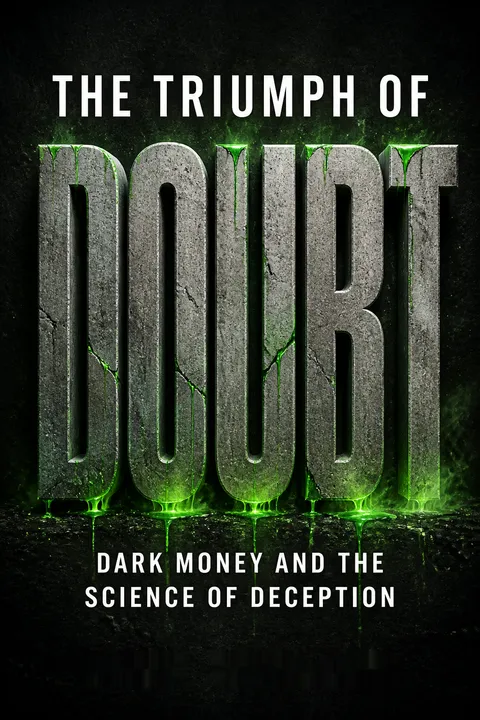

Key Takeaways
1. The "Doubt is Their Product" Playbook: A Corporate Strategy
"Doubt is our product," he wrote, "since it is the best means of competing with the 'body of fact' that exists in the minds of the general public. It is also the means of establishing a controversy."
Systemic corporate behavior. When faced with public concern about dangerous products, corporations instinctively deny allegations, defend their products at all costs, and attack the science. This isn't about finding truth; it's about protecting profits and avoiding financial loss, often at the expense of human health and the environment. This "low road" approach has become a deeply ingrained corporate reflex.
Tobacco's blueprint. The tobacco industry pioneered the "manufacturing doubt" strategy in the 1950s when confronted with evidence linking smoking to lung cancer. They created front groups like the Tobacco Industry Research Committee (TIRC) to produce their own "science" and sow confusion. This playbook became the template for countless other industries facing similar threats to their bottom line.
Delay and profit. While product defense campaigns rarely hold up in the long run, their primary goal is to sow confusion and buy time. This delay allows industries to thrive, maintain market share, and develop new products, compounding their wealth for years. The human suffering and environmental damage in the interim are dismissed as "unfortunate."
2. Mercenary Science: The Rise of Product Defense Firms
Science is supposed to be constant, apolitical, and above the fray. This book is about those science-for-sale specialists and the “product defense industry” that sustains them—a cabal of apparent experts, PR flaks, and political lobbyists who use bad science to produce whatever results their sponsors want.
Science for sale. A booming industry of "product defense" firms like Exponent, ChemRisk, and Gradient employs toxicologists, epidemiologists, and other experts to produce reports that predictably favor their clients. These firms are not seeking objective truth; their financial success depends on delivering conclusions that delay regulation or defeat lawsuits. They "cook the books" to get desired results.
Public relations disguised as science. These firms market their studies as "sound science," but they often just "sound like science." They produce impressive-looking reports, publish in industry-friendly peer-reviewed journals, and provide contrarian sound bites for media. Their work aims to:
- Influence regulatory agencies.
- Defend against lawsuits.
- Discredit independent academic research.
Manufacturing uncertainty. The core strategy is to dispute any conclusion that might support regulation. Animal studies are deemed irrelevant, human data dismissed as unrepresentative, and exposure data discredited as unreliable. The constant refrain is "too much doubt," "not enough proof of harm," or "not enough proof of enough harm," even when evidence is overwhelming.
3. The NFL's Head Doctors: A Case Study in Denial
Faced with initial evidence of widespread, progressive, catastrophic brain damage among its former players, the NFL might have taken steps to find out what’s happening, or at least how to address it. This is not what happened.
Denial and defense. When early evidence of chronic traumatic encephalopathy (CTE) emerged in the 1990s, the NFL, like Big Tobacco, denied and defended. They formed the "Mild Traumatic Brain Injuries (MTBI) Committee," staffed by conflicted physicians with financial ties to the league, who predictably minimized or denied long-term effects of head trauma. Their studies were published in a journal whose editor was also an NFL consultant.
Ignoring overwhelming evidence. Despite mounting evidence from autopsies of deceased players (like Mike Webster and Junior Seau) showing severe CTE, the MTBI committee continued to churn out studies exonerating head impacts. They even suggested professional players' brains were "resistant to brain damage." This charade bought the league time but led to a national uproar and congressional scrutiny.
Retracting support. When the NFL donated $30 million to the National Institutes of Health (NIH) for concussion research, they expected to control the outcome. However, when the NIH awarded the grant to independent researchers at Boston University (who had previously criticized the NFL's settlement offer), the league pulled its funding, demonstrating its true intent to control, not support, objective science.
4. Big Pharma's Opioid Deception: Manufacturing Addiction
The drug industry, in particular Purdue with its newly obtained FDA approval, endeavored to convince physicians that pain was undertreated in our society (arguably true), that the new painkillers were a safe way to treat pain because they were virtually nonaddictive (very untrue), and they could not easily be abused (outrageously untrue).
Misrepresenting addiction risk. Purdue Pharma launched OxyContin in 1995, claiming its long-acting formulation made it less addictive. This claim, approved by the FDA (whose medical officer later joined Purdue), was based on flimsy evidence, including a five-sentence letter to the editor in the New England Journal of Medicine that was heavily and uncritically cited. The company knew the drug wore off early for many, leading to withdrawal and increased dosage.
Inventing "pseudoaddiction." Opioid manufacturers promoted the idea that craving for drugs was due to unrelieved pain, not addiction, and called it "pseudoaddiction." This concept, based on a single case study, justified prescribing more opioids. Influential physicians, paid millions by drug makers, became "key opinion leaders" to spread this narrative, often recanting later.
Front groups and loopholes. The industry funded "patient-advocacy" groups like the American Pain Foundation to promote long-term opioid use and lobby against regulatory changes. They exploited FDA loopholes, using unbranded ads to downplay addiction risks while adhering to stricter rules for specific product ads. This multi-pronged campaign, combined with aggressive sales tactics, fueled an epidemic that has killed tens of thousands and decimated communities.
5. Forever Chemicals: DuPont and 3M's Toxic Legacy
The chemical bonds in PFAS are almost impossible to break down. Their “half-life”—basically a measure of how long a molecule lives—in the environment is very, very long, so long the scientists have not been able to even estimate the length.
Ubiquitous and persistent. Per- and polyfluoroalkyl substances (PFAS), used in products like Teflon and Scotchgard, are "forever chemicals" due to their extreme persistence. Discovered in 1938, they are now found in the blood of virtually all Americans and have contaminated drinking water systems globally, posing a major health concern.
Hidden dangers. DuPont and 3M knew about the toxicity of PFAS (specifically PFOA and PFOS) for decades, with internal documents showing:
- High concentrations in factory workers' blood in the 1970s.
- Birth defects in rats and human babies linked to the chemicals in the 1980s.
- Internal safety limits for drinking water far below actual contamination levels.
Despite this, they kept the information secret from workers, residents, and public health agencies.
Product defense and litigation. Facing lawsuits, DuPont hired product defense firms like ChemRisk and TERA to minimize risks and set weak "safe" exposure levels. However, a class-action lawsuit led to the "C8 Studies," a massive independent scientific undertaking that definitively linked PFOA exposure to testicular and kidney cancer, thyroid disease, and other serious conditions. This forced DuPont and Chemours to pay hundreds of millions in settlements.
6. The Deal with Diesel: Polluters' Decades of Obstruction
Although knowledge of the health problems associated with diesel exhaust has informed the United States’ auto policy for decades, the industry’s product defense enablers are also still on the job, working hard—even after decades of ever-increasing scientific understanding—to convince the public that the black smoke is harmless to our health: saying in effect, who you gonna believe—us or your lying eyes?
Persistent pollution. Diesel engines, while efficient, emit a complex mix of gases and tiny particulate matter (DEP) that cause stroke, heart disease, lung cancer, and respiratory illnesses. Despite dramatic improvements in new diesel technology, older, dirtier engines remain prevalent, especially in Europe and the Global South, contributing to hundreds of thousands of premature deaths annually.
Sabotaging research. When the U.S. National Institute for Occupational Safety and Health (NIOSH) and the National Cancer Institute (NCI) launched the "Diesel Miners Study" in the 1990s to investigate DEP's link to lung cancer, the mining and diesel equipment industries (under the MARG Diesel Coalition) waged a multi-year campaign to delay or kill it. They:
- Lobbied Congress to stifle the study.
- Praised the study publicly while trying to sabotage it.
- Took agencies to federal court on technicalities.
- Used a congressional committee to demand drafts and data, effectively giving industry a veto.
Volkswagen's "Dieselgate." The most brazen deception came from Volkswagen, which installed "defeat devices" in 11 million diesel cars worldwide. These devices detected emissions tests and activated pollution controls, making cars appear clean, while in real-world driving, they emitted up to 40 times the legal limit of NOx. This fraud, exposed by independent researchers, led to:
- Billions in fines and buybacks.
- Criminal charges for executives.
- An estimated 1,200 premature deaths in Europe and 59 in the U.S.
7. Sickeningly Sweet: Big Sugar's Calorie Conundrum
That the Sugar Research Foundation’s former chief could transition so seamlessly to defending cigarettes speaks volumes of the work conducted by the SRF. And indeed, the two industries had similar histories.
Blaming fat, not sugar. Starting in the 1950s, the Sugar Research Foundation (SRF) ran a secret disinformation campaign, paying nutrition scientists to promote the idea that dietary fats, not sugar, were the primary cause of heart disease. This strategy, predating Big Tobacco's similar efforts, profoundly influenced American dietary guidelines for decades, allowing increased sugar consumption.
The "energy balance" myth. Coca-Cola funded the Global Energy Balance Network (GEBN) to shift the focus from diet to exercise as the solution to obesity. GEBN, led by academic scientists, claimed "no compelling evidence" linked sugary drinks to obesity, emphasizing that "an energy balance framework is the only framework that makes sense." This was a thinly veiled attempt to deflect blame from sugary beverages.
Funding effect and transparency. Studies funded by sugar and beverage industries are overwhelmingly more likely to find no detrimental health effects compared to independent research. Coca-Cola's "transparency" initiative, listing donations to health organizations, was later found to omit hundreds of academic studies it funded. This systematic manipulation of science continues to sow doubt about the clear links between sugar, obesity, and diabetes.
8. Working the Refs: Industry's Attack on Scientific Agencies
Corporations do not want their products labeled as cancer-causing, for obvious reasons. Accordingly, the scientific and regulatory process leading to a cancer-causing designation can quickly become contested terrain.
Targeting IARC and NTP. The International Agency for Research on Cancer (IARC) and the U.S. National Toxicology Program (NTP) are crucial for identifying carcinogens. Their designations trigger regulation and impact markets, making them prime targets for industry's "working the refs" strategy. Corporations launch sophisticated doubt campaigns to prevent their products from being listed as cancer-causing.
Talc's successful deferral. In 2000, the talc industry, including Johnson & Johnson, mobilized against NTP's proposed designation of talc as a carcinogen. They hired product defense experts like Jim Tozzi (Center for Regulatory Effectiveness) and Alfred P. Wehner, who:
- Argued a "fatal flaw" in NTP's reasoning regarding asbestos contamination.
- Applied political pressure through well-connected lobbyists.
- Sent aggressive communications to NTP officials.
This campaign successfully confused the NTP's Board of Scientific Counselors, leading them to defer, and eventually drop, talc from consideration, despite mounting evidence of its link to ovarian cancer.
Glyphosate's vilification. When IARC classified glyphosate (Monsanto's Roundup) as a "probable" human carcinogen, Monsanto launched a secret "Preparedness and Engagement Plan." This involved:
- Ghostwriting scientific papers published in industry-friendly journals.
- Hiring journalists to discredit IARC.
- Establishing front groups.
- Aggressively attempting to silence scientists.
This campaign aimed to devalue IARC's decision as "political, not scientific," providing cover for regulatory agencies to continue approving the herbicide.
9. The Climate Denial Machine: Fossil Fuels' Existential Threat
The success of the climate change denial machine may have something to do with the public vernacular. The term “climate change” has a nonjudgmental, inoffensive tone, one that minimizes the forces that are driving fierce wildfires, famine, and changes in ocean levels that will soon create millions of refugees.
From "change" to "breakdown." The term "climate change" itself downplays the severity of the crisis, which is better described as a rapid, catastrophic climate breakdown. Despite overwhelming scientific consensus, a powerful "denial machine" has successfully turned climate science into a partisan political issue, particularly within the Republican Party.
Marshall Institute's legacy. The George C. Marshall Institute, founded by Cold War physicists, pioneered the strategy of casting environmental claims as threats to free-market capitalism. They downplayed acid rain and the ozone hole, then applied these tactics to climate change. Frederick Seitz, a Marshall founder, also ran a grant-making program for R. J. Reynolds Tobacco, linking the origins of climate denial directly to Big Tobacco's playbook.
Koch Industries' dark money. Koch Industries, the largest privately held oil company, has bankrolled a vast network of anti-regulatory think tanks and front groups (e.g., Citizens for a Sound Economy, Americans for Prosperity) to undermine climate science. This "dark money" campaign has successfully convinced a substantial portion of Americans that climate action is an attack on "liberty," making climate denial a loyalty test for GOP politicians.
10. The Political Party Line: Science as an Adversary
On matters related to science and regulation, this claim is patently false. The Trump administration’s policies reflect a half-century of Republican hostility toward any scientific evidence that does not align with the needs of the party’s financial benefactors. The coalescence under Trump amounts to nothing more than a rebranding.
Partisan science. The Trump administration's policies on science are not an anomaly but a culmination of decades of Republican hostility towards scientific evidence that conflicts with corporate interests. This anti-intellectualism, fueled by corporate money, has made climate denial a core tenet of the Republican platform.
Defanging regulatory agencies. The GOP's primary objective, cloaked in rhetoric of "liberty" and "personal responsibility," is to lower corporate taxes and reduce regulatory "burdens." This enables polluters and manufacturers of dangerous products to operate with little oversight. They actively work to defund and dismantle public health and environmental agencies, shifting the burden of protection from government to individuals.
Unqualified appointments. The Trump administration appointed numerous individuals with clear conflicts of interest or a history of denying established science to key government positions. Examples include:
- Michael Honeycutt (Texas's chief toxicologist) to chair EPA's Science Advisory Board, despite his history of advocating for looser regulations on mercury and arsenic.
- Louis Anthony Cox (industry consultant) to chair the Clean Air Scientific Advisory Committee, despite his discredited testimony in previous cases.
- Kathleen Hartnett-White (climate denier) nominated to chair the Council on Environmental Quality, who later withdrew after failing to answer basic scientific questions.
11. Weaponized Transparency: Undermining Public Health Science
The new EPA regulation would do the opposite of what its title suggests: it would make it more difficult for EPA to use the findings of scientific investigations to protect public health. It is part of a larger tack utilized across the political right, one that can only be characterized as weaponized transparency: making the data underlying scientific conclusions publicly available, then hiring mercenary scientists to re-analyze it in faulty, specious ways.
The "Secret Science Reform Act." This strategy, pioneered by the tobacco industry and later championed by fossil fuel companies, aims to create "explicit procedural hurdles" for agencies issuing scientific reports. Congressman Lamar Smith's "Secret Science Reform Act" (later the "HONEST Act") sought to forbid EPA from using any study unless all raw data, computer programs, and analysis tools were publicly posted.
Undermining epidemiology. While seemingly promoting transparency, this legislation would effectively render much of environmental science, especially epidemiologic studies, unusable by the EPA. Most human studies guarantee confidentiality, making raw data sharing impossible. Furthermore, it would allow industry to endlessly re-analyze data to create doubt, without the government having resources to counter these efforts.
Trump's end-run. When the HONEST Act failed in the Senate, the Trump administration attempted to implement it through regulation. This move, opposed by leading science organizations and even the Pentagon, would drastically reduce the number of studies EPA could rely on, effectively crippling its ability to protect public health and the environment.
12. Litigation as a Regulator: Forcing Corporate Accountability
Our regulatory agencies are weak and under siege, especially from corporations whose behavior is threatened by regulation, and the courts can be a faster and more effective regulator.
The limits of regulation. The U.S. regulatory system is often slow, under-resourced, and vulnerable to industry influence. When government regulators do catch companies hiding science, penalties are often minimal, failing to deter future misconduct. This leaves a critical gap in protecting public health and the environment.
Toxic tort lawsuits. Litigation, particularly "toxic tort" lawsuits, serves as a powerful, albeit imperfect, alternative regulator. These lawsuits force companies to disclose internal documents during discovery, revealing hidden data and corporate strategies to manufacture doubt. This transparency is crucial for:
- Exposing corporate wrongdoing (e.g., Big Tobacco, DuPont, Monsanto).
- Providing monetary compensation to victims.
- Deterring future harmful behavior through punitive damages.
Shifting costs and changing behavior. While litigation has "frictional" costs, it correctly shifts the financial burden of toxic products back to the corporations that caused the harm. The fear of massive punitive damages (e.g., in talc and glyphosate cases) can compel companies to change their practices, even when regulation fails. For example, lawsuits around diacetyl (popcorn lung chemical) led the flavor industry to virtually stop selling the product.
Review Summary
The Triumph of Doubt receives mostly positive reviews for exposing how industries manipulate science to protect profits at the expense of public health. Readers praise Michaels' expertise and clear writing, finding the book informative and disturbing. Many appreciate the detailed case studies across various industries. Some criticize it as one-sided or repetitive. Overall, reviewers consider it an important work highlighting corporate tactics to sow doubt about scientific evidence, though a few find the political stance too partisan.
People Also Read








Download PDF
Download EPUB
.epub digital book format is ideal for reading ebooks on phones, tablets, and e-readers.








































