
Plot Summary
The Fourth Dimension Unveiled
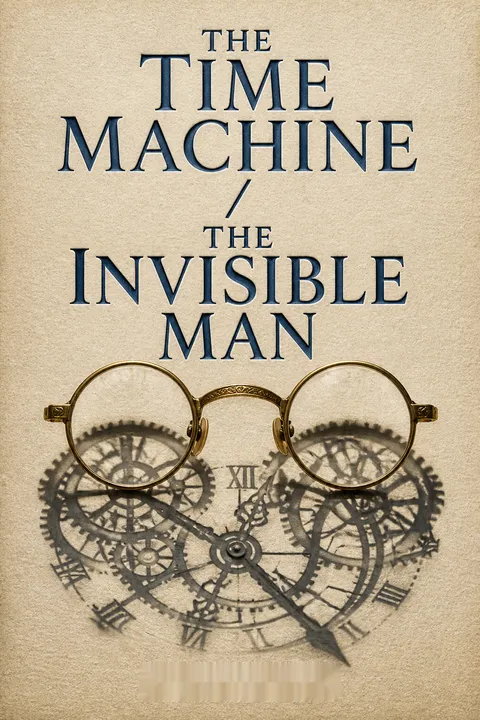
In a cozy Victorian parlor, the enigmatic Time Traveller challenges his skeptical friends with a radical idea: time is not just a measure, but a dimension like length or width, and can be traversed. Demonstrating a small model, he makes it vanish before their eyes, hinting at the possibility of moving through time as one moves through space. The group is both fascinated and incredulous, but the Time Traveller's conviction is unshaken. He reveals he has built a full-sized machine and intends to journey through time itself. The air is thick with anticipation, skepticism, and the thrill of the unknown, as the boundaries of reality and imagination blur, setting the stage for a journey that will question the very nature of existence.
Into the Distant Future
The Time Traveller embarks on his machine, hurtling forward through centuries in a dizzying rush of light and shadow. He witnesses the rise and fall of civilizations, the transformation of landscapes, and the relentless march of time. Finally, he stops in the year 802,701 AD, emerging into a world both beautiful and alien. The air is warm, the sky unfamiliar, and colossal ruins dot a lush, overgrown landscape. A mysterious white Sphinx statue looms, enigmatic and watchful. The Time Traveller is awestruck and apprehensive, realizing he is utterly alone, a stranger in a world shaped by forces and histories he cannot yet comprehend.
The Eloi and the Sphinx
He soon encounters the Eloi, delicate, childlike beings who live in apparent harmony and ease, their days filled with play and pleasure. They welcome him with garlands and laughter, but their innocence is tinged with apathy and a lack of curiosity. The world is a vast garden, devoid of hardship or struggle, and the Eloi's society reflects this stagnation. Yet, the Sphinx statue and the ruins hint at a lost complexity. The Time Traveller's attempts to communicate reveal the Eloi's limited intellect and language. He is both enchanted and unsettled, sensing that beneath the surface beauty lies a deeper, unresolved mystery.
Shadows Below: The Morlocks
The illusion of utopia shatters when the Time Traveller's machine vanishes, and he discovers the existence of the Morlocks—pale, subterranean creatures who emerge at night. The Eloi, though seemingly carefree, are terrified of darkness and the underground wells scattered across the land. The Time Traveller's investigations lead him to the chilling realization that the Eloi are not the sole inheritors of the earth. The Morlocks, adapted to darkness, maintain the machinery of this world and hold a sinister power over the Eloi. The balance between the two species is fraught with fear, dependence, and a history of division.
Weena's Innocence, Eloi's Fear
Amidst his search for answers, the Time Traveller rescues Weena, a gentle Eloi girl, from drowning. She becomes his companion, offering affection and a glimpse of the Eloi's vulnerability. Through Weena, he witnesses the Eloi's terror of night and their utter helplessness in the face of danger. The Time Traveller's protective instincts deepen, and he is moved by Weena's trust and innocence. Yet, the ever-present threat of the Morlocks and the Eloi's inability to defend themselves underscore the tragic consequences of a society that has sacrificed struggle for comfort, leaving its people defenseless and dependent.
Descent into Darkness
Driven by necessity and curiosity, the Time Traveller descends into the Morlocks' underground world. The darkness is suffocating, filled with the hum of machinery and the stench of decay. He glimpses the Morlocks' true nature—carnivorous, cunning, and adapted to a life without light. The revelation is horrifying: the Eloi are not just cared for by the Morlocks, but bred and harvested as livestock. The Time Traveller's theories about social evolution and class division crystallize into a grim vision of humanity's future, where the pursuit of comfort has led to degeneration and predation. He escapes, shaken and desperate to recover his machine.
The Truth of Evolution
Reflecting on his experiences, the Time Traveller sees the Eloi and Morlocks as the end result of unchecked social division and the abandonment of struggle. The Eloi, once the privileged class, have become weak and passive; the Morlocks, once laborers, have adapted to darkness and turned predatory. The world's beauty is a mask for a deeper decay. The Time Traveller mourns the loss of intellect, creativity, and compassion, recognizing that without challenge, humanity has regressed. The future is not a utopia, but a warning—a vision of what happens when progress is mistaken for perfection, and nature reclaims what is not earned.
Fire, Loss, and Escape
Determined to reclaim his machine, the Time Traveller arms himself and sets out with Weena toward the Palace of Green Porcelain, seeking tools and refuge. Their journey is fraught with danger, culminating in a terrifying night in a dark forest, where the Morlocks attack. In the chaos, Weena is lost, and the forest is consumed by fire. The Time Traveller, exhausted and grief-stricken, barely escapes with his life. The loss of Weena is a poignant reminder of the cost of complacency and the fragility of innocence. The world he once saw as idyllic is now a landscape of loss and regret.
The End of All Things
With his machine finally recovered, the Time Traveller ventures further into the future, witnessing the earth's slow death. The sun grows dim and red, the air thin and cold. Life dwindles to monstrous crabs and strange, sluggish creatures. Eventually, even these vanish, leaving only silence and darkness. The end of the world is bleak and lonely, a testament to the impermanence of all things. The Time Traveller returns, forever changed, haunted by the knowledge that progress is not guaranteed, and that the fate of humanity is shaped by its choices and its willingness to adapt.
The Return and Disappearance
Back in his own time, the Time Traveller recounts his journey to his incredulous friends. He offers as proof the strange white flowers Weena gave him, tokens of a lost world. His story is met with skepticism and wonder, but the impact is undeniable. Restless and unsatisfied, the Time Traveller soon departs again, vanishing into the unknown. His fate remains a mystery, but his warning endures: the future is not fixed, and the choices of the present shape the destiny of all. The flowers, fragile and withered, are a symbol of hope and tenderness that persist even as civilizations fall.
The Stranger in Iping
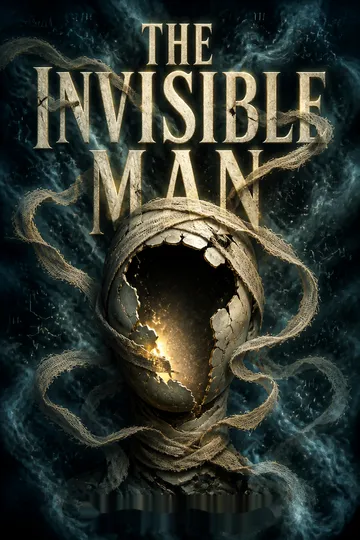
In the quiet English village of Iping, a heavily bandaged stranger arrives at the Coach and Horses inn, seeking solitude and secrecy. His odd appearance and reclusive behavior arouse suspicion and gossip among the villagers. The stranger, irritable and secretive, conducts strange experiments with bottles and chemicals, paying little heed to social niceties. As odd incidents multiply—unexplained noises, violent outbursts, and a dog's attack revealing blackness beneath his clothes—the villagers' curiosity turns to fear. The stage is set for the revelation of a secret that will shatter the tranquility of Iping and unleash chaos.
Bottles, Bandages, and Secrets
The stranger's true nature is gradually revealed through a series of bizarre events. His room is filled with mysterious bottles, and he is seen without hands or face beneath his wrappings. Local curiosity grows, leading to confrontations and rumors of witchcraft, crime, and madness. The stranger, whose name is eventually revealed as Griffin, is a brilliant but tormented scientist who has discovered the secret of invisibility. His isolation deepens as his experiments fail and his funds dwindle. The villagers' suspicion escalates, culminating in a series of confrontations that push Griffin to the brink of violence and despair.
The Unveiling: Invisible Terror
Tensions explode when Griffin, cornered and desperate, reveals his invisibility to the villagers. Stripping away his bandages, he becomes a living nightmare—an unseen force capable of violence and chaos. Panic spreads as Griffin escapes, using his invisibility to terrorize and elude his pursuers. The village descends into confusion and fear, its sense of order shattered by the presence of an invisible, unpredictable threat. Griffin's transformation from misunderstood stranger to hunted outcast is complete, and his descent into madness accelerates as he realizes the true cost of his power.
Marvel's Bargain
On the run, Griffin coerces the hapless tramp Marvel into becoming his unwilling accomplice. Marvel, terrified and manipulated, helps Griffin retrieve his precious notebooks and supplies. Their uneasy alliance is marked by fear, mistrust, and escalating violence. Griffin's isolation and paranoia deepen, and his actions become increasingly ruthless. Marvel, desperate to escape, ultimately betrays Griffin, setting off a chain of events that will lead to Griffin's undoing. The relationship between the two men highlights the corrupting influence of unchecked power and the vulnerability of those caught in its wake.
Flight, Betrayal, and Fury
Griffin's pursuit of Marvel leads to a violent confrontation in a seaside town, where Marvel seeks refuge in a pub. Griffin, wounded and enraged, is forced to flee, his plans unraveling as the world closes in around him. He seeks sanctuary with Dr. Kemp, a former acquaintance, and reveals the story of his transformation—his scientific genius, his descent into obsession, and the moral compromises that led him to invisibility. Kemp, horrified by Griffin's intentions to use his power for a reign of terror, betrays him to the authorities. Griffin's sense of betrayal and isolation reaches its peak, driving him to a final, desperate campaign of violence.
Kemp's Dilemma
Kemp, torn between scientific curiosity and moral responsibility, becomes the focal point of Griffin's wrath. As Griffin's plans for domination and revenge become clear, Kemp must choose between aiding his former colleague or protecting society from his madness. The conflict between scientific ambition and ethical restraint is brought into sharp relief, as Kemp realizes the dangers of knowledge divorced from compassion. The town is mobilized against Griffin, and a tense game of cat and mouse ensues, with Kemp as both target and conscience. The struggle becomes a battle for the soul of science itself.
The Reign of Terror
Griffin, now fully unhinged, declares a reign of terror, threatening to kill anyone who opposes him. The town is gripped by fear, and the authorities launch a desperate manhunt. Griffin's invisibility, once a source of power, becomes a curse as he is hunted, wounded, and increasingly isolated. His actions grow more violent and erratic, culminating in murder and mayhem. The community, once passive and disbelieving, unites in resistance, using every means at their disposal to track and contain the invisible threat. The boundaries between hunter and hunted blur, as Griffin's humanity is consumed by his own creation.
The Final Hunt
In a final, frenzied pursuit, Griffin is cornered and killed by a mob, his body becoming visible in death—a pale, broken figure stripped of all pretense and power. The tragedy of Griffin's life is laid bare: a man destroyed by his own genius, consumed by isolation, and undone by the very gift he sought to master. The aftermath is marked by reflection and regret, as those who witnessed his rise and fall grapple with the implications of his story. The secret of invisibility, locked away in unreadable notebooks, remains a cautionary tale—a reminder of the perils of unchecked ambition and the enduring need for empathy and restraint.
Analysis
Wells's "The Time Machine" and "The Invisible Man" remain enduring works not merely for their imaginative premises, but for their incisive exploration of human nature, society, and the double-edged sword of progress. Both novels interrogate the costs of unchecked ambition—whether the pursuit of comfort and security leads to stagnation and decay, or the quest for scientific mastery results in isolation and destruction. Through vivid allegory and psychological depth, Wells warns that the future is not a utopia guaranteed by technology or intellect, but a fragile construct shaped by empathy, struggle, and ethical restraint. The Eloi and Morlocks embody the dangers of social division and the loss of purpose, while Griffin's tragic arc exposes the perils of genius unmoored from compassion. Ultimately, Wells challenges readers to confront the limits of knowledge, the responsibilities of power, and the enduring need for connection and humility. His stories are as much about the present as the future, urging vigilance, self-awareness, and a commitment to the values that make civilization worth preserving.
Review Summary
The Time Machine and The Invisible Man receive mostly positive reviews, praised for their imaginative concepts, social commentary, and pioneering role in science fiction. Readers appreciate Wells' writing style, character development, and ability to blend fantastical elements with relatable themes. The Time Machine is noted for its exploration of class division and human evolution, while The Invisible Man is lauded for its thrilling narrative and examination of power. Some readers find the language dated or the pacing slow, but overall, both works are considered classics that have stood the test of time.
People Also Read

Characters
The Time Traveller
The Time Traveller is a brilliant, unconventional scientist whose curiosity and intellect drive him to invent a machine capable of traversing time. His relationships with his skeptical friends are marked by a mix of camaraderie and distance, as his ideas often outpace their understanding. Psychologically, he is both idealistic and deeply critical, seeking progress but wary of its consequences. His journey into the future exposes him to the limits of human achievement and the dangers of complacency. The loss of Weena and the horrors he witnesses leave him changed—haunted, reflective, and ultimately isolated. His final disappearance underscores his inability to reconcile vision with reality, making him both a prophet and a cautionary figure.
Weena
Weena, a gentle Eloi girl, embodies the fragility and sweetness of her kind. Her attachment to the Time Traveller is childlike and pure, offering him comfort and a sense of purpose in an alien world. Psychologically, she represents the lost potential of humanity—affectionate but helpless, loving but unable to defend herself. Her tragic fate at the hands of the Morlocks is a poignant symbol of innocence destroyed by forces beyond its control. Weena's flowers, left with the Time Traveller, serve as a lasting reminder of tenderness and gratitude that persist even in a world of decay.
The Eloi
The Eloi are the surface-dwelling descendants of humanity, living in apparent ease and beauty but marked by intellectual and physical decline. Their society is communal, peaceful, and devoid of struggle, resulting in a loss of curiosity, creativity, and resilience. Psychologically, they are childlike, passive, and emotionally shallow, unable to comprehend danger or change. Their relationship with the Morlocks is one of dependence and fear, a distorted echo of past social divisions. The Eloi's fate is a warning against the perils of comfort without challenge and the erosion of what makes humanity vital.
The Morlocks
The Morlocks are the subterranean counterparts to the Eloi, adapted to darkness and driven by necessity. Once the laboring class, they have become the dominant force, maintaining the world's machinery and preying on the Eloi for sustenance. Psychologically, they are cunning, resourceful, and devoid of empathy, shaped by generations of deprivation and adaptation. Their existence is a grim reflection of social stratification taken to its extreme, where the oppressed become oppressors. The Morlocks' relationship with the Eloi is both symbiotic and predatory, a cycle of dependence and violence that underscores the dangers of unchecked division.
Griffin (The Invisible Man)
Griffin is a brilliant but deeply flawed scientist whose discovery of invisibility becomes both his triumph and his undoing. Alienated from society by his appearance and temperament, he pursues knowledge without regard for ethics or consequence. Psychologically, Griffin is driven by pride, resentment, and a growing sense of persecution. His invisibility amplifies his worst impulses, leading to paranoia, violence, and a desire for domination. His relationships—with Marvel, Kemp, and the villagers—are marked by manipulation, betrayal, and escalating hostility. Griffin's downfall is a study in the corrosive effects of unchecked ambition and the human need for connection.
Dr. Kemp
Dr. Kemp is a scientist and former acquaintance of Griffin, whose initial curiosity gives way to horror as Griffin's intentions become clear. He embodies the tension between scientific inquiry and moral responsibility, struggling to balance empathy with the need to protect society. Psychologically, Kemp is cautious, analytical, and ultimately courageous, choosing to oppose Griffin despite personal risk. His actions catalyze the community's resistance and highlight the importance of ethical boundaries in the pursuit of knowledge. Kemp's role as both confidant and adversary underscores the complexities of friendship, loyalty, and duty.
Mr. Marvel
Marvel is a down-on-his-luck tramp who becomes Griffin's unwilling accomplice. His motivations are simple—fear, self-preservation, and a desire for comfort. Psychologically, Marvel is weak-willed, easily manipulated, and opportunistic, but also resourceful in his own way. His relationship with Griffin is one of dependency and dread, marked by moments of comic relief and genuine pathos. Marvel's eventual escape and acquisition of Griffin's notebooks position him as a symbol of the unpredictable consequences of scientific discovery and the resilience of the ordinary individual.
Mrs. Hall
Mrs. Hall, the landlady of the Coach and Horses, is a figure of common sense and determination. Her initial hospitality toward Griffin gives way to suspicion and fear as his behavior grows more erratic. Psychologically, she is grounded, assertive, and protective of her home and community. Her confrontations with Griffin reflect the broader clash between the ordinary and the extraordinary, the known and the unknown. Mrs. Hall's resilience in the face of chaos highlights the strength of everyday people in confronting the disruptions of modernity.
The Narrator (Hillyer)
Hillyer serves as the frame narrator for the Time Traveller's story, providing a lens of skepticism, curiosity, and emotional resonance. His role is to mediate between the extraordinary events and the reader, offering context, reflection, and doubt. Psychologically, Hillyer is cautious, empathetic, and open-minded, willing to entertain the possibility of the impossible. His relationship with the Time Traveller is one of admiration and uncertainty, embodying the tension between belief and disbelief that runs through both narratives.
The Villagers of Iping
The villagers of Iping represent the broader society confronted with the unknown. Their initial curiosity about Griffin turns to fear, suspicion, and eventually collective action. Psychologically, they are a mix of skepticism, superstition, and pragmatism, responding to crisis with both panic and solidarity. Their interactions with Griffin and Marvel highlight the dynamics of rumor, mob mentality, and the struggle to maintain order in the face of disruption. The villagers' ultimate role in Griffin's downfall underscores the power of community and the limits of individualism.
Plot Devices
Dual Narratives and Framing
Both "The Time Machine" and "The Invisible Man" employ a narrative structure that frames extraordinary events within the context of ordinary life. The use of a skeptical narrator (Hillyer) in "The Time Machine" and the shifting perspectives in "The Invisible Man" create a sense of immediacy and credibility, inviting readers to question the boundaries between reality and fiction. The dual narratives—one exploring the future of humanity, the other the dangers of unchecked scientific ambition—mirror and reinforce each other, offering complementary warnings about the consequences of progress without foresight or ethics.
Foreshadowing and Symbolism
Wells uses foreshadowing and symbolism to build tension and anticipation, from the enigmatic Sphinx and the mysterious wells in "The Time Machine" to the gradual unveiling of Griffin's secret in "The Invisible Man." Symbolic elements—the flowers Weena gives, the Sphinx, the bandages and bottles—serve as metaphors for innocence, mystery, and the duality of human nature. The recurring motifs of light and darkness, visibility and invisibility, highlight the themes of knowledge, power, and the limits of perception.
Social Satire and Allegory
Both novels function as allegories, using speculative fiction to critique contemporary society. The division between Eloi and Morlocks satirizes class stratification and the dangers of complacency, while Griffin's descent into madness exposes the perils of scientific hubris and isolation. Wells employs irony and satire to challenge assumptions about progress, morality, and the role of the individual in society. The stories are cautionary tales, warning against the abandonment of empathy, the pursuit of power without responsibility, and the illusion of utopia.
Psychological Realism and Characterization
Wells delves into the psychological complexities of his protagonists, exploring the motivations, fears, and desires that drive their actions. The Time Traveller's idealism is tempered by loss and regret; Griffin's genius is corrupted by pride and alienation. The supporting characters—Weena, Marvel, Kemp, Mrs. Hall—serve as foils and mirrors, reflecting the protagonists' strengths and weaknesses. The interplay of internal and external conflict creates a rich tapestry of emotion and meaning, grounding the fantastical elements in human experience.
About the Author
Download PDF
Download EPUB
.epub digital book format is ideal for reading ebooks on phones, tablets, and e-readers.








































