
Plot Summary
Devil's Thorn on the Step
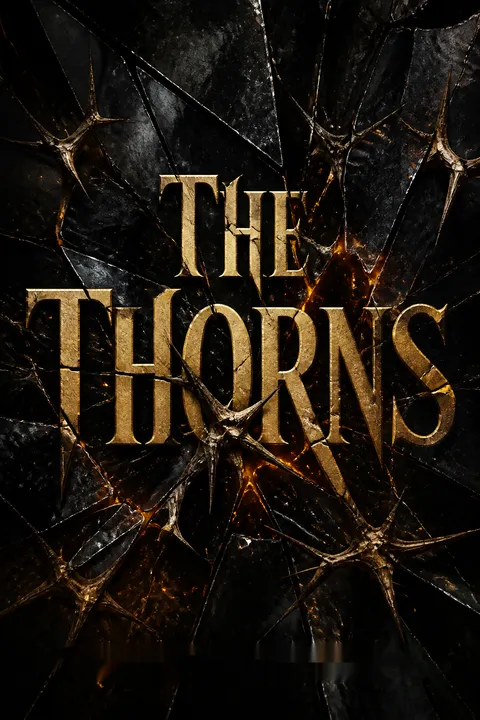
Bethany Sloane, a successful but troubled author in London, is haunted by her past. Her days are marked by chronic pain, anxiety, and a creative block—she cannot kill off her fictional heroine, Sally. One morning, she finds a devil's thorn on her doorstep, a symbol from her South African childhood, and receives an email from Stacey, her childhood best friend and tormentor. The thorn and the message trigger a flood of memories and dread, as Bethany realizes the past she tried to bury is clawing its way back. The devil's thorn is both a literal and psychological harbinger, signaling that the wounds of her youth are not only unhealed but are about to be reopened.
The Thorns Are Chosen
In the arid, sun-baked grounds of a South African boarding school, young Bethany is chosen by Stacey, the charismatic and dangerous older girl, to join "The Thorns"—a trio with Bernie as the third. The girls' feet are toughened by the devil's thorns that litter the ground, a badge of survival and belonging. Stacey's approval is everything; her rules are law. Bethany's longing for acceptance and love is palpable, and she learns quickly that pain and loyalty are the price of inclusion. The Thorns become a microcosm of power, cruelty, and desperate affection, setting the stage for the psychological games that will define Bethany's life.
Reunion in the Diner
Years later, Bethany and Stacey meet in a London diner. The encounter is fraught with tension, nostalgia, and unspoken threats. Their conversation is a dance of memories—peanut butter and Bovril sandwiches, Matron Monday, and the janitor Joe—interspersed with silences heavy with what is left unsaid. Bethany is unsettled by Stacey's presence, her old power undiminished. The past is not safely buried; it is alive in their banter, in the way Bethany still seeks Stacey's approval and fears her judgment. The meeting leaves Bethany shaken, her sense of self destabilized, and the reader senses that the old games are about to begin anew.
Games of Power
Flashbacks reveal the dangerous games the Thorns played: dares, punishments, and rituals of pain and loyalty. Stacey's leadership is absolute—she commands Bethany to prove her love by self-harm, to endure isolation, to betray or be betrayed. The games escalate, blurring the line between play and abuse. In the present, Bethany's adult life is shaped by these formative experiences; her relationships, her writing, and her sense of reality are all warped by the psychological scars inflicted by Stacey. The games are never truly over—they have simply changed form.
The Invisible House
The girls create an "Invisible House" in the bush, a secret place of play and fantasy. Here, they enact dramas of family, punishment, and survival, with Stacey always in control. The house is both sanctuary and site of psychological warfare, a place where reality and imagination bleed together. For Bethany, the Invisible House becomes a metaphor for her fractured mind—a place where she can hide, but also where she is trapped, unable to distinguish between what is real and what is constructed by her need for love and safety.
Mirror Cracks and Memories
As an adult, Bethany avoids mirrors, terrified of the cracks she sees in her reflection—literal and metaphorical. Her sense of self is fractured; she is haunted by visions of blood, glass, and the ever-present threat of breaking apart. The cracks are the legacy of her childhood trauma, the evidence of a mind splintered by abuse, guilt, and longing. The mirror becomes a recurring symbol of her dissociation and the horror of confronting her true self.
Prove You Love Me
Stacey's demands for proof of love escalate: Bethany is ordered to cut herself, to endure humiliation, to keep secrets. The rituals of pain are both a test and a bond, binding Bethany to Stacey even as they destroy her. The need to be loved, to be chosen, overrides Bethany's sense of self-preservation. These acts of self-destruction are mirrored in her adult life, where she sabotages her own happiness and clings to toxic relationships, unable to break free from the patterns established in childhood.
The Trap and the Predator
Bethany's isolation at school makes her vulnerable to Sakkie, the predatory groundskeeper. In a series of harrowing encounters, Sakkie grooms and abuses her, exploiting her need for affection and her confusion about love and loyalty. The trauma is compounded by her inability to confide in anyone—Stacey's approval is still paramount, and Bethany is trapped in a web of secrecy and shame. The abuse is both a literal violation and a metaphor for the many ways Bethany is used and discarded by those she trusts.
Sakkie's Poison
Sakkie's abuse leaves Bethany physically and psychologically scarred. She is manipulated into believing she is complicit, that she is "special" to him, even as he hurts her. The adults around her fail to protect her; the school is a world of neglect and denial. The poison spreads: Bethany's relationships with Stacey, Bernie, and even her own sense of self are contaminated. The cycle of harm is perpetuated as Bethany, in turn, becomes cruel to others, desperate to regain some measure of control and worth.
The Fire and the Split
A disastrous night of games, alcohol, and violence culminates in a fire that destroys the girls' dorm. In the chaos, reality fractures: Stacey dies, but Bethany's mind cannot accept the loss. She dissociates, creating alter egos—Stacey and Beth—who take turns inhabiting her body and mind. The trauma is so great that Bethany's memory splinters; she cannot distinguish between what she did and what was done to her. The fire is both an ending and a beginning—the moment when Bethany's identity is irreparably split.
Ghosts in the Sand
Years later, Bethany and Stacey (or the version of Stacey that lives in Bethany's mind) return to the ruins of their childhood school in South Africa. The landscape is unchanged—devil's thorns, cracked earth, the ghostly remains of the Invisible House and the Tractor Tire. The journey is both literal and psychological: Bethany is forced to confront the ghosts of her past, the truth of what happened, and the reality of her fractured self. The sand is littered with memories, pain, and the ever-present threat of being claimed by the Glass Man—the embodiment of death and madness.
The Final Reckoning
In a climactic confrontation at the Tractor Tire, Bethany faces Stacey and Beth—her alter egos—in a battle for survival. The lines between reality and hallucination blur; violence erupts, and blood is spilled. Bernie, the third Thorn, is drawn into the conflict, and old betrayals are revisited. The struggle is both physical and psychological—a fight to reclaim agency, to kill the ghosts that have haunted her, and to assert her right to exist as herself. The Glass Man, the ultimate predator, is revealed to be the sum of all the harm done to and by Bethany.
Becoming Myself Again
After the violence, Bethany is rescued by Bruce, her husband—who is revealed to be Rowan, her first love, having changed his name to escape the past. In therapy, Bethany begins the long process of integrating her fractured selves, accepting the reality of Stacey's death, and mourning the loss of innocence. The journey is ongoing; the scars remain, but Bethany is no longer defined by them. She learns to live with her trauma, to accept help, and to believe in the possibility of a future not dictated by the past.
The Return to Africa
Bethany's return to South Africa is both a pilgrimage and a reckoning. She revisits the sites of her childhood—the school, the Invisible House, the sugarcane fields—and confronts the memories that have shaped her. The landscape is both familiar and alien, a place of beauty and horror. The journey is necessary for closure; only by facing the ghosts can Bethany hope to lay them to rest. The return is not triumphant, but it is honest—a step toward healing.
The Last Game
The final chapter is a meditation on survival—the games we play to endure, the selves we create to protect ourselves, and the price we pay for belonging. Bethany's story is not one of simple redemption; it is a testament to the complexity of trauma, the persistence of memory, and the possibility of becoming whole, even when wholeness means living with scars. The last game is the choice to live, to accept the past, and to move forward—not as a victim, not as a Thorn, but as herself.
Analysis
Dawn Kurtagich's The Thorns is a harrowing exploration of childhood trauma, psychological fragmentation, and the desperate human need for love and belonging. Through the lens of Bethany's fractured mind, the novel interrogates the ways in which abuse—emotional, physical, and sexual—can warp identity, relationships, and memory. The boarding school setting becomes a crucible for cruelty and complicity, where the absence of adult protection allows harm to flourish unchecked. The novel's nonlinear structure and use of unreliable narration immerse the reader in the confusion and terror of dissociation, making Bethany's struggle for selfhood both visceral and universal. The recurring symbols—devil's thorns, glass, the Tractor Tire—anchor the psychological horror in the physical world, while the games and rituals of childhood become metaphors for the lifelong struggle to break free from toxic patterns. Ultimately, The Thorns is a story of survival—not in the sense of triumph or redemption, but in the hard-won acceptance of one's scars, the integration of fractured selves, and the possibility of forging a future not wholly determined by the past. It is a testament to the resilience of the human spirit, the complexity of healing, and the enduring power of memory.
Review Summary
Characters
Bethany Sloane
Bethany is the protagonist, a woman whose childhood trauma at a South African boarding school has left her with deep psychological scars. Her need for acceptance and love makes her vulnerable to manipulation and abuse, first by Stacey and later by Sakkie. As an adult, she is haunted by dissociation, self-harm, and creative paralysis. Bethany's psyche is split into multiple selves—her "twin" Stacey, the cruel and charismatic leader, and "Beth," the self-destructive alter ego. Her journey is one of painful self-discovery, as she confronts the ghosts of her past, the reality of her own complicity, and the possibility of healing. Her relationship with Bruce/Rowan offers a fragile hope for integration and recovery.
Stacey Preston
Stacey is both Bethany's childhood best friend and tormentor, the leader of the Thorns. She is magnetic, cruel, and fiercely intelligent, wielding power over Bethany and Bernie through games, dares, and psychological warfare. Stacey's approval is everything to Bethany; her betrayal is devastating. After her death in the fire, Stacey becomes an alter ego in Bethany's mind—a voice of command, judgment, and longing. She represents both the allure and the danger of belonging, the seductive pull of power, and the destructive consequences of unresolved trauma.
Bernie
Bernie is the third member of the Thorns, always on the margins of the group. She is desperate for inclusion but is often the target of Stacey and Bethany's cruelty. Her vulnerability makes her both a victim and, eventually, a participant in the cycle of harm. As an adult, Bernie's fate is tragic—she is drawn back into Bethany's unraveling, a reminder of the collateral damage inflicted by toxic friendships and unresolved pain.
Sakkie
Sakkie is the school's groundskeeper, a man who grooms and abuses Bethany under the guise of affection. He exploits her vulnerability, reinforcing her sense of worthlessness and complicity. Sakkie's abuse is both a literal violation and a metaphor for the many ways Bethany is used and discarded by those she trusts. His presence lingers long after he is gone, poisoning Bethany's relationships and sense of self.
Bruce / Rowan
Rowan is Bethany's first love, a boy who offers her genuine affection and understanding. Their relationship is a brief respite from the cruelty of Stacey and the predation of Sakkie. As an adult, Rowan reappears as Bruce, Bethany's husband, having changed his name to escape the past. He is patient, supportive, and committed to helping Bethany heal, even as he struggles with the legacy of their shared trauma. Bruce/Rowan represents the possibility of love that is not conditional or destructive.
Beth (Alter Ego)
Beth is the alter ego that emerges in Bethany's mind after the fire—a voice of self-hatred, compulsion, and despair. She is the part of Bethany that internalizes the abuse, that believes she is unworthy of love, and that seeks punishment. Beth is both a symptom and a survival mechanism, a way for Bethany to distance herself from unbearable pain. Her presence is a constant threat, but also a clue to the depth of Bethany's suffering.
Matron Monday
Matron Monday is the school's caretaker, responsible for the girls' welfare but largely oblivious to the abuse and suffering in her charge. She represents the failure of adult protection, the institutional indifference that allows harm to flourish. Her inability to see or act is a silent but powerful force in Bethany's story.
Joe
Joe is the school's janitor and Sakkie's father. He is a kind presence in the girls' lives, offering cocoa and a semblance of safety. However, his failure to recognize or intervene in Sakkie's abuse makes him a tragic figure—well-intentioned but ultimately complicit. Joe's grief over the loss of his snake, Molly, and his regret over Sakkie's actions mirror Bethany's own sense of loss and guilt.
Gert Van Dyck
Gert is a classmate, initially a bully but later a reluctant ally. His small acts of kindness—lying to protect Bethany, offering support—are a reminder that not all bystanders are indifferent. Gert's presence is a faint glimmer of normalcy and decency in a world otherwise defined by cruelty and neglect.
Dr. Morgan
Dr. Morgan is the psychiatrist who helps Bethany piece together her fractured memories and identity. He is patient, compassionate, and persistent, guiding her through the long process of integration and healing. Dr. Morgan represents the possibility of understanding, the importance of bearing witness, and the slow, painful work of recovery.
Plot Devices
Nonlinear Narrative and Fragmented Memory
The novel employs a nonlinear structure, shifting between past and present, childhood and adulthood, reality and hallucination. This fragmentation mirrors Bethany's dissociative state, her inability to distinguish between what happened and what she remembers. The use of flashbacks, unreliable narration, and shifting perspectives immerses the reader in Bethany's confusion and pain, making the process of piecing together the truth both a narrative and psychological journey.
Symbolism: Devil's Thorns, Glass, and the Tractor Tire
Devil's thorns, glass, and the Tractor Tire recur throughout the novel as symbols of pain, memory, and the inescapability of trauma. The thorns represent both the wounds inflicted and the toughness required to survive; glass is a metaphor for fragility, self-harm, and the shattering of identity; the Tractor Tire is the site of games, violence, and ultimately, reckoning. These symbols ground the psychological horror in the physical world, making the abstract tangible.
Games and Rituals
The games the girls play—truth or dare, rituals of pain, tests of loyalty—are both literal and metaphorical. They are mechanisms of control, initiation, and exclusion, shaping the girls' identities and relationships. As adults, these games persist in new forms, manifesting as self-sabotage, toxic relationships, and the compulsion to reenact old traumas.
Dissociation and Alter Egos
Bethany's mind fractures under the weight of trauma, creating alter egos—Stacey and Beth—who take turns inhabiting her consciousness. This dissociation is both a defense mechanism and a source of horror, as Bethany loses control over her actions and memories. The novel blurs the line between reality and hallucination, forcing the reader to question what is true and what is imagined.
Foreshadowing and Circularity
The novel is rich in foreshadowing—devil's thorns on the step, the Glass Man legend, the recurring games—all pointing toward the inevitable confrontation with the past. The narrative is circular, with events and symbols repeating across time, reinforcing the sense that Bethany is trapped in an endless loop of trauma and survival.
Download PDF
Download EPUB
.epub digital book format is ideal for reading ebooks on phones, tablets, and e-readers.








































