
Key Takeaways
1. Tests are ancient tools for judgment, ability, identity, and health.
Tests are as old as humanity, and there are four fundamental questions that we have never stopped asking: “Are you guilty?” “Are you able?” “Who am I?” and “Am I sick?”
Timeless human inquiry. From the dawn of civilization, humans have sought to understand themselves and others through various forms of testing. Ancient societies used divine judgment to determine guilt, such as the "ordeal by water" in the Code of Ur-Nammu, or psychological methods like the "donkey test" in early India to detect lies based on fear. These early tests, though primitive, laid the groundwork for modern interrogation techniques.
Proving worth and belonging. Beyond guilt, tests have historically served to assess capability and facilitate entry into communities. Initiation rites, courage trials, and inauguration ceremonies required aspirants to prove themselves, a practice still seen in fraternities or indigenous tribes. The Chinese imperial examinations (ke-ju) around AD 600 were a pioneering example of merit-based assessment for bureaucratic roles, combining physical, rote learning, and problem-solving tasks.
Quest for self-knowledge. The third enduring question, "Who am I?", led to early personality classifications like Empedocles' four temperaments (choleric, melancholic, phlegmatic, sanguine) and later physiognomy. While some methods were flawed or misused, they reflect a continuous human desire to quantify and understand individual character, a quest that continues to evolve with scientific advancements.
2. Modern life is a constant barrage of tests, driving self-optimization.
From the cradle to the grave, from head to toe, we’re subjected to a barrage of evaluations, standardizations and formulae: prenatal diagnostics, PISA, GCSEs, driving test, army physical, IQ, EQ, fitness test, depression test, dementia test — life is one long test, and we are just the candidates.
Pervasive evaluation. In contemporary society, testing has become an inescapable part of the human experience, spanning every life stage and aspect. From prenatal screenings to end-of-life diagnostics, individuals are continuously measured, standardized, and categorized. This constant evaluation shapes our educational paths, career opportunities, and even our personal well-being.
Shift to self-optimization. The purpose of testing has evolved from external judgment to internal self-improvement. While historically tests were "prescribed by the powers that be," today, individuals actively seek out personality and performance tests on their own initiative. This reflects a deep-rooted insecurity and a desire to answer the self-optimizing question: "Am I good enough?"
Data-driven existence. Our obsession with self-analysis extends beyond personality to physical performance, exemplified by "self-tracking" apps that record everything from calorie consumption to sleep patterns. This biocentric, egocentric focus transforms individuals into constantly self-evaluating candidates, comparing themselves against norms and peers, making tests the "oracle of the modern world."
3. Personality tests offer frameworks, but true self-knowledge is complex.
The true complexity of a person can never be fully described.
Categorizing the self. Personality tests, like the ancient Greek temperament test or Carl Gustav Jung's psychological types, attempt to classify human characteristics. Jung's work, which introduced concepts like extroversion and introversion, combined with four "functions" (thinking, feeling, sensing, intuition), laid the foundation for many modern typologies. These frameworks aim to provide a structured understanding of individual differences.
The Big Five and MBTI. The "Big Five" model (Extroversion, Agreeableness, Conscientiousness, Emotional Stability, Openness to experience) is a widely accepted academic standard, offering scaled rather than binary results. The Myers-Briggs Type Indicator (MBTI®), though scientifically controversial, remains popular, categorizing individuals into 16 types based on preferences in energy, perception, processing, and orientation. These tools, while imperfect, offer a starting point for self-reflection and understanding interpersonal dynamics.
Limitations and insights. Critics often highlight the binary nature and oversimplification of some personality tests, arguing that they fail to capture the full "complexity of a person." However, even flawed tests can offer valuable insights. Malcolm Gladwell's simple four-question test (canine/feline, specific/vague information, insider/outsider, nibbler/gobbler) demonstrates how even seemingly nonsensical classifications can resonate, providing orientation and fostering awareness of diverse working styles.
4. Physical and mental health tests provide vital self-diagnosis and awareness.
Historically, knowing if you were healthy or ill was a question that could only be answered by experts. Today, apps facilitate self-diagnosis.
Assessing physical well-being. Tests like the Body Mass Index (BMI), Push-up Test, Vertical Jump Test, Cooper Test (stamina), Stork Test (balance), and Sit-and-Reach Test (flexibility) offer quantifiable measures of physical health and fitness. While BMI has limitations, combining it with metrics like Waist-to-Height Ratio provides a more accurate picture of body composition. These tests empower individuals to monitor their physical condition and identify areas for improvement.
Diagnosing mental states. Mental health assessments, such as the Two-Question Depression Test or the Narcissism Test, provide quick indicators for potential psychological issues. The CAGE test helps diagnose problematic alcohol consumption, while the Clock Test can screen for early signs of dementia. These tools, though not substitutes for expert diagnosis, serve as crucial first steps in recognizing symptoms and seeking professional help.
Pain and perception. The Ice Water Test measures pain threshold and tolerance, revealing individual differences in how we experience discomfort. The Sight Test (Snellen Chart) and Handedness Test assess sensory and motor dominance. The Lateralization Test explores brain hemisphere functions, debunking simplistic "left-brain/right-brain" myths. These diverse tests highlight the intricate interplay between our physical and mental states, offering a holistic view of health.
5. Skills and career assessments guide personal and professional growth.
Nowadays, a person is hired not because she can prove that she is able to carry out a particular work process, but because she is the best person for the job.
Optimizing performance. Tests like the Maximization Test (how you decide), Learning Type Test (how you learn), Attention Test (concentration), and Reading/WPM Tests (speed and efficiency) help individuals understand their cognitive strengths and weaknesses. These insights are crucial for personal development, enabling people to tailor their approaches to tasks and improve productivity.
Career fit and advancement. For professional contexts, tests like the Job Test (job-related personality description), Leadership Test (leadership style), and Self-Leadership Test (self-motivation) are invaluable. They help individuals assess their suitability for roles, identify leadership preferences, and develop strategies for self-management. The GMAT, a prerequisite for MBAs, evaluates analytical and verbal reasoning, influencing career trajectories in business.
Beyond the resume. Modern hiring practices increasingly move beyond traditional interviews. Behavioral interviews, for instance, focus on past experiences as predictors of future performance, asking "Tell me about an instance..." rather than hypothetical questions. This shift aims for a more objective evaluation, recognizing that skills and personality fit are as important as qualifications.
6. Lifestyle and cultural tests expose biases and societal influences.
Culture experts like to point out that our pop culture consumer society reflects our social structures and preferences.
Unveiling social biases. The Bechdel Test, which assesses female representation in film, reveals how deeply ingrained androcentric biases are in popular culture. Similarly, the Implicit Association Test (IAT) exposes subconscious prejudices related to race, gender, or age, demonstrating a discrepancy between conscious convictions and implicit biases. These tests highlight the subtle ways societal norms shape our perceptions and behaviors.
Personal values and beliefs. The Politics Test helps individuals map their political orientation on economic (left-right) and social (conservative-liberal) axes, providing clarity in an increasingly complex political landscape. The Social Value Orientation Test categorizes individuals as competitive, individualistic, prosocial, or altruistic, shedding light on how personal values influence resource distribution and cooperation.
Reflecting on identity. The Wealth Test challenges our perception of richness, showing that happiness often correlates with earning more than our peers, rather than absolute income. The Fear of Missing Out (FoMO) Test reveals addiction to social media, where curated online lives foster insecurity and a constant comparison with others. These tests prompt reflection on how external factors and cultural narratives shape our sense of self and well-being.
7. Knowledge and belief tests challenge assumptions and reveal cognitive quirks.
Statements about the future cannot be “right” or “wrong”: many degrees of probability lie between these two extremes.
Assessing general knowledge. Tests like the "Who Wants to Be a Millionaire?" quiz or the "School Test" (1930s knowledge for children) gauge general knowledge, highlighting how educational standards and societal expectations of what constitutes "clever" have evolved. The Familiarity Test, or Over-Claiming Questionnaire (OCQ), cleverly exposes "smart-asses" by including non-existent public figures, revealing our tendency to feign knowledge.
Challenging assumptions. The Oxbridge Test uses brainteasers to assess problem-solving strategies and critical thinking, valuing the process of thought over a correct answer. The Turing Test, designed to distinguish humans from machines, probes the essence of intelligence and empathy, revealing that common sense and personal questions are often more effective than factual queries in identifying AI.
Understanding probability. The Bayesian Estimation demonstrates our inherent difficulty in realistically assessing probability, a cognitive bias exploited by industries like gambling and finance. This test, rooted in Thomas Bayes' work, shows how background assumptions and test results must be combined to calculate accurate probabilities, challenging our gut instincts and highlighting the need for logical reasoning in decision-making.
8. Tests are powerful instruments for orientation, but also for categorization and control.
But tests are also powerful instruments. They decide who belongs and who doesn’t. They draw the line between normal and crazy, between us and others, between below and above average.
Defining boundaries. Tests serve as gatekeepers, establishing criteria for inclusion and exclusion in various domains of life. They delineate what is considered "normal" versus "crazy," "competent" versus "incompetent," and "average" versus "exceptional." This power to categorize profoundly impacts individuals' opportunities, social standing, and self-perception.
Providing orientation. Beyond control, tests offer a crucial sense of direction in a complex world. They help individuals answer fundamental questions like "Who am I?", "What can I do?", and "Where do I stand in comparison to others?" This self-awareness is a prerequisite for personal growth, enabling people to identify their current position and chart a course for their desired future.
The Barnum Effect. The "Barnum Effect" illustrates how easily we can be swayed by generalized personality descriptions, mistaking platitudes for profound personal insights. This phenomenon highlights a subconscious longing for validation and a tendency to emphasize desirable traits. It also underscores that many psychometric tests, rather than revealing unique individuality, often highlight common human experiences and aspirations.
9. Self-evaluation often stems from a deep-rooted insecurity: "Am I good enough?"
To take it to the extreme, you could say that the question “Who am I?” has been replaced with the self-optimizing question “Am I good enough?”
The modern dilemma. The pervasive nature of tests in contemporary society has shifted the focus from a quest for identity ("Who am I?") to a relentless pursuit of self-optimization ("Am I good enough?"). This deep-rooted insecurity drives individuals to constantly evaluate their talents, work-life balance, relationships, and potential against perceived norms and ideals.
Comparison and concealment. In this culture of constant assessment, people are driven to compare themselves to others, often concealing weaknesses and emphasizing strengths. This behavior is fueled by the "prognostic validity" of tests—the promise that past performance and comparisons can predict future success, risks, or possibilities. The allure of predictability makes tests highly attractive, despite their inherent limitations.
The pursuit of happiness. The Subjective Happiness Scale reveals that happiness is often self-defined, influenced by biological disposition, social expectations, and personal behavior. While external factors play a role, our internal narrative and self-acceptance are paramount. The Core Self-Evaluation Test, for instance, measures self-esteem, self-efficacy, neuroticism, and locus of control, showing that self-confident individuals are happier, even if not necessarily more "successful" by external metrics.
10. The future of testing is hyper-personalized and data-driven.
Our every movement, what we eat and drink, our feelings and reactions, are measured, compared, and evaluated.
Life tracking and metadata. The next generation of self-tracking apps will move beyond simple data collation to analyze metadata: where we are, with whom, for how long, and what we consume. This "life tracking" promises to evaluate the financial, emotional, and health gains from our contacts, jobs, and activities, creating an unprecedented level of personal data analysis.
Genetic insights. Gene tests, once prohibitively expensive, are becoming accessible, offering insights into ancestry, predispositions to diseases, and even personality traits. While controversial due to the potential for unforeseen consequences and ethical dilemmas, genetic testing represents a frontier in personalized self-understanding, potentially influencing health insurance, family planning, and identity.
Data dictatorship. We are moving towards a "data dictatorship" where measurability is the prevailing ideology. Our online comments, ratings, and social media interactions constantly generate "scores" that contribute to our digital profiles. This hyper-personalized, data-driven future transforms every aspect of our lives into a continuous test, making tests the ultimate "oracle of the modern world."
Review Summary
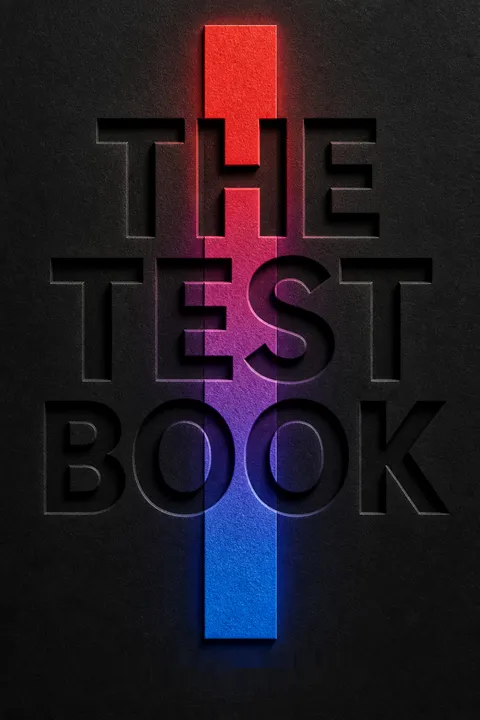
The Test Book receives mixed reviews, averaging 3.51 stars. Readers appreciate its concise, entertaining format condensing various psychological and personality tests into accessible quizzes. Many find it fun and insightful for self-reflection, praising favorites like the Rorschach and parenting tests. However, critics note the subtitle "64 tools to Lead You To Success" is misleading, as tests are based on pop psychology rather than rigorous science. Some complain about incomplete tests offering only sample questions, inconsistent quality, and limited applicability outside the US. Overall, it's considered an entertaining, quick read for quiz enthusiasts rather than a serious self-improvement tool.
About the Author

Download PDF
Download EPUB
.epub digital book format is ideal for reading ebooks on phones, tablets, and e-readers.








































