
Plot Summary
Forgotten at Sixteen
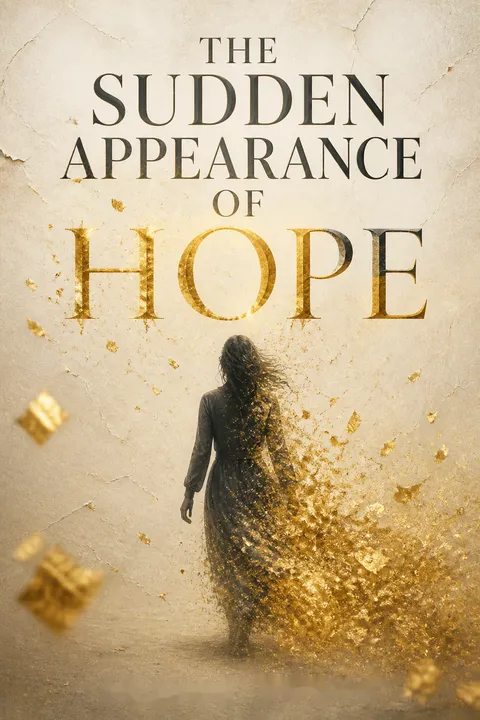
Hope Arden's life changes forever at sixteen, when people begin to forget her existence within minutes of meeting her. Family, friends, teachers—one by one, they lose all recollection of her. This erasure is not dramatic but gradual, a slow fade that leaves Hope isolated and invisible in a world that cannot hold her. She is forced to survive on her own, learning that her condition makes her both vulnerable and uniquely powerful. The pain of being forgotten shapes her identity, stripping away the comfort of relationships and the safety of routine, but also granting her a strange freedom. Hope's journey begins in this void, where she must define herself without the validation or memory of others.
The Perfection App Emerges
In a world obsessed with self-improvement, the Perfection app appears, promising users a path to the "perfect" life. It gamifies every aspect of existence—diet, exercise, spending, socializing—rewarding conformity to its algorithmic ideals with points and exclusive experiences. Hope first encounters Perfection through the phone of Reina, a woman she meets in Dubai. The app's reach is insidious, demanding ever more data and control, and punishing deviation with lost points and social exclusion. Perfection's rise is swift, its influence spreading across classes and continents, shaping not just individual behavior but the very definition of worth and success.
Reina's Tragedy
Reina, a thoughtful and quietly rebellious woman, is drawn into the orbit of Perfection by her family and social circle. Despite her intelligence and activism, she is worn down by the app's relentless pressure to conform and improve. Hope, who is both friend and stranger due to her condition, witnesses Reina's struggle and eventual suicide. Reina's death is a catalyst for Hope, exposing the app's darker consequences and the emotional violence of a system that equates value with unattainable ideals. The tragedy leaves Hope with guilt, anger, and a burning need to act against the forces that destroyed her friend.
The Art of Theft
Hope's invisibility makes her a natural thief. She learns to navigate the criminal underworld, perfecting the arts of pickpocketing, burglary, and long cons. Her condition allows her to slip past security, evade police, and reinvent herself endlessly. Yet, theft is not just a means of survival—it becomes a way to assert her existence in a world that refuses to remember her. The thrill of the heist is tempered by loneliness and the knowledge that her victories are fleeting, unshared, and uncelebrated. Hope's criminal life is both a rebellion and a resignation to her fate.
Dubai: Diamonds and Death
In Dubai, Hope sets her sights on the Chrysalis diamond, a legendary jewel owned by royalty and coveted by many. The heist is meticulously planned, exploiting her forgettability to bypass layers of security. The theft is successful, but the aftermath is complicated by Reina's death and the growing influence of Perfection. The event draws the attention of powerful figures—royals, tech moguls, and security operatives—setting Hope on a collision course with the creators and enforcers of the new digital order. The Dubai job marks a turning point, where personal loss and professional triumph become inseparable.
Perfection's Seduction
Perfection's grip tightens as it expands globally, seducing users with rewards and social validation. Hope observes how the app transforms lives, relationships, and even bodies, as people undergo treatments to become more "perfect." The app's logic is circular: perfection is defined by the app, and the app is the arbiter of perfection. Those who fall behind are punished with exclusion and shame. Hope's outsider status gives her a unique perspective—she sees both the appeal and the emptiness of the pursuit. The app's promise of happiness is revealed as a mechanism of control, erasing individuality in favor of algorithmic sameness.
The Heist and Its Fallout
The theft of the Chrysalis diamond triggers a global manhunt. Hope is pursued by Gauguin, a relentless security chief, and becomes entangled with Byron14, a mysterious figure on the darknet. The diamond must be fenced, but every transaction is a risk, every ally a potential betrayer. Hope's condition both aids and complicates her escape, as she must constantly reestablish her identity and intentions. The fallout from the heist exposes the interconnectedness of crime, technology, and power, and forces Hope to confront the limits of her own agency in a world that is both forgetful and unforgiving.
The Cost of Invisibility
Hope's life is a study in loneliness. Her relationships are fleeting, her achievements unacknowledged. Attempts at intimacy—romantic, platonic, or familial—are undermined by her condition. Even acts of kindness or cruelty are erased from memory, leaving her with a sense of unreality. Hope turns to knowledge, discipline, and ritual to anchor herself, but the absence of recognition gnaws at her. The cost of invisibility is not just practical but existential: without memory, can a person truly exist? Hope's struggle is to find meaning in the present, to assert her worth in a world that cannot see her.
Fencing the Chrysalis
Selling the stolen diamond is as perilous as stealing it. Hope navigates a labyrinth of fences, couriers, and darknet contacts, each with their own agendas and dangers. The process is fraught with paranoia—every deal could be a setup, every buyer a cop or a killer. Hope's forgettability is both shield and curse, as she must constantly reintroduce herself and reestablish trust. The fencing of the Chrysalis becomes a metaphor for her life: valuable, desired, but ultimately unclaimed and unclaimable. The transaction is never just about money—it is about survival, identity, and the possibility of being remembered.
The Darknet and Byron
Hope's path crosses with Byron14, a legendary hacker and former spy with her own vendetta against Perfection. Their alliance is uneasy, built on mutual need and shared enemies. Byron is both mentor and manipulator, offering Hope resources and information but also using her as a tool in a larger game. The darknet is a world of shifting loyalties, where information is currency and trust is always provisional. Together, they plot to expose and destroy Perfection, but their methods and motives diverge. The partnership forces Hope to question her own ethics and the true cost of rebellion.
Pursued Across Continents
Hope's journey becomes a flight across borders—Oman, Egypt, Turkey, Japan, Korea, America, France, Italy, Scotland. Each new country offers both opportunity and danger, as Hope is hunted by Gauguin, sought by Byron, and shadowed by the consequences of her actions. The chase is relentless, a test of endurance and ingenuity. Hope's condition allows her to slip through cracks, but it also means she can never rest, never build a life. The pursuit is not just physical but psychological, as Hope is forced to confront the emptiness at the heart of her existence.
Encounters with the Law
Hope's interactions with law enforcement are surreal—she is arrested, interrogated, and even imprisoned, but always forgotten. Her crimes are real, but her identity is ephemeral. The law is shown to be both powerful and powerless, able to punish but unable to comprehend or contain someone like Hope. Her relationship with Inspector Luca Evard, a dogged Interpol agent, is complex—he is both adversary and confidant, obsessed with catching her but also drawn to her mystery. Their encounters raise questions about justice, responsibility, and the nature of selfhood in a world where memory is unreliable.
The Loneliness of Hope
Hope's solitude is profound. She seeks connection in fleeting encounters—lovers, friends, fellow outcasts—but is always left behind. Even those who try to remember her are defeated by the inexorable erasure of her presence. Hope's only lasting relationships are with those who are themselves forgotten—children, the elderly, the marginalized. Her attempts to find or create meaning are acts of defiance against oblivion. The loneliness is not just emotional but metaphysical: to be unremembered is to be unreal. Yet, in her isolation, Hope discovers a kind of freedom, a space to define herself on her own terms.
The 106 Club Unveiled
The 106 Club is the pinnacle of Perfection's hierarchy—a secret society of those who have achieved the highest scores and undergone the most radical treatments. Hope infiltrates their world, observing the rituals, surgeries, and psychological manipulations that define membership. The club is a microcosm of the app's ideology: beauty, confidence, and conformity at any cost. The treatments promise happiness but deliver emptiness, erasing individuality and empathy. Hope's investigation reveals the dangers of algorithmic utopianism and the human cost of chasing an unattainable ideal. The club's secrets are both seductive and horrifying.
Treatments and Transformation
Perfection's treatments are a blend of neuroscience, psychology, and technology, designed to rewire the brain for confidence, ambition, and happiness. Hope witnesses—and is subjected to—these procedures, which promise to make her memorable but threaten to erase her soul. The treatments are both miracle and monstrosity, offering relief from pain and anxiety but at the price of authenticity. The process is dehumanizing, reducing people to products, their worth measured in points and compliance. Hope's struggle is to retain her selfhood in the face of forces that would make her perfect—and perfectly forgettable.
The Price of Perfection
The pursuit of perfection reaches its climax at a lavish party in Venice, where the elite of the 206 Club gather to celebrate their transformation. Byron, with Filipa's help, unleashes a catastrophic hack—triggering a mass psychotic break that turns the guests into killers. The massacre is broadcast to the world, shattering the illusion of Perfection and exposing its dangers. The event is both a reckoning and a tragedy, as the dream of a perfect society collapses in blood and chaos. Hope, wounded and powerless, is forced to witness the consequences of her own actions and those of her allies.
Parker: A Mirror Self
In New York, Hope meets Parker, a man with a similar condition—unremembered by all. Their brief relationship is a revelation, a glimpse of what life could be with someone who truly understands. They devise elaborate rituals to remember each other, leaving notes and photographs as anchors in a sea of forgetting. Yet, even this connection is fragile, undone by the relentless erasure of memory. Parker's fate is a warning and a comfort: to be forgotten is to be free, but also to be alone. Hope's encounter with Parker shapes her understanding of herself and her place in the world.
The Venice Massacre
The massacre at the Hotel Madellena is the culmination of all the novel's threads—technology, ambition, loneliness, and rebellion. Byron's plan succeeds, destroying Perfection and its creators, but at a terrible price. The world is forced to confront the dangers of algorithmic control and the illusion of happiness. Hope survives, but is left with wounds—physical, emotional, and existential. The event is both an ending and a beginning, a moment of reckoning that leaves the future uncertain. The cost of revolution is measured in lives and in the loss of innocence.
Aftermath and Reckoning
In the wake of the massacre, Hope recovers in anonymity, her role in the events unacknowledged and unremembered. The world moves on, seeking new distractions and new ideals. Perfection is discredited, its creators disgraced or dead, but the forces that gave rise to it remain. Hope reconnects with her family, especially her disabled sister Gracie, finding solace in small acts of kindness and care. The aftermath is a time of reflection, as Hope considers the meaning of her journey and the possibility of redemption. The reckoning is personal as much as societal—a search for peace in a world that cannot remember.
Choosing to Remember
Hope's final act is to write her story, to inscribe her existence in words that may outlast memory. She reflects on the lessons of her journey—the dangers of perfection, the value of imperfection, the necessity of self-definition. Writing becomes an act of resistance, a way to assert her reality in a world that forgets. Hope chooses to remember herself, to claim her worth and her story. The novel ends with a sense of hard-won acceptance: to be forgotten is not to be worthless, and to live is to choose, again and again, to be oneself.
Analysis
Claire North's The Sudden Appearance of Hope is a profound meditation on memory, identity, and the dangers of algorithmic perfection. Through the lens of Hope Arden's unique condition—being forgotten by all—the novel interrogates what it means to exist in a world obsessed with self-improvement, conformity, and digital validation. The Perfection app is both a plot engine and a symbol, embodying the seductive promise and insidious violence of a society that equates worth with unattainable ideals. The novel's structure—fragmented, recursive, anchored in the present—mirrors Hope's existential struggle, forcing readers to confront the emptiness at the heart of perfectionism and the necessity of self-definition. The story is both a thriller and a philosophical inquiry, blending heist, chase, and psychological drama. Its lessons are urgent and timely: happiness cannot be engineered, worth cannot be measured by algorithms, and freedom is found not in conformity but in the courage to be oneself. In the end, Hope's act of writing her story is an act of resistance—a refusal to be erased, a claim to existence in a world that forgets. The novel challenges us to remember what matters, to embrace imperfection, and to choose, again and again, to be real.
Review Summary
The Sudden Appearance of Hope receives mixed reactions, averaging 3.64/5 stars. Readers praise Claire North's imaginative premise: protagonist Hope Arden is forgotten by everyone within seconds of leaving their sight. Many appreciate the thought-provoking exploration of identity, memory, and social commentary, particularly regarding the dystopian "Perfection" app. The beautiful, philosophical writing divides readers—some find it captivating and extraordinary, while others consider it overly verbose and repetitive. Common criticisms include excessive length, slow pacing in later sections, and literary fiction style rather than expected sci-fi elements. Most agree the concept is brilliant, though execution varies in effectiveness.
People Also Read

Characters
Hope Arden
Hope is the protagonist, a woman erased from memory by all who meet her. Her condition is both a curse and a superpower, making her a master thief but dooming her to profound loneliness. Hope is fiercely intelligent, resourceful, and disciplined, using knowledge and ritual to anchor herself in a world that cannot hold her. Her relationships are fleeting, her achievements unacknowledged, and her pain is both acute and chronic. Psychologically, Hope is shaped by abandonment, guilt, and a relentless search for meaning. Her journey is one of self-definition, as she struggles to assert her worth and reality in the face of oblivion.
Reina bint Badr al Mustakfi
Reina is a friend and brief companion to Hope, drawn into the world of Perfection by family and social pressure. She is intelligent, compassionate, and quietly rebellious, but ultimately overwhelmed by the app's demands and the cruelty of those around her. Reina's suicide is a pivotal event, exposing the emotional violence of perfectionism and the app's power to destroy. Her relationship with Hope is marked by mutual recognition and loss, and her fate haunts Hope throughout the novel. Reina embodies the cost of conformity and the tragedy of unacknowledged suffering.
Byron14 (Siobhan Maddox)
Byron is a former spy and hacker, driven by a vendetta against Perfection and its creators. She is Hope's ally and antagonist, offering resources and knowledge but also manipulating and endangering her. Byron is ideologically driven, willing to use violence and deception to achieve her goals. Her relationship with Hope is complex—part mentorship, part rivalry, part mirror. Psychologically, Byron is marked by loss, obsession, and a willingness to sacrifice others for her cause. She is both a liberator and a destroyer, embodying the dangers of unchecked idealism and the costs of revolution.
Gauguin (Matisse, mugurski71)
Gauguin is a security chief and former lover of Byron, tasked with protecting Perfection and its interests. He is Hope's pursuer and occasional collaborator, driven by guilt, duty, and a sense of personal failure. Gauguin is methodical, disciplined, and emotionally repressed, but his encounters with Hope and Byron force him to confront his own limitations and regrets. His relationship with Filipa and Byron is fraught with unresolved feelings and moral ambiguity. Gauguin's arc is one of penance and disillusionment, as he seeks meaning in a world that has moved beyond him.
Filipa Pereyra-Conroy
Filipa is the scientist behind Perfection's treatments, a woman of extraordinary intellect and deep insecurity. She is manipulated by her brother Rafe and the demands of the market, her work twisted from a tool for healing into a mechanism of control. Filipa is both victim and perpetrator, complicit in the app's rise but horrified by its consequences. Her relationship with Hope is one of mutual recognition and loss, as both women struggle with the costs of their actions. Filipa's psychological journey is marked by guilt, denial, and a desperate search for redemption.
Rafe Pereyra-Conroy
Rafe is the CEO of Prometheus and the public face of Perfection. He is charming, ambitious, and utterly convinced of his own vision. Rafe is both visionary and villain, willing to sacrifice anything and anyone for the success of his product. His relationship with Filipa is exploitative, using her genius for his own ends. Rafe's downfall is a consequence of his hubris and inability to see the dangers of his own creation. Psychologically, he is driven by a need for validation and control, blind to the suffering he causes.
Parker
Parker is a man with a condition similar to Hope's—unremembered by all. Their brief relationship is a revelation for both, offering a glimpse of connection and understanding. Parker is resourceful, funny, and deeply lonely, using his condition for both survival and mischief. His fate is a warning to Hope, showing both the possibilities and the limits of their existence. Psychologically, Parker is marked by resignation and a bittersweet acceptance of his fate.
Inspector Luca Evard
Luca is an Interpol agent obsessed with catching Hope. He is methodical, intelligent, and deeply committed to justice, but his encounters with Hope force him to question the nature of his own morality and the limits of the law. Luca's relationship with Hope is fraught with tension, attraction, and mutual recognition. He is both adversary and confidant, drawn to Hope's mystery but unable to reconcile it with his own values. Psychologically, Luca is marked by loneliness, obsession, and a longing for meaning.
Gracie Arden
Gracie is Hope's disabled younger sister, one of the few people who can sometimes remember her. She is a source of unconditional love and acceptance, grounding Hope in moments of despair. Gracie's vulnerability and resilience are a counterpoint to Hope's isolation, reminding her of the value of care and connection. Psychologically, Gracie is marked by simplicity, joy, and a capacity for forgiveness.
The 106/206 Club Members
The members of the 106 and 206 Clubs are the ultimate products of Perfection—beautiful, confident, and utterly conformist. They are both envied and pitied, their individuality erased by treatments and their happiness revealed as hollow. Their fate at the Venice massacre is a warning about the dangers of algorithmic utopianism and the loss of self. Psychologically, they are marked by emptiness, anxiety, and a desperate need for validation.
Plot Devices
The Condition of Forgettability
Hope's unique condition—being forgotten by all who meet her—serves as both a literal and metaphorical device. It enables her to move unseen, commit crimes, and evade capture, but also isolates her from all human connection. The condition is explored through psychological, social, and philosophical lenses, raising questions about identity, worth, and the nature of existence. It is used to examine the limits of memory, the construction of self, and the consequences of being unacknowledged. The device is reinforced through narrative structure—fragmented, recursive, and anchored in the present tense.
The Perfection App and Treatments
Perfection is both a plot engine and a symbol—the promise of a perfect life, delivered through data, surveillance, and psychological manipulation. The app's gamification of existence, its rewards and punishments, and its invasive treatments drive the story's conflicts and themes. The treatments, blending neuroscience and technology, are both miracle and monstrosity, offering relief from pain but at the cost of authenticity. The app's rise and fall are used to explore the dangers of conformity, the commodification of self, and the emptiness of algorithmic utopianism.
The Heist and Its Consequences
The theft of the Chrysalis diamond is both a thrilling set piece and a catalyst for the novel's larger conflicts. The heist structure allows for exploration of trust, betrayal, and the limits of agency. The consequences of the crime ripple outward, drawing Hope into a web of pursuit, alliance, and moral ambiguity. The heist is used to examine the interplay of power, technology, and identity in a world where memory is unreliable.
The Darknet and Digital Shadows
The darknet serves as a space of both possibility and danger, where information is currency and alliances are provisional. Hope's interactions with Byron, Gauguin, and other digital actors are mediated by anonymity, surveillance, and the constant threat of betrayal. The digital world is both a refuge and a trap, reflecting the novel's themes of invisibility, control, and the search for meaning.
Foreshadowing and Recursion
The novel's structure is recursive, with events and themes repeating in new forms—heists, betrayals, alliances, losses. Foreshadowing is used to build tension and reinforce the sense of inevitability. The present tense narration, anchored in Hope's experience, creates a sense of immediacy and unreality, mirroring her condition. The use of notes, photographs, and recordings as anchors for memory is a recurring device, highlighting the fragility of selfhood and the necessity of self-definition.
About the Author
Other books by Claire North



Download PDF
Download EPUB
.epub digital book format is ideal for reading ebooks on phones, tablets, and e-readers.








































