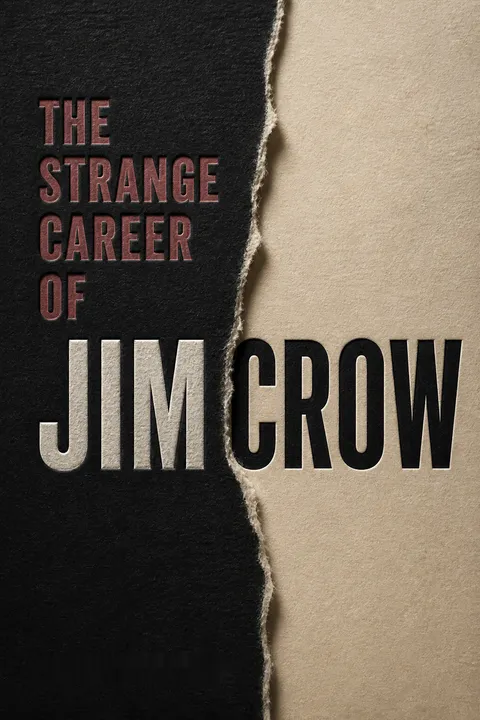

Key Takeaways
1. Jim Crow's Recent and Mutable Origin
Few have any idea of the relative recency of the Jim Crow laws, or any clear notion of how, when, and why the system arose.
Challenging assumptions. Many believed Jim Crow laws were an ancient, immutable part of Southern "folkways," existing since slavery or Reconstruction. However, historical evidence reveals that the rigid, legally enforced system of segregation was a relatively recent development, emerging primarily in the late 19th and early 20th centuries. This challenges the notion that racial separation was an inherent and unchangeable aspect of Southern society.
Post-Reconstruction fluidity. The period immediately following Reconstruction (roughly 1877-1890s) was characterized by a surprising degree of inconsistency and flexibility in race relations. While discrimination existed, it was not yet codified into a comprehensive, statewide system. This era offered "forgotten alternatives" to the extreme racism that would later prevail, demonstrating that the path to rigid segregation was not inevitable.
Laws shaped society. The widespread adoption of Jim Crow laws around the turn of the century fundamentally altered race relations, rather than merely reflecting existing customs. These laws actively pushed Black people further down the social ladder, formalizing and intensifying racial ostracism in ways that had not existed before. This contradicts the idea that "legislation cannot make mores," proving that stateways can indeed change folkways.
2. Pre-Jim Crow South: A Period of Forgotten Alternatives
Alternatives were still open and real choices had to be made.
Inconsistent relations. For more than a decade after Reconstruction, race relations in the South were marked by inconsistency rather than rigid uniformity. Black and white individuals often interacted in public spaces, on common carriers, and in political arenas in ways that would become unthinkable under later Jim Crow laws. This period was a time of "experiment, testing, and uncertainty," where various forms of interaction coexisted.
Three philosophies. Before extreme racism fully took hold, three distinct philosophies of race relations competed for Southern adherence:
- Liberal: Advocated by figures like George Washington Cable and Lewis Harvie Blair, who called for full civil and political equality, and an end to segregation.
- Conservative: Preached paternalism and noblesse oblige, acknowledging Black subordination but rejecting total ostracism and humiliation. Conservatives often sought Black votes and appointed Black individuals to minor offices.
- Radical (Populist): Emphasized economic equality and a common cause between poor whites and Blacks, transcending racial differences. Populists actively integrated Black members into party leadership and campaigned together.
Black political participation. Contrary to popular belief, Black citizens continued to vote in large numbers and hold various offices (local, state, and federal) for two decades after Reconstruction. White politicians, particularly conservatives facing challenges from agrarian radicals, often courted Black voters, demonstrating a pragmatic, if self-interested, willingness to engage across racial lines that would later disappear.
3. The Capitulation to Racism: How Jim Crow Became Law
The South’s adoption of extreme racism was due not so much to a conversion as it was to a relaxation of the opposition.
Weakening restraints. The rise of rigid Jim Crow laws was not due to a sudden embrace of racism, but rather a decline in the forces that had previously checked it. This included:
- Northern liberalism: Retreating from its Reconstruction-era commitments, it increasingly acquiesced to Southern racial views.
- Southern conservatism: Its moral authority was undermined by financial scandals and its use of Negrophobe tactics against Populists.
- Southern radicalism (Populism): After being defeated by conservative fraud and racial demagoguery, many disillusioned Populists turned against their former Black allies.
Legal and political erosion. A series of Supreme Court decisions between 1873 and 1898 systematically weakened federal protections for Black civil rights, culminating in Plessy v. Ferguson (1896) which established "separate but equal" as constitutional. Simultaneously, the U.S. plunged into imperialism, adopting racial superiority doctrines that mirrored Southern white supremacy, further legitimizing discriminatory practices.
Disfranchisement and violence. Southern states implemented elaborate schemes to disfranchise Black voters, using poll taxes, literacy tests, and white primaries, often with "grandfather clauses" to protect poor whites. This was accompanied by intense white supremacy propaganda, sensationalized stories of Black crime, and outbreaks of mob violence and lynching, creating an atmosphere of fear and intimidation that solidified the new racial order.
4. Northern Roots of Segregation
One of the strangest things about the career of Jim Crow was that the system was born in the North and reached an advanced age before moving South in force.
Pre-Civil War segregation. While slavery was a Southern institution, racial segregation in its complete and fully developed form originated in the North. By 1830, with slavery largely abolished, Northern states implemented widespread segregation in public accommodations, transportation, schools, hospitals, and cemeteries. This system was often more rigid and pervasive than any rudimentary segregation seen in the urban South during slavery.
Northern discrimination. Alexis de Tocqueville observed that racial prejudice was stronger in states that had abolished slavery. Northern Black individuals faced severe curtailment of political and civil rights, including disfranchisement and exclusion from juries. Abraham Lincoln himself, a prominent Northern voice, publicly stated his opposition to social and political equality for Black and white races, reflecting the prevailing sentiment.
Post-WWI spread. The "Southern Way" of race relations began to spread as the "American Way" after World War I. Northern cities experienced race riots, the Ku Klux Klan gained national influence, and Black workers faced increased discrimination and exclusion from unions and desirable jobs. This demonstrated that racial prejudice and segregation were not unique to the South but were deeply embedded in national attitudes and practices.
5. The Second Reconstruction: Federal Power Challenges Jim Crow
The real initiative and leadership in the early phases of the Second Reconstruction came neither from the executive nor the legislative branches, but from the federal judiciary.
New forces for change. After World War II, a "Second Reconstruction" began, driven by a confluence of factors:
- Black migration: Massive movement of Black people to Northern cities increased their political power.
- Cold War: International pressure and Communist propaganda highlighted U.S. racial hypocrisy, embarrassing the State Department.
- UN influence: Global scrutiny through the United Nations exposed American race practices.
- Federal expansion: Unprecedented growth of federal power extended its reach into areas like employment, housing, and education.
Executive and judicial action. President Harry Truman initiated significant changes, establishing the Fair Employment Practices Committee, creating a Civil Rights Committee, and issuing executive orders to end discrimination in federal employment and desegregate the armed services. The Supreme Court, reversing its historical role, took the lead in dismantling Jim Crow by striking down segregation in interstate transportation, housing covenants, and the white primary, leading to a resurgence of Black voting and office-holding.
Military integration. Truman's order to desegregate the armed services was particularly impactful. Despite initial resistance, the Korean War forced integration, proving its effectiveness and leading to widespread desegregation in military bases globally. Hundreds of thousands of service members, both Black and white, returned to civilian life with unprecedented experiences of interracial contact and equality, challenging deeply ingrained prejudices.
6. Brown v. Board of Education: The Legal End of Jim Crow
We conclude that in the field of public education the doctrine of “separate but equal” has no place. Separate educational facilities are inherently unequal.
The pivotal decision. On May 17, 1954, the Supreme Court, in Brown v. Board of Education, delivered a unanimous opinion declaring segregation in public schools unconstitutional. This landmark ruling dismissed historical arguments as "inconclusive" and asserted that "public education in the light of its full development and its present place in American life" could not tolerate segregation, as it generated "a feeling of inferiority" in Black children.
Erosion of "separate but equal." The Brown decision was the culmination of earlier Supreme Court rulings that had progressively broadened the definition of "equality" in higher education, making "separation" increasingly incompatible with it. Cases like Sweatt v. Painter (1949) and McLaurin v. Oklahoma (1950) had already chipped away at the legal basis for segregated professional and graduate schools, setting the stage for the broader challenge to public school segregation.
Beginning of the end. The Brown decision marked the "beginning of the end of Jim Crow" as a legal system. While the Court postponed immediate implementation, calling for "all deliberate speed" in its 1955 decree, the principle was clear: legal segregation in public education was no longer permissible. This ruling provided a powerful legal foundation for the burgeoning civil rights movement and signaled a fundamental shift in the nation's approach to racial equality.
7. Southern Resistance and the Rise of Direct Action
The long-feared and long-predicted reaction in the South was at last under way and gaining ground rapidly.
Initial optimism fades. Following the Brown decision, initial Southern responses were surprisingly restrained, leading to some optimism about peaceful adjustment. However, this quickly gave way to "massive resistance," spearheaded by figures like Senator Harry F. Byrd and organizations like the Citizens Councils. States adopted "interposition" resolutions, declared federal rulings "null and void," and passed numerous pro-segregation laws, including measures to close public schools or fund private ones to avoid integration.
Federal inaction and defiance. President Eisenhower's reluctance to enforce the Brown decision, coupled with his belief that "you cannot change people's hearts merely by law," emboldened Southern defiance. The Little Rock crisis in 1957, where Governor Orval Faubus used national guardsmen to block Black students, forced Eisenhower to deploy federal troops, but desegregation stalled significantly in the following years, with many Southern schools remaining segregated.
The Negro awakening. In 1960, the "sit-in" movement, initiated by Black college students in Greensboro, North Carolina, sparked a wave of non-violent direct action across the South. This, along with "freedom rides" and boycotts, challenged segregation in public spaces and exposed the brutality of white resistance. The movement, led by figures like Martin Luther King, Jr., gained national attention and spurred the Kennedy and Johnson administrations to commit to stronger civil rights legislation.
8. The Paradox of Progress: Urban Riots and Shifting Goals
The apparent paradox of these unprecedented outbursts of black violence, disorder, and frustration exploding just at the peak of optimism bred of the civil rights movement and national commitments for improvement so recently made by the federal government came as a profound shock to many whites.
Post-1965 violence. Just five days after the Voting Rights Act of 1965, the Watts riot erupted in Los Angeles, marking the beginning of four summers of unprecedented racial violence in Northern and Western cities. These riots, unlike earlier civil rights protests, were largely confined to Black districts and targeted symbols of white authority and property, driven by grievances over police brutality, discrimination, and a sense of powerlessness.
Unfulfilled expectations. This wave of violence occurred precisely when the civil rights movement was achieving its greatest legislative victories. The paradox was explained by "relative deprivation": the Southern struggle had raised expectations among Northern Black communities, but these expectations were unmet by the realities of de facto segregation, white flight to suburbs, and worsening economic conditions (automation, unemployment) in their own cities.
Shifting movement dynamics. The urban riots highlighted the incongruity between the needs of Northern ghettos and the integrationist goals of the Southern civil rights movement. This led to a fundamental shift in the movement's orientation, with new leaders, strategies, and rhetoric emerging. Less emphasis was placed on civil rights and integration, and more on economic demands, liberation, and various forms of Black nationalism, often accompanied by violent rhetoric.
9. Black Separatism and White Backlash: A New Polarization
Our Nation is moving toward two societies, one black, one white—separate and unequal.
Rise of separatism. The disillusionment following the civil rights victories led some Black leaders and organizations, like CORE and SNCC, to embrace Black separatism, rejecting integration and assimilation. Influenced by figures like Malcolm X and the Black Panthers, this movement advocated for racial purity, pride, and total separation, often using militant rhetoric and even violence, though it remained a minority view among Black Americans.
White alienation and backlash. Simultaneously, a large class of alienated white Americans, particularly working-class individuals, felt their grievances were ignored while Black aspirations were prioritized. They resented Black advances, opposed government programs for minorities, and associated urban riots and social problems with race. This "white backlash" found a national champion in Governor George C. Wallace, whose anti-busing stance and appeal to "little people" shifted the center of national politics to the right.
Nixon's "Southern Strategy." President Richard Nixon capitalized on this white backlash with his "Southern Strategy," slowing federal spending for Black advancement and advocating for "benign neglect" of the race issue. While the Supreme Court forced rapid desegregation in Southern schools in the early 1970s, Northern cities faced growing de facto segregation and intense opposition to busing, effectively transferring the desegregation battleground from South to North.
10. The Enduring Dilemma: Integration vs. Identity
So long as it had been truculently withheld, it had seemed infinitely more desirable than when it was grudgingly proffered at prices that seemed too high.
Confused goals. After two decades of the civil rights crusade, the goals of integration became increasingly confused. While Southern schools made significant progress in desegregation, Northern cities struggled with de facto segregation, white flight, and fierce opposition to busing. This led some Black leaders to question the value of integration, especially when it seemed to come at the cost of community control and cultural identity.
The "Second Atlanta Compromise." A pragmatic compromise emerged in Atlanta, where Black leaders accepted continued de facto segregation in exchange for administrative control of the predominantly Black school system. This "Second Atlanta Compromise" sparked fears among integrationists that it represented a betrayal of their cause and a return to "separate but unequal," albeit with Black leadership.
Unresolved tensions. The debate between integrationists and separatists highlighted the complex, unresolved tensions facing Black Americans. While mass opinion still favored integration, the challenges of achieving it (white flight, busing controversies) and the desire to preserve Black identity and culture fueled separatist arguments. The legal end of Jim Crow did not erase the handicaps inflicted by the system, leaving Black Americans to navigate a future where the promise of integration often came with a high, and sometimes unacceptable, price.
Review Summary
The Strange Career of Jim Crow receives mostly high praise (4.14/5 stars) for debunking the myth that segregation was an ancient Southern tradition. Readers appreciate Woodward's demonstration that Jim Crow laws only emerged in the 1890s, not immediately after the Civil War. Many note the book's historical significance, with Martin Luther King Jr. calling it the "bible of the Civil Rights Movement." Reviewers value its brevity and accessibility. Common criticisms include the later editions' weaker contemporary analysis, lack of footnotes, and Woodward's integrationist perspective that dismisses Black nationalist movements. Several note the book remains relevant to understanding modern racial issues.
People Also Read



Download PDF
Download EPUB
.epub digital book format is ideal for reading ebooks on phones, tablets, and e-readers.








































