
Key Takeaways
1. The Art Historical Canon is Fundamentally Biased
Had I essentially been looking at the history of art from a male perspective? The answer was yes.
A glaring omission. The author's personal revelation at an art fair—where not a single artwork was by a woman—sparked a critical inquiry into the pervasive underrepresentation of women artists in the art historical canon. This imbalance is not merely anecdotal but deeply systemic, reflecting centuries of male-centric narratives that have shaped what is considered "great art." The traditional list of defining artists, from Giotto to Hirst, is almost exclusively male, leaving countless female pioneers unacknowledged.
Statistical evidence. The exclusion is starkly quantified by research:
- A 2019 study of eighteen major US art museums found 87% of artworks were by men and 85% by white artists.
- London's National Gallery collection comprises just 1% women artists.
- The Royal Academy of Arts only hosted its first solo exhibition by a woman in its main space in 2023.
These figures underscore a profound gender imbalance that has historically denied women their rightful place in art history.
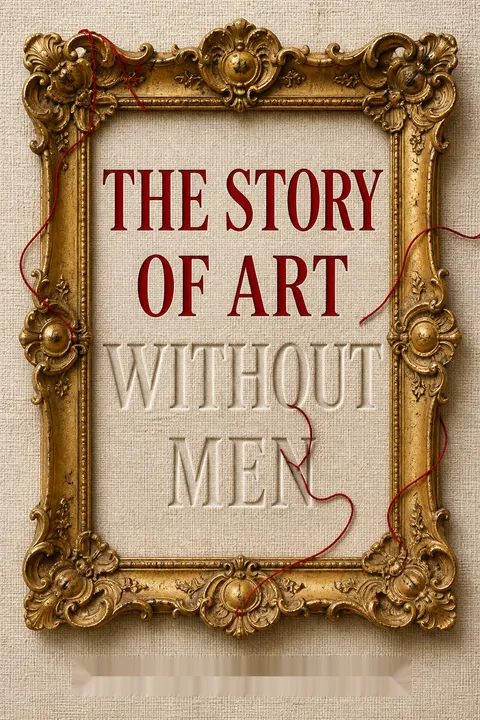
Challenging the narrative. The book's very title, "The Story of Art Without Men," directly confronts E. H. Gombrich's influential "The Story of Art," which famously included only one woman in its sixteenth edition. This re-evaluation is crucial because art reflects society, history, and culture. Without diverse voices, our understanding of these broader contexts remains incomplete and skewed, necessitating a collective effort to reinsert women and other underrepresented figures into the mainstream.
2. Centuries of Societal Barriers Constrained Women Artists
To be taken seriously as an artist in Renaissance Europe, a liberal arts education was required: the study of literature, mathematics, perspective and, significantly, human anatomy – drawing from art and live models, including nudes. All of this was, however, off-limits for women.
Systemic disadvantages. From the Renaissance through the 19th century, women faced immense educational, personal, and professional setbacks that severely limited their artistic pursuits. Access to fundamental training, such as studying human anatomy from live models, was denied to them, crippling their ability to tackle "high art" genres like historical or biblical scenes. This institutional exclusion was compounded by social norms that confined women to domestic spheres and dismissed their intellectual capabilities.
Limited opportunities. Most female artists were either daughters of artists or wealthy noblemen, gaining access to studios only through familial connections. Even then, their experience was restricted:
- They couldn't wander unchaperoned in public spaces like churches or cultural centers, vital for artistic inspiration.
- They were often relegated to "craft" or "design," genres not considered "fine art."
- Art dealers sometimes replaced female signatures with male ones to increase market value.
These barriers meant that a woman's artistic success often depended on the patronage or support of a powerful man.
The "passive sex" stereotype. Prevailing attitudes, such as the Victorian belief in women's "smaller," less "creative" brains, made it difficult for them to be taken seriously as professionals. Despite these formidable obstacles, women artists persevered, often rejecting gender conventions and pioneering new approaches, laying the groundwork for future generations to challenge these ingrained prejudices.
3. Women Artists Innovated Within and Subverted Limitations
But let us not dwell on the hierarchies of subject imposed in the past; let us instead celebrate the greatness of such works since women did come to perfect these genres, monopolising their markets, and even subverting them with proto-feminist twists.
Mastering "acceptable" genres. Confined largely to still life and portraiture—genres deemed accessible and socially respectable for women—artists like Sofonisba Anguissola, Lavinia Fontana, and Clara Peeters not only perfected these forms but infused them with innovative techniques and subtle subversions. Anguissola's intimate self-portraits and Fontana's detailed depictions of the Bolognese elite showcased exceptional skill, while Peeters famously embedded miniature self-portraits in the reflections of her still lifes, asserting her presence and authorship.
Pioneering new artistic languages. Beyond traditional painting, women artists pushed boundaries in diverse media:
- Giovanna Garzoni blended still life with scientific drawing, creating highly collectible works.
- Maria Sibylla Merian revolutionized botanical illustration, contributing significantly to zoology with her detailed studies of insect metamorphosis.
- Joanna Koerten mastered intricate silhouette paper cutting, creating delicate narrative scenes.
- Mary Delany pioneered collage with her "paper mosaicks" of flowers, a groundbreaking technique in Western art.
These artists demonstrated immense creativity and technical prowess, often working outside the established "fine art" hierarchy.
Defiance through art. These women, unfazed by critics who deemed the painter's brush "manly," found ingenious ways to circumvent societal limitations. Their work, whether through hidden self-portraits or the elevation of "lowly" subjects, subtly challenged patriarchal norms and asserted their identity as serious artists. Their triumphs highlight that artistic greatness is not confined by genre or medium, but by vision and execution.
4. The Rise of Academies Paradoxically Hindered Women
Although academies had existed since the Renaissance, these two were founded with the purpose of providing artists with essential training, a theoretical education, exhibition opportunities (access to patrons for financial gain), preservation of the artist’s work and legacy, and – let’s not forget – prestige. Unsurprisingly, they were not welcoming to women.
Institutional gatekeeping. The establishment of prestigious academies like the Académie Royale in Paris (1648) and the Royal Academy of Arts in London (1768) was meant to professionalize art, but it inadvertently created new barriers for women. These institutions:
- Enforced a strict hierarchy, placing large-scale history paintings at the top and portraiture/still life at the bottom, disadvantaging women who were restricted to the latter.
- Denied women access to crucial training, particularly the study of the nude from life, which was fundamental for "high art."
- Imposed quotas, like the Académie Royale capping female artists at four at any one time, and the Royal Academy failing to admit any women for over a century after its two female founders died.
Subtle resistance and triumph. Despite these systemic exclusions, some women artists achieved remarkable success. Angelica Kauffman, a child prodigy and founding member of the Royal Academy, created ambitious multi-figured history paintings, often subtly inserting herself into the narrative to assert her agency. Her allegorical work "Design" depicted a female artist studying a muscular body cast, highlighting her ingenious workaround for the forbidden life room.
A slow path to equality. The 18th and 19th centuries saw incremental progress, with women eventually gaining access to state-funded art education and the life room by the late 1800s. However, the enduring legacy of academic sexism meant that even when women entered these spaces, their contributions were often undervalued or dismissed. The struggle for full inclusion and recognition continued, paving the way for the more overt feminist activism of later centuries.
5. Modernism's "New Woman" Era Brought New Freedoms and Self-Expression
What I long for is the freedom of going about alone, of coming and going, of sitting on the seats in the Tuileries and especially in the Luxembourg, of stopping and looking at the artistic shops, of entering the churches and museums, of walking about the old streets at night; that’s what I long for and that’s the freedom without which one can’t become a real artist.
Embracing independence. The late 19th and early 20th centuries marked a pivotal shift, as women artists, particularly in Paris, began to enjoy newfound liberties. They could travel independently, attend life classes, and exhibit their work more freely. This era saw the emergence of the "New Woman"—provocative, androgynous, and defiant of traditional gender roles—who used art to explore her identity and challenge societal expectations.
Self-portraiture as liberation. The self-portrait became a powerful tool for women to assert their autonomy and inner lives. Artists like Helene Schjerfbeck, Gwen John, and Paula Modersohn-Becker used this genre to convey:
- Emotional complexity: Schjerfbeck's enigmatic self-portraits revealed shifts in artistic fashion and a woman battling mortality.
- Quiet defiance: John's introspective works projected an inward view of her reclusive world, signifying freedom through personal space.
- Radical self-assertion: Modersohn-Becker, arguably the first woman in Western art to paint herself semi-nude, celebrated her independence and burgeoning new life.
These artists immortalized themselves on their own terms, disclosing truths and desires previously unseen in art.
Beyond the canvas. The influence of French Modernism extended globally, inspiring artists like Florine Stettheimer in America and Georgette Chen and Pan Yuliang in Asia. Stettheimer's nude self-portrait, painted at 44, was a bold declaration of self-ownership, while Chen and Yuliang blended Western modernism with their cultural heritage, using self-portraits to convey confidence, longing, and resilience amidst personal and political upheaval. This era laid the groundwork for women to claim their space and define their narratives in the evolving art world.
6. War and Political Upheaval Fueled Radical Artistic Responses
Responding to changes in all areas of their lives, artists questioned traditions, rejected long-held perspectives and narratives, doing away with the hierarchies between artforms, and employing new palettes for the purpose of expressivity.
Art as a mirror to turmoil. The early 20th century, marked by two World Wars, economic depressions, and rising fascism, profoundly shaped artistic expression. Artists abandoned traditional realism, turning to introspection and emotion to make sense of the chaos. Women artists, in particular, used their work to confront social injustices, political events, and the raw realities of life, often pioneering new media and challenging male-dominated subjects.
Pioneering new forms and techniques:
- Käthe Kollwitz (German Expressionism) used printmaking to depict the grief-stricken and oppressed, her compassionate images revealing the grim rawness of war's impact on mothers and children.
- Hannah Höch (Dada) created satirical photomontages, splicing images from contemporary media to critique political chaos and women's oppression, notably in "Cut with the Dada Kitchen Knife."
- Baroness Elsa von Freytag-Loringhoven (Dada) experimented with "readymades" and "wearable art," challenging artistic conventions and predating Duchamp's famous "Fountain" with her own found objects.
- Jeanne Mammen and Lotte Laserstein (Weimar Era) captured the vibrancy and turmoil of a restructuring Germany, depicting bold, glamorous women in nightclubs or exploring gender identity through poignant portraits, despite the looming threat of Nazism.
Documenting devastation. Photography became a powerful tool for women to intimately capture historical events. Dorothea Lange's iconic "Migrant Mother" defined the Great Depression, while her photographs of Japanese American internment camps exposed injustices. Lee Miller, a renowned war correspondent, documented the horrors of the Holocaust and the devastation of war, often infusing her images with a surrealist atmosphere. These artists used their cameras as a force for change, bringing attention to suffering and challenging official narratives.
7. The Post-War Era: Abstract Expressionism and Experimentalism
Painting is not separate from life. It is one. It is like asking – do I want to live? My answer is yes – and I paint.
A new American avant-garde. In the aftermath of World War II, New York City emerged as the new cultural capital, giving birth to Abstract Expressionism. This movement, characterized by ambitious, energetic, and often colossal abstract paintings, marked a radical departure from traditional representation. Women artists were central to this groundbreaking shift, despite facing significant sexism and a lack of institutional support.
Breaking new ground in painting:
- Janet Sobel, a self-taught artist, pioneered the "all-over" drip painting technique, influencing Jackson Pollock's breakthrough works, though her contribution was largely uncredited.
- Lee Krasner, a formidable and outspoken artist, constantly evolved her style, from luminous "Little Images" to monumental, gestural canvases that visibly expressed her emotions and challenged artistic stagnation.
- Elaine de Kooning reinvented portraiture with action-like gestures, capturing the likenesses of figures like John F. Kennedy with dynamic energy.
- Joan Mitchell transformed paint into gusts of light and movement, creating tough, gritty, yet dazzling canvases that expanded on late-19th-century painting.
- Helen Frankenthaler pioneered the "soak-stain" technique, pouring thinned oil paint onto raw canvas, a method that formed the basis of "Colour Field" painting and influenced male contemporaries.
Sculptural innovation. Louise Nevelson's monochromatic, architectural wall sculptures, amassed from found and discarded objects, reflected New York's urban growth and questioned new types of religious experiences. Her work, like that of the Abstract Expressionists, transformed something old into something new, pushing sculpture in directions that mirrored the city's industrial development. These women, with their fearless ambitions and strong personalities, were instrumental in shaping the trajectory of postwar art, even as their recognition lagged behind their male peers.
8. Feminist Art Movements Fought for Visibility and Systemic Change
I took hold of my own identity, and I said henceforth, I should determine who I am. I reject the definitions which society has given me.
An era of activism. The 1970s exploded as a revolutionary decade for women, fueled by global feminist movements demanding equal rights. In the art world, this translated into fierce protests against institutional sexism and underrepresentation. Women artists, often ignored by mainstream galleries and museums, took matters into their own hands, forming collectives and creating their own spaces.
Building new structures:
- The Ad Hoc Committee of Women Artists campaigned for 50% representation in major exhibitions.
- A.I.R. Gallery opened in New York as the first commercial gallery dedicated to women.
- The Woman's Building in Los Angeles became the first physical space for feminist art and education, fostering critical discussion and artistic development.
- "Where We At" Black Women Artists formed to counter the double exclusion faced by Black women, staging all-Black, all-female exhibitions and supporting each other with domestic duties.
Art as a tool for change. Artists like Judy Chicago, who famously declared her rejection of societal definitions, spearheaded new approaches to art education and art-making. Her work, like "Heaven is for White Men Only," used bold, vaginal forms to critique male-dominated Minimalism. Suzanne Lacy and Ana Mendieta used performance to address violence against women, with Mendieta's "Untitled (Rape Scene)" directly confronting the realities of exploitation.
Challenging traditional narratives. Mary Kelly's "Post-Partum Document" explored the psychological experience of motherhood, while Senga Nengudi's "R.S.V.P." series used stretched nylon stockings to visualize the physical and psychological effects of childbirth. These works, often using unconventional materials and challenging traditional art spaces, redefined what "feminist art" could be, laying the groundwork for future generations to continue the fight for equality and representation.
9. Art as Activism: Addressing Race, Gender, and Social Justice
Every time I think about colour it’s a political statement … It would be a luxury to be white and never have to think about it …
Confronting systemic injustice. The 1960s and 70s Civil Rights Movement and the subsequent Black Arts Movement profoundly reshaped American art, with women artists using their work to advance Black empowerment and beauty. They countered racial stereotypes and advocated for social change, often in opposition to white-dominated aesthetic standards. This activism extended to addressing gender, sexuality, and other forms of discrimination.
Visualizing Black experience:
- Emma Amos, a member of the Spiral collective, explored gender boundaries and Black middle-class life in her vibrant, Pop-like figurative paintings, often disrupting romantic scenes with subtle critiques of societal judgment.
- Betye Saar transformed racist caricatures into symbols of Black power, most notably in "The Liberation of Aunt Jemima," a pivotal work in the Black women's movement.
- Elizabeth Catlett sculpted powerful figures of mothers and children with identifiable Black features, using printmaking to convey social and political messages like "Sharecropper."
- Faith Ringgold's "American People Series" directly addressed racial tensions and violence, culminating in "Die," a stark portrayal of societal conflict. Her "For the Women's House" envisioned a better, more equal future for incarcerated women.
Reclaiming the gaze. Figurative painters like Alice Neel, Sylvia Sleigh, Joan Semmel, and Maria Lassnig reinvented portraiture, challenging centuries of male-dominated depictions of the nude. Neel's raw, honest portraits captured the unguarded selves of her diverse sitters, while Sleigh presented men in provocative, Venus-like poses, repossessing art history from a feminist viewpoint. These artists, alongside photographers like Carrie Mae Weems and Nan Goldin, used their mediums to document humanity, tell emotive stories, and enhance the visibility of underrepresented communities, making art a powerful force for social change.
10. Redefining Art Forms: From Textiles to Public Installations
If I were unable to speak, I could make something, and show it to you, and you would get the idea without my having to verbalize it.
Elevating dismissed media. Historically relegated to "decorative arts" due to their association with women, textiles and embroidery underwent a radical transformation in the mid-20th century. Artists expanded the limits of weaving, adopting ancient techniques and working "off-loom" to create complex, three-dimensional sculptures and immersive installations, finally gaining recognition as "Fibre Art."
Innovations in fiber and beyond:
- Sheila Hicks created vibrant, tactile fiber installations that encourage physical interaction, blurring the lines between art object and viewer.
- Cecilia Vicuña incorporated Indigenous traditions of quipus (knotted communication systems) into her cascading, forest-like fiber works, inviting participation and non-verbal communication.
- Mrinalini Mukherjee configured extraordinary, towering sculptures from dyed rope, using hand-knotting techniques to create regal, expressive figures that oscillate between abstraction and figuration.
- Judith Scott, a self-taught artist with Down's syndrome and deafness, obsessively wrapped and bundled fibers around found objects, transforming them into complex, communicative sculptures.
- Faith Ringgold and Rosie Lee Tompkins continued the tradition of quiltmaking, using narrative patchwork to honor cultural figures, reference childhood memories, and comment on contemporary American society with Pop Art-like collages.
The Gee's Bend legacy. The all-female, African American Gee's Bend Quiltmakers, descended from formerly enslaved people, have maintained a century-long tradition of creating versatile, geometric, and freeform quilts from discarded materials. Their work, now celebrated in major museums, embodies resilience, beauty, and a deep personal history, demonstrating how art can emerge from necessity and community. These artists collectively challenged the hierarchies of art forms, proving that profound artistic expression can be found in any medium.
11. The New Millennium: Decolonizing Narratives and Global Perspectives
I am a Third World artist … from the perspective of the victim … the defeated people, it’s where I’m looking at the world.
Challenging colonial legacies. The new millennium has seen a powerful surge in artists actively decolonizing narratives and confronting historical truths, particularly through public art and monumental installations. The opening of colossal galleries like London's Tate Modern in 2000, with its Turbine Hall, provided unprecedented spaces for ambitious, large-scale works that often engaged with these themes.
Reinventing monuments and public spaces:
- Doris Salcedo's "Shibboleth," a 160-meter crack in the Tate Modern's floor, questioned borders, violence, and immigration, permanently scarring the institution's floor as a reminder of cruel colonial histories. Her "Untitled" installation of stacked chairs spoke of loss and civil war.
- Kara Walker's "A Subtlety, or the Marvelous Sugar Baby," a giant sugar-coated sphinx, confronted the brutal history of slavery and sugar production at a former factory site in Brooklyn. Her "Fons Americanus" at Tate Modern reimagined imperialist fountains to highlight the transatlantic slave trade.
- Adriana Varejão interrogated Brazil's violent past in paintings that fused gruesome, fleshy imagery with pristine tiles, referencing colonial motifs and exposing hidden traumas.
Globalized perspectives. Artists like Julie Mehretu, Sarah Sze, and Katharina Grosse redefine painting and sculpture to encapsulate our complex, globalized world. Mehretu's multilayered paintings reflect the motion of a world on the verge of collapse or transition, while Sze's architectural installations act as microcosms of information overload. Grosse's all-engulfing, spray-painted environments challenge the very idea of what a painting can be, inviting viewers to experience art from within. These artists, often from diverse backgrounds, are actively rewriting lost pasts and exposing historical truths, shaping a more inclusive and critical understanding of art and its role in society.
12. The Ongoing Renaissance of Figuration and Inclusivity
… figuration is still important today because people want to see themselves in art. They want to see their children and their mothers and their selves. In the same way that those people who made cave paintings of handprints wanted to say, “Here I am” … I do not think that much has changed.
A craving for humanity. In an era of rapid technological advancement, dystopian politics, and global crises, there is a profound resurgence of interest in figurative painting. Contemporary artists are using the human form to explore identity, challenge stereotypes, and record real-life interactions, offering a powerful counterpoint to the abstract or conceptual art that dominated previous decades. This renaissance reflects a collective desire to see and understand ourselves and our diverse communities in art.
Rethinking representation:
- Mickalene Thomas elevates Black women in her glittering collages and paintings, reclaiming art-historical compositions and mythologizing everyday spaces.
- Njideka Akunyili Crosby amalgamates personal histories and cultural references in her layered paintings, reflecting the union and disparities between her Nigerian and American worlds.
- Lisa Brice reincarnates female characters from historic paintings, freeing them from passivity and charging them with power and defiance in her cobalt-blue canvases.
- Lynette Yiadom-Boakye creates lyrical, poetic scenes of Black figures from her imagination, imbuing them with personality and psychological depth.
- Toyin Ojih Odutola uses storytelling and meticulously rendered figures to question the history of "myth" and power dynamics, proposing alternative histories free from colonialism.
- María Berrío crafts collaged paintings of courageous women and girls, alluding to political realities and migration through poignant symbolism.
Capturing the present moment. Artists like Chantal Joffe and Celia Paul record intimate, real-life interactions with raw honesty, preserving truths and emotions in their expressive portraits. Jennifer Packer paints politically charged portraits of her community and commemorates lives lost to injustice. Zanele Muholi, a "visual activist," uses self-portraits and documentary photography to memorialize Black queer lives in South Africa, asserting their visibility and humanity. Khadija Saye's self-portraits, tragically cut short by the Grenfell Tower fire, explored identity and spirituality, leaving a timeless legacy. These artists, alongside emerging "New Masters" like Jadé Fadojutimi, Flora Yukhnovich, and Somaya Critchlow, are not just painting figures; they are rewriting art history, confronting contemporary issues, and demanding a more inclusive and representative future for art.
Review Summary
The Story of Art Without Men receives mixed reviews averaging 4.3/5 stars. Readers praise its accessible writing, beautiful illustrations, and success in highlighting overlooked female artists across centuries. Many found it educational and inspiring, calling it an essential introduction to women's art history. However, critics note significant limitations: superficial treatment with artists receiving only brief mentions, lack of depth in analysis, Western-centric focus, inconsistent writing style, and failure to challenge the patriarchal canon it claims to dismantle. Several reviewers criticized it as "neoliberal feminism" that doesn't adequately address intersectionality or acknowledge prior feminist art historians' work.
People Also Read
Download PDF
Download EPUB
.epub digital book format is ideal for reading ebooks on phones, tablets, and e-readers.








































