
Plot Summary
Museum's Hidden Battles
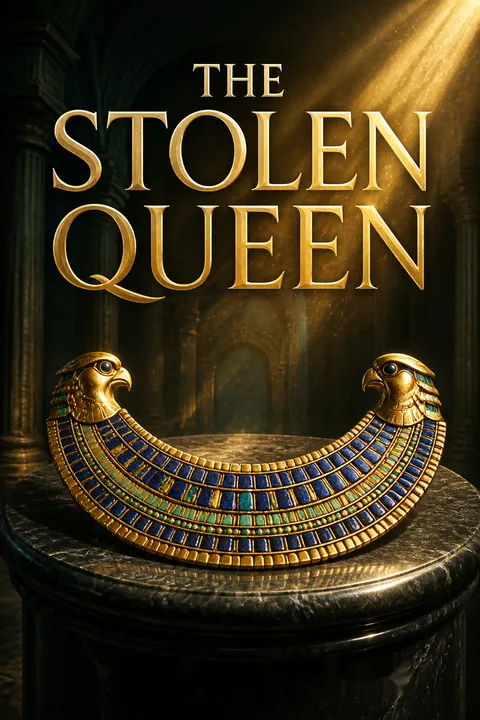
In 1978, Charlotte Cross, associate curator at the Metropolitan Museum's Egyptian Art department, navigates the high-stakes world of museum politics. The Met is abuzz with the upcoming King Tut exhibition and the recent installation of the Temple of Dendur. Charlotte, competent but overlooked, manages her egotistical boss Frederick and a staff stretched thin by the demands of donors and logistics. Amidst the chaos, Charlotte pursues a secret research project on the maligned female pharaoh Hathorkare, hoping to restore her reputation. The museum's Monday closure offers Charlotte a rare moment of peace, but also a reminder of her stalled career and the legacy she yearns to leave. The arrival of a mysterious Egyptian artifact—a broad collar she last saw in Egypt decades ago—shakes her, hinting at unresolved trauma and secrets buried in both the museum's storerooms and her own past.
The Curse of Hathorkare
Flashing back to 1936 Egypt, young Charlotte joins an archaeological dig, eager to prove herself in a male-dominated field. She befriends Henry, a charming English archaeologist, and faces both the thrill of discovery and the dangers of the desert. The team uncovers a tomb containing two mummies—one possibly Hathorkare, the other her nurse—and a stunning broad collar inscribed with the female pharaoh's name. The find is shadowed by tales of a curse: those who remove Hathorkare's treasures from Egypt meet misfortune. Charlotte's own life becomes entwined with the legend as she falls in love with Henry, faces professional jealousy, and senses that the past is never truly dead. The curse's shadow lingers, foreshadowing tragedy and loss.
Daughters and Mothers
In 1978 New York, nineteen-year-old Annie Jenkins juggles waitressing, cleaning, and caring for her fragile, aging-model mother, Joyce. Their relationship is fraught with codependency, financial instability, and unspoken resentments. Annie's dreams of a better life are stifled by her mother's needs and her own lack of opportunity. A chance errand for their landlady leads Annie into the Met's Costume Institute, where she meets the legendary Diana Vreeland and is swept into the glamorous chaos of preparing for the Met Gala. Annie's longing for independence and recognition mirrors Charlotte's own struggles decades earlier, as both women seek to define themselves beyond the roles assigned to them by family and society.
The Broad Collar Returns
The sudden arrival of the broad collar at the Met—on anonymous loan—throws Charlotte into turmoil. She recognizes it as the very piece lost in Egypt during a traumatic shipwreck that claimed her husband Henry and infant daughter Layla. The collar's reappearance suggests a tangled web of theft, smuggling, and personal betrayal. Charlotte's quest to uncover the donor's identity is stymied by institutional secrecy and her own fear of confronting the past. Meanwhile, her research on Hathorkare challenges the accepted narrative, threatening the reputations of her male colleagues and the museum's own history. The artifact becomes a symbol of both personal and historical erasure, and the possibility of redemption.
Love and Loss in Egypt
In 1937, Charlotte and Henry marry in Egypt, their union shadowed by professional setbacks and the looming threat of war. Charlotte's pregnancy sidelines her from fieldwork, fueling resentment and anxiety about her future. As the dig season ends and political tensions rise, the couple is forced to flee Egypt with their newborn daughter, Layla. A catastrophic shipwreck on the Nile separates them—Henry and Layla vanish, presumed drowned, while Charlotte survives, traumatized and alone. The broad collar, smuggled in a suitcase, disappears with them. Charlotte's grief is compounded by guilt and the suspicion that her own ambitions and the curse of Hathorkare have doomed her family.
The Met Gala Unravels
Back in 1978, Annie is swept up as Diana Vreeland's assistant, helping prepare the Met Gala's Ballets Russes-themed exhibition. The event is a whirlwind of fashion, egos, and last-minute crises. Charlotte, meanwhile, battles for recognition of her Hathorkare research and tries to protect the newly arrived broad collar from being used as a mere fashion accessory. The night of the gala, a box of supposed butterflies—meant to be released as a spectacle—turns out to be filled with moths, unleashing chaos and threatening priceless costumes. Amid the pandemonium, a thief uses the distraction to steal the Cerulean Queen, a fragmentary statue beloved by Charlotte and Annie alike.
Moths and Mayhem
The moth invasion sends the gala into uproar, drawing security away from the Egyptian galleries. Charlotte and Annie, both implicated in the disaster, realize the theft of the Cerulean Queen was orchestrated to coincide with the chaos. Their pursuit of the thief leads them into the museum's storm drains, where they are attacked and barely escape. Annie's quick thinking and courage save them, but suspicion falls on her as an inside accomplice. The incident exposes vulnerabilities in the museum's security and the personal cost of institutional ambition. Both women are left reeling—Charlotte from the loss of her research file, Annie from the threat of arrest and the collapse of her fragile new life.
The Cerulean Queen Stolen
As the museum reels from the theft, Charlotte's research on Hathorkare is stolen, accompanied by a threatening note to "mind your own business." The broad collar's provenance is called into question, and Charlotte suspects a connection between the theft, her missing file, and the shadowy organization Ma'at, dedicated to repatriating Egyptian antiquities. Annie, now homeless and jobless after her mother's betrayal, is taken in by her landlady and resolves to clear her name. Both women are driven by a need for justice—Charlotte for the truth about her family and the artifacts, Annie for her own redemption.
Secrets in the Storm Drain
Charlotte and Annie's pursuit of the thief leads them into the museum's labyrinthine storm drains, where they confront danger and the reality that the theft is part of a larger, international operation. The Cerulean Queen is smuggled out of the country, hidden in a plaster King Tut souvenir. The women's alliance deepens as they face physical peril and institutional indifference. Their determination to recover the statue and uncover the truth about Ma'at propels them toward Egypt, where the answers to both personal and historical mysteries await.
The Past Resurfaces
Charlotte and Annie travel to Egypt, each seeking closure—Charlotte for her lost daughter and husband, Annie for her own sense of worth. They navigate the complexities of modern Egypt, from the crumbling Egyptian Museum to the bustling bazaars and ancient tombs. Their investigation leads them to Leon, Charlotte's former colleague and suspected smuggler, and to Mona, a Met docent trainee with ties to Ma'at. The search for the Cerulean Queen and the truth about Layla becomes a journey through memory, loss, and the enduring power of maternal love.
The Search for Layla
Clues from the past and present converge as Charlotte and Annie discover that Mona is not Layla, but that Layla may still be alive, hidden in plain sight. The revelation that Henry, Charlotte's husband, survived and started a new life in Geneva with another family complicates the search. The women's investigation uncovers the role of Mona, Leon, and Ma'at in the thefts, and the possibility that Layla is connected to the Winter Palace Hotel in Luxor. The quest for the lost daughter becomes a test of forgiveness, resilience, and the capacity to heal.
Repatriation and Justice
The Cerulean Queen is recovered in Cairo, thanks to Annie's resourcefulness and Charlotte's determination. The statue is returned to the Egyptian Museum, and the Ma'at network is dismantled. Charlotte's research on Hathorkare is restored, and her theory—supported by new evidence from the tomb—reframes the female pharaoh as a wise and effective ruler, not a usurper. The novel grapples with questions of cultural patrimony, the ethics of museum collections, and the meaning of justice for both people and objects displaced by history.
The Truth in the Tomb
A CT scan of the canopic box and mummy from Hathorkare's tomb provides definitive proof of the queen's identity, vindicating Charlotte's years of research. The discovery is celebrated as a triumph for both Egyptian and international scholarship. The moment is marked by a mystical vision—Charlotte sees Hathorkare's spirit, signaling the lifting of the curse and the possibility of peace. The past, once a source of pain and loss, becomes a wellspring of meaning and connection.
The Daughter's Silver Streak
The final clues lead Charlotte and Henry to Fatima, a hotel clerk in Luxor with a distinctive silver streak in her hair—Charlotte's daughter, Layla, long thought lost. The reunion is bittersweet, marked by tears, forgiveness, and the acknowledgment of years stolen by fate and human error. Fatima's life, shaped by love and resilience, mirrors Charlotte's own journey. The circle of mothers and daughters—Charlotte, Fatima, Annie, and even Joyce—finds a measure of closure and hope for the future.
The Final Reunion
Charlotte, Henry, and Fatima embrace as a family, joined by Annie, whose own journey toward independence and self-worth is affirmed. The mysteries of the past are resolved, and the characters find peace in the knowledge that love endures beyond loss. The novel ends with Charlotte choosing to remain in Egypt, dedicating herself to scholarship, family, and the ongoing work of honoring the past. Annie, too, steps into a new life, empowered by her experiences and the bonds she has formed.
New Beginnings in Egypt
In the aftermath, Charlotte becomes a liaison between the Met and the Egyptian Museum, continuing her research and advocacy for Hathorkare. Annie flourishes as Diana Vreeland's assistant, her confidence and sense of purpose restored. The Cerulean Queen and Hathorkare's mummy draw crowds in Cairo, symbols of resilience and the enduring power of women's stories. The novel closes with Charlotte, Fatima, and Annie together in Egypt, their lives forever changed by the search for truth, justice, and belonging.
Analysis
Fiona Davis's The Stolen Queen is a sweeping, emotionally resonant novel that explores the intersections of personal and historical loss, the erasure and reclamation of women's stories, and the ethics of cultural heritage. Through its dual timelines and richly drawn characters, the book interrogates the costs of ambition, the weight of secrets, and the possibility of redemption. The narrative's heart lies in the search for lost daughters—both literal and metaphorical—and the healing that comes from confronting the past with honesty and courage. The novel's engagement with the politics of museum collections and repatriation is timely and thought-provoking, challenging readers to consider who owns history and whose voices are heard. Ultimately, The Stolen Queen is a celebration of resilience, the enduring bonds of family (chosen and biological), and the transformative power of truth. It reminds us that the artifacts we treasure are not just objects, but vessels of memory, identity, and hope.
Review Summary
The Stolen Queen receives mixed reviews averaging 3.91 stars. Readers praise the dual timeline between 1936 Egypt and 1978 New York, strong female characters Charlotte and Annie, and atmospheric settings from archaeological sites to the Met Gala. Many appreciate the Egyptian history and museum culture elements. However, criticisms include predictable plotting, superficial treatment of themes, excessive reliance on coincidences, slow pacing due to timeline switches, historical inaccuracies, and overly neat resolutions. Some found the mystery anticlimactic with villain reveals feeling like "Scooby-Doo" moments. Despite flaws, historical fiction fans generally enjoyed the found-family dynamics and intergenerational friendship.
People Also Read







Characters
Charlotte Cross
Charlotte is the associate curator of Egyptian Art at the Met, a brilliant but underappreciated scholar whose life is shaped by loss, ambition, and a longing for recognition. Her early career in Egypt is marked by love, discovery, and tragedy—the loss of her husband Henry and infant daughter Layla in a shipwreck. Decades later, Charlotte is driven by a need to restore the reputation of the female pharaoh Hathorkare, whose story mirrors her own struggle for agency and respect. Charlotte's relationships—with her colleagues, her partner Mark, and her protégé Annie—are colored by her guardedness and fear of further loss. Her journey is one of confronting the past, reclaiming her voice, and ultimately finding healing through truth and connection.
Annie Jenkins
Annie is a nineteen-year-old New Yorker trapped in a codependent relationship with her mother, Joyce. Resourceful, hardworking, and quietly ambitious, Annie dreams of a life beyond waitressing and cleaning. Her chance encounter with Diana Vreeland at the Met propels her into the world of high fashion and museum intrigue. Annie's psychological arc is one of self-discovery—learning to assert herself, take risks, and value her own contributions. Her bond with Charlotte becomes a surrogate mother-daughter relationship, offering both women a chance at healing. Annie's journey from self-doubt to empowerment is central to the novel's emotional core.
Henry Smith / Darius Farid
Henry is Charlotte's first love and the father of Layla. An English archaeologist, he is charming, intelligent, but ultimately flawed—drawn into smuggling antiquities out of Egypt in a misguided attempt to provide for his family. Presumed dead after the shipwreck, he survives and builds a new life in Geneva, marrying Heba and raising Mona. Henry's psychological burden is immense: guilt over his choices, the loss of Charlotte and Layla, and the consequences of his actions. His eventual reunion with Charlotte is fraught with pain, but also offers a chance for forgiveness and closure.
Layla / Fatima
Layla, Charlotte and Henry's daughter, is swept away in the shipwreck and raised by an Egyptian family as Fatima. She grows into a capable, independent woman, working as a hotel clerk in Luxor. Fatima's discovery of her origins is handled with grace and maturity; she honors both her adoptive and biological families. Her silver streak—a genetic marker—serves as a symbol of continuity and belonging. Fatima's presence completes the circle of loss and reunion, embodying the novel's themes of identity, resilience, and the enduring bonds of love.
Mona Salah
Mona is Henry's daughter with Heba, raised in Egypt and Geneva. Intelligent, proud, and fiercely nationalistic, she becomes involved with Ma'at, orchestrating the theft of the Cerulean Queen and the repatriation of Egyptian artifacts. Mona's psychological complexity lies in her need for belonging and her anger at perceived injustices. Her actions, though criminal, are motivated by a desire to reclaim her heritage. Mona's confrontation with Charlotte is a study in the pain of divided loyalties and the consequences of secrets kept too long.
Leon Pitcairn
Leon is Charlotte and Henry's former colleague, a British archaeologist turned smuggler. Charming but untrustworthy, he is involved in the theft of the broad collar and later works with Ma'at. Leon's relationship with Henry is one of rivalry and complicity; with Charlotte, it is marked by betrayal and regret. His survival after the shipwreck and subsequent criminal activities make him a catalyst for the novel's central mysteries.
Joyce Jenkins
Joyce is Annie's mother, a former model clinging to youth and beauty. Emotionally unstable and self-absorbed, she relies on Annie for support while resenting her daughter's independence. Joyce's psychological profile is one of arrested development, unable to accept aging or responsibility. Her relationship with Annie is both toxic and tender, illustrating the complexities of maternal love and the difficulty of breaking free from unhealthy patterns.
Diana Vreeland
The legendary fashion editor and consultant at the Met's Costume Institute, Vreeland is eccentric, demanding, and inspiring. She recognizes Annie's potential and pushes her to grow, serving as both a mentor and a test of Annie's resilience. Vreeland's presence brings glamour and chaos to the narrative, embodying the allure and danger of ambition.
Frederick
Frederick is the head of the Met's Egyptian Art department, more interested in donors and prestige than scholarship. He relies on Charlotte to manage the department's complexities while taking credit for her work. Frederick's resistance to Charlotte's Hathorkare research reflects the institutional barriers faced by women and the inertia of established narratives.
Omar Abdullah
Omar is a pragmatic, affable leader who collaborates with Charlotte on the identification of Hathorkare's mummy. He represents the challenges and opportunities of cultural repatriation, balancing national pride with international cooperation. Omar's role is to facilitate justice for both artifacts and people, embodying the possibility of reconciliation.
Plot Devices
Dual Timelines and Interwoven Narratives
The novel employs a dual timeline structure, alternating between Charlotte's experiences in 1930s Egypt and the events of 1978 New York. This device allows for the gradual revelation of secrets, the layering of personal and historical trauma, and the exploration of how the past shapes the present. The intergenerational connections between Charlotte, Annie, and Layla create emotional resonance and thematic depth.
The Curse and the Artifact
The curse of Hathorkare and the fate of the broad collar and Cerulean Queen serve as both literal and metaphorical plot engines. The artifacts are imbued with personal and cultural significance, representing loss, longing, and the possibility of redemption. The curse motif foreshadows tragedy and tests the characters' courage, while the recovery of the artifacts parallels the healing of personal wounds.
Misdirection and Red Herrings
The novel uses red herrings—such as the mistaken identity of Mona as Layla, the ambiguous motives of various characters, and the shifting alliances within the museum—to keep readers guessing. Foreshadowing is employed through references to the curse, the dangers of ambition, and the fragility of memory. The gradual unveiling of the truth is paced to maximize emotional impact.
Thematic Echoes and Symbolism
The stories of Hathorkare, Charlotte, Annie, and Layla are woven together through recurring motifs: lost daughters, erased women, the struggle for recognition, and the reclamation of agency. The silver streak in Charlotte and Layla's hair, the recurring image of the Cerulean Queen, and the motif of mothers and daughters all serve as symbolic anchors.
Institutional Critique and Repatriation Debate
The novel interrogates the ethics of museum collections, the legacy of colonialism, and the complexities of repatriation. Characters debate the merits of returning artifacts to their countries of origin versus preserving them in Western institutions. The Ma'at organization embodies the radical response to historical injustice, while Charlotte and Annie's evolving perspectives reflect the novel's nuanced approach.
About the Author
Other books by Fiona Davis
Download PDF
Download EPUB
.epub digital book format is ideal for reading ebooks on phones, tablets, and e-readers.








































