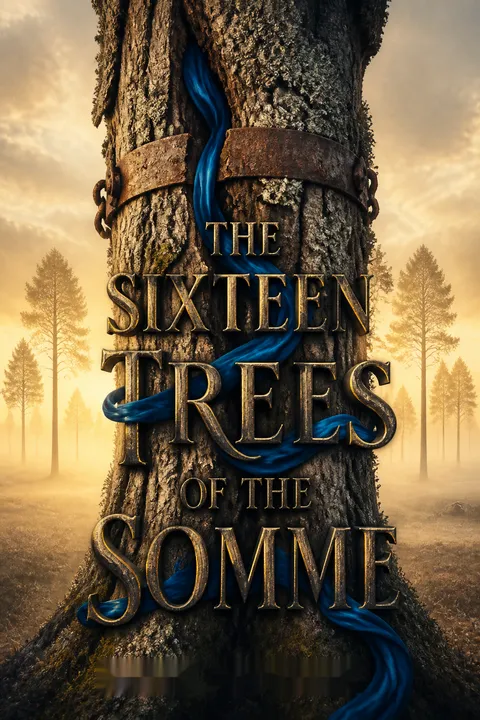

Plot Summary
1. Seeds of Absence
Edvard Hirifjell grows up on a secluded Norwegian farm with his stoic grandfather, called Bestefar, haunted by the early loss of his parents. All that remains are fragmented memories: a scent of his mother, a photograph by the phone, and hushed adult voices. As a child, Edvard believes the easy explanation—that his parents died in a tragic accident in France when he was three. But the details are shadowed and selective. His origins are a tapestry of gaps, filled by hardship and the rural routines of potato planting, fishing, and wooden artifacts. This formative emptiness, marked by the certainty of being "the boy who came back," becomes the seed for both Edvard's identity and his searching nature, as curiosity about his true past begins to take root beneath the daily rituals of rural isolation.
2. Ashes Become Questions
As Edvard moves from guarded childhood to early adulthood, unvarnished truths surface in the least expected places—a faded yearbook, a village's gossip, the quiet bitterness in his grandfather's voice. He discovers disturbing facts about his parents' death from poison gas in war-strewn France, and his own unexplained disappearance and return. Edvard's mind awakens to the mysteries: Why were his parents in the Somme battlefield, a place haunted by unspent shells? Why did no one want to speak of the four lost days? The bonds with his grandfather deepen through shared work and silent support, but a sense of inherited guilt begins to stir. The birch woods above their fields, scarred and banded with iron, seem to hold the same mysterious pain—a quiet accusation that grows as Edvard matures, driving him to seek the history lost in ashes.
3. The Unraveling Orchard
Death returns to Hirifjell with the loss of Edvard's grandfather. The farm, once kept vibrant by shared rituals and silent love, now feels empty and haunted by gaps in understanding. Among the practicalities of funeral arrangements, Edvard begins to uncover secrets long buried under routines: a cryptic, lavish coffin crafted years before; old envelopes marked for the dead; and a connection to a bitter family schism between Edvard's grandfather and great-uncle Einar, a prodigal who vanished and left behind shackled flame-birches. Each revelation widens the rift—between war and peace, family and exile, inheritance and loss. Grief and isolation begin to peel back layers of silence, and Edvard senses that the true shape of his life, and that of the nonconforming orchard, lies not in what flourishes, but in what's been selectively pruned and lost.
4. Coffins and Bitter Wood
The discovery of a magnificent coffin, hand-crafted in art-deco style and sent from the Shetland Islands, opens a portal to the family's core mysteries. Bestefar's death seems less an end than a catalyst, prompting Edvard to dig into the enigma of Einar—the estranged uncle, renowned cabinetmaker, and supposed war casualty who perhaps lived long after his reported death. The birch woods, scarred by Einar's iron bands and hacking, become a living metaphor for trauma and survival. Edvard unearths that both flame-birch and man become beautiful in their wounds. Meanwhile, the family's relationship to rare walnut trees felled during WWI casts a shadow—wood that was supposed to shape heirlooms instead signals inheritance never received. Coffins, woods, and tools form a mosaic of broken trust, muted longing, and unresolved debts, pushing Edvard to leave Norway in search of answers.
5. Ghosts of the Somme
Haunted by images of war graves and the knowledge that his parents' deaths were anything but random, Edvard is propelled toward the Somme, seeking clues in a landscape still heavy with loss. The battlefield is more than history—it is living ground, filled with unexploded shells, wild growth over bodies, and memorials to the vanished. Amid fields, river, and silent woods, Edvard feels the pull of all those who failed to return—from soldiers mourned by generations, to the Daireaux family forever exiled from their trees. The land embodies both the grief and endurance shaping Edvard's own inheritance. In wandering, he realizes that the past is not a distant stage but breathing soil. To make sense of how he survived when others perished, Edvard must step through the shrouds of Somme and listen for the unwritten stories left by war's survivors and exiles.
6. Return to the Birch Woods
Back in Norway, Edvard surveys the birch woods that have watched over his whole life—a haunted, shackled stand, more grave than grove. Bestefar's loss, and the farm's gnawing silence, press him to revisit places formerly avoided, turning the familiar strange. The woods become a site of struggle between what to remember and what to forget. Edvard recalls Einar's pain, his carving of iron and his crafting of beauty from wounds, and finds in the trees both kinship and accusation. The woods mark where the past refuses to die, and where trauma and comfort grow intertwined roots. Wrapped in lingering sorrow, Edvard is unable to let go, sensing he's caught not only by his family's wounds but also by the deeper inheritance of remembering too well, or not enough.
7. Letters and Blue Dresses
Digging through attic and desk, Edvard encounters a trove of hidden letters, a blue dress, and documents that complicate the simple story of his past. Among them, a packet of letters between his mother, Nicole Daireaux, and Einar reveals unspoken affections, war trauma, and the weight of exile. The blue dress—a relic from before death, before migration—becomes an emblem of all that's irrecoverable and desired, a color that haunts Edvard's attempts at resolution. Each letter is a wound opening; stories of adoption, annihilated family, love and betrayal, and the losses inherited alongside survival. Through these tangible remnants, Edvard finds both the comfort of connection to his maternal line and the burden of mysteries unresolved. He begins to see that answers are never total, and that everything personal—clothes, handwriting, music—can become a touchstone for what time otherwise erases.
8. The Island and the Storm
Driven by secrets, Edvard journeys to the Shetland Islands, seeking both a living uncle and the meaning of his own survival. The islands are windswept and almost treeless, yet full of their own sad grandeur—unmoored from the mainland like Edvard feels from his own roots. Here, he uncovers the traces of Einar: a sequestered workshop, exquisite coffins, and notes that read like messages from exile. Caught in storms literal and emotional, Edvard draws near Gwen Winterfinch, a caretaker with a haunted legacy of her own. The storm, and the island's relentless tide, break through the postures and lies each character uses for protection, forcing Edvard to confront loss, desire, and the possibility of kin—a harrowing but necessary embrace of the wild, unpredictable truths that shape every human inheritance.
9. Gwendolyn's Game
Gwen Winterfinch, both confessor and liar, emerges as Edvard's mirror in love and subterfuge. She brings with her the weight of her own inheritance: a family of timber merchants, a ruined mansion, and her grandfather's obsession with lost walnut trees. Their relationship is a volatile blend of candor and concealment, passion and rivalry; Gwen's strategies evoke the duplicity necessary to survive and to belong. Their journey across Shetland and into the heart of the walnut inheritance draws them together and apart—flirting, fighting, cajoling. The questions of love and ownership, guilt and restitution, are played out across games from classes and castes, and become inseparable from the search for truth. Gwen is both lover and adversary—her betrayal and her care force Edvard to reckon with how history, inheritance, and intimacy always complicate each other.
10. Walnut and War Memories
The family legend of the Sixteen Trees of the Somme—magnificent walnuts that survived world war and were poisoned by gas—comes into focus, connecting Edvard's own fractured history to the scars of Europe. At the heart of the story lies the timber destined for greatness but consigned to loss: the trees' wood becomes a currency of memory and grief, sought by both the Daireaux and Winterfinch families. Through letters, old contracts, and the help of a gunsmith, Edvard unpacks the passage of wood from war memorial into furniture, coffins, and a fortune's worth of gunstocks possibly hidden in plain sight. The wood bridges personal and collective trauma, and whether in a boat's frame, a shotgun's grip, or coffins for the dead, it is always inscribed with suffering, beauty, and the irreparable passage of time.
11. The Inheritance Revealed
The secret of the inheritance is at last exposed—both in the literal sense (the walnut built into the boat Patna) and in the deeper reckoning of familial loyalty, guilt, and release. Gwen and Edvard are forced to confront not just the question of ownership, but whether they can trust each other in the shadow of so much loss. Gwen's decision to scuttle Patna—the fortune and the inheritance—embodies a desperate act to free themselves from a legacy that only divides. The act is as much about forgiveness as it is about renunciation, illustrating that true inheritance is not just about what is received but also what is relinquished. In the aftermath, both lovers understand that what remains is not property but memory, pain, and the faint hope of reconciliation.
12. River of the Lost
Edvard's journey returns him to the actual and emotional landscapes of his parents' deaths. Revisiting the Somme, woods, and the river, he pieces together what memory and evidence can offer. The place is unchanged: silent woods, hidden dangers, stagnant water. Immersing himself both physically (swimming across the same pond) and inwardly, he confronts versions of guilt—the possibility that he, a restless child, led his parents to death. Yet in facing the darkest memory, Edvard unspools not just loss but also the ineffable forgiveness threaded through survivor's guilt. The river becomes a crossing not just of geography, but of the boundary between holding on and letting go, bringing Edvard closer to understanding how life, grief, and perseverance flow together.
13. Perch in Saffron
In Authuille, Edvard experiences a rare grace: small details—a meal of perch in saffron, a menu on a restaurant wall—bring back vibrant scraps of lost family life. For the first time, his father's voice returns in memory; ordinary, joyful, and safe. The gentle normalcy of eating with loved ones, the tactile sensations, and the shared excitement infuse Edvard with peace now inaccessible elsewhere. This moment, outside of war and inheritance, illustrates how the heart of a life is not in spectacular trauma but in the warmth of familial routine. Closure, fragile and poignant, is found in the simple act of reliving a last meal, nourishing not just the body but the longing soul.
14. The Price of History
Back in Norway, Edvard works to reclaim normalcy—tending soil, mending fences, and reconciling with past and present loves. The price of history—its claims on identity, loyalty, and future happiness—becomes clear as both he and Gwen struggle to accept the inheritances that matter. In learning whom to trust and how much to let go, Edvard begins to fashion a new adulthood—one that honors both continuity and change. The narrative mingles bitterness about what cannot be put right with gratitude for those who stood by him, and the recognition that healing comes not from answers but from accepting the incomplete and the imperfect, and making peace with both.
15. Driftwood and Forgiveness
Gwen and Edvard are battered by their attempts to keep and destroy the past. Their love is tested, broken, and re-formed in the crises that follow—the scuttling of Patna, the near-fatal accident, and the eventual return to separate ways. The inheritance, embodied in driftwood and remnants, loses its power to control. Both must forgive themselves for wounds and betrayals—Edvard for the child's accident that ended in death, Gwen for her own complicity and hurt. Ultimately, forgiveness does not mean erasure, but the acceptance that wounds endure, that beauty emerges despite damage, and that, like driftwood, one can be both lost and found, transformed by journey and return.
16. Legacy in Flame and Rain
In the final movement, years have passed. The farm is marked by change—new tractors, old memories, and the persistent cycles of blight and bounty. Edvard plants sixteen walnut saplings among the flame-birches, letting personal and historical wounds root alongside hope. He makes peace with both the dead and the future, gifting the blue dress and the flame-birch chest to his daughter, symbolizing a new generational turn—one that acknowledges painful inheritance but insists on growth, beauty, and reconciliation. In the marriage of memory and renewal, the past is both honored and transformed. The flame and rain that once marked loss now nurture kinship and promise, completing Edvard's long journey from ashes to new life.
Analysis
The Sixteen Trees of the Sommeis a profound meditation on inheritance—what is passed down, what is lost, and how survivors either forge connection or perpetuate wounds. Lars Mytting's novel transforms family secrets and historical trauma into an urgent journey across landscapes of memory and mourning. The physical artifacts—coffins, rare woods, blue dresses—evoke both beauty and lingering pain; their presence in the narrative reveals how deeply the past shapes identity, love, and the potential for forgiveness. By braiding personal and collective histories, the novel illuminates how war's aftermath, displacement, and silence echo through the lives of children and grandchildren.
Through Edvard's quest, Mytting interrogates what it means to be "someone the dead can rely on": whether true closure is possible, or only a partial, bittersweet reconciliation with the legacies of violence, shame, and longing that form every life. Love, Mytting suggests, does not erase the scars of history—rather, it helps bear and transform them, making possible the planting of new roots amid old wounds.
The cyclical arc—from abandonment and searching, through fiery reckoning and storm, and finally to a renewal marked by both flame and rain—gives the novel its emotional power. The lessons offered are subtle but enduring: beauty is inseparable from pain; truth must be sought but never fully possessed; and to heal is not to forget, but to accept, forgive, and plant anew. In the end, Mytting delivers a story deeply relevant for a world wrestling with memory, loss, and the hope of renewal—reminding us that, like the scarred trees and driftwood, we embody both what was broken and what survives.
Review Summary
Reviews for The Sixteen Trees of the Somme are largely positive, averaging 4.09/5. Many readers praise the atmospheric settings spanning Norway, Shetland, and France, along with the beautifully crafted prose and compelling multi-generational mystery. The exploration of wood and craftsmanship is frequently highlighted as fascinating. Common criticisms include underdeveloped characters, particularly the protagonist Edvard, who some find selfish and emotionally distant. Some readers felt the pacing was slow and the romantic storylines unconvincing. The translation is generally considered excellent, preserving the Norwegian spirit of the original text.
Characters
Edvard Hirifjell
Edvard is the center of the novel's tangled web—a Norwegian farmer's grandson brought up in the shadow of mysterious loss: the death of his parents in France, and his own four missing days as a child. Raised by a reticent and loving grandfather, he inherits stoicism and responsibility but is also driven by longing, guilt, and the inability to let the past rest. His relationships—with the land, with women, with memory—are mediated by gaps and artifacts: letters, music, wood, and the puzzle of human bonds. Driven by a need to be "someone the dead could rely on," Edvard embarks on a journey across Norway, Shetland, and France to piece together history's fractured narrative. In the process, he moves from anger and helplessness to a fragile acceptance, his interior complexity mirroring the wounded beauty of the wood and earth he tends.
Bestefar (Sverre Hirifjell)
Bestefar raises Edvard with commitment and tacit love, filling the roles of parent, guide, and shield against the world's cruelties. Yet he, too, is caught in history's barbed wire—having fought on the wrong side in WWII, isolated from his village, and marked by schism with his brother. Bestefar is practical, proud, and loyal, yet his tendency to withhold and his own unresolved pain pass trauma down to Edvard. His choices—adopting Edvard, keeping secrets, and striving to redeem past failings—make him the linchpin of the family's uneasy survival. His eventual death releases a flood of unresolved questions, but in his mixture of strength and vulnerability, Bestefar embodies the cost of living with secrets, and the redemptive, if imperfect, power of steadfast love.
Einar Hirifjell / Oscar Ribaut
Einar is both legendary and absent—a master cabinetmaker, charismatic in youth, but forever at odds with Sverre and with himself. His journey from Norway to Paris to Shetland, and through the destructive theaters of WWII, leaves him wounded, reclusive, obsessed with atonement, and yet capable of acts of exquisite artistry and devotion. Einar's relationships—with Isabelle Daireaux, the Daireaux family, and with Edvard's mother Nicole—are fraught with longing and unresolvable guilt. He is both rescuer and bearer of trauma, the creator of objects (coffins, gunstocks, chests) that hold both beauty and pain. Einar's inability to claim happiness, or to bring healing to his estranged family, casts a long shadow. He is the story's most troubled soul, his life a testament to both the wounds war inflicts and the grace of flawed seeking.
Nicole Daireaux (Edvard's Mother)
Nicole, daughter of Isabelle, is an orphan born in Ravensbrück concentration camp, adopted and raised in post-war France. Her attempts to reconstruct her past and identity—changing her name, seeking out Einar, returning to Norway, and loving Walter—are acts of hope against desolation. She is marked by the pain of the Holocaust, by the absence of her birth family, and by the resilience she brings to motherhood. Nicole's longing for kin, for inheritance, and for peace drive the narrative; her presence, glimpsed in fragments, blue dresses, and remembered songs, makes her both lost and enduring. She is the embodiment of what survives horror: incomplete, mysterious, loving, and aching for closure.
Walter Hirifjell
Edvard's father, Walter, is caught between the inherited disgrace of his family's wartime choices and his attempt to build a new life. He, too, is an outsider—fleeing the family farm for Oslo, falling in love with Nicole, and longing for escape from the burdens pressed upon him. Walter's struggles are seen through secondhand impressions: his kind, melancholy presence is palpable in Edvard's brief memories and the images left behind. His love for Nicole and Edvard, and his tragic, accidental end, make him a figure who inhabits the liminal space between past devastation and the tentative hope of renewal.
Gwendolyn (Gwen) Winterfinch
Gwen is a complex foil to Edvard: the ambitious, proud scion of a once-mighty Scottish timber family, burdened by ancestral obsession with the lost walnut trees of the Somme. Her sharpness, guile, and vulnerability make her both antagonist and lover. In the search for the walnut inheritance (and its symbolic resolution), Gwen vacillates between competition and intimacy, honesty and deception. She is literate in the codes and games of class and survival, yet underneath is a lonely, dislocated figure longing for grounding, wrestling with envy, and ultimately torn between possession and absolution. Her relationship with Edvard is passionate, bruising, and ultimately a catalyst for revelation and the breaking of generational curses.
Hanne Solvoll
Hanne personifies what is possible and what is lost in Edvard's Norwegian world—a friend, lover, and confidante who knows Edvard's wounds and strengths. Practical and resilient, she excels at rural life, veterinary work, and grounding the farm. She offers Edvard a pathway to continuity, but also demands he move forward, not be mired in the unresolved. Her skepticism, warmth, and capacity for tough love provide Edvard with choices between future and past, between reconciliation and isolation. Hanne's pragmatic approach to love and healing consistently challenges Edvard to choose life rather than perpetual mourning.
Agnes Brown
Agnes is Einar's Shetland confidante and surrogate, a hairdresser who becomes entangled in the long vigil for messages and the possibility of reunion. Her quiet love for Einar, her dignity in disappointment, and her stewardship of his memory embody the novel's values of faithfulness, endurance, and restorative beauty amid pain. Agnes represents the dignity of unrequited hope: she opens her heart to loss, and is rewarded in the end with posthumous connection and grace.
Isabelle Daireaux
Isabelle, Edvard's maternal grandmother, is at the story's origin—a member of the French resistance, witness to atrocity, and victim of the camps. Her beloved blue dress, the memory of her voice, and the legacy of maternal courage shape the yearning and traumas transmitted across generations. Isabelle is a shadow guiding Edvard's mother and, by extension, Edvard himself—a silence in the archives, yet a living force in each act of remembrance, restitution, and forgiveness.
Duncan Winterfinch
Gwen's grandfather, Duncan, is a man whose life is bracketed by trauma—the horror of the Somme, the loss of his arm, and the obsession with the sixteen walnut trees. Both a cause of and participant in the family's long-standing conflicts, Duncan embodies both the destructiveness and nobility of memory. He is an absentee but ever-present influence, whose actions shape the fates of Edvard, Gwen, and the mystery itself. The contradictions in his character—a builder of sanctuary, a keeper of wounds, an agent of both hurt and rescue—lend him great tragic weight.
Plot Devices
Interwoven Narrative Timelines
Like the grain of wounded wood, the novel's structure moves back and forth through decades, generations, wars, and personal histories. Letters, artifacts, and oral stories appear not in order, but in emotionally attuned succession—much as trauma is remembered in relived flashbacks, dreams, and sudden encounters. This narrative structure immerses readers in Edvard's restless search for truth, where each revelation both clarifies and complicates, exposing the limitations of perspective and the enduring presence of the past. Timelines interlace in such a way that present actions (planting, burning, loving) are never free from ancestral echoes—keeping the emotional stakes ever high, and reflecting how wounds endure in family psyche.
Artefacts as Memory Triggers
Whether flame-birch trees, blue dresses, wooden chests, coffins, or rare walnut gunstocks—objects are vessels of story and feeling. Letters and envelopes unlock secrets long buried; the blue dress returns in image and touch; a toy dog becomes an emblem of lost childhood and recovered memory. Each object both withholds and offers: they anchor the characters to a truth often too painful or incomplete for logical reconstruction, and invite the reader to "handle" history with the same care craftsmen show wood. The physicality of artistry—carving, planting, crafting—mirrors the psychological labor of piecing together identity and forgiveness.
War's Enduring Wounds
From the unexploded shells in the Somme to the divided loyalties of WWII, war is not a background but a condition that reshapes inheritance, love, and belonging for generations. The notion that those who survive are marked as surely as those who die—through guilt, through the burden of secrets, or through inheriting others' pain—runs as a motif throughout. Every family tree, every act of making or breaking, is warped by violence endured or perpetrated; the characters' struggles to love and let go become metaphors for national memory.
Echoes, Foreshadowing, and Cycles
Images, actions, and snatches of language echo repeatedly—prefiguring future events, revisiting old wounds anew. The act of swimming across a river, or planting saplings in wounded earth, rhymes with the trauma and renewal pulsing across the centuries. Even the divisive handling of inheritance cycles through generations—until, finally, characters are forced to choose whether to break the destructive pattern or perpetuate it. The recurrence of storms, burnt fields, and re-planted woods foreshadows the truths that await and the new life that might yet persist.
Unreliable Memory & Reluctant Testimony
Characters withhold, forget, or manipulate what they know—sometimes protectively, sometimes out of shame or sorrow. The structure fosters suspense, as each version of the story—whether from Edvard, Bestefar, Agnes, Einar, Gwen, or others—may lack crucial context or contradict another's truth. This ambiguity mirrors both the pain of not-knowing and the way trauma disjoints recollection, compelling both protagonist and reader to piece together what happened out of emotional clues as much as rational ones.
Download PDF
Download EPUB
.epub digital book format is ideal for reading ebooks on phones, tablets, and e-readers.








































