
Plot Summary
Night Whispers in England
In the chill English house, Sophia, pregnant and exiled, lies awake, tormented by the strange, almost supernatural echoes emanating from vivariums of Mediterranean spiders plucked by her husband James from their island home. Her nocturnal wanderings and fraught interior monologue reveal her sense of alienation, loss, and unbreakable bonds with both the sacred island and her lost love Hira. England is painted as cold and constrictive in contrast to the fierce, mythic world of Kratos, while the spiders—a symbol of a violated, misunderstood ancient power—become a silent chorus of reproach and longing. Sophia's grief and hope are bound by threads of memory and the trembling anticipation of a child who may inherit both the wounds and magic of her divided worlds.
Shopkeepers of Sound and Silence
In rainy London, widower Henry Latimer polishes artifacts in his father-in-law's hearing aid emporium when Sir Edward Ashmore-Percy walks in, selling not solutions for noise but actual silence—woven from the silk of extraordinary, foreign spiders. A spider-silk sample unveils its paradox: perfect soundlessness on one side, strange haunting echoes on the other. Sir Edward gifts Henry a scrap, and their mutual fascination (and grief) quietly entwines. Henry, addicted to the promise of peace, finds the silk a balm, but also sensing hidden turbulence beneath. The draw of Ashmore-Percy, and the mysterious Telverton Silk, will set both men—and an entire town—on an intersecting journey through commerce, technology, and longing.
Sir Edward's Gift
The death of Henry's wife Madeleine haunts him, mirrored in nightly silences both oppressive and poignant. Sir Edward's visit offers an unlikely catalyst: to journey to Devon and consult on a hearing aid for his supposedly incurable, mute-daughter Philomel. Henry's increasing dependence on silence and escape—from grief, noise, and London's bleakness—takes the tangible form of the spider-silk patch. His pilgrimage west is not only for business, but a hope of renewal, fueled by hints of something greater—friendship, redemption, even transgressive desire—awaiting in Telverton's strange atmosphere.
Journey to Telverton
Henry arrives in Telverton, experiencing the famed "echoes" and malaise—a disorienting, all-consuming distortion caused by the factory's spider-silk turbulence. Passing through slums and the imposing mill, he is sharply confronted with deep local hardship. A fleeting encounter with a weeping woman foreshadows the cost of progress for the working poor. On reaching Cathermute House, he is thrust into opulence—the tangible reward and cost of industry—carrying with him not only the tools for "fixing" another's silence but also the wound of his own. His first impression is of duplicity: beneath the lush gardens and grand architecture, scars and stains from the past hint at what cannot so easily be hidden.
The Unheard Daughter
Henry meets the deaf Philomel, her governess Miss Fielding, and discovers a bright, expressive child, at home in "fingerspeak" but mute in traditional language. The debut of his many hearing aids is both farce and tragedy: Philomel's condition is absolute, and Miss Fielding, herself marginalized, is wary of forcing her into the mold of the hearing world. Against paternal pressure for normalization, the chapter uncovers the cost of suppressing language, agency, and community—fingerspeak is survival, not deficiency. Henry's hope that he can "free" Philomel from her silent world is uncomfortably paralleled by the factory's desire to sell escape from noise and chaos.
Factory of Echoes
Henry tours Sir Edward's wondrous, terrible spider-silk factory with the unctuous Worsley: children draw out web from "prisoned" spiders, men go deaf amid the looms, and the embodiment of industry is at once awe-inspiring and monstrous. Deafness is literal and figurative: the language of signs, the insularity of workers, the price paid in health. Turbulence is not just an acoustic effect, but a social one—grinding, corrupting, and silently shaping destinies. The beauty of silk and its silence contrasts with the violence done to bodies, nature, and meaning. Henry feels the sacrilege but is also seduced by the sheer ambition and terror of the place.
Lost Voices, Broken Fates
Flashbacks to Kratos, where Sophia and James's arrival in Greece is riddled with loneliness and culture clash; the couple oscillate between yearning for discovery and home. Sophia is drawn into a community of women, especially the healer Hira, discovering warmth, ritual, and emotional complexity unknown in England. James, obsessed with scientific notoriety, is blind to spiritual costs and growing estrangement. Hira's "otherness" and the villagers' ambiguous rituals suggest a deep, ancient understanding both alluring and impenetrable. Small betrayals and unseen violence—Sophia stealing a spider, James's disregard—crystallize the wound at the heart of the empire's hunger for transformation and mastery.
Kratos: Web and Betrayal
The Kratos narrative climaxes as Sophia, seduced by the promise of sacredness and love with Hira, steals the legendary spider for James. The theft, both literal and spiritual, will lead to lasting disaster. The web's properties—sonic, physical, and mystical—prefigure the destructive and redemptive ambiguities of British "progress." When Sophia loses a much-wanted child and is forced to bury it in the spiders' silk, the rituals of birth, death, and weaving are recast as both curse and comfort. The memory of the island becomes the haunting shadow across every human project in England.
A Catalogue of Sanctuary
Back in England, Henry's ingenuity enables Sir Edward to relaunch the silk as both physical and emotional sanctuary—a way to cloak, silence, and insulate even death. Catalogue entries and the conversion of a manor into a showroom become both means of self-advancement and erasure: casualties of innovation are hidden beneath the drapery. Henry's ambition is at odds with spectacle and guilt; yet the intoxicating benevolence of the silk—and his growing longing for Sir Edward—draw him ever closer. The catalogue is a performance of hope and denial, offering the illusion that noise, pain, and loss are without history or cost.
Dinner, Deception, and Desire
At dinner, Henry must persuade investors that the high cost of silence is justified: that it is salvation amid chaos. The conversation, laced with snobbery, calculation, and skepticism, sees Henry transformed from nervous outsider into voice of conviction—his appeal is as much to emotion as to reason, and he is forced to shape the product's meaning as something intimate, magical, and necessary. Beneath this, the tension between Henry and Sir Edward intensifies, culminating in a mutual recognition of desire. Their relationship, at once camaraderie, mentorship, and growing romantic charge, threatens to upend social order while offering the illusion of new belonging.
The Shape of Silence
As Henry rises in Sir Edward's esteem, he encounters the legacy of madness, confinement, and silence that stains the family and house. The wife/mother locked in arain-lined rooms, punished for difference and misfortune, echoes Sophia's fate and Philomel's prospects. Henry is complicit: in perpetuating stories, marketing myth, and silencing suffering by conversion into profit or philanthropy. Increasingly, the spider silk's history feels cursed—a thing brought through violence, suffering, and misunderstanding—and every hope of transcendence or new love is shadowed by betrayal and guilt.
The Secrets in Silk
The narrative fractures as Henry and Miss Fielding exchange bitter truths: about Philomel's parentage, the violence that made her mother "mad," and about their own failures of nerve and love. The machinery of fate, silk, and ambition is revealed as heartbreakingly fragile—the legacy of progress built on erased voices, shamed women, exploited children. As Henry's desire for Sir Edward becomes open, and his complicity impossible to ignore, the threads of secrecy, class, and longing are drawn tighter. The real function of the silk—submission, control, and silence—becomes unmistakable, even as the structures built atop it begin to crumble.
Love's Test and Collapse
Disaster will have its due: Mercy, the worker whose child was destroyed by factory labour, crashes Sir Edward's ball, attempting—and faking—his murder. In the chaos, the community's collective denial is shattered. Simultaneously, the river bursts its banks, flooding and destroying the factory and spider house. Henry, caught in the deluge, is both perpetrator and victim—taking up the mantle of angry justice, helping destroy the spiders, yet complicit in Mercy's doom and Worsley's death. The collapse is not only physical, but moral and emotional. Henry is stripped first of power, then hope, and finally love itself.
Fury, Flood, and Reckoning
After the flood, Henry awakes in the Hinshaws' Quaker household, alive but ruined. Sir Edward vanishes, Cathermute is forfeit, the spiders gone. Henry, physically and emotionally battered, cannot return to the past—neither to London, nor Argyll, nor the possibility of pure love with Sir Edward. He confesses to Miss Fielding the secret he never told anyone: he gave away his only daughter in infancy, substituting hope and ambition for love. Nothing—promise, silence, or progress—could rescue him from the consequences of evasion or cowardice. In the end, all that is left is regret and the persistent ache of lost voices.
Shattered Webs
In the aftermath, the world remakes itself—imperfect, scarred, but marching on. Henry is given the chance to teach at a progressive school for the deaf, a final opportunity to reclaim agency and care. Yet every victory is tainted by what he could not save: Philomel's forced separation from Miss Fielding; Sir Edward's absence; the memory of every life and voice silenced. Sophia's prophecy and Mercy's act are fulfilled: some curses cannot be broken—yet grief and love will, in time, become their own quiet thread in the fabric of another future.
Acts of Conscience
The closing chapters see Henry walking through a quieter Telverton, the factory stilled, the air cleaner. He finds no solace in his ambitions—each act, each silence purchased or sold, has its ghost. A chance encounter with a child or a web in the greenery can evoke regret and longing; Henry must learn to live not through sanctuary, but through honest reckoning with what cannot be undone—or heard. The lessons of pain and tenderness, the truths buried in every spun silk and broken pane, remain.
Ghost Cages and Submission
As Henry confronts the ultimate consequences of the factory experiment—the "ghost cage" that can induce total submission, obedience, and the erasure of self—he must grapple with the difference between silence chosen for solace and silence imposed for control. In refusing to become part of Worsley's design, and (at last) in destroying what he can, Henry chooses conscience, at a cost. True healing will not come from forgetting, nor from perfect silence, but from facing the knotted history of love, suffering, and the unfathomable gap between intention and effect. In this way, the story loops back on itself—like a web—ending not with transcendence, but with the possibility of imperfect connection.
Analysis
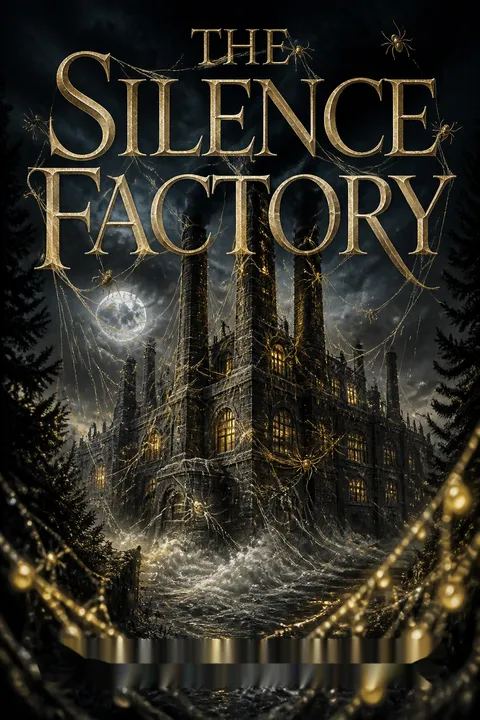
Bridget Collins' The Silence Factory functions as a rich meditation on the dangers of longing for escape, the cost of progress, and the inescapable nature of complicity. Through finely woven parallel plots separated by time and space, the novel interrogates whose voices are allowed, whose stories are heard, and what silence conceals. The spider silk is at once a marvel of invention and a metaphor for all comforts procured at another's expense. The technology's promise of sanctuary—of perfect silence, order, and oblivion—becomes, inescapably, the tool of domination, erasure, and submission. The ghosts that haunt the narrative—silent women, broken children, forbidden loves—are not exorcised by innovation, but instead demand to be reckoned with. The lesson is clear: to be deaf to suffering, to market safety as a privilege, is to be forever entangled in the very web meant to shelter us. True hope and healing arise only when we acknowledge the pain in ourselves and others, accept that no sanctuary is pure, and strive to listen—even when it is most costly. In a world grown quieter, the final message resounds: silence, without justice or memory, can never be peace.
Review Summary
The Silence Factory receives mixed reviews, averaging 3.42/5. Praised for its atmospheric gothic setting, unique premise of silence-inducing spider silk, and beautiful prose, many readers found it compelling and original. The dual timeline structure — following Henry Latimer in Victorian England and Sophia Ashmore-Percy's 1820 diary — drew both admiration and criticism. Common complaints include Henry being an unlikeable, frustratingly passive protagonist, pacing issues, underdeveloped characters, and an unsatisfying resolution. Fans of Collins' previous work had divided opinions, though the book's gothic atmosphere and thought-provoking themes were widely appreciated.
People Also Read

Characters
Henry Latimer
Henry, a meek but intelligent Londoner, is lost in grief after his wife's and child's deaths. His emotional journey is shaped by a yearning to escape pain through the fantasy of silence, success, and intimacy. His trajectory moves from victimhood and passivity, through ambition and collusion (in Sir Edward's schemes), to a crisis of conscience and agency. Attracted to Sir Edward (body and mind), he is both the story's moral heart and its site of deepest complicity—capable of great empathy, yet easily swept into denial. Psychoanalytically, Henry's longing for love and meaning, and inability to embrace the "unheard"—whether children, women, or the oppressed—mirrors the era's impossible promise of "sanctuary." Only by accepting the impossibility of undoing harm, and striving to care for what remains, does he achieve a bittersweet redemption.
Sophia Ashmore
Sophia, wife to James and would-be mother, serves as the haunted confessor of the past, splitting the narrative between England and the Greek island of Kratos. Her psyche is shaped by longing—for love (with Hira), for the sacred feminine, for a home that can never exist—and self-recrimination. Her theft of the sacred spider is a primal act, birthing both industrial magic and ancient curse. Her complexity lies in her intersectionality: colonizer and victim, innovator and destroyer, faithful and apostate. Her hope for her unborn daughter shimmers with possibility and regret, illuminating the enduring price of desire, loss, and silence.
Sir Edward Ashmore-Percy
Sir Edward is a paradox: a man of vision, generosity, and reckless pride. He both charms (especially Henry) and wounds, fixated on legacy and driven by the wounds of his own family's history. Simultaneously a modernizer and a secret-keeper, he enables both transformation and ruin. His affection for Henry is ambiguous, containing elements of affection, exploitation, and homoerotic possibility. Throughout, Sir Edward's inability to see—and hear—the real cost of his project mirrors the blindness of all progress built on suppressed voices. His final ruination is as much emotional as material, hinting at the empty grandeur of all inherited dreams.
Hira
Hira represents the island world before colonial trespass, its rituals, mysteries, and gendered power. Her bond with Sophia is transformative—for both women and for the story itself—as she anchors the sacredness violated by science and ambition. Psychoanalytically, Hira is a mother and a lover, the keeper of a lost matriarchy, but also the one who cannot (and will not) rescue Sophia from the consequences of theft and complicity. She lingers as both memory and judgment—a presence more powerful in absence.
Miss Fielding (Ruth)
Miss Fielding is Philomel's protector: passionate, stubborn, the advocate for sign language and self-determination. Denied power by social class and gender, she nonetheless holds profound emotional influence over Philomel, and her warnings to Henry foreshadow every disaster. She is the novel's conscience, refusing simple consolation, and her trajectory is both heroic and tragic—she survives, but must accept powerlessness in the face of inexorable loss.
Philomel
Philomel is the epicenter of multiple conflicts: medical, familial, and existential. By turns radiant and marginalized, her communication through "fingerspeak" makes her both bridge and battleground for others' projections—she is to be saved, disciplined, erased, or loved, but above all, not listened to on her own terms. Her fate is emblematic of all those made voiceless by the progress and patriarchy surrounding her.
James Ashmore
James is the archetypal Victorian scientist, obsessed with novelty, yet blind to ethical consequences and emotional truths. He sees spiders as specimens, never as sacred or sentient, and cannot comprehend Sophia's needs or the meaning of Hira's world. His arc is one of increasing isolation and decline, and although his actions set the drama in motion, he remains unable to save—or love—anyone, least of all himself.
Worsley
Worsley is the human face of the factory's evil: devious, servile, and ultimately cruel. He enables and delights in both mundane and monstrous abuses—on animals, children, and souls—culminating in the invention of the ghost cage, a device for negating human will. If Sir Edward is the dreamer, Worsley is the instrument, and his downfall is both deserved and incomplete: systems persist even when villains perish.
Mercy Harman
Mercy is emblematic of the story's casualties: her son destroyed by factory work, she oscillates between hope, rejection, and fury. Her final act—staging Sir Edward's assassination—serves as catalyst for the unraveling of the silk empire. Mercy embodies the rage of the unheard, her violence both a crime and a final, comprehensible cry for justice.
The Spiders / Silk
Not a character in the traditional sense, the spiders and their silk are the story's animating force: at once promise, curse, and witness. They reflect transformation, beauty, suffering, and the cost of silence—conduits for both dream and subjugation. Through their threads, the narrative's disparate worlds are joined, and in their extinction, a kind of rebirth is made possible.
Plot Devices
Echoes, Silence, and Submission
The narrative is strung, like the webs themselves, with oppositions: noise and order, silence and freedom, speech and submission. From the initial promise of "silence for sale" arises an exploration of the impossibility of perfect peace without cost. Every echo—physical (Telverton malaise), psychological (memory, longing), and social (generational trauma)—foretells disaster. The silk's duality (calming on one side, inducing "turbulence" or haunting on the other) foreshadows the ultimate horror: the ghost cage, a machine not of silence but of control—where free will itself is erased. The structure of the story is recursive, looping past and present, England and Kratos, and echoing across different scales—from Sophia's pregnancy to Henry's loss, and from Philomel's muteness to Mercy's howl of protest.
Nested Narrative and Parallel Lives
The story interweaves Sophia's journal (Kratos and its aftermath), Henry's present quest, and multiple embedded texts (catalogue pages, letters, diary fragments). The result is both mystery and mediation: each character's understanding is partial, marred by loss, bias, or simple absence. Motifs from Ovid—transformation, nightingales, tapestries—are repurposed, and multiple characters (Sophia, Cecilia, Philomel) are locked into cycles of being silenced or forced to tell their story through forbidden means. Narrative structure thus mirrors both the silencing and the survival of subjugated voices.
Foreshadowing and Symbolic Clues
Early references to curses, disaster, and the violence beneath progress anticipate the catastrophic ending. The repeated image of silk—beautiful, seductive, but inherently dangerous—serves as a warning and as poetic justice. Songs, half-heard voices, and surprising tactile experiences constantly suggest that nothing is as safe, or as simple, as it appears. The fracturing of the spider house and the factory flood literalize the collapse already foreshadowed in characters' dreams, physical scars, and broken relationships.
Download PDF
Download EPUB
.epub digital book format is ideal for reading ebooks on phones, tablets, and e-readers.








































