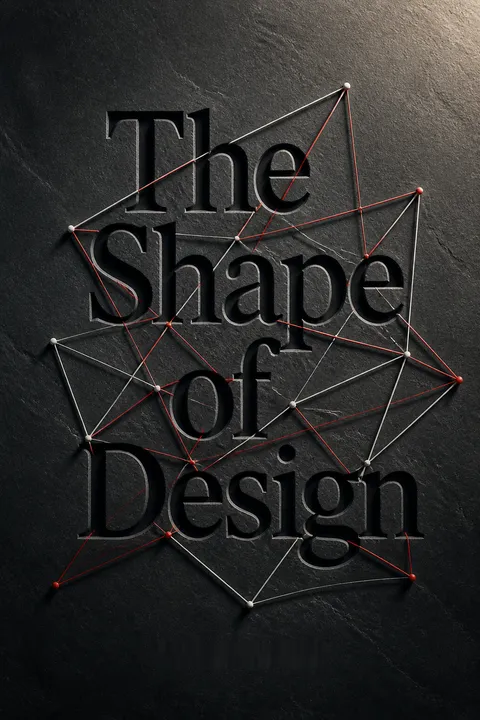

Key Takeaways
1. Design is a Dance of How and Why
Questions about How to do things improves craft and elevates form, but asking Why unearths a purpose and develops a point of view.
Purpose over technique. Many creative individuals focus excessively on How to execute their work, perfecting techniques and craft. However, true design mastery comes from understanding Why the work is being created in the first place. The "Why" defines the objective, provides motivation, and ensures that even if there are missteps in execution, the overall direction remains true to its purpose.
Near and far perspective. The creative process mirrors a painter's dance between working near the canvas (focused on craft, "How") and stepping far back (assessing the whole, "Why"). This constant dialogue between execution and strategy, making and thinking, is crucial. Neglecting the "Why" leads to blind imitation, like a mockingbird mimicking a car alarm without understanding its purpose, resulting in futile effort.
Motivation and enablement. While "How" questions enable us by improving skills, "Why" questions motivate us by clarifying purpose. This balance is vital for overcoming creative blocks. When we understand the deeper motivations behind our work, we can navigate challenges and find solutions that resonate, moving beyond mere technical proficiency to create something truly meaningful and aligned with our unique "song."
2. Craft Infused with Love Creates Beauty
Beauty is a special form of craft that goes beyond making something work better.
Beyond utility. Design is fundamentally about transformation—shaping the world to a better condition. While utility is paramount, beauty elevates design beyond mere function. The elegant symmetry of an ancient hand axe, for instance, didn't make it chop better, but its presence implies a care for craft that transcends pure usefulness, connecting us to makers across millennia.
Love letter to audience. High craft is a "love letter" from the maker to the audience, a demonstration of pouring every ounce of care and attention into the work. This affection for the audience produces the diligence necessary to make something truly well, creating a magical aura that enables those who interact with it. Stradivari's violins, for example, were so meticulously crafted that they are believed to contain traces of his own essence, a true labor of love.
Spark of connection. When work is imbued with this kind of love, enthusiasm transfers from the maker to the audience, bonding them. The true magic of design, like a Stradivarius violin, is only fully revealed through its use, creating a shared experience. This care, felt by the user, transforms an object into something warm and alive, a testament to the human connection embedded within its form.
3. Embrace Limitations for Creative Improvisation
The promise of a smaller scope makes us forget our fear, and the limitations become a starting point for ideas.
Building on others. Creativity is rarely starting from zero; it's often about taking bits of others' work and fusing them with our own choices. Like Buson's haiku, "Lighting one candle with another candle," we accept influence without diminishing the source. This collaborative spirit, seen in Japanese renga poetry, provides a foundation and structure, curbing the ruthlessness of the blank page.
Momentum through absurdity. To overcome creative inertia, define objectives, then temporarily set them aside. Start by imagining the worst possible solutions to a problem. This intellectual play, stretching creative muscles in "intellectual mud," generates momentum, making every subsequent idea inherently better. Once momentum is gained, reintroduce objectives to steer the direction, knowing any step forward is progress.
"Yes, and..." and frameworks. Improvisation, whether individual or collaborative, thrives on the "Yes, and..." maxim: accept contributions and build upon them. Miles Davis's Kind of Blue exemplifies this, where simple scales (limitations) provided a framework for musicians to explore and reinvent jazz. Limitations, whether self-imposed or given, act as barriers that hold the sand in the sandbox, focusing exploration and allowing ideas to develop without premature criticism.
4. Design's Magic Lies in Reconfiguring Message, Tone, and Format
Design is the method of putting form and content together.
Three levers of design. All design work possesses three interconnected traits: the message (what is said, the utility), the tone (how it's said, the sentiment), and the format (the artifact, the medium). Successful design harmonizes these elements to create a whole greater than its parts. Thinking of them as levers allows for adjustment and exploration, leading to different outcomes.
Questioning convention. Creative breakthroughs often occur when designers explore fresh configurations of these three levers, challenging established couplings. For example, rethinking a concert poster's format from paper to a dynamic web experience opens new opportunities for motion, sound, and direct connection with musicians. This isn't about screens being superior, but about reassessing assumptions and maximizing the affordances of the current situation.
Pulling from the adjacent possible. Visionary designers, like Ferran Adrià transforming avocado into caviar, don't just iterate on existing solutions (the "faster horse"). Instead, they ask "Why" questions to define root needs, then pull from outside the "adjacent possible"—the realm of what's currently conceivable. This "magic" comes from intense analysis of assumptions, revealing new possibilities and pushing the world forward into unimagined directions.
5. Design Builds Bridges with Productive Fictions
Modern people, unlike the ancients, have a different relationship with the future, because we understand that it’s something to be made rather than a destiny imposed by the gods or the whims of fortune.
Connecting through design. Design acts as a bridge, connecting various parties—client, audience, and designer—and their interests. It lives in the "in-between spaces," constantly shifting to serve and respond to the elements it connects. This middle position allows design to establish the vocabulary for engagement, speaking the tongue of art with the force of commerce, and shaping culture in unique ways.
Necessary duplicity. The designer often navigates a "double-allegiance," paid by the client but obligated to the audience, whose presence imbues the work with value. This duplicity is necessary because value must move in both directions across the bridge. Design's role is to negotiate this problem space, ensuring compatibility between differing desires to build a successful connection.
Productive untruths. The future is pliable, and we shape it with "productive fictions"—alluring visions of a better world that don't yet exist. These untruths, like New Year's resolutions or an entrepreneur's pitch, act as hypotheses, motivating us to work with cleverness and dedication to turn fiction into fact. Unlike corrosive lies, productive fictions aim to close the gap between what is imagined and what is real, confessing that "the world is not yet done."
6. Responsive Design Adapts to Shifting Contexts
We sail within a vast sphere, ever drifting in uncertainty, driven from end to end.
Constant movement. Like a tightrope walker maintaining balance through continuous motion, design must constantly respond and move. There are no fixed points; the work itself and its surrounding cultural context are always shifting. Robert Irwin's installation art exemplifies this, where he made no formal plans but observed the gallery space, letting the context dictate the art, improvising in response.
Outcomes over artifacts. Design is less about producing fixed artifacts and more about facilitating outcomes and consequences. The physical forms are merely means to an end, flexible so long as they serve the underlying need. This explains the multiplicity of solutions for a single problem, like the diverse chairs from Shakers, Eames, and Gehry—each a valid response to the need for sitting, shaped by disposition, time, and available technology.
Shifting bullseye. Design is not merely problem-solving, as hitting a target is only ever temporary. Culture defines what is desirable, but the best design also recalibrates those expectations, causing the target to move. This dynamic interplay means designers must embrace the subjective nature of their work and allow for a multiplicity of responses, fostering diversity and building movement into the definition of their craft for continuous life-enhancement.
7. Stories and Voids Drive Resonance and Empathy
A story is simply change over time, and the scale and scope of that change doesn’t matter so long as it has momentum.
Narrative's power. Once design leaves the maker's hands, narrative becomes essential for achieving resonance and propagation. Stories are fundamental to human understanding, permeating all cultures and interpretations of life, from origin myths to everyday anecdotes. They are efficient communication methods, fostering sensitivity and empathy by illustrating change over time.
Unfinished stories. Edward Hopper's Nighthawks captivates because it presents a void, an unfinished story that compels viewers to contribute their own interpretations. This lack creates tension and engagement, making the audience project themselves into the artwork. Similarly, students critiquing abstract art often resort to storytelling, personifying shapes to make sense of unfamiliar visual relationships and communicate feedback effectively.
Empathy through narrative. Stories humanize, allowing us to understand others and ourselves better. The film Wall•E, despite its mute robot protagonist, masterfully uses narrative to evoke deep empathy. David Ogilvy's famous "It is spring and I am blind" sign transformed a beggar's plea by adding a story, creating empathy in passersby. Good stories, especially those with "elevation," create shared experiences and bridge the voids between people.
8. Frameworks Foster Audience Contribution and Community
A good framework is an enticing means of contribution and an invaluable feedback mechanism.
Designing for contribution. Frameworks are structures that enable audience contributions, acting as two-way bridges between designer and audience. They address the question, "What if the audience is smarter than I am?" by opening valves for thoughts, opinions, and solutions. Effective frameworks reap the rewards of an intelligent, experienced audience, fostering shared ownership and a true synthesis of requirements.
Collaborative improvisation. Like Japanese renga or jazz improvisation, good frameworks are inherently social and collaborative. They require accepting contributions ("Yes, and...") and building upon them, with tight feedback loops that quickly incorporate each part into the whole. Miles Davis, in Kind of Blue, provided a framework but then wisely relinquished complete control, allowing his musicians to co-author the masterpiece.
Invisible etiquette. Intuitive frameworks often disappear into the background, like salt in a well-seasoned dish, only noticed when out of balance. They enhance what the audience already intends to do, making contributions feel like small, low-risk efforts with big rewards. Designers must also consider "netiquette" and social protocols, as design choices, like the size of avatars in a photo-sharing app, can profoundly influence empathy and community engagement.
9. Delightful Design is Empathetic Accommodation
Who ever said that pleasure wasn’t functional?
Memorable experiences. Delightful design aims to create memorable experiences through superior fit and empathy, making users feel understood and accommodated. It's not just about happiness or superficial gimmicks, but about building meaningful, long-term relationships. These gestures, often small, express compassion and care, maximizing the opportunity for consequential human engagement.
Skillful accommodation. Delight arises from the designer anticipating the audience's disposition and needs, crafting a space of accommodation. This is evident in small satisfactions, like spell check learning typos or a handbasket appearing at the right moment in a grocery store. The Griffin, Georgia road sign ("If you hit this sign, you will hit that bridge") exemplifies delightful design through its clear, immediate, and humorous tone, surprising users with its directness.
Clarity and surprise. Delight often involves surprise, whether through serendipitous moments like a humorous error message ("Application cannot edit the Unknown") or by rethinking the mundane, as seen in the Ace Hotel's integrated exit sign or simplified WiFi login. Delightful design finds clarity by balancing added details for resonance with reduced friction for simplicity, showing up when valuable and getting out of the way when not needed, all rooted in deep empathy.
10. The Best Design is a Gift That Moves
The things that we make are more than just objects. They’re the way we paint pictures of what’s to come.
Value beyond commerce. Design, like art, exists in both market and gift economies. While profitability ensures endurance, the true value of design transcends commercial terms, acting as a gift that fosters connection and cohesion. Our talents are a "gift" that obligates us to use our natural resources to shape the world for others, creating experiences that cannot be fully captured on a ledger.
The "long, hard, stupid way." Creative individuals often pursue the "long, hard, stupid way," investing exorbitant effort beyond clear financial benefit, driven by pride in their craft. This extra essence—the perfectly plated dish, the articulate sentence, the precise dab of paint—is sensed by the audience, creating special experiences for those attuned to notice the details, making the work worth savoring.
Gifts must move. Like a family heirloom gaining value with each generation, design as a gift accrues worth through its movement and sharing. It initiates an exchange: designers offer their work, and the audience gives attention, contributions, and financial support. Milton Glaser's I ♥ NY logo, for instance, became a shared symbol, a gift to culture that diffused authorship and became a vessel for collective emotion, demonstrating how design can become so ingrained it feels like it has always existed, a testament to our shared human endeavor.
People Also Read


Download PDF
Download EPUB
.epub digital book format is ideal for reading ebooks on phones, tablets, and e-readers.








































