
Plot Summary
The Disappearance Request
The story opens with a detective receiving a formal request: a woman's husband, Nemuro, has vanished without a trace. She is desperate, yet oddly composed, and her brother acts as her intermediary. The detective enters a sterile, labyrinthine housing complex, noting the sameness and anonymity of the city. The wife's apartment is marked by lemon-yellow curtains, a detail that will haunt the narrative. The detective's initial interview with the wife is marked by ambiguity—she offers little information, only a matchbox and a photograph as clues. The detective senses that the case is not straightforward, and that the wife's emotional state is more complex than simple grief. The city itself feels like a maze, and the detective's own sense of self begins to blur as he steps into the investigation.
Lemon-Yellow Curtains
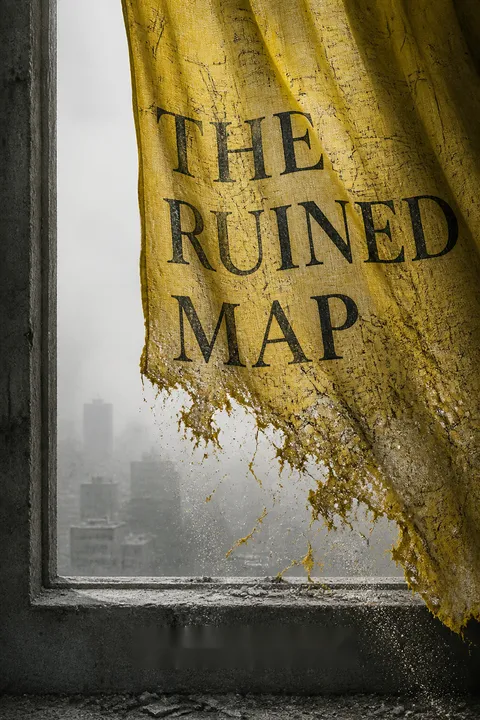
The detective is struck by the lemon-yellow curtains in the wife's apartment, which seem to define the space and mood. The wife is elusive, her face hard to remember, her presence both childlike and mature. She drinks beer alone, waiting for her missing husband, and speaks in riddles about dreams and patience. The detective is unsettled by her detachment and the way she talks to herself. The apartment is filled with traces of the missing man—books, a cutaway engine diagram, a Picasso print—but nothing concrete. The lemon-yellow curtains become a symbol of waiting, of a life paused, and of the detective's own growing sense of unreality as he tries to grasp the truth behind the disappearance.
The Vanishing Husband
The wife recounts the morning her husband vanished: he left for work, returned for a paper clip, then walked out again, never to be seen. She points to a spot near a manhole where he was last observed. The detective tries to reconstruct the event, but the details are vague and contradictory. The city's routines—commuters, buses, shopping—continue as if nothing has happened. The detective is haunted by the idea that the husband simply stepped out of the world, leaving no trace. The wife's brother, always absent yet influential, is said to have discouraged her from searching, insisting that one should only follow safe, well-trodden paths in life. The detective senses that the disappearance is both deliberate and inexplicable.
The Matchbox Clue
The only physical clue is a matchbox from the Camellia coffee house, found in the husband's raincoat. The detective visits the café, finding it unremarkable and the staff unhelpful. The matchbox contains matches with both black and white tips, an oddity that nags at the detective. He suspects the matchbox is a feint, a planted clue meant to mislead. The wife and her brother seem to know more than they admit, and the detective begins to suspect that the investigation itself is a performance, a way for the wife to cope with her husband's absence or to cover up something darker. The matchbox becomes a symbol of the case's ambiguity—something ordinary, yet filled with hidden meaning.
Brother in the Shadows
The detective finally meets the wife's brother in a parking lot. The brother is slippery, charming, and possibly dangerous. He claims to have investigated the disappearance himself, to no avail. He hints at blackmail, amnesia, and deliberate escape, but offers no concrete evidence. The brother's relationship with the wife is close, perhaps too close, and his feelings toward the missing husband are conflicted. He is involved in shady dealings, possibly blackmailing a local fuel supplier. The detective is drawn into the brother's orbit, unsure whether he is an ally, a suspect, or a red herring. The brother's presence deepens the detective's sense of being manipulated and lost.
The Camellia Coffee House
The Camellia coffee house, with its faded décor and help-wanted ads, becomes a focal point. It is a gathering place for temporary taxi drivers and a front for unlicensed employment. The detective learns that the husband may have been involved in this world, either as a customer or as someone seeking escape. The café's matchbox, the classified ad, and the parking lot all intertwine, suggesting a hidden network of people living on the margins. The detective's investigation yields little but dead ends, and he begins to question the very nature of evidence and truth. The Camellia stands as a symbol of the city's underbelly—mundane, yet filled with invisible transactions and disappearances.
Circling the Map's Blankness
The detective interviews the husband's employer and colleagues, uncovering a web of business deals, secrets, and possible motives. The company is involved in fuel distribution, and the husband was recently promoted. There are hints of blackmail, embezzlement, and under-the-table dealings, but nothing definitive. The detective is followed by a nervous clerk, Tashiro, who eventually confesses to knowing about the husband's secret life as a photographer of nudes. The investigation circles around the same points—parking lots, coffee houses, company offices—without ever finding solid ground. The detective's own sense of purpose begins to erode, and he wonders if he is being used to cover up a crime or simply to provide closure for the wife.
Company Secrets and Lies
The detective's visit to Dainen Enterprises reveals a culture of secrecy and denial. The director and young clerk Tashiro both evade questions about the husband's work and the documents he was supposed to deliver. The company's maps and charts mirror the detective's own ruined map—complicated, full of dead ends and false leads. The detective is forced to confront his own incompetence and the possibility that the case is unsolvable. The company's business is tied to the city's relentless expansion and decay, and the husband's disappearance becomes a metaphor for the fate of those caught in the machinery of modern life.
The Parking Lot Encounter
The detective's repeated encounters with the wife's brother in parking lots and fuel suppliers' offices blur the line between coincidence and conspiracy. The brother admits to blackmailing the fuel supplier, claiming it is necessary to fund the ongoing investigation. He is both confessor and trickster, revealing and concealing in equal measure. The detective is drawn into the brother's world of petty crime, prostitution, and gang violence, culminating in a riot at a riverbed encampment. The brother's death in the ensuing chaos marks a turning point—the loss of the case's central enigma and the severing of the investigation's financial support.
The Mechanic's Trail
The detective learns that the missing husband was a skilled mechanic with a mania for licenses and qualifications. He bought, repaired, and sold cars, and may have used the Camellia as a base for these activities. The wife describes his enthusiasm for technical manuals, photography, and dreams of shipping out as a radio operator. The detective's search leads him to a taxi driver who bought the husband's car, and to the realization that the husband may have simply chosen to disappear into the city's underclass of temporary workers. The trail grows cold, and the detective is left with only fragments—a raincoat, a matchbox, a photograph.
Blackmail and Brotherhood
The brother's involvement in blackmail and his leadership of a gang of runaway boys come to light. The detective attends the brother's funeral, observing the rituals of the underworld and the ambiguous grief of the wife. The brother's relationship with the wife is revealed to be both protective and possessive, blurring the boundaries between sibling loyalty and something more. The detective suspects that the brother's death may be linked to his criminal activities, and that the wife's passivity masks a deeper complicity. The investigation becomes a meditation on the limits of knowledge and the impossibility of truly understanding another person.
The Riverbed Riot
The detective is caught in a riot at a makeshift brothel in a riverbed, where the brother's gang is attacked by disgruntled workers. The chaos and brutality of the scene expose the city's hidden violence and the fragility of its social order. The detective escapes, but the brother is killed, and the investigation loses its central thread. The riot serves as a metaphor for the breakdown of meaning and the collapse of the detective's own sense of direction. The city's map is revealed as a ruined, unreadable document, and the detective is left to wander its blank spaces.
The Diary and the Dream
The detective seeks out the husband's diary, hoping for a clue to his motives. The wife is indifferent, more interested in beer and memories than in facts. The diary, when it appears, is empty of revelations. The detective's own dreams and memories begin to intrude, blurring the line between investigator and investigated. He visits his estranged wife, reflecting on their failed marriage and the impossibility of communication. The search for the missing man becomes a search for self, and the detective realizes that he is as lost as his quarry.
The Wife's Waiting Game
The wife continues to wait in her lemon-yellow room, drinking and talking to herself. The detective is drawn back to her again and again, unable to break free from the case or from his own fascination with her. Their conversations circle around the same themes—absence, memory, the meaning of facts—without resolution. The wife's passivity is both a shield and a trap, and the detective suspects that she is complicit in her husband's disappearance, or at least in the maintenance of the mystery. The investigation becomes a ritual of waiting, a performance of grief and hope that never ends.
Tashiro's Confessions
The young clerk Tashiro becomes increasingly unstable, confessing to lies, fabrications, and finally to having seen the missing husband. He vacillates between wanting to help and wanting to shield the husband from discovery. His confessions culminate in a phone call announcing his suicide, a final act of disappearance that mirrors the husband's own vanishing. The detective is left with a sense of guilt and futility, realizing that the search for truth is always compromised by the desires and fears of those involved. Tashiro's death marks the end of the investigation's last hope for closure.
The Investigator's Own Map
The detective's sense of self unravels as the case collapses. He resigns from the agency, cut off from his former life and from the structures that gave him purpose. He wanders the city, haunted by the image of the lemon-yellow curtains and the vanished husband. The boundaries between investigator and investigated, between self and other, dissolve. The detective realizes that he has been following his own ruined map all along, and that the search for the missing man is a search for meaning in a world that offers none.
The Town Beyond the Curve
The detective finds himself unable to remember the town beyond a certain curve in the road. The familiar becomes strange, and the city's map dissolves into blankness. He enters a coffee house, hoping for recognition, but finds only more ambiguity. The woman behind the counter is both familiar and unknowable, and the detective's own identity slips away. The city is revealed as a labyrinth without center or exit, a place where people vanish not through violence or conspiracy, but through the ordinary erosion of meaning and memory.
The Vanishing Self
In the end, the detective is left with nothing but fragments—a badge, a scrap of paper, a memory of lemon-yellow curtains. He calls a number, hoping for rescue, but chooses to hide instead of being found. The story closes with the detective walking away from the woman who might have saved him, choosing instead to disappear into the city's endless maze. The ruined map is not just the city's, but his own—a record of loss, erasure, and the impossibility of ever truly finding one's way.
Analysis
Kōbō Abe's The Ruined Map is a masterwork of existential noir, using the conventions of the detective genre to explore the alienation and fragmentation of modern urban life. The novel's central mystery—the disappearance of Nemuro—is less a puzzle to be solved than a metaphor for the erosion of identity, meaning, and connection in a world defined by sameness and anonymity. The detective's journey is not toward resolution, but toward the realization that every map is already ruined, every search doomed to circle the same blank spaces. The city is a labyrinth without center or exit, and its inhabitants are defined by absence—waiting, hiding, vanishing into the crowd. Abe's lesson is both bleak and profound: in a world where every clue is a feint and every relationship a performance, the search for truth is inseparable from the search for self, and both are ultimately unending. The novel's enduring power lies in its refusal to offer closure, insisting instead on the necessity—and the impossibility—of continuing to walk the ruined map.
Review Summary
Reviews of The Ruined Map are mixed, averaging 3.45/5. Many praise Abe's subversion of the detective genre, using a missing persons case to explore identity, alienation, and urban dislocation. The nameless detective's psychological unraveling resonates with readers familiar with Abe's themes. Critics note overly descriptive prose that can feel tedious, vague transitions, and an ambiguous ending that divides opinion—some find it rewarding, others frustrating. Comparisons to Kafka, Auster's City of Glass, and Cortázar appear frequently. Most agree the novel rewards patient readers willing to embrace disorientation over conventional mystery resolution.
People Also Read


Characters
The Detective (Narrator)
The unnamed detective is both the protagonist and the lens through which the story unfolds. Hired to find a missing man, he is methodical, skeptical, and increasingly self-doubting. His professional detachment erodes as he becomes entangled in the emotional and existential ambiguities of the case. Psychoanalytically, he is a figure of alienation—estranged from his own life, haunted by failed relationships, and ultimately unable to distinguish between his own desires and those of his clients. His development is a slow unraveling: from confident investigator to a man lost in the labyrinth of the city and his own mind, mirroring the disappearance he is hired to solve.
The Wife (Mrs. Nemuro)
The missing man's wife is enigmatic, emotionally opaque, and marked by a strange passivity. She waits in her lemon-yellow room, drinking and talking to herself, both victim and possible accomplice. Her relationship with her brother is close, perhaps unhealthily so, and her feelings toward her husband are ambiguous—by turns loving, resentful, and indifferent. Psychologically, she embodies the theme of waiting and the refusal to confront reality. Her development is circular: she remains in place, unchanged by the investigation, her identity defined by the absence of her husband and the endless performance of hope and grief.
The Brother
The wife's brother is a complex figure—charming, evasive, and possibly dangerous. He acts as the wife's intermediary, investigates the disappearance on his own, and is involved in blackmail and gang activity. His motives are ambiguous: he claims to want to find the husband, but also benefits from his absence. His relationship with his sister is intimate, bordering on possessive, and his feelings toward the missing man are conflicted. Psychologically, he represents the city's underworld and the blurred line between family loyalty and criminality. His death in a riot marks the collapse of the investigation's central mystery.
Nemuro (The Missing Husband)
Nemuro is present only in absence—a photograph, a raincoat, a matchbox. He is described as methodical, obsessed with licenses and technical skills, and possibly dissatisfied with his life. His disappearance is both a deliberate act and an existential statement: a refusal to play the roles assigned to him by family and society. Psychologically, he is a cipher, a projection of the other characters' desires and fears. His development is negative: he becomes less real as the story progresses, until he is indistinguishable from the detective's own sense of loss.
Tashiro
Tashiro is a young, nervous office worker who becomes increasingly unstable as the investigation progresses. He confesses to lies, fabrications, and finally to having seen the missing man. His relationship with the detective is fraught—he wants to help, but also to shield the husband from discovery. Psychologically, he represents the anxiety and guilt of those left behind, and his suicide is both a personal tragedy and a metaphor for the case's irresolvable ambiguity.
The Chief
The detective's boss is pragmatic, cynical, and obsessed with rules and boundaries. He warns the detective not to get too involved, to avoid invading clients' privacy, and to remember that the job is about money, not truth. Psychologically, he represents the limits of professional identity and the dangers of empathy. His presence is a constant reminder of the detective's own precarious position and the futility of the search.
The Camellia Proprietor
The owner of the Camellia coffee house is a minor but significant figure, presiding over a nexus of temporary workers, unlicensed employment, and hidden transactions. He is both ordinary and menacing, a symbol of the city's invisible networks. His relationship to the case is indirect, but his establishment is the site of crucial clues and encounters.
Saeko (The Model)
Saeko is the model in the husband's nude photographs, encountered by the detective in a bar. She is pragmatic, self-possessed, and uninterested in the detective's search for meaning. Her body is dissected and objectified, both by the husband's camera and by the detective's gaze. Psychologically, she represents the limits of knowledge and the impossibility of truly seeing another person.
Toyama
Toyama is the man who bought the husband's car, a figure of ordinary struggle and resilience. His testimony provides insight into the world of temporary workers and the possibility that the husband simply chose to disappear. He is neutral, neither friend nor enemy, and his perspective grounds the story in the realities of urban survival.
The Lemon-Yellow Curtains
Though not a character in the traditional sense, the lemon-yellow curtains in the wife's apartment are a recurring motif, symbolizing the suspension of time, the performance of hope, and the blurring of reality and illusion. They mark the boundary between the known and the unknown, the present and the absent, and serve as a visual anchor for the detective's own unraveling sense of self.
Plot Devices
The Ruined Map
The novel's central plot device is the metaphor of the ruined map—a city that is both bounded and infinite, a labyrinth where every street is the same and every clue leads to a dead end. The narrative is fragmented, circling around the same events and locations without resolution. Foreshadowing is achieved through recurring motifs—lemon-yellow curtains, matchboxes, photographs—that hint at meaning but ultimately dissolve into ambiguity. The detective's investigation is both a literal search for a missing person and a metaphysical quest for meaning in a world that resists explanation. The use of unreliable narration, shifting perspectives, and unresolved mysteries creates a sense of disorientation and existential dread. The ruined map is both the city's and the detective's—a record of loss, erasure, and the impossibility of ever truly finding one's way.

Download PDF
Download EPUB
.epub digital book format is ideal for reading ebooks on phones, tablets, and e-readers.








































