
Plot Summary
Maid of Honor's Mission
Francie Driscoll, a practical, loyal New Englander, travels to Roswell, New Mexico, to serve as maid of honor at her college roommate Serena's wedding. Serena, impulsive and prone to disastrous relationships, is marrying a UFO enthusiast during the annual Roswell UFO Festival. Francie's sense of duty is twofold: to support Serena and, if necessary, talk her out of another bad marriage. Arriving alone, Francie is thrust into a world of alien-obsessed locals, conspiracy theorists, and festival chaos, all while worrying about her friend's future and her own role as the voice of reason.
Abduction on Roswell's Streets
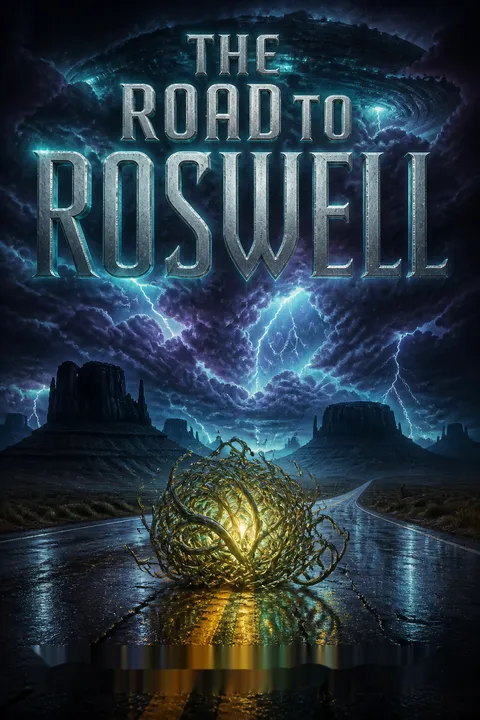
While running an errand for Serena, Francie is abducted by a bizarre, tentacled, tumbleweed-like alien hiding in a car. The alien, later nicknamed "Indy," communicates only through gestures, binding Francie and forcing her to drive out of town. Francie's terror is mixed with outrage and disbelief as she realizes she's living out the abduction stories she'd mocked. Her attempts to escape are futile; Indy is both physically overwhelming and eerily focused on a mysterious destination. Francie's sense of control and safety is shattered, replaced by fear, confusion, and a growing sense of responsibility for her captor.
Tumbleweed Alien Revealed
As Francie is driven into the desert, she tries to reason with Indy, who cannot speak or understand English. The alien's actions are urgent but not overtly violent, and Francie's fear is tempered by curiosity. She attempts to call for help, but her story is dismissed as a prank. Indy's behavior is both alien and oddly childlike, and Francie begins to suspect he is lost or in trouble himself. The isolation of the desert, the strangeness of her captor, and the failure of outside help force Francie to rely on her own wits and empathy.
Escape, Panic, and Partnership
After a failed escape attempt, Francie is joined by Wade, a stranded hitchhiker who is quickly abducted as well. Wade's calm, analytical approach contrasts with Francie's anxiety, and together they begin to piece together Indy's needs. Wade's skepticism and humor help ground Francie, and the two form a tentative partnership. As they are forced to cooperate to survive, their dynamic shifts from captor and captive to reluctant allies, united by the need to understand Indy and escape their predicament.
Hitchhiker and Unlikely Allies
The trio is soon joined by Lyle, a conspiracy theorist, and Eula Mae, a sharp-witted gambler, both swept up by Indy's relentless quest. Each new addition brings their own baggage—Lyle's paranoia, Eula Mae's pragmatism—complicating the group's dynamic. The forced road trip becomes a crucible, testing patience, trust, and resourcefulness. As they zigzag across New Mexico, evading authorities and UFO hunters, the group's survival depends on their ability to work together and decode Indy's intentions.
Gas Station Gambit Fails
The group's plan to escape at a gas station collapses when Indy abducts another bystander, escalating their predicament. Francie's efforts to call for help are again dismissed, and the group realizes that outside intervention may only make things worse. The addition of new captives strains resources and tempers, and the group's situation grows more desperate. Indy's urgency intensifies, and the group is forced to abandon hope of rescue and focus on understanding their captor's needs.
The Conspiracy Grows
As the group travels in a commandeered RV, the story takes on the flavor of a classic Western, with the group as a modern-day stagecoach party pursued by unseen threats. Joseph, the RV's owner and a Western movie buff, joins the cast, adding both comic relief and practical skills. The group's journey becomes a race against time, with Indy's mysterious deadline looming and the threat of government intervention ever-present. The RV becomes both sanctuary and prison, and the group's bonds deepen as they face danger together.
Rattlesnakes and Rescue
A tense encounter with rattlesnakes in the desert cements the bond between Francie and Indy. Francie's warning saves Indy from a deadly bite, and Indy's quick reflexes save Francie in turn. This mutual rescue marks a turning point: Francie's fear of Indy is replaced by empathy, and Indy's trust in Francie grows. The group begins to see Indy as more than a captor—he is vulnerable, desperate, and in need of help. The theme of reciprocal duty and friendship emerges, echoing the Western code of loyalty and honor.
Communication Barriers Broken
Through patient effort, Francie and the group teach Indy basic English, using closed-captioned Westerns, road signs, and trial and error. Indy's first written words—scrolling across his tentacles—are a breakthrough, allowing for true communication. The group learns that Indy is searching for a "tsurrispoinis," a word he cannot translate, and that he is driven by a sacred duty to help a friend, Srennom. The revelation that Indy is not an invader but a lost, well-intentioned alien reframes the group's ordeal as a quest for understanding and redemption.
The Language of Friendship
As communication improves, the group learns that Indy's actions are motivated by a deep sense of duty—"bbhbiniits"—akin to the Western code of helping a friend in need. Francie's own sense of obligation to Serena mirrors Indy's quest, and the two form a bond of mutual respect and affection. The group's journey becomes a meditation on friendship, forgiveness, and the power of empathy to bridge even the widest gaps. The Western motifs of loyalty, sacrifice, and redemption are woven into the fabric of the story.
Thunderstorm Quest Unveiled
Indy's quest is finally understood: he is searching for a thunderstorm, the "tsurrispoinis," where his friend Srennom is stranded and in need of rescue. The group races against time, pursued by both human and alien authorities, to reach the storm before it dissipates. The journey becomes a literal and metaphorical race against the elements, with the fate of Indy, Srennom, and possibly their entire species hanging in the balance. The group's unity and determination are tested to the limit.
Monument Valley's Shadow
As the group nears their goal, they are surrounded by both human law enforcement and alien pursuers, symbolized by the iconic Monument Valley landscape. The Western setting becomes a stage for the final confrontation, with themes of justice, atonement, and the outsider's place in society coming to the fore. The group must navigate not only physical dangers but also the complexities of interplanetary law, cultural misunderstanding, and the consequences of their actions.
The Wedding Detour
Indy's misunderstanding of Francie's "duty" to attend a wedding leads to a comic detour: Francie and Wade are forced to stage a wedding in a Las Vegas chapel to satisfy Indy's sense of obligation. The farcical ceremony, complete with Elvis impersonator, becomes a moment of truth for Francie and Wade, who realize their feelings for each other. The wedding, both real and not, serves as a metaphor for the bonds formed under duress and the unexpected ways love and duty intertwine.
FBI, Betrayal, and Escape
The group is captured by the FBI, and Francie feels betrayed by Wade, who is revealed as an undercover agent. Isolated and interrogated, Francie despairs for Indy's fate. But Wade orchestrates a daring escape, revealing his true loyalty to Francie and Indy. The theme of trust—broken, tested, and ultimately restored—reaches its climax as the group races to complete Indy's mission before time runs out. The lines between friend and foe, captor and ally, are blurred and redrawn.
The Storm and the Ship
The group reaches the thunderstorm, where Indy and Srennom are reunited in a dazzling, otherworldly sequence. The storm becomes both battleground and sanctuary, as the group helps the aliens complete their mission—collecting vital data to save their homeworld. The storm's violence and beauty mirror the emotional intensity of the moment, and the group's courage and selflessness are rewarded. The boundaries between human and alien, self and other, dissolve in the shared experience of survival and hope.
The Alien Tribunal
The group is brought before an alien tribunal to answer for their actions. The Hosbitaii, the governing alien species, weigh the crimes of abduction, interference, and data theft against the sacred duty of helping a friend. Francie's defense—rooted in the Western code of honor and the universality of friendship—persuades the tribunal to show mercy. The story's moral center is revealed: forgiveness, empathy, and the willingness to help others, even at personal risk, are the highest virtues.
Duty, Forgiveness, and Atonement
The tribunal's verdict is one of forgiveness and gratitude. Indy and Srennom are pardoned, and the group is celebrated for their compassion and courage. The aliens offer gifts—technological and material—but the true reward is the affirmation of shared values across species. The story's emotional arc resolves in a spirit of reconciliation, as past wrongs are atoned for and new bonds are forged. The Western themes of redemption, second chances, and the power of community are brought to a cosmic scale.
Goodbyes and New Beginnings
As the aliens prepare to depart, Francie and Wade face their own crossroads. Their ordeal has transformed them, revealing strengths and feelings they never expected. The story ends with farewells—bittersweet, but full of promise. Francie returns to her life, changed by her encounter with the unknown, and ready to embrace new adventures. The lessons of the road to Roswell—duty, friendship, forgiveness, and the courage to help others—linger, offering hope for a future where understanding and compassion bridge even the widest divides.
Analysis
Connie Willis's The Road to Roswell is a masterful blend of science fiction, romantic comedy, and Western adventure, using the familiar tropes of alien abduction and the American road trip to explore deeper questions of duty, forgiveness, and the power of friendship. At its heart, the novel is a meditation on the universality of compassion—the idea that, across all boundaries of species, language, and culture, the willingness to help others is the highest virtue. The story's humor and warmth are balanced by genuine suspense and emotional depth, as the characters confront both external threats and their own limitations. The Western motifs—stagecoach journeys, codes of honor, the outsider's quest—are reimagined for a modern, cosmic context, affirming the enduring relevance of these themes. The novel's ultimate message is one of hope: that understanding, empathy, and the courage to help others can bridge even the widest divides, and that, in the end, we are all travelers on the same road, seeking connection, redemption, and a place to call home.
Review Summary
People Also Read



Characters
Francie Driscoll
Francie is the emotional and moral center of the story—a grounded, rational woman whose sense of duty to her friend Serena propels her into the heart of chaos. Her journey from skepticism to empathy mirrors the book's central themes: the power of friendship, the necessity of forgiveness, and the courage to help others even when afraid. Francie's psychological arc is one of growth: she moves from reluctant participant to active ally, learning to trust, to lead, and ultimately to love. Her bond with Indy, forged through mutual rescue and understanding, exemplifies the story's belief in the universality of compassion.
Wade "Agent Hastings" Pierce
Wade begins as a mysterious hitchhiker, later revealed as an undercover government agent. His initial duplicity masks a deep sense of responsibility and a capacity for self-sacrifice. Wade's journey is one of reconciliation: he must balance his duty to his agency with his growing loyalty to Francie and the group. His humor, intelligence, and adaptability make him an effective leader, but it is his willingness to risk everything for his friends that defines his character. His relationship with Francie evolves from wary partnership to genuine love, grounded in mutual respect and shared ordeal.
Indy (Kliihai)
Indy, the tumbleweed-like alien, is both catalyst and mirror for the human characters. His inability to communicate, his desperate quest, and his vulnerability evoke both fear and empathy. Indy's psychological journey is one of trust: he must learn to rely on strangers, to accept help, and to forgive himself for his mistakes. His sacred duty to help Srennom drives the plot, but it is his growing bond with Francie and the group that humanizes him. Indy embodies the story's central message: that even the most alien among us can be understood, forgiven, and loved.
Serena
Serena is the catalyst for Francie's journey—a friend whose poor choices and vulnerability elicit both frustration and fierce loyalty. Her pattern of disastrous relationships is both comic and poignant, highlighting the human need for connection and the dangers of self-delusion. Serena's arc is one of growth: through Francie's absence and her own experiences, she learns to value herself and to seek healthier relationships. Her friendship with Francie is a touchstone for the story's exploration of duty, forgiveness, and the complexities of love.
Lyle
Lyle represents the human tendency toward paranoia, pattern-seeking, and the need to make sense of the unknown. His wild theories, while often absurd, occasionally hit close to the truth, blurring the line between delusion and insight. Lyle's presence adds both humor and tension, challenging the group's assumptions and forcing them to confront their own fears. Psychologically, Lyle is driven by a need for significance and control in a world that feels chaotic and threatening.
Eula Mae
Eula Mae is a survivor—sharp, adaptable, and unflappable. Her skills as a gambler and her ability to read people make her an invaluable ally. Beneath her practical exterior lies a deep well of empathy and wisdom. Eula Mae's arc is one of self-reinvention: she moves from outsider to trusted member of the group, finding purpose and belonging in the shared quest. Her relationship with Francie and the others is marked by mutual respect and affection.
Joseph
Joseph, the RV owner, brings both comic relief and practical skills to the group. His love of Westerns provides a thematic framework for the story, and his knowledge of survival, mechanics, and leadership proves crucial. Joseph's arc is one of transformation: from solitary traveler to valued member of a makeshift family. His optimism, resourcefulness, and sense of adventure embody the story's spirit of resilience and hope.
Srennom
Srennom is the catalyst for Indy's journey—a fellow alien in need of rescue. His plight mirrors Indy's own vulnerability and the universal need for help. Srennom's presence deepens the story's exploration of duty, sacrifice, and the bonds of friendship. His rescue is both literal and symbolic, representing the triumph of compassion over fear and law.
The Hosbitaii
The Hosbitaii, the governing alien species, serve as both threat and source of mercy. Their rigid laws and initial severity are tempered by a capacity for understanding and forgiveness. Psychologically, they represent the dangers and possibilities of cross-cultural encounter: the risk of misunderstanding, the need for empathy, and the hope for reconciliation. Their ultimate decision to pardon Indy and Srennom affirms the story's faith in the power of compassion and shared values.
The FBI / Agent Sanchez
The FBI and its agents represent the human impulse to control, contain, and explain the unknown. Their suspicion, bureaucracy, and occasional incompetence are both comic and threatening. Agent Sanchez, in particular, embodies the tension between duty and empathy, law and mercy. The agency's eventual willingness to listen and adapt is a testament to the story's belief in the possibility of growth and change, even within institutions.
Plot Devices
Western Road Trip Structure
The novel uses the structure and tropes of the Western—stagecoach journeys, outlaws, posses, codes of honor—to frame its alien abduction narrative. The road trip becomes a modern cattle drive, the group a band of unlikely allies facing both external threats and internal conflicts. This structure allows for both humor and pathos, grounding the cosmic in the familiar and highlighting the universality of the story's themes.
Language Barrier and Communication
The inability to communicate drives much of the plot's tension and humor. Indy's gradual acquisition of language—through closed-captioned Westerns, road signs, and patient teaching—mirrors the group's journey from fear to understanding. The motif of translation, both literal and metaphorical, underscores the story's central message: that empathy and effort can bridge even the widest divides.
Sacred Duty and the Code of the West
The concept of "bbhbiniits"—a sacred duty to help a friend—serves as both plot engine and moral compass. The Western code of loyalty, sacrifice, and honor is reinterpreted through the lens of alien law, creating both conflict and resolution. The story's emotional arc is shaped by the characters' willingness to forgive, to help, and to risk themselves for others.
Comic Misdirection and Farce
The novel employs farce, mistaken identity, and comic detours (such as the forced wedding) to both entertain and illuminate. The absurdity of the situations—alien abduction, government conspiracy, Western movie references—serves to disarm fear and foster intimacy among the characters. Humor becomes a means of coping, bonding, and ultimately transcending the unknown.
Foreshadowing and Reversal
The story is rich in foreshadowing—early references to Westerns, duty, and friendship pay off in unexpected ways. Reversals abound: the alien is not a threat but a friend; the government agent is not a betrayer but a savior; the wedding is both a farce and a moment of truth. These reversals reinforce the story's central lesson: that the unknown is not always to be feared, and that help can come from the most unlikely sources.
About the Author
Other books by Connie Willis



Download PDF
Download EPUB
.epub digital book format is ideal for reading ebooks on phones, tablets, and e-readers.








































