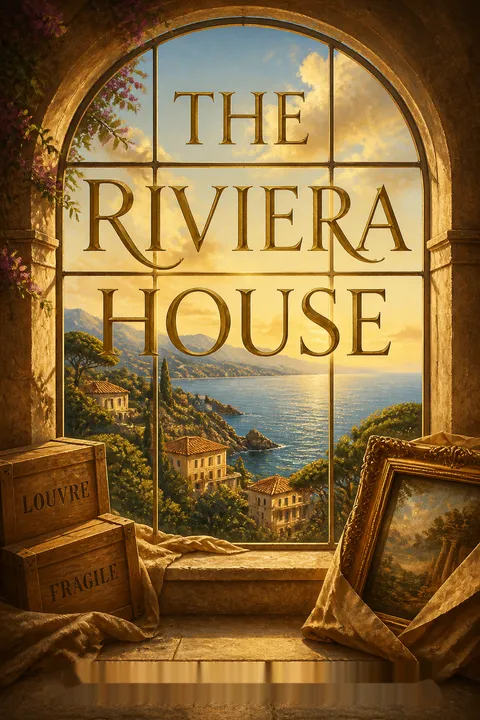

Plot Summary
Sisters and Sacrifice
In pre-war Paris, Éliane Dufort shoulders the burden of caring for her younger sisters amid poverty and a crumbling family business. Her dreams of art are sacrificed for survival, but her love for her siblings is unwavering. The Dufort children, especially Éliane, learn to navigate a world where affection and responsibility are intertwined, and where every small act of kindness is a lifeline. The looming threat of war casts a shadow over their daily struggles, but it also forges a fierce loyalty among the sisters. This chapter sets the emotional foundation for Éliane's later choices, showing how love and duty can both uplift and imprison.
Louvre's Secret Exodus
As Hitler's ambitions threaten Paris, Éliane joins a clandestine effort to evacuate the Louvre's treasures. Under the guidance of Monsieur Jaujard, she, her brother Luc, and the enigmatic Xavier Laurent work tirelessly to pack and code priceless artworks, including the Mona Lisa, for secret transport to the countryside. The operation is both a logistical feat and a symbolic act of resistance, as the preservation of art becomes a stand-in for the preservation of French identity. The tension between hope and dread is palpable, and the camaraderie among the volunteers is tinged with the knowledge that their efforts may not be enough to save either art or lives.
Love Amidst Looming War
Amidst the chaos, Éliane and Xavier's connection deepens, offering a rare respite from fear. Their love is passionate but fragile, shadowed by the realities of war and the demands of family. When Xavier is forced to leave Paris for England, their relationship is abruptly severed, leaving Éliane heartbroken and alone. The pain of separation is compounded by the loss of her sisters, who flee south with their mother, and by the growing sense that nothing—neither love nor art—is safe from the ravages of war. This chapter explores the intersection of personal longing and historical catastrophe.
Paris Falls, Hearts Break
The German occupation transforms Paris into a city of silence and suspicion. Éliane, now separated from her family and Xavier, clings to her work at the Louvre and later at the Jeu de Paume, where she witnesses the systematic looting of Jewish-owned art. The city's beauty is marred by fear, hunger, and the ever-present threat of violence. As Éliane navigates this new reality, she is forced to make impossible choices, sacrificing her own happiness and safety for the sake of others. The chapter is marked by a sense of mourning—for lost love, lost family, and a lost way of life.
Art Under Occupation
The Jeu de Paume becomes the epicenter of Nazi art theft, with Éliane and her ally Rose Valland secretly documenting the plunder. The arrival of high-ranking Nazis like Göring and von Behr turns the museum into a theater of greed and corruption. Éliane's daily existence is a tightrope walk between compliance and resistance, as she gathers intelligence while pretending ignorance. The moral stakes are heightened by the knowledge that every act of defiance could mean death—not just for herself, but for those she loves. The art itself becomes a silent witness to both atrocity and courage.
Resistance in the Shadows
Éliane, Rose, Luc, and Monsieur Jaujard form a covert network to track the fate of stolen art and pass information to the Allies. Their work is painstaking and perilous, involving coded records, clandestine meetings, and calculated risks. The boundaries between friend and foe blur, especially as Éliane is forced to manipulate the affections of the Nazi officer König to protect herself and her unborn child. The resistance is not just a matter of grand gestures but of small, persistent acts—each one a thread in the larger tapestry of survival and hope.
Betrayal and Survival
As the war grinds on, betrayals multiply. Luc, once a beloved brother, is revealed as an informant, trading secrets for survival and power. Éliane's world narrows to a series of desperate bargains: pretending König is her child's father to save her real love, Xavier; risking everything to keep her son safe. The lines between victim and collaborator, hero and traitor, become agonizingly thin. The cost of survival is measured in lost innocence and broken relationships, but also in the fierce determination to protect what remains.
Riviera Echoes, 2015
Decades later, Remy Lang arrives at a villa on the French Riviera, seeking solace after the loss of her husband and daughter. The house, inherited under mysterious circumstances, is filled with vintage treasures and echoes of the past. Remy's grief is palpable, but so is her resilience. As she befriends her neighbors—the Henry-Jones family—and begins to rebuild her life, she is drawn into a mystery involving a painting that once hung in her childhood bedroom. The past and present intertwine, setting the stage for revelations that will reshape her understanding of herself and her family.
Grief, Glamour, and New Beginnings
Remy's journey is marked by tentative steps toward healing: new friendships, a revived passion for vintage fashion, and a creative collaboration with photographer Adam Henry-Jones. Their growing intimacy is complicated by shared losses and unresolved pain, but also by moments of laughter and beauty. The discovery of a Nazi-era art catalog in a box of books triggers a quest for answers, linking Remy's personal history to the larger story of wartime art theft. The chapter balances the glamour of the Riviera with the rawness of grief, showing how both can coexist.
Unraveling the Past
Remy and Adam's investigation takes them from the Riviera to Paris and Washington, D.C., as they piece together the provenance of the mysterious painting. With the help of historians and archivists, they uncover a web of connections: Éliane's heroism, Luc's betrayal, and the fate of the Dufort family. The process is both exhilarating and painful, forcing Remy to confront uncomfortable truths about her ancestry and the legacy of trauma. The past is not just a backdrop but an active force, shaping the present in unexpected ways.
The Truth in Paintings
The paintings at the heart of the story—Les Amoureux and L'Amour—become symbols of love, loss, and endurance. Their journey mirrors that of the characters: hidden, stolen, reclaimed, and finally restored. Through these works, Remy discovers her true lineage and the sacrifices made by her grandparents, Éliane and Xavier. The art is both a literal and metaphorical inheritance, carrying the weight of history and the promise of continuity. The revelation of Luc's treachery and the ultimate fate of the Duforts is both devastating and redemptive.
Choices of the Heart
In the war's final days, Éliane faces her greatest test: to save her brother Luc, she must give up her son Alexandre to König and his wife Elke. The plan is fraught with danger and heartbreak, but it is also an act of hope—trusting that love and courage will find a way to reunite mother and child. The choices made by Éliane, Angélique, and even Elke are shaped by love in its many forms: maternal, romantic, and filial. The chapter is a meditation on the costs and rewards of choosing the heart's dictates over self-preservation.
The Final Train
The evacuation of Paris and the last Nazi art train become the crucible in which all the story's threads converge. Éliane's desperate gamble to save Alexandre and Luc is both triumphant and tragic. Luc's final act—shielding Alexandre with a painting and losing his life—redeems his earlier betrayals but cannot undo the damage done. The aftermath is marked by separation, imprisonment, and the lingering hope that love will outlast even the darkest times. The train, laden with stolen art and shattered dreams, is both an ending and a beginning.
Legacy of Loss and Love
In the present, Remy's journey comes full circle as she uncovers the truth about her family and the sacrifices that made her life possible. The legacy of Éliane and Xavier is not just in the art they saved but in the love they passed down, even through loss and silence. Remy's own healing is mirrored in her relationship with Adam and the birth of their son, Xavier. The story affirms that while history is often written in suffering, it is also inscribed in acts of courage, compassion, and connection.
Reunion and Redemption
The final chapters bring together the living and the dead, the past and the present. Remy reconciles with her own grief and guilt, finding solace in the knowledge that her ancestors' love endures. The reunion with Adam and the birth of their child symbolize the possibility of renewal, even after unimaginable loss. The art, once stolen and hidden, now hangs as a testament to survival and hope. The story ends not with closure but with the promise that love—like art—can transcend time and tragedy.
Analysis
A meditation on art, memory, and the endurance of loveThe Riviera House is a sweeping historical novel that explores the intersections of personal and collective trauma, the moral complexities of resistance and collaboration, and the redemptive power of art. Through its dual timelines, the book examines how the past shapes the present, and how the choices of individuals—often made under impossible circumstances—ripple across generations. The novel's central lesson is that beauty and love are worth fighting for, even when the world seems irredeemably broken. Art, in this context, is both a symbol of what is most precious and a testament to what survives. The story does not shy away from the costs of survival—betrayal, loss, and guilt—but it insists that hope is found in connection, in the willingness to risk everything for others, and in the belief that even the most fragile things can endure. Ultimately, The Riviera House is a tribute to the unsung heroes—especially women—who, through acts both grand and small, preserved not just paintings but the possibility of a future worth living.
Review Summary
The Riviera House is widely praised as a beautifully written, well-researched dual-timeline historical novel. Most reviewers awarded it five stars, celebrating its vivid portrayal of Nazi art theft in occupied Paris alongside a compelling modern-day mystery. Readers particularly admired the strong female characters, descriptive prose, and seamless blending of fact and fiction. Some critics found the modern romance storyline overwrought or melodramatic, and a few felt the dual timelines created disconnection. Overall, the majority found it emotionally gripping, historically fascinating, and difficult to put down.
People Also Read
Characters
Éliane Dufort
Éliane is the emotional and moral center of the story, a young woman whose life is defined by duty—to her sisters, to art, and to France itself. Her journey is one of relentless sacrifice: she gives up her dreams, endures hunger and humiliation, and risks her life to save both her family and the cultural treasures of her country. Her love for Xavier is passionate but marked by loss and longing, and her relationship with her brother Luc is tested by betrayal. As a mother, she faces the ultimate choice between her child and her conscience. Éliane's resilience is both her strength and her burden, and her legacy is one of quiet heroism.
Xavier Laurent
Xavier is both an artist and a spy, moving between worlds with a grace that belies his inner turmoil. His love for Éliane is deep and enduring, but circumstances force him into roles that require deception and sacrifice. As an art adviser to the Nazis, he risks everything to gather intelligence for the Allies and to protect the woman he loves. Xavier's psychological complexity lies in his ability to compartmentalize, to endure suspicion and hatred for a greater good. His ultimate fate is tragic, but his love and courage echo through generations.
Luc Dufort
Luc is a study in contradictions: charming, talented, and beloved, yet ultimately undone by weakness and the lure of power. His initial devotion to art and family gives way to self-preservation, leading him to betray those closest to him. Luc's actions are driven by a desperate need for validation and control, but his final sacrifice—shielding Alexandre with a painting—offers a measure of redemption. His character embodies the moral ambiguities of war, where survival often comes at the cost of integrity.
Rose Valland
Based on a real historical figure, Rose is the unsung hero of the art resistance. Her unassuming appearance masks a steely resolve and a meticulous mind. Rose's partnership with Éliane is built on mutual respect and shared purpose, and her ability to navigate danger with humility and cunning is key to the survival of countless artworks. Psychologically, Rose is defined by her sense of duty and her capacity for self-effacement; she is content to let others take the spotlight, knowing that her work will speak for itself.
Ernst König
König begins as a diffident, almost pitiable Nazi officer, easily manipulated by Éliane. His longing for affection and recognition makes him both a tool and a threat. As the war progresses, König's ambition and capacity for cruelty grow, culminating in his attempt to claim Éliane's child as his own. His psychological arc is one of corruption, as the pressures of war strip away his innocence and reveal the darkness beneath.
Angélique Dufort
Angélique evolves from a dependent younger sibling into a vital member of the resistance. Her bravery is quiet but profound, as she risks her life to carry messages and protect her family. Angélique's loyalty is unwavering, and her willingness to sacrifice herself for others is both her greatest strength and her greatest vulnerability. Her fate is a testament to the often-unrecognized heroism of women in wartime.
Remy Lang
Remy is a woman marked by loss—of her husband, her daughter, and her sense of self. Her journey is one of gradual reawakening, as she confronts the mysteries of her family's past and learns to embrace love and vulnerability again. Remy's psychological landscape is shaped by grief, guilt, and the fear of repeating history, but also by resilience and the capacity for joy. Her relationships—with Adam, with her friends, and with her ancestors—are the means by which she reconstructs her identity.
Adam Henry-Jones
Adam is both a foil and a complement to Remy: a photographer whose own losses have left him guarded but deeply empathetic. His relationship with Remy is built on mutual understanding and the shared experience of grief. Adam's journey is one of learning to let go—of anger, of control, and of the need to fix everything. His love is patient and unconditional, offering Remy the space to heal at her own pace.
Elke König
Elke is a figure of ambiguity: the wife of a Nazi, the caretaker of Éliane's child, and a woman haunted by regret. Her actions are motivated by a longing for love and belonging, but also by a sense of duty to a child not her own. Elke's psychological struggle is with guilt—over what she has done and what she has failed to do. Her eventual honesty and vulnerability offer a measure of redemption.
Molly Henry-Jones
Molly, Adam's niece and biological daughter, represents the possibility of new beginnings. Her presence forces the adults around her to confront their own wounds and to reconsider the boundaries of family and love. Molly's innocence is both a source of pain and a beacon of hope, reminding the characters—and the reader—that the future is always unwritten.
Plot Devices
Dual Timelines and Intergenerational Mystery
The novel's structure alternates between wartime France and contemporary Riviera, using the device of a lost painting and a mysterious inheritance to connect the two narratives. This dual timeline allows for a gradual unveiling of secrets, as Remy's quest to understand her family's past mirrors Éliane's struggle to survive and resist. The intergenerational mystery is propelled by objects—paintings, letters, jewelry—that serve as tangible links between eras. Foreshadowing is employed through recurring motifs (art, loss, coded messages), and the narrative's emotional arc is shaped by the slow convergence of past and present, culminating in revelations that transform both.
Art as Symbol and Catalyst
Art is not just a backdrop but a central plot device, symbolizing both the fragility and endurance of culture, love, and identity. The fate of the paintings mirrors the fate of the characters: hidden, stolen, reclaimed, and restored. The act of saving art becomes a metaphor for saving the self and the soul of a nation. The paintings themselves are imbued with personal and historical significance, serving as catalysts for action, confession, and reconciliation.
Betrayal, Sacrifice, and Redemption
The plot is propelled by acts of betrayal—some motivated by fear, others by ambition or desperation. These betrayals force the characters to confront the limits of forgiveness and the costs of survival. Sacrifice is a recurring theme, with characters repeatedly choosing the well-being of others over their own happiness or safety. Redemption is hard-won and often incomplete, but it is made possible by acts of courage, honesty, and love.
Coded Communication and Hidden Records
The use of coded notebooks, secret messages, and hidden compartments is both a practical tool for the characters and a narrative device for the reader. These elements create suspense and allow for delayed revelations, as the truth is uncovered piece by piece. The act of recording—whether in art, writing, or memory—is shown to be both a weapon against erasure and a means of survival.
Download PDF
Download EPUB
.epub digital book format is ideal for reading ebooks on phones, tablets, and e-readers.








































