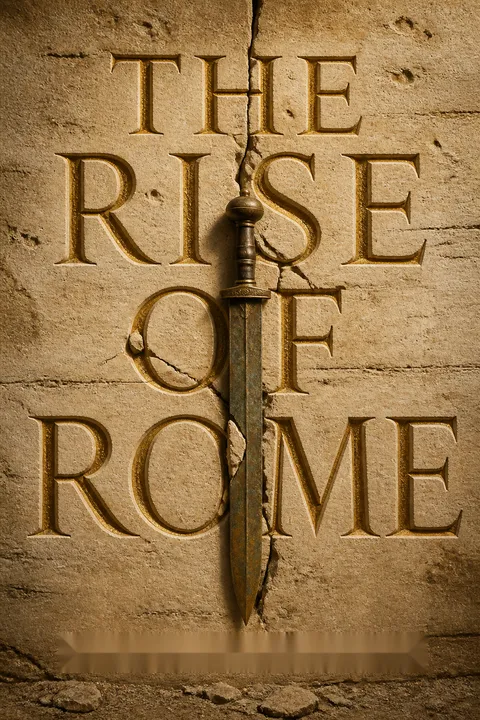

Key Takeaways
1. Rome's Ascent: From Tiber Village to Italian Hegemon
This rise from small village to world power is the theme of this book.
Humble beginnings. Rome began as a modest cluster of Iron Age settlements on the Tiber's banks, one among many developing communities in Latium. Initially overshadowed by more powerful Etruscan cities to the north and vibrant Greek colonies to the south, its eventual dominance was far from predetermined. By 264 BC, however, Rome had transformed into a formidable city-state, controlling the entire Italian peninsula and poised for wider imperial expansion.
Strategic advantages. The site of Rome offered numerous natural benefits that facilitated its growth. Its uneven topography provided defensible hills for settlement, while the Tiber River offered both a navigable route to the sea and a crucial ford for controlling trade between Etruria and Latium. Access to building stone (tufa) and salt pans further contributed to its early viability and eventual prosperity.
Unforeseen trajectory. A political observer in the seventh century BC would likely not have singled out Rome as a future power, given its relatively slower development compared to its neighbors. Yet, by examining its history within the broader Italian context, we can understand the unique aspects that allowed Rome to achieve unparalleled dominance, ultimately shaping the course of Mediterranean history.
2. Italy's Diverse Tapestry: The Crucible of Roman Identity
Rome did not develop in isolation, and it cannot be understood without this broader Italian context.
A mosaic of cultures. Ancient Italy was a land of immense diversity, boasting a wide range of climates, resources, and topographies, from the Alpine north to the fertile plains of Latium and the arid mountains of Calabria. This geographical variety fostered a mosaic of distinct ethnic groups, each with its own language, religious cults, and material culture, most of indigenous origin, with the notable exception of the Greeks in the south.
Crossroads of influence. Italy's advantageous position at the heart of long-established trade routes, both maritime and overland, exposed its inhabitants to a wide-ranging network of contacts. Goods and ideas flowed from the Middle East, Egypt, Greece, and central Europe, profoundly influencing local cultures. Rome, in particular, demonstrated a remarkable willingness to borrow and adapt cultural styles and customs from across Italy and the Mediterranean, while steadfastly maintaining its core Roman identity.
Regional variations. While coastal plains saw early development of city-states and dense urban settlement, the rugged Apennine regions fostered smaller, non-urbanized communities reliant on agriculture and pastoralism. These differences arose from adaptation to local environments, not backwardness, and the effectiveness of Apennine communities in resisting Roman expansion is a testament to their distinct, resilient social and political organizations.
3. Myths and Mounds: Reconciling Rome's Legendary Origins with Archaeology
As myths they tell us a great deal about how Romans saw their history and identity, and how this changed over time, but they cannot be used to reconstruct a detailed history for the earliest centuries of Rome.
Founding narratives. Roman tradition asserts that the city was founded on April 21st, 753 BC, by Romulus, a descendant of the Trojan hero Aeneas. This narrative, involving divine parentage, abandoned twins, fratricide, and the abduction of Sabine women, became central to Roman identity, validating core aspects of their culture like openness to outsiders and military aggression.
Archaeological reality. In contrast to these dramatic tales, archaeological evidence points to a gradual, long-term process of development. The site of Rome was occupied from the Middle Bronze Age, with Iron Age huts appearing on the Palatine and other hills by the ninth century BC. These early settlements slowly merged into a single proto-urban community, with public spaces like the Forum beginning to take shape by the late eighth century BC.
Evolving legends. The foundation myths were not static but evolved over centuries, reflecting changing Roman self-perceptions. The prominence of Remus, for instance, may have symbolized plebeian resistance, while Aeneas's role gained significance during Augustus's reign to legitimize imperial power. While these myths offer invaluable insights into Roman values and identity, they cannot be taken as literal historical accounts of Rome's earliest centuries.
4. The Orientalizing Revolution: Elite Power and Cultural Exchange
If the main trend in the eighth century had been the development of proto-urban settlements structured around families and elites with a warrior identity, the seventh century was dominated by the emergence of a hugely wealthy and powerful international aristocracy.
Princely displays. The seventh century BC, known as the Orientalizing period, witnessed a dramatic shift in elite culture across Italy. Wealthy aristocrats, particularly in Etruria, began constructing elaborate chamber tombs, often covered by massive earth mounds (tumuli), designed for multiple family burials. These "princely burials" were not just resting places but monumental statements of family power and status, filled with opulent grave goods.
Conspicuous consumption. These tombs showcased an unprecedented level of wealth and a taste for luxury. Grave offerings included:
- Inlaid furniture and ceremonial carriages
- Finely worked metal and pottery vessels (e.g., Etruscan bucchero, imported Greek wares)
- Intricately decorated gold jewelry, often with granulated designs
- Exotic items like carved ostrich eggs, ivory ornaments, and faience beads
This demonstrated not only immense riches but also control over international trade networks and access to skilled craftsmen from across the Mediterranean.
International aristocracy. This period saw the emergence of an interconnected, pan-Italian aristocratic class. These elites, sharing a luxurious material culture and lifestyle, forged networks through intermarriage and formal guest-friendships across state and ethnic boundaries. While exclusive, this network facilitated the rapid spread of new artistic styles, craft techniques (like literacy), and social customs, profoundly transforming Italian society and laying the groundwork for more complex political structures.
5. Urban Transformation: The Rise of the City-State in Archaic Italy
This new level of central organization of communities is reflected in their layout.
Accelerated growth. While proto-urban settlements emerged in the eighth century, the sixth century BC marked a rapid acceleration in urbanization across much of Italy. Key settlements grew significantly in size, becoming central places that controlled substantial territories and housed populations of several thousand inhabitants. This growth signaled increasing economic diversity and stronger political authority.
Monumental infrastructure. Cities began to acquire distinct urban features, reflecting their newfound wealth and collective identity. Stone city walls replaced earlier earthworks, providing both defense and a powerful statement of civic pride. Within these walls, houses became larger and more substantial, and public buildings, including impressive temples adorned with brightly painted terracotta decorations, began to appear.
- Greek cities like Metapontum adopted regular street grids and monumental agoras.
- New Etruscan cities like Marzabotto were meticulously planned with orthogonal layouts.
- Investment in roads, bridges, and drainage systems (e.g., Veii's cuniculi) improved infrastructure.
Evolving power structures. This urban revolution coincided with a shift in elite priorities. Instead of solely investing in personal tombs, aristocrats channeled their wealth into civic projects, demonstrating their power through public munificence. Forms of government also diversified, with many cities moving towards rule by elected magistrates, though power remained largely concentrated within a competitive, yet increasingly unified, elite.
6. The Tarquin Dynasty: Etruscan Influence and Early Roman Statecraft
The general picture of a vigorously expanding Rome, ruled by an elite influenced by Etruscan and Greek culture, fits with contemporary archaeological evidence, and the establishment of kingship as an institution at Rome by the sixth century is confirmed by contemporary inscriptions.
Etruscan connections. Roman tradition attributes the rule of Rome in the late seventh and sixth centuries BC to the Tarquin dynasty, a family of Etruscan origin. While the specific narratives of kings like Tarquinius Priscus, Servius Tullius, and Tarquinius Superbus are heavily mythologized, their historical existence is supported by Etruscan sources and archaeological evidence. This period saw Rome's vigorous expansion and significant cultural influence from Etruria and Greece.
Servian reforms. Servius Tullius is credited with far-reaching military and political reforms that fundamentally reshaped the Roman state. These included:
- A census dividing citizens into tribes based on residence, redefining citizenship as a legal status.
- Organization of adult males into five property-based classes, forming centuries for military service and voting.
- Introduction of hoplite warfare, a new style of fighting with heavy infantry in close formation.
These reforms strengthened the state's military organization, reduced dependence on private armies, and laid the groundwork for a more structured political system.
Monumental Rome. The Tarquin era witnessed a dramatic transformation of Rome's urban landscape. Major public works, often funded by war spoils, included:
- The massive Temple of Jupiter Optimus Maximus on the Capitoline, the largest temple of its time.
- Drainage of the Forum area with the cloaca maxima and its paving as a public space.
- Construction of impressive private houses and possibly early city walls.
This building boom showcased Rome's growing wealth, civic ambition, and the increasing influence of Etruscan architectural styles and craftsmanship.
7. The Early Republic's Tumult: Internal Strife and External Threats
The fifth century has often been described as a period of crisis, and this chapter will examine the changes taking place in Italy, their impact on Italian society and whether they really did constitute a crisis.
Post-monarchy instability. The overthrow of the Tarquin monarchy around 509 BC plunged Rome into a period of political experimentation and social unrest. While the new Republic replaced a single king with elected annual magistrates, the exact structure of early Republican government remained fluid, with varying numbers and titles for chief executives. This transition was marked by ongoing power struggles between elite families.
The Struggle of the Orders. Throughout the fifth century, Rome was consumed by the "Struggle of the Orders," a protracted conflict between the patrician elite and the plebeian populace. This multifaceted struggle encompassed:
- Economic grievances: Endemic debt, debt bondage (nexum), and unfair land distribution.
- Political exclusion: Plebeians' lack of access to high office and legal protection from arbitrary patrician power.
- Legal reform: Demands for a written law code, culminating in the Twelve Tables (451-449 BC), which codified Roman law and limited patrician judicial discretion.
This period saw the creation of new plebeian institutions like the tribunate and the concilium plebis, giving plebeians a voice and veto power.
External pressures. Rome's internal strife was compounded by continuous external threats. It faced debilitating wars with its powerful Etruscan neighbor Veii, inconclusive campaigns against the Volsci and Aequi in Latium, and a traumatic Gallic invasion and sack of the city in 390 BC. These conflicts, while costly, also spurred military reforms and territorial expansion, laying the groundwork for Rome's eventual dominance.
8. The Samnite Wars: Forging Roman Dominance in Italy
Romans, our quarrels will not be decided by the words of envoys or the arbitration of any man, but by Mars, on the Campanian plain on which we will meet, and by arms and common strife. Then let us draw up camp against camp, between Capua and Suessula, and decide whether Samnite or Roman will rule Italy.
Clash of powers. From 343 to 272 BC, Rome engaged in a series of protracted and brutal conflicts known as the Samnite Wars, a pivotal struggle for supremacy in central and southern Italy. These wars pitted Rome against the dynamic and warlike Samnites, an Oscan-speaking people from the Apennines, whose expanding ambitions clashed directly with Rome's growing influence in Campania and the Liris valley.
Strategic gains and setbacks. The First Samnite War (343-341 BC) saw Rome intervene in Campania, leading to a temporary alliance with Capua and a clash with the Samnites, but was cut short by internal Roman unrest and a subsequent Latin revolt. The Latin War (340-338 BC) decisively broke the Latin League, allowing Rome to establish a new, centralized system of control over Latium. The Second Samnite War (327-304 BC) was a long, arduous struggle, marked by the Roman humiliation at the Caudine Forks (321 BC), but ultimately resulted in Rome pushing back Samnite influence from Campania and Apulia through strategic colonization and alliances.
Final confrontation. The Third Samnite War (298-290 BC) saw the Samnites form a formidable anti-Roman coalition with Etruscans, Umbrians, and Gauls. The decisive Roman victory at Sentinum in 295 BC, though costly, broke the coalition and paved the way for Rome's final subjugation of Samnium. This period also included the Pyrrhic War (281-272 BC), where Rome faced the Hellenistic military might of King Pyrrhus of Epirus, ultimately securing Roman control over the Greek cities of southern Italy and solidifying its position as the undisputed power in the peninsula.
9. Rome's Ingenious Control: A Flexible Web of Citizenship and Alliances
This neat solution allowed Rome to dominate in practice without incurring the resentment that might have arisen from attempts to exercise a closer degree of control.
Arm's-length governance. As Rome's territory expanded, it developed an innovative and remarkably stable system of control over conquered Italian communities, avoiding direct administration. This system, largely formalized after the Latin War (340-338 BC), created a complex web of bilateral relationships with Rome at its center, rather than a unified, centrally governed empire.
Tiered statuses. Rome categorized Italian communities into distinct legal statuses, each with specific rights and obligations:
- Roman Citizens (cives Romani):
- Full Citizenship (civitas optimo iure): Civil and political rights, including voting and holding office in Rome.
- Citizenship Without Suffrage (civitas sine suffragio): Civil rights and Roman legal protection, but no voting or office-holding rights in Rome. This was often imposed as a punishment, requiring military service and taxation.
- Latins: A legal status (not ethnic) granting rights of intermarriage (conubium), trade (commercium), and eventual migration to Rome to gain citizenship. Latin communities were independent but provided significant military support.
- Allies (socii): Independent states bound to Rome by bilateral treaties, primarily obliging them to provide military assistance when requested. Rome deliberately undermined multilateral leagues to prevent collective action against its authority.
Colonization as a tool. Rome extensively used colonization to secure and integrate newly conquered territories. Roman colonies (coloniae civium Romanorum) were small settlements of Roman citizens, often in strategic coastal locations, while larger Latin colonies (coloniae Latinae) were independent city-states, populated by Romans and allies who exchanged their original citizenship for Latin status. This program disseminated Roman-style urbanism, language, and governance, profoundly transforming the cultural and demographic landscape of Italy.
10. Conquest's Bounty: The Economic and Social Reshaping of Rome
Between 340 and 264 Rome began to reap the economic rewards of its conquest of Italy.
Wealth from war. Rome's relentless conquest of Italy brought immense economic benefits, transforming its state and personal wealth. War spoils, including vast amounts of booty, land, and slaves, funded ambitious public works and enriched the burgeoning Roman elite. The ager Romanus (Roman territory) expanded dramatically, from approximately 5,525 km² in 338 BC to over 26,805 km² by 264 BC.
Demographic boom. The city of Rome experienced rapid population growth, tripling in size from an estimated 30,000 to 90,000-190,000 people between the mid-fourth and early third centuries BC. This influx was fueled by natural growth, rural-to-urban migration, and a massive increase in the slave population, with tens of thousands of war captives enslaved during the Samnite and Etruscan conflicts.
- Slave labor: Provided cheap labor for agriculture and monumental public works.
- Manumission: Freed slaves gained Roman citizenship, expanding the citizen body and creating a loyal client base.
Urban renewal. The economic boom funded an unprecedented program of urban development. Rome acquired state-of-the-art infrastructure and monumental architecture:
- City walls: The massive "Servian Wall" (11 km long, 4m thick) was constructed from Veientine tufa.
- Aqueducts: The Aqua Appia (312 BC) and Aqua Anio Vetus (272 BC) provided essential water.
- Temples: Over a dozen new temples, often victory dedications funded by generals' war spoils, transformed the cityscape.
- Public spaces: The Forum was further monumentalized with structures like the Rostra, adorned with captured ship prows.
11. Hellenism's Embrace: Rome's Selective Cultural Adaptation
Greek influence on Roman culture was a matter not just of adoption but of adaptation to serve Rome’s own political and cultural agenda and to add to a distinctively Roman identity.
Growing Greek contact. As Rome expanded its influence across Italy, particularly into Magna Graecia, its direct contact with Greek culture intensified from the late fourth century BC onwards. This exposure, mediated through Etruscan and Oscan neighbors, profoundly impacted Roman art, architecture, intellectual life, and even personal habits.
Cultural adoption and adaptation. Rome selectively adopted aspects of Hellenism, integrating them into its existing traditions rather than simply replacing them. Examples include:
- Architecture: Temples, while retaining traditional Italian forms, incorporated Greek elements like columns and decorative terracottas.
- Art: Frescoes and bronze objects, like the Ficoroni cista, blended Greek mythological scenes with local traditions.
- Religion: Greek cults (e.g., Aesculapius) and abstract virtues (e.g., Salus, Victoria) were adopted, and Roman envoys consulted Greek oracles.
- Intellectual life: Interest in Greek philosophy and literature grew, with figures like Appius Claudius Caecus writing in the Greek manner.
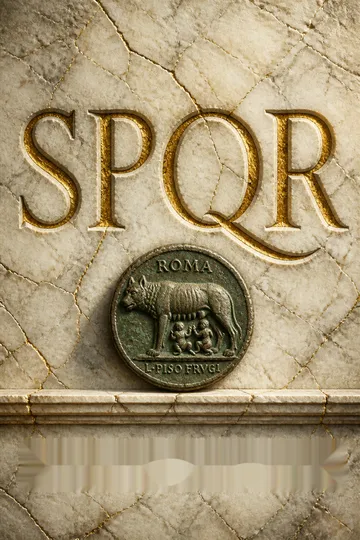
Distinct Roman identity. Despite these influences, Rome maintained a strong sense of its own cultural identity. Early Roman coinage, initially using Greek weights and designs, quickly adopted distinctively Roman symbols like the she-wolf. The Roman nobility, while embracing Hellenistic tastes, remained deeply attached to traditional Roman values of family continuity, military achievement, and public service, which they showcased through elaborate funerals and monumental tombs. This selective adaptation allowed Rome to absorb new ideas while reinforcing its unique character.
Review Summary
The Rise of Rome receives praise for its scholarly approach to early Roman history, drawing on archaeological evidence to challenge traditional narratives and legends. Readers appreciate Lomas's contextualization of Rome within broader Italian culture, including Etruscans, Greeks, and Samnites. The book covers Rome's development from Iron Age settlements to the First Punic War. However, many reviewers note the writing can be dry, dense, and repetitive, making it more suitable for dedicated history enthusiasts than casual readers. While the academic rigor is valued, some find it lacks narrative engagement. Overall, it's recommended as a comprehensive, well-researched introduction to archaic Rome.
People Also Read






Download PDF
Download EPUB
.epub digital book format is ideal for reading ebooks on phones, tablets, and e-readers.








































