
Key Takeaways
1. Dinosaurs Began as Underdogs, Not Apex Predators
They were small and meek creatures, nowhere near the top of the food chain during their earliest years.
Humble origins. Dinosaurs did not burst onto the scene as dominant giants. Their ancestors, the dinosauromorphs, emerged around 250 million years ago in the Triassic Period, following the devastating end-Permian mass extinction. These early forms, like the cat-sized Prorotodactylus, were small, upright-walking reptiles, leaving tiny footprints in places like ancient Poland.
Overshadowed rivals. For millions of years, these proto-dinosaurs and the first true dinosaurs, such as Herrerasaurus and Eoraptor from Argentina, were marginal players in ecosystems. They were dwarfed and outnumbered by other creatures, particularly the pseudosuchians—crocodile-line archosaurs—which were far more diverse and included apex predators like the twenty-five-foot-long Saurosuchus. Early dinosaurs were geographically confined to humid regions of the supercontinent Pangea, unable to cope with the vast deserts.
Evolutionary struggle. A morphological disparity study revealed that pseudosuchians were significantly more anatomically diverse than dinosaurs throughout the Triassic, experimenting with more diets and behaviors. Dinosaurs were underdogs, struggling to find their niche and expand their range, far from the global rulers they would eventually become.
2. Mass Extinctions Paved the Way for Dinosaur Dominance
Paradoxically, however, it was also a mass extinction that helped dinosaurs break out of their early-life slump and become the enormous, dominant animals that stoke our imaginations.
Pangea's breakup. Around 201 million years ago, at the end of the Triassic, the supercontinent Pangea began to violently split apart. This continental rifting triggered one of Earth's largest volcanic events, the Central Atlantic Magmatic Province (CAMP), which spewed out immense quantities of lava and noxious gases for hundreds of thousands of years.
Global catastrophe. These eruptions caused a runaway greenhouse effect, melting clathrates and releasing methane, leading to rapid global warming and environmental chaos. This triggered a mass extinction that claimed over 30% of all species, including nearly all of the dominant pseudosuchians—phytosaurs, aetosaurs, and rauisuchians—that had overshadowed dinosaurs.
Dinosaur opportunity. While other groups perished, dinosaurs somehow endured and thrived in the aftermath. They rapidly diversified, grew larger, and spread into new environments, filling the ecological niches left vacant by their extinct rivals. This catastrophic event, rather than hindering them, propelled dinosaurs into their era of global dominance.
3. Sauropods Achieved Gigantism Through Unique Adaptations
They were the largest animals that ever walked the land, and they push the limit for what evolution can achieve.
Unprecedented size. After the end-Triassic extinction, sauropods—the long-necked, potbellied herbivores—began to evolve truly colossal sizes, far exceeding any other land animals before or since. From two-ton proto-sauropods like Plateosaurus, they rapidly grew to ten-ton giants in the Early Jurassic, and later to fifty-ton behemoths like Argentinosaurus in the Cretaceous.
Specialized body plan. Sauropods possessed a unique combination of adaptations that enabled their gigantism:
- Long necks: Allowed access to high foliage, efficient feeding without moving.
- Fast growth rates: Matured from pigeon-sized hatchlings to multi-ton adults in 30-40 years.
- Efficient lungs: Bird-like "flow-through" lungs provided continuous oxygen.
- Air sacs: Invaded bones, making skeletons strong yet lightweight, and aided in cooling.
Evolutionary marvels. These features, assembled piecemeal over millions of years, allowed sauropods to overcome the biological constraints that limit other large land animals. They became the dominant large herbivores worldwide, demonstrating evolution's capacity to produce truly awe-inspiring creatures.
4. Continental Drift Shaped Diverse Dinosaur Ecosystems
The Late Jurassic, then, was a time of global uniformity. The same suite of dinosaurs ruled every corner of the globe.
Pangea's influence. During the Late Jurassic (around 150 million years ago), Pangea was still largely connected, allowing similar dinosaur faunas to spread globally. The Morrison Formation in western North America, for example, reveals diverse sauropods (Brontosaurus, Diplodocus, Brachiosaurus) coexisting through niche partitioning, alongside large predators like Allosaurus.
Fragmented world. As the Jurassic transitioned into the Cretaceous, Pangea continued to fracture, and continents drifted further apart, leading to increased isolation. This geographical separation fostered provinciality, with distinct dinosaur communities evolving on different landmasses.
- North America (Laramidia): T. rex, Triceratops, Edmontosaurus.
- South America: Abelisaurids, titanosaurs, unique land crocodiles.
- Europe (islands): Dwarf dinosaurs like the cow-sized Magyarosaurus and the peculiar raptor Balaur bondoc.
Isolation breeds diversity. This fragmentation meant that a dinosaur like T. rex, while dominant in North America, never encountered the giant abelisaurids of South America. Different evolutionary pressures and available niches on isolated landmasses led to a spectacular diversification of unique dinosaur forms worldwide, marking the apogee of their success.
5. Tyrannosaurs Rose to Power by Outlasting Rivals
Only then, after that interminable period of evolution in anonymity, did tyrannosaurs start growing bigger, stronger, and meaner.
Small beginnings. Tyrannosaurs, the group that includes T. rex, originated over 100 million years before their famous king, in the Middle Jurassic. Early tyrannosaurs like Kileskus (Siberia) and Guanlong (China) were human-sized, feathered, and not apex predators, living in the shadows of larger carnivores like Allosaurus and carcharodontosaurs.
Middle Cretaceous turnover. For about 80 million years, tyrannosaurs remained small to medium-sized. However, a period of environmental change and mass extinction in the mid-Cretaceous (around 94 million years ago) saw the decline of the dominant carcharodontosaurs in North America and Asia. This created a power vacuum.
Opportunistic rise. Tyrannosaurs, which had been developing larger brains and keener senses (like Timurlengia from Uzbekistan), opportunistically filled these vacant apex predator niches. They rapidly evolved into colossal forms like T. rex, Albertosaurus, and Tarbosaurus, dominating North America and Asia during the final 20 million years of the Age of Dinosaurs.
6. T. rex Was a Highly Specialized, Intelligent Apex Predator
T. rex was the King of the Dinosaurs, the largest predator that has ever lived on land in the 4.5-billion-year history of Earth.
Colossal hunter. Tyrannosaurus rex, reigning in western North America from 68 to 66 million years ago, was a forty-two-foot-long, seven-to-eight-ton behemoth. It was a pure carnivore, capable of "puncture-pull feeding," biting through bone with immense force (up to 3,000 pounds per tooth) thanks to its thick, peg-like teeth, massive jaw muscles, and a rigidly constructed skull.
Advanced senses and intellect. CT scans reveal T. rex possessed a relatively large brain (EQ similar to a chimp) and highly developed senses:
- Olfactory bulbs: Enormous, indicating a world-class sense of smell.
- Inner ear: Elongated cochlea for keen low-frequency hearing, long semicircular canals for agility.
- Vision: Binocular vision for depth perception.
These attributes aided in targeting and ambushing prey like Triceratops and Edmontosaurus.
Dynamic growth and social behavior. T. rex grew rapidly, gaining about 1,700 pounds per year during its teenage years, transforming from a slender juvenile sprinter to a bulky adult ambusher. Evidence from mass graveyards of its close relatives suggests T. rex likely hunted in packs, with juveniles and adults complementing each other's skills.
7. Birds Are Living Dinosaurs, a Testament to Evolutionary Success
Birds are simply a subgroup of dinosaurs, just like the tyrannosaurs or the sauropods—one of the many branches on the dinosaur family tree.
Huxley's legacy. The idea that birds evolved from dinosaurs, first proposed by Thomas Henry Huxley in the 1860s, was confirmed by the "Dinosaur Renaissance" of the 1970s and a deluge of feathered dinosaur fossils from Liaoning, China, starting in 1996. These fossils, like Sinosauropteryx and Microraptor, showed dinosaurs with feathers, wishbones, and other bird-like features.
Gradual assembly of the bird body plan. Many features once thought unique to birds actually evolved in their non-flying theropod ancestors:
- Feathers: Initially simple proto-feathers for insulation or display, later evolving into quill-like structures.
- Wishbone: Developed in early theropods to stabilize shoulders.
- Large brains & efficient lungs: Evolved in maniraptorans and other theropods for active lifestyles.
- Wings: First evolved for display in large, non-flying dinosaurs, then repurposed for aerodynamics.
Accidental flight. Flight likely evolved multiple times in parallel among small, feathered, winged paravian dinosaurs, initially as an accidental byproduct of display structures. Natural selection then refined these early fliers into the diverse, highly efficient birds we see today, which experienced a rapid burst of evolution once powered flight was achieved.
8. A Catastrophic Asteroid Impact Caused the Dinosaur Extinction
If there is one, single straightforward proposition that I would stake my career on, it would be this: no asteroid, no dinosaur extinction.
The worst day. 66 million years ago, an asteroid approximately six miles wide struck Earth in what is now Mexico's Yucatán Peninsula. This impact unleashed the energy of a billion nuclear bombs, triggering a chain reaction of global devastation.
Immediate horrors:
- Light flashes & sonic booms: Blinding light and deafening sounds.
- Mega-earthquakes: Richter scale 10 tremors, causing tsunamis and volcanic eruptions.
- Glass rain & heat pulse: Molten rock vaporized, cooled into scalding glass beads, igniting global wildfires.
- Hurricane-force winds: Blasted across continents.
Global aftermath. Soot and dust from fires and impact debris blocked the sun for years, causing a "nuclear winter" that halted photosynthesis and collapsed food chains. This was followed by acid rain and a runaway greenhouse effect from released CO2. The asteroid was the primary, abrupt cause of the non-bird dinosaur extinction.
9. Dinosaur Vulnerabilities Contributed to Their Demise
If it had happened a few million years earlier or later, maybe it wouldn’t just be seagulls congregating outside my window but tyrannosaurs and sauropods too.
Pre-existing stress. While the asteroid was the direct cause, the Earth was already in a state of flux. Indian volcanoes were erupting, temperatures were cooling, and sea levels fluctuated. These long-term changes had made some dinosaur ecosystems vulnerable.
Ecosystem fragility. Studies show that the diversity of large plant-eating dinosaurs, like horned ceratopsians and duck-billed hadrosaurs, was declining in the millions of years before the impact. This reduction in keystone herbivores made food webs less robust and more susceptible to collapse when the asteroid struck.
Biological disadvantages. Dinosaurs, compared to many survivors, had several liabilities:
- Large size: Most couldn't hide in burrows or underwater.
- Specialized diets: Reliant on specific plants or large prey, vulnerable to food chain collapse.
- High metabolism: Required constant food, couldn't hibernate.
- Slow reproduction: Long incubation times for eggs, slow growth to adulthood.
These factors, combined with the asteroid's timing, sealed their fate.
10. The Dinosaur Extinction Created Opportunities for Mammals and Humans
If the asteroid had never hit, if it had never ignited that chain reaction of extinction and evolution, the dinosaurs would probably still be here, and we would not.
A new world. The asteroid impact, while devastating, cleared the ecological playing field. The non-bird dinosaurs, along with 70% of all species, vanished. This created an unprecedented opportunity for the surviving lineages.
Mammalian radiation. Mammals, which had lived in the shadows of dinosaurs for over 150 million years, rapidly diversified in the Paleogene Period (after 66 million years ago). From tiny shrew-like insectivores, they quickly evolved into badger-sized burrowers, saber-toothed carnivores, and even cow-sized plant-eaters, filling the vacant niches.
Our lineage's rise. Among these early mammals were creatures like Torrejonia, one of the oldest primates, living just a few million years after the impact. These humble ancestors, having endured the catastrophe, were then free to evolve over the next 60 million years into the diverse primate lineage that eventually led to humans. The dinosaur extinction was a pivotal moment, directly enabling the rise of mammals and, ultimately, our own existence.
Review Summary
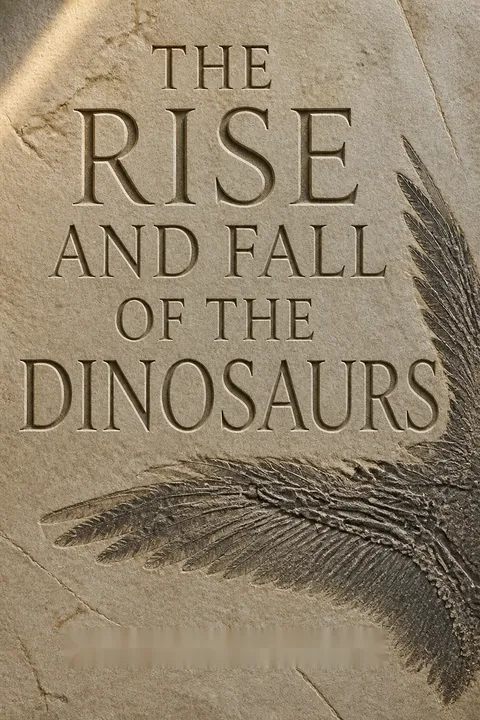
The Rise and Fall of the Dinosaurs receives mostly positive reviews for its engaging and informative content on dinosaur evolution and paleontology. Readers appreciate Brusatte's enthusiasm and the book's accessibility for general audiences. Many find the scientific information fascinating, especially recent discoveries and theories. However, some criticize Brusatte's writing style, particularly his personal anecdotes and descriptions of colleagues, as distracting or self-indulgent. Despite these critiques, most reviewers recommend the book for anyone interested in dinosaurs and paleontology.
People Also Read





About the Author
Other books by Steve Brusatte
Download PDF
Download EPUB
.epub digital book format is ideal for reading ebooks on phones, tablets, and e-readers.








































