
Plot Summary
Blood on the Marsh
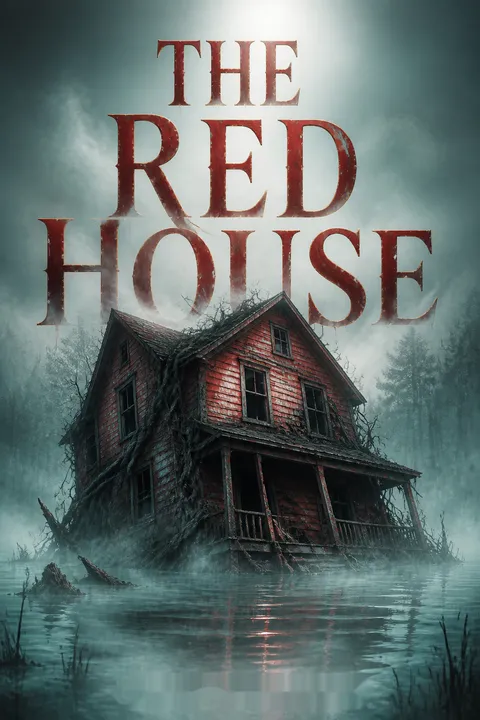
In 2002, five-year-old Celestine Flowers flees her family's farmhouse, the Red House, after witnessing her parents and baby brother's murder. Her teenage brother Joseph is found comatose, accused of the crime. The house, surrounded by blood-tinged marshland, becomes a symbol of trauma and mystery. The event scars Celestine, who grows up with a new name—Eve—trying to escape her past, but the Red House's shadow lingers, its secrets buried in the marsh.
The Snake Girl Returns
Twenty years later, Eve lives quietly, hiding her identity as the "snake girl" who survived the Red House murders. She works in a bookshop, volunteers at an animal sanctuary, and avoids attention. But the past resurfaces when a viral computer game, coded by Joseph, draws obsessive fans seeking a rumored "hidden level" that might reveal the truth about the murders. Eve's anonymity is shattered when a photo of her circulates online, and she's forced to confront the legacy she tried to bury.
Ghosts of the Red House
Eve's beloved grandmother, Peggy, calls her back to the Red House with urgent news. The house, now isolated and decaying, is filled with memories and the presence of Joseph, still alive but unresponsive. Peggy reveals she is dying and asks Eve to promise to care for Joseph after she's gone. The request reopens old wounds, forcing Eve to face the physical and emotional ghosts of her childhood home.
Granny's Last Request
Peggy's illness and her plea for Eve to look after Joseph weigh heavily. Eve is torn between her promise and her inability to forgive her brother. Peggy hints there's more to Joseph's story, but dies before she can explain. Eve is left with guilt, responsibility, and the sense that the truth about the Red House is still hidden, waiting to be unearthed.
The Brother in the Bed
Joseph, in a vegetative state, is moved to a nursing home after Peggy's death. The family must decide whether to continue life support. Eve, wracked with guilt and uncertainty, is pressured by her uncle Gregory to let Joseph die. The decision is complicated by the possibility that Joseph is more aware than anyone realizes, and by the unresolved question of what really happened that night.
The Game and the Past
Joseph's cult game, "The Red House," is believed to contain clues to the murders. Gamers and Eve's acquaintances obsess over unlocking its hidden level. The game's surreal, symbolic world mirrors the real Red House and marsh, blurring the line between memory, trauma, and reality. Eve's own face blindness and unreliable memory make her doubt what she saw as a child, and whether Joseph is truly guilty.
A Promise and a Death
Peggy's death leaves Eve isolated and vulnerable. The animal sanctuary faces financial ruin, and Eve's identity as Celestine is exposed online. A threatening encounter with a stranger and the resurfacing of old acquaintances—some helpful, some menacing—make Eve realize she is being watched. The past is not done with her, and someone wants the truth to stay buried.
The Hidden Level
Eve, with the help of Serena (her boss's fiancée and a secret gaming expert), and Nate (Joseph's old friend), tries to access the hidden level in Joseph's game. They discover Joseph's notebook, filled with coded clues and childhood drawings. The game's secret area, unlocked through Eve's unique observational skills, reveals a re-enactment of the murders from a child's perspective, casting doubt on Joseph's guilt.
The Weight of Memory
Eve's lifelong struggle with prosopagnosia (face blindness) comes to the fore. She realizes her childhood identification of Joseph as the killer may have been a tragic mistake, based on clothing and context, not facial recognition. The game's blurred faces and shifting perspectives echo her own fractured memory, and she is forced to confront the possibility that she helped condemn an innocent brother.
Family Ties Unravel
As Eve investigates, she uncovers layers of family dysfunction: her mother's depression, her father's controlling and possibly abusive behavior, and her uncle Gregory's self-serving decisions. The will leaves the Red House to Eve, but the inheritance is tangled with the fate of Joseph and the family's dark history. Eve's relationships with her surviving relatives are strained by old resentments and new revelations.
The Will and the House
The Red House, left to Eve, becomes both a sanctuary and a prison. Peggy's secret communication aids reveal she knew Joseph was conscious and tried to protect him. Eve's search for Joseph's notebook and the truth about the murders leads her to hidden compartments, old tapes, and the realization that her family's story is not what it seemed.
The Dice Decide
Overwhelmed by responsibility, Eve resorts to chance—rolling dice to decide Joseph's fate. But when she discovers evidence that Joseph is conscious and able to communicate, the moral calculus changes. Joseph, able to answer yes/no questions with eye movements, reveals he does not remember the murders and, at first, wishes to die. But as more is uncovered, his will to live returns.
The Nursing Home Dilemma
As Joseph's consciousness becomes public, the case attracts media and true-crime obsessives. Eve is threatened by a stranger, and those who get close to the truth—Peggy's friend Liz, and even Joseph—are targeted. Attempts are made on Joseph's life, and Eve realizes the killer is still at large, desperate to keep the past hidden.
The Second Car
A long-silent witness comes forward, revealing that two cars left the Red House the night of the murders. This crucial detail, ignored by police, suggests another adult was present. Eve's investigation, aided by Serena and Nate, points to her mother's old lover, Stephen, as a possible suspect, but the truth is more complex and closer to home.
The Face in the Crowd
Eve's search leads her to question everyone, including herself. Family members' alibis and motives are re-examined. The discovery of a bag in the marsh, containing a phone and a pottery bird linked to her mother's past, points to a cover-up. Eve's father, long thought dead, is revealed to be alive, living under a new identity, and responsible for the murders.
The Notebook's Secret
Joseph's notebook and the hidden level in the game, when fully decoded, confirm that Joseph was not the killer. The game's perspective, the clues in the marsh, and the family's lies all converge. Eve realizes her father killed her mother, her mother's lover, and her baby brother in a fit of rage, then faked his own death with the help of Gregory.
The Folly and the Marsh
Eve is lured to the marsh by her father, who tries to kill her to keep his secret. Trapped in the flooded folly, Eve uses her wits and the knowledge from Joseph's game to escape. In a final struggle, she overcomes her father with the help of her friends and the symbolic snakes, letting the marsh claim him as it has so many secrets before.
The Truth in the Pool
With the truth revealed, Joseph is exonerated and begins to recover. Eve inherits the Red House and transforms it into a sanctuary for animals and herself. The family's cycle of trauma is broken. Eve, no longer hiding, embraces her identity and her future, surrounded by friends, animals, and the hard-won peace of knowing the truth.
Analysis
A modern gothic about trauma, memory, and the search for truthThe Red House is a masterful psychological thriller that uses the conventions of the gothic—an isolated house, a haunted protagonist, buried secrets—to explore the lasting effects of trauma and the complexity of family bonds. At its heart is a meditation on the unreliability of memory, especially when shaped by fear, guilt, and neurological difference. The novel interrogates the ways in which victims can become complicit in their own silencing, and how the desire for closure can lead to both healing and harm. Through Eve's journey, the story asks whether it is possible to forgive oneself for mistakes made in ignorance, and whether the truth, once uncovered, can set one free. The use of a computer game as both plot device and metaphor is particularly resonant in an age obsessed with puzzles, secrets, and the gamification of reality. Ultimately, The Red House is about reclaiming agency, breaking cycles of violence, and finding hope in the possibility of new beginnings, even in the most haunted of places.
Review Summary
The Red House follows Eve, who witnessed her brother Joseph allegedly murder their family twenty years ago before crashing into a coma. Now an adult, Eve investigates the truth behind the massacre. Reviews are mixed: many praise the atmospheric setting, clever twists, and shocking ending, rating it highly. However, critics cite an overloaded plot with too many coincidences, especially in the second half, repetitive writing, and an occasionally frustrating protagonist. The video game element intrigued readers. Most agree the book is gripping despite pacing issues, with several reviewers shocked by unexpected revelations.
People Also Read
Characters
Eve (Celestine) Flowers
Eve, formerly Celestine, is the sole child survivor of the Red House murders. Her life is defined by loss, guilt, and the struggle to escape her past. Suffering from face blindness, she is an unreliable witness to her own trauma, which becomes central to the novel's mystery. Eve is introspective, guarded, and fiercely independent, yet deeply lonely. Her journey is one of self-forgiveness, reclaiming agency, and learning to trust others. Her relationships—with her grandmother Peggy, her brother Joseph, and new friends—are fraught with the tension between the need for connection and the fear of betrayal. Eve's development is marked by her willingness to confront the truth, even when it implicates herself and those she loves.
Joseph Flowers
Joseph, Eve's older brother, is accused of murdering their family and left in a vegetative state. His consciousness, long undetected, becomes the key to unraveling the truth. Joseph is a sensitive, creative soul, more comfortable with snakes and computer code than people. His game, "The Red House," is both a confession and a cry for help, filled with symbolism and hidden messages. Joseph's psychological torment—trapped in his body, blamed for an atrocity he didn't commit—mirrors the novel's themes of voicelessness and misjudgment. His gradual emergence into awareness and communication is both heartbreaking and redemptive.
Peggy Flowers
Peggy is Eve's grandmother and Joseph's caretaker. Her life is consumed by guilt, duty, and the need to protect her family, even at great personal cost. Peggy's moral complexity is revealed in her decision to hide Joseph's consciousness and her role in the family's cover-up. She is loving but controlling, her actions driven by a fierce loyalty that sometimes blinds her to the consequences. Peggy's death is the catalyst for Eve's quest, and her hidden aids and tapes provide crucial clues. Her relationship with Liz, her best friend and lover, adds depth to her character and highlights the costs of secrecy.
Gregory Flowers
Gregory, Eve's uncle, is pragmatic, self-interested, and emotionally distant. He raises Eve after the murders but never offers true warmth or support. Gregory's complicity in the cover-up—misidentifying the bodies, enabling his brother's escape, and prioritizing inheritance over justice—reveals a man willing to sacrifice others for his own security. His psychological profile is one of suppressed guilt, rationalization, and eventual flight when the truth threatens to surface.
Andrew Flowers
Andrew, Eve's father, is initially presented as a victim, but is ultimately revealed as the murderer. His charm masks a controlling, violent nature. Andrew's psychological unraveling is triggered by his wife's plan to leave him, leading to a murderous rage. His ability to manipulate those around him, fake his own death, and live undetected for years speaks to his cunning and lack of remorse. Andrew's relationship with Eve is twisted by his need for control and his inability to accept loss.
Serena
Serena, Marcus's fiancée, is a secret gaming expert obsessed with the Red House game. Her intelligence, curiosity, and technical skills make her an invaluable partner in Eve's investigation. Serena's own history of abuse and her ambivalence about motherhood add layers to her character. She is both a mirror and a foil to Eve—capable, guarded, and ultimately loyal. Her relationship with Marcus and her role as "The Seeker" in the gaming community highlight the novel's themes of hidden identities and the search for truth.
Marcus
Marcus, Eve's boss at the bookshop, is a kind, eccentric figure who provides stability and acceptance. His hippie persona and broken nose make him memorable to Eve, who relies on distinctive features to recognize people. Marcus's relationship with Eve is one of quiet support, and his eventual involvement in the story's climax demonstrates his loyalty. His own secrets and vulnerabilities, including his connection to Serena, enrich his role as a surrogate family member.
Nate Armitage
Nate, Joseph's childhood friend and co-creator of the Red House game, is scarred physically and emotionally by an acid attack for which Eve was wrongly blamed. Nate's bitterness, intelligence, and obsession with the game's secrets make him both an ally and a source of tension. His own trauma and guilt intersect with Eve's, and his technical expertise is crucial in unlocking the hidden level. Nate's development is marked by his gradual reconciliation with Eve and his willingness to confront the past.
Liz Dagenham
Liz, Peggy's partner, is a vibrant, independent woman whose relationship with Peggy is a source of joy and solace. Liz's outsider perspective allows her to see the family's dysfunction more clearly, and her warnings to Eve are pivotal. Her suspicious death underscores the danger of uncovering the truth and the lengths to which the real killer will go to protect himself.
Zack
Zack, a dry-stone waller with a distinctive leaf tattoo, becomes Eve's romantic interest and emotional anchor. His patience, understanding, and acceptance of Eve's face blindness allow her to be vulnerable and authentic. Zack represents the possibility of a future unburdened by the past, and his presence in the story's resolution signals Eve's movement toward healing and connection.
Plot Devices
Unreliable Narrator and Face Blindness
The novel's central device is Eve's unreliable memory, shaped by trauma and prosopagnosia (face blindness). This condition not only makes her an uncertain witness to her family's murder but also serves as a metaphor for the ways in which trauma distorts reality. The reader is forced to question every recollection, every identification, and every assumption, mirroring Eve's own doubts. This device is reinforced by the structure of Joseph's game, with its blurred faces and shifting perspectives, and by the use of tapes, notebooks, and coded messages that must be interpreted with care.
The Computer Game as Metafiction
Joseph's cult computer game, "The Red House," is both a literal and symbolic key to the mystery. Its hidden level, accessible only through a combination of codebreaking and unique observation, mirrors the process of uncovering repressed memories and family secrets. The game's surreal, symbolic world—snakes, marshes, blurred faces—reflects the characters' psychological landscapes. The search for the hidden level becomes a quest for truth, with the game's structure echoing the novel's own narrative twists and revelations.
Multiple Perspectives and Time Shifts
The novel alternates between Eve's present-day investigation, flashbacks to the night of the murders, and the perspectives of other key characters (Joseph, Andrew, Peggy, etc.). This fragmented structure allows the reader to piece together the truth alongside Eve, experiencing the same uncertainty, false leads, and moments of clarity. The use of found objects—tapes, notebooks, letters—serves as both plot device and symbol of the persistence of the past.
Foreshadowing and Red Herrings
The narrative is rich with foreshadowing—Peggy's hints, the rumors of a second car, the symbolism of the marsh and the snakes. Red herrings abound: Joseph's supposed guilt, the focus on Stephen as a suspect, the acid attack on Nate. These devices keep the reader (and Eve) guessing, heightening the suspense and emotional stakes.
The Marsh and the Red House as Gothic Symbols
The Red House and its surrounding marsh are more than mere backdrops—they are living, breathing entities that shape the characters' fates. The marsh, with its blood-red water and hidden dangers, symbolizes the family's buried secrets and the inescapability of the past. The house, both sanctuary and prison, is a site of trauma, memory, and eventual redemption.
Download PDF
Download EPUB
.epub digital book format is ideal for reading ebooks on phones, tablets, and e-readers.








































