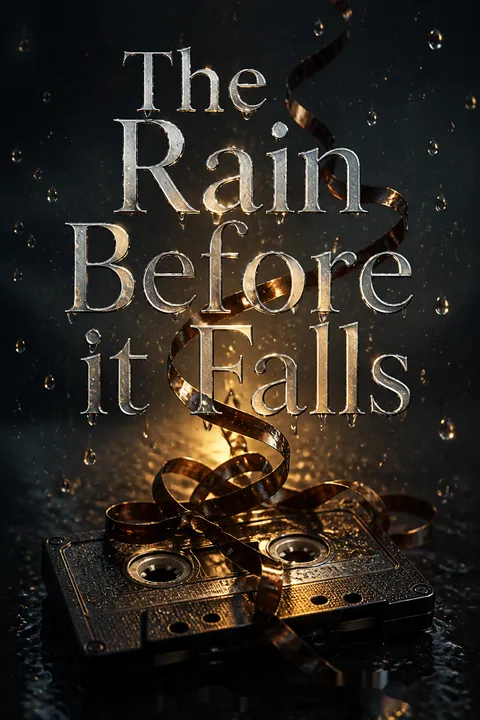

Plot Summary
News Among Falling Leaves
On a late autumn day, Gill learns of her elderly Aunt Rosamond's death, her passing wrapped in ordinary domestic sounds as the family absorbs the news. Rosamond—eccentric, isolated, childless—has left a will splitting her estate between her niece Gill, nephew David, and a mysterious third beneficiary: Imogen, a young blind woman from the family's now-shadowy past. Gill is tasked with finding Imogen and understanding her connection, despite only having met her once decades ago at an awkward birthday party. The announcement begins an emotional journey, as Gill, her children, and the older generation start sifting through memories and histories that seem to flicker behind ordinary objects and photos. Subtle inheritances and unresolved guilt hang in the air, setting the emotional terrain for the family's attempt to reclaim or make sense of their origins.
Tapes for Imogen
While sorting through Rosamond's effects in a lonely Shropshire house, Gill finds a series of numbered cassette tapes, each marked only for "Imogen." Driven by curiosity, she and her daughters listen; Rosamond's voice on the tapes is intimate and raw, narrating twenty family photographs to give Imogen a history she cannot see. The tale promises to trace a difficult inheritance, focusing on how trauma and love shape identity. Rosamond's urgency is palpable—she wants Imogen to understand her roots, and to discover "the story that only I know." The selection of twenty photos forms the skeleton for the chronicle, setting the stage for decades of intergenerational longing, misunderstanding, and small acts of kindness or cruelty, revealed through the lives and choices captured in still images.
Evacuees and Blood Sisters
In war-torn 1940s England, young Rosamond is evacuated from Birmingham to Warden Farm, home of her aunt Ivy, uncle Owen, and cousins. She bonds deeply with Beatrix, her slightly older cousin, both girls feeling neglected and misunderstood in the bustling, dog-filled farmhouse. Shared loneliness draws them together; after a failed nighttime escape, they become blood sisters—a fierce childhood oath linking their fates amid indifference. The joy and vulnerability of their secret world form the emotional root of later heartbreaks. Family neglect, especially from unloving mothers, plants seeds of insecurity in Beatrix that will shape her own capacity to love and wound. The photo of their escape and the moody, golden Shropshire landscape become recurring images of lost innocence.
Shropshire Summers
After the war, Beatrix, restless and unwelcome at home, enters a hasty marriage with Roger, driven by the twin lures of escape and romance. The house is cold, the marriage functional rather than loving, and soon Beatrix, with her daughter Thea, grows hungry for more. A traveling film crew stirs Beatrix's imagination—she appears as an extra, flirtations flourish, and she begins an impulsive affair. Driven by dreams of adventure, Beatrix elopes with Jack, the charismatic carpenter, and takes Thea on a wandering, precarious life in a gypsy caravan across Ireland. This family fracture—leaving Roger behind, pursuing new passions—foreshadows cycles of abandonment and the longing for belonging that will haunt future generations, especially Thea.
Beatrix's Choices
Beatrix's restlessness unfolds as a pattern: new lovers, transient homes, absent stability. Jack's charm fades, and in Dublin, Beatrix meets Charles, a Canadian. Desperate for love, she leaves her own daughter Thea in others' care to chase romantic fulfillment, moving to Canada, marrying Charles, and starting a new family. Thea, occasionally reclaimed, finds herself perpetually the outsider—displaced within her mother's new life. Beatrix's ability to walk away, to become "Annie" in Canada and renounce the past, reverberates as a maternal wound, with Thea left longing for love and place. Warm nostalgia for English landscapes dissipates into cold Canadian reinvention, relationships left behind with each phase of Beatrix's reinvention.
Caravan Exile
Thea, as a girl, spends formative years shuffled between guardians—Rosamond and then Beatrix's new families. At times with Rosamond and her lover Rebecca, Thea briefly thrives in a non-traditional, lovingly cobbled-together household. Their holidays in France, especially one idyllic afternoon by a lake, blossom into profound happiness. Yet, even these respites are precarious, always haunted by the knowledge that Beatrix or another adult can upend everything. When Beatrix abruptly returns to reclaim Thea, the circle breaks, plunging both child and surrogate mother into inconsolable grief and solitude. The image of the rain before it falls—promised happiness never fully realized—threads through these years.
The Film and Farewells
Rosamond's narrative, through the family's minor celebrity as extras in "Gone to Earth," captures a rare window of elated togetherness. These moments, whether on Shropshire streets or during picnics, gain meaning precisely because they end so abruptly. Exile becomes a motif as Beatrix translates her desires into movement—moving with Charles to Pinner, then to Saskatchewan, rebranding herself completely. Photographs and souvenirs can only gesture toward lost intimacy; each move erases relationships and redefines identities anew. In their wake, Thea loses the sense of continuity, always uprooted, longing for connection to a family history that remains elusive and interrupted.
Family Fractures
Adult Thea experiences her mother's volatility firsthand—Beatrix's moods swing from affection to cruelty, especially after a paralyzing car accident that disrupts the family permanently. Thea, as a teen, is both scapegoat and emotional surrogate in a turbulent home. Siblings Joseph and Alice fit in, but Thea inherits the same sense of unworthiness that once haunted Beatrix. At a seaside holiday, Beatrix turns on Thea, a knife-wielding moment of violence culminating years of suppressed rage. Rosamond, visiting, must comfort Thea but is then accused in turn. The incident severs their intimacy; false accusations and emotional violence become a defining legacy. Throughout, family love is shown as both nurturing and destructive, filtered through the unresolved wounds of past generations.
Rebecca's Embrace
Parallel to the main family tragedies, Rosamond briefly finds happiness with Rebecca, her Oxford-educated lover, and their makeshift home with Thea. The three form an improvised family—two women raising a child not their own, displaced from traditional kinship structures but held together by devotion and imagination. Their time together, especially a summer trip to rural France, embodies the possibility of joy, but also the fragility of alternative arrangements in a judgmental world. The home is precarious; Thea's reacquisition by Beatrix and Rebecca's eventual departure break the temporary sanctuary. Yet, the memory persists as an idyllic pivot point, a fleeting promise of what love outside conventions might provide.
Crossed Paths and Loss
As Rosamond and Beatrix's lives spiral into separation, Thea moves between continents, half-siblings, and identities. Canada brings new attempts at integration—new names, schools, and social circles—but for Thea, belonging is always conditional. When Thea returns to Britain, she repeats her mother's pattern, falling for the unreliable Martin and, with their daughter Imogen, living in marginal circumstances on a chilly caravan park. Martin soon leaves. Thea's volatility and vulnerability—caring for her own child with the same mixture of longing and rage she received—trigger a crisis that recapitulates familial patterns: the risk of love becoming violence, absence, or both.
Becoming Thea's Family
Thea's harrowing journey as a mother culminates in a moment of irreversible violence: in a fit of anger, she shakes and blinds Imogen, her toddler. The act is both unspeakable and, in the context of generational trauma, tragically inevitable. Imogen is removed, Thea imprisoned. Rosamond's determined efforts to adopt or at least maintain contact with Imogen are rebuffed by social workers; society's suspicion of non-traditional families—especially two women living together—effectively cuts her off. The portrait that Ruth paints of Imogen stands as both a consolation and a symbol of love's limited reach: something beautiful, permanent, but unable to shelter the child from harm or separation. Imogen's inevitable existence springs from a cascade of mistakes and loves; she is the consequence of all that precedes her.
Rain and Happiness
Flashbacks to Rosamond, Rebecca, and Thea together in France—later reflected in one of Rosamond's favorite photos—show that happiness, when it occurs, is both timeless and marked for extinction. The experience is heightened by foreknowledge that it must end, that the rain before it falls is that moment charged with hope, but carrying within it the certainty of impending grief. The phrase encapsulates the novel's emotional center: immense beauty and connection inevitably disrupted, remaining mostly as memory, yearning, and slight evidence (a photo, a fragment of music, a phrase). The ache of recollection, of what could never last, becomes inseparable from the experience of love itself.
Accidents and Betrayals
The spiral of harmful choices and tragic accidents—whether it be Beatrix's paralyzing car accident, Thea's exile to half-sibling status, or Rosamond's inability to save the people she loves—reverberates through the years. No single event is decisive; rather, each act of abandonment or rashness builds upon the last. Even well-meaning care is marred by guilt and regret. The novel dwells on how the suffering and desires of one generation are passed, often invisibly, onto the next, laying the groundwork for repetitions: mothers wounding daughters, lovers leaving without explanation, homes lost in pursuit of the fleeting possibility of happiness.
Thea's Descent
By the time Thea has Imogen, she is isolated, impoverished, and emotionally brittle. Like Beatrix before her, she alternately clings to love and is undone by it, channeling her anger at Martin's abandonment into catastrophic violence toward Imogen. The fallout—imprisonment, public shame, and irrevocable loss—reflects the long shadow of never having felt truly wanted or at home. The institutional response—adopting Imogen out, denying contact with Rosamond—ensures the thread of familial connection is finally, bureaucratically, cut. The cycle seems to have reached its nadir, with even the narrative voice left with only remnants: a painting, a memory, the wish to explain but not to repair.
Christmas at Warden Farm
A return to Warden Farm for a Christmas gathering in the 1960s brings little solace: Thea now a brooding teen, connections between family members strained, the past both achingly present and irretrievable. Attempts at reconciliation—Rosamond reaching out to Thea—are rebuffed; the wounds beneath small talk and party hats remain unaddressed. Time, for the older women, is beginning to run out; the farm is seen now as a rarely visited reliquary of old pains and lost magic. The hope that understanding one's history will heal is undercut by the realization that memory itself is neither redemptive nor sufficient.
Canada and New Names
Beatrix—now "Annie"—and family settle in Canada, rewriting the past with a new surname and identity. Letters are sporadic, relationships more so. The further Beatrix (and Thea by extension) run from their beginnings, the less they are able to connect meaningfully with those left behind. The possibility of a new start repeatedly founders as the psychic residuals of earlier lives emerge, unbidden, in small betrayals, silences, and changes in affection. The novel suggests that reinvention is possible, but never truly complete; the web of causes and consequences traces back to wounds that name changes and oceans cannot erase.
Thea's Daughter
Imogen, Thea's daughter, grows up first in her troubled mother's care and then among strangers, never truly belonging anywhere. Despite efforts by Rosamond—and later, Thea herself after escaping a cult-like marriage—to reconnect, Imogen's story is tragically brief. A road accident at seventeen claims her life, completing the pattern first traced by a runaway dog in Beatrix's childhood and echoing through the generations. Imogen's presence is felt as inevitability: the living outcome of all the mistakes, longings, and loves that came before. Her blindness and death are both the literal and symbolic endpoint of the family's years of misdirected affection and violence.
Final Pictures
Rosamond's tapes—her urgent act of witness—constitute the final gift: an attempt to restore, in words, a context for pain, to grant Imogen some sense of belonging and her own history, even if (or because) the actual family is irretrievably lost. Her death, hinted to be suicide, mirrors the earlier sadness of her life: connection achieved only in retrospect, impossible in the present. The last photos exist as both memorial and accusation, circling back to the unresolved question—can love or understanding ever truly save us from the harm we inherit? The broken pattern of the family is not, and cannot be, mended.
Patterns and Endings
After the tapes, Gill reads Thea's letter, learning that Imogen is long dead and that efforts at reconnection came too late. Gill, like Rosamond, finds herself grasping at hints, meaningful patterns in coincidence, stories within stories—but concludes that these are as insubstantial and evanescent as rain before it falls. The quest to find and restore the lost child is itself exposed as a kind of longing for order in an uncontrollable world. The novel ends on the acceptance (not quite peace) that some things are irrevocable, that past wounds persist and explanations are always incomplete, but that love's attempts—however halting—remain worthy, if tragic, gestures into the void.
Analysis
Jonathan Coe's The Rain Before it Falls presents a devastating meditation on the weight of inheritance, the imperfect transmissions of love, and the bitter difficulty of escaping both familial wounds and historical patterns. Through its interwoven narrative of women across four generations, the novel critiques the myth of closure and the redemptive power of knowing one's past—suggesting, instead, that true understanding is continually deferred, filtered through loss, unreliable memory, and acts of separation or violence. Its structure—built around photographs, cassettes, and shifting narrators—underscores the tension between what can be preserved and what inevitably slips away. The novel's greatest accomplishment may be its simultaneous empathy for its flawed, sometimes damaging characters, and its clear-eyed recognition that good intentions, or even passionate love, cannot always save us from ourselves or those we wish to protect. Contemporary readers will find resonances with current debates on cycles of trauma, the limits of chosen family, and the ambiguous gifts of memory and history. Coe offers neither facile condemnation nor simple hope; instead, he invites us to face the "rain before it falls"—the beautiful, impossible promise of happiness that shapes lives but cannot often be possessed. In the end, it is our stories—fragmented, repeated, half-told—that constitute the legacy we leave, for better or worse.
Review Summary
The Rain Before It Falls is widely praised for its emotionally rich, melancholic storytelling and inventive narrative structure, in which an elderly woman describes twenty photographs to recount the lives of four generations of women. Readers admire Coe's elegant prose, compelling character work, and exploration of motherhood, loss, and inherited trauma. The audio format is frequently highlighted as particularly effective. Critics note occasional pacing issues and a somewhat fatalistic tone. Overall, most reviewers found it a quietly devastating, memorable read that lingers long after finishing.
Characters
Rosamond
Rosamond serves as the emotional core of the tale, both storyteller and participant. She is marked from childhood by feelings of exclusion, trauma, and a fierce, sometimes desperate need to connect—first with her cousin Beatrix as a blood sister, later with surrogate families and lovers. Her temperament combines careful observation with reticence; she is at once self-effacing and driven to bear witness, striving to "give back" a sense of history to those who inherit only pain. Psychoanalytically, she embodies the child seeking the love denied her in youth, reproducing the attempt to "rescue" in her relationship with Thea and Imogen. Her later life is marked by loneliness and depression, her storytelling a paradoxical act of solace and penance. Ultimately, she cannot heal the wounds she documents, but she offers clarity, self-understanding, and incomplete, but genuine, acts of love.
Beatrix ("Annie")
Beatrix is the electric, volatile, and ultimately tragic figure on whom the novel's central familial injuries rest. Her childhood neglect by her mother leaves her with an insatiable need for affection and validation, driving her into unsuitable marriages, reckless affairs, and a lifelong wandering from one emotional shore to another. Her mothering is deeply ambivalent—capable both of sudden generosity and of biting, even brutal, cruelty. Her relationship with her daughter Thea is her most enduring tragedy: unable to escape the wound of not having been wanted herself, she repeats it, inflicting absence, harshness, and, at times, violence. Beatrix's capacity for reinvention (becoming "Annie" in Canada) is both survival strategy and symptom of emotional avoidance. She encompasses the paradox of harm and longing, love warped by its own history.
Thea
Thea is the key generational link, bearing the cumulative weight of familial trauma. As a child, she is cherished by Rosamond and Rebecca, neglected and scapegoated by her mother, and perpetually displaced through border crossings, both literal and emotional. As a young woman, she re-enacts her mother's patterns—seeking love in unreliable men, succumbing to volatility and destructive anger. Her breakdown, culminating in the blinding of her own child, is both a catastrophic act and the logical extension of inherited pain. She oscillates between remorse, denial, and attempts at redemption, but ultimately remains unable to escape the gravitational pull of her own mother's legacy.
Imogen
Imogen is born into deprivation and love, both wanted and unwanted by her fractured family. Her blindness is both literal misfortune and a metaphor for the emotional blindness handed down through generations. Raised by strangers, cut off from her origins and denied even knowledge of her own story, she becomes the repository for everyone's longing to repair the past. Her brief life (ended by accidental death at seventeen) fulfills the destiny of all unresolved family stories—beauty and hope extinguished, possibility truncated, but also the evidence that love's persistence can create something "right" even out of perpetual wrong. Psychoanalytically, she is the figure who carries the burden of her ancestors' choices, bearing their scars but unable to escape their fate.
Gill
Gill, Rosamond's niece, is the responsible anchor in the present day, tasked with unearthing and interpreting the meaning of her family's history after Rosamond's death. She brings a clear-eyed practicality to complex emotional messes, but is herself haunted by moments of detachment, anxiety, and feelings of failure as a mother and daughter. Her attempt to "find Imogen," though ultimately thwarted, is both a literal and symbolic journey into the past's hold on the present, and her own place in a story where legacy is more burden than comfort.
Rebecca
Rebecca offers Rosamond—and, briefly, Thea—a model of alternative family rooted in care, shared joy, and a kind of nonjudgmental home. Her relationship with Rosamond is deeply emotional but, like all happiness in the novel, tenuous and ultimately unattainable within the context of social pressures and fate's machinery. Her exit signals the end of any lasting repair for either Rosamond or Thea; her later life, out of sight and happy in conventional terms, leaves Rosamond with a bittersweet awareness that some loves cannot endure, but are no less formative for that loss.
Ruth
Ruth is Rosamond's long-term partner in middle age, a quietly supportive presence whose painting of Imogen becomes the final artifact of the novel's quest for memory and meaning. Ruth's role is that of witness and caretaker, gently urging Rosamond to let go of unhealthy attachments but also honoring the act of preserving Imogen's story through art. Her moderation, artistic discipline, and practical care contrast with the destructive chaos of Beatrix's line, offering a possible—if limited—model for love that is slow, modest, and sustaining.
Ivy and Owen
Ivy (Beatrix's mother) and her husband Owen are minor but crucial figures, providing the emotional climate in which Beatrix's wounds originate. Ivy's indifference or coldness, and Owen's passive presence, create the template for all that Beatrix will later pass on. Their farmhouse is at once a haven and a site of exclusion, the stage for the first great injury in a line of subsequent ones.
Martin
Thea's lover and Imogen's biological father, Martin is an unreliable, immature figure whose presence is marked by absence. His lack of investment (as musician, roadie, and partner) offers Thea no anchor, and his abandonment catalyzes her collapse into rage and violence. In psychoanalytic terms, he is the recapitulation of male failures from earlier generations, reinforcing rather than interrupting the cycles of injury.
Catharine and Elizabeth
Gill's daughters, minor in the main plot, function as observers and inheritors of yet another cycle; their personalities reflect both the strength and the anxiety that accompanies any attempt to reckon with familial legacy. Their presence hints at the persistence of both hope and unresolved trauma into the present.
Plot Devices
Photographs as Narrative Skeleton
The tapes and their associated twenty photographs are the organizing device: each image triggers narrative digression, emotional recollection, and interpretive struggle. Photos become unreliable guides—supposedly clear records, they are made ambiguous, incomplete, and often misleading, suggesting that no moment can be fully captured, no story perfectly told. The device underlines the difference between what can be preserved (surface, look) and what must remain inarticulate (feeling, context).
Intergenerational Trauma
The novel's recursive movement across three generations (Ivy to Beatrix to Thea to Imogen) shows how neglect, longing, and unresolved pain are transmitted. Each woman, in different ways, repeats or reacts against the injuries done to her—hoping in vain to break the cycle, but often only reconfiguring its terms.
Epistolary and Oral History
The tapes offer direct address and unreliable subjectivity; Thea's concluding letter attempts a parallel act of witness from her side. These devices provide contrast between perspectives, highlight gaps in memory, and cast doubt on the fantasy of objective history. The resulting collage is emotionally truthful but structurally incomplete.
The "Rain Before it Falls" Motif
This phrase, uttered by Thea as a child, encapsulates the novel's worldview: happiness is always anticipated, just out of reach, experienced as possibility rather than possession. It echoes in every family rupture, every failed reunion, every attempt to give meaning to past pain. The phrase's ambiguity—there is no such thing—mirrors the narrative's own doubts about healing and pattern.
Foreshadowing and Recurrence
The repeated motif of running off after dogs, minor accidents prefiguring catastrophic ones, and reunions always cut short, deepens a sense of fatedness or inevitability. These devices heighten the interplay between free will (choices repeating old wounds) and determinism (the sense that the past sets the terms for all that follows).

Download PDF
Download EPUB
.epub digital book format is ideal for reading ebooks on phones, tablets, and e-readers.








































