
Key Takeaways
1. A Dreamer's Calling Amidst Family Brilliance
It might be said that because he was lonely, he became a theologian, and because he became a theologian, he was lonely.
A unique child. Dietrich Bonhoeffer grew up in a large, intellectually formidable family in Germany, often feeling overshadowed by his older, more accomplished siblings who excelled in science and law. While they dug tunnels and pursued academic brilliance, Dietrich was the dreamer, drawn to solitude, music, and profound questions about life, death, and God.
Finding his path. Despite his family's skepticism and his father's view that theology was a "quiet, uneventful" path, thirteen-year-old Dietrich declared his intention to become a minister. He saw the church not as a retreat, but as a powerful force capable of confronting evil and helping those in need, a vision that would later put him in direct conflict with the Nazi regime.
Early influences. His childhood home, though unconventional with its pet goat and backyard zoo, fostered intellectual curiosity and a strong moral compass. The death of his brother Walter in World War I deeply impacted him, fueling his lifelong quest to understand eternity and the nature of faith in the face of suffering.
2. Discovering the Universal Church in Rome
Suddenly, his own church, which was almost synonymous with being German, seemed small, provincial, and narrow-minded.
A transformative trip. At eighteen, Bonhoeffer traveled to Rome, a trip that profoundly challenged his preconceived notions about Christianity. Witnessing the diverse congregation at St. Peter's Basilica on Easter Sunday, composed of people from many nations and races, opened his eyes to the global nature of faith.
Beyond national borders. This experience sparked his radical idea of the "universality of the church," a living community transcending national, ethnic, and class boundaries. He envisioned a church deeply involved in the problems of ordinary people, a stark contrast to the insular, state-aligned German church he knew.
Foundation for future action. This concept became the basis for his groundbreaking dissertation, "Sanctorum Communio," and later fueled his efforts to connect with international church leaders during the Nazi era, believing a united global church could stand against Hitler's tyranny.
3. America Shifts Focus to Social Justice
“I turned from phraseology to reality,” he said.
From academia to action. Bonhoeffer's time at Union Theological Seminary in New York in 1930 marked a crucial turning point, shifting his focus from abstract theology to practical social justice. Initially unimpressed by American intellectualism, his perspective changed dramatically through new experiences.
Encountering inequality. His friendship with Frank Fisher, an African American student, led him to the Abyssinian Baptist Church in Harlem, where he was deeply moved by the vibrant worship and the community's resilience despite poverty and segregation. He witnessed firsthand the injustices of Jim Crow laws, which he found "repugnant."
Pacifism and reality. Seeing the anti-war film "All Quiet on the Western Front" solidified his commitment to pacifism. Combined with his observations of social inequality and Reinhold Niebuhr's lectures on faith and current events, Bonhoeffer realized that true faith demanded action on behalf of the oppressed, leading him to return to Germany despite warnings.
4. Early Defiance Against the Führer
Anyone who claims to be the supreme leader is ultimately what he called a “mis-leader,” he said.
Return to a changing Germany. Bonhoeffer returned to a Germany increasingly under the spell of Adolf Hitler. As a lecturer and chaplain, he immediately encountered the pervasive influence of Nazism on campus, with students embracing the ideology and tearing down his posters.
Speaking truth to power. Just two days after Hitler became chancellor, Bonhoeffer used a radio address to denounce the concept of a "Führer," warning that those who give total allegiance to such a leader "will in the end be destroyed by him." His speech was abruptly cut off, a chilling preview of the regime's intolerance for dissent.
Witnessing the crackdown. The Reichstag fire and subsequent suspension of civil liberties confirmed his fears. Hitler's men began arresting opponents, establishing concentration camps, and enacting laws that criminalized criticism, setting the stage for Bonhoeffer's direct confrontation with the state.
5. Challenging the Church's Complicity
The church, he said, has an obligation to “assist the victims” of government wrongdoing—“even if they do not belong to the Christian community.”
The Aryan Paragraph. Bonhoeffer learned through his brother-in-law, Hans von Dohnanyi, about the impending Aryan Paragraph, which would expel Jews and those of Jewish descent from government jobs, including the clergy. This law directly targeted his friend Franz Hildebrandt and exposed the moral crisis facing the German church.
A lone voice. While church leaders debated, Bonhoeffer passionately argued that the church must not only care for the victims but also actively resist the government's injustice, urging them to "jam a stick in the wheel itself." His plea was met with resistance and he was warned against further criticism.
Formation of the Confessing Church. As the official church aligned itself with Hitler, adopting the Aryan Paragraph and displaying swastikas, Bonhoeffer and other dissenters formed the Pastors' Emergency League, later the Confessing Church, vowing allegiance to God over the Nazi party and seeking to be a church that would "speak out for those who cannot speak."
6. Embracing a "Resistance Unto Death"
“A ‘resistance unto death.’”
Exile and reflection. Demoralized by the church's failure to resist and facing threats from the Gestapo, Bonhoeffer accepted a post in London. This period of exile allowed him to reflect deeply on the meaning of discipleship and the nature of resistance in the face of overwhelming evil.
Discipleship requires action. His reflections culminated in his influential book, The Cost of Discipleship, where he argued against "cheap grace" and insisted that true faith required costly action, urging believers to "take up his cross and follow me," even if it meant losing one's life.
Secret contact and treason. From London, Bonhoeffer made secret contact with Archbishop George Bell, a member of the British Parliament, providing him with information about the Nazi takeover of the church and the plight of the Jews. This act of communicating with a foreign government was treason, marking his shift towards a more dangerous form of resistance.
7. Moral Justification for Treason and Murder
“If I see a madman driving a car into a group of innocent bystanders, then I can’t, as a Christian, simply wait for the catastrophe and then comfort the wounded and bury the dead. I must try and wrestle the steering wheel out of the hands of the driver.”
Joining the conspiracy. Upon his return to Germany, Bonhoeffer was drawn into the inner circle of the conspiracy led by his brother-in-law, Hans von Dohnanyi. Dohnanyi, working within the Justice Ministry and later the Abwehr (German intelligence), had amassed the "Chronicle of Shame," documenting Nazi atrocities.
The ethical dilemma. The conspirators faced a profound moral question: Was it a sin to commit treason and murder to stop Hitler? Bonhoeffer, the former pacifist, provided the theological justification, arguing that in the face of such radical evil, traditional ethical concepts were confused, and God would forgive those who acted boldly to prevent greater suffering.
A double agent. Dohnanyi secured Bonhoeffer a position in the Abwehr, providing him with a cover story to avoid the draft and travel abroad. Bonhoeffer became a courier and spy, using his church contacts as camouflage while secretly working to overthrow the regime he outwardly served, embodying the principle that sometimes, one must "sin and sin boldly."
8. Undercover Courier and Unheard Warnings
“You can rely on it,” Bonhoeffer said. “We shall overthrow Hitler!”
Spying for the resistance. Under the guise of collecting intelligence for the Abwehr, Bonhoeffer traveled to Switzerland and Sweden, meeting with church leaders and foreign officials. His real mission was to inform the outside world about Nazi atrocities and seek support for the conspiracy.
Appeals for help. He presented evidence of Hitler's crimes and the existence of a German resistance willing to risk everything for a post-Hitler Germany. He desperately hoped to convince the Allies, particularly the British government through Archbishop Bell, that the conspirators were trustworthy and needed their help to prevent further bloodshed and chaos after a coup.
Met with silence. Despite his dangerous efforts and passionate appeals, Bonhoeffer's warnings and requests for support were largely ignored. The Allies, focused on total military victory, were skeptical of the resistance and unwilling to engage, leaving the conspirators isolated and increasingly desperate.
9. First to Report the Mass Deportations
“The despair is unprecedented.”
Witnessing the Holocaust begin. In October 1941, Bonhoeffer was among the first to learn of the systematic deportation of Jews from Berlin and other German cities. His family friend, a sixty-year-old woman, was among those rounded up and sent away in cattle cars.
Gathering evidence. Despite being under surveillance, Bonhoeffer immediately began collecting information on the mass "evacuations," documenting the scale and speed of the deportations. He reported that thousands of Jews had vanished from Berlin in just weeks.
Sounding the alarm. Bonhoeffer compiled his findings into a report for the conspirators and managed to smuggle a copy out of the country to a contact in Geneva. This document is believed to be the first report to reach the outside world detailing the mass deportations, providing crucial early evidence of what would become the Holocaust.
10. Love, Failed Plots, and the Tightening Noose
“Shall I shoot?”
Love in wartime. Amidst the danger and secrecy of his resistance work, Bonhoeffer found solace and joy in his relationship with Maria von Wedemeyer. Despite their age difference and the uncertain times, their connection deepened through letters, offering him a glimpse of a future beyond the war.
Assassination attempts. The conspirators, increasingly desperate and aware the Gestapo was closing in, accelerated their plans to kill Hitler. They attempted to assassinate him twice in March 1943, first with a bomb disguised as cognac on his plane and then with a suicide bomb during a military review. Both attempts narrowly failed.
The noose tightens. Following the failed attempts, the Gestapo intensified their investigation. An accounting discrepancy related to Operation 7, Bonhoeffer and Dohnanyi's plan to help Jews escape, alerted the authorities. Interrogations began, and the names of Dohnanyi, Oster, and Bonhoeffer surfaced, signaling that their time was running out.
11. Arrest, Coded Messages, and Prison Faith
“In a hundred years,” it said, “it’ll all be over.”
The inevitable arrest. On April 5, 1943, Bonhoeffer was arrested at his parents' home, just hours after Dohnanyi and his sister Christel were taken. He was prepared, having hidden incriminating documents and leaving a fake diary to mislead the Gestapo.
Life in Tegel prison. Initially held in harsh conditions, Bonhoeffer's situation improved due to his family's prominence and his ability to win over some guards. He was allowed to receive letters, books, and small gifts, maintaining correspondence with Maria and his family, though he kept his conspiracy involvement secret to protect them.
Communication and resilience. Despite the isolation, Bonhoeffer and Dohnanyi maintained contact through coded messages hidden in books and letters concealed in jam jars. The Gestapo, focused on financial crimes related to Operation 7, remained unaware of their central role in the assassination plot, allowing them to continue planning even from prison.
12. Evidence Found, Family Arrested, and Martyrdom
“I have never seen a man die so entirely submissive to the will of God.”
The Chronicle discovered. Following the failed July 20, 1944, assassination attempt led by Stauffenberg, the Gestapo launched a massive crackdown. A search party discovered Dohnanyi's "Chronicle of Shame," including documents directly linking him and Bonhoeffer to the conspiracy.
Family imprisoned. The discovery led to the arrest of Bonhoeffer's brother Klaus and brother-in-law Rüdiger Schleicher, bringing the four key male family members involved in the plot into Nazi custody. Bonhoeffer refused an opportunity to escape, fearing it would worsen their fate.
Flossenbürg and execution. Transferred to the Gestapo prison in Berlin and later to Buchenwald and Flossenbürg concentration camps as the war ended, Bonhoeffer continued to minister to fellow prisoners. On April 9, 1945, just weeks before the camp's liberation and Hitler's suicide, Bonhoeffer, Canaris, and Oster were hanged at Flossenbürg, a final act of Nazi vengeance against the resistance.
Review Summary
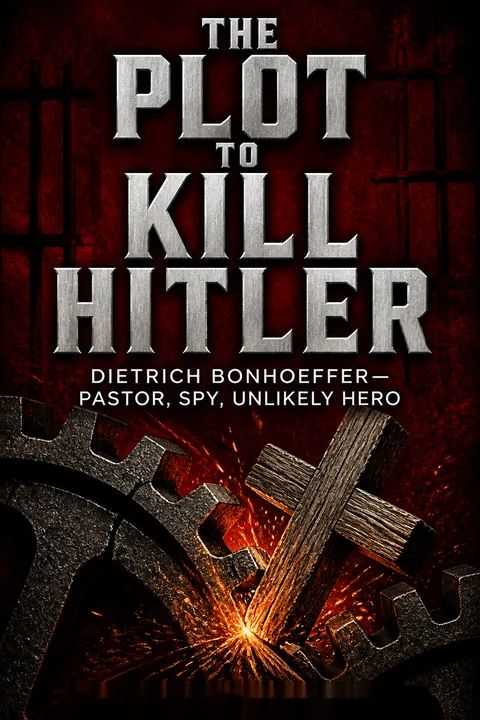
The Plot to Kill Hitler by Patricia McCormick is highly praised for its accessible and engaging portrayal of Dietrich Bonhoeffer's life and involvement in the resistance against Nazi Germany. Readers appreciate the book's concise yet informative approach, making it suitable for young adults and adults alike. Many reviewers found Bonhoeffer's story inspiring and thought-provoking, highlighting his moral courage and faith. The book is commended for its historical accuracy and ability to spark interest in further exploration of World War II history and Bonhoeffer's legacy.
People Also Read



FAQ
1. What is "The Plot to Kill Hitler: Dietrich Bonhoeffer—Pastor, Spy, Unlikely Hero" by Patricia McCormick about?
- Biography of Dietrich Bonhoeffer: The book is a biography of Dietrich Bonhoeffer, a German pastor, theologian, and member of the resistance against Adolf Hitler.
- Focus on Resistance: It details Bonhoeffer’s journey from a privileged childhood to his involvement in a plot to assassinate Hitler during World War II.
- Themes of Faith and Action: The narrative explores how Bonhoeffer’s Christian faith compelled him to take action against the Nazi regime, even at great personal risk.
- Historical Context: The book provides a vivid account of life in Nazi Germany, the rise of Hitler, and the moral dilemmas faced by those who opposed him.
2. Why should I read "The Plot to Kill Hitler" by Patricia McCormick?
- Inspiring True Story: The book tells the compelling and courageous story of a man who stood up to evil, making it both educational and inspiring.
- Accessible for Young Readers: Written in clear, engaging prose, it’s suitable for younger audiences and adults alike, making complex history understandable.
- Moral and Ethical Questions: It raises important questions about faith, conscience, and the responsibility to act against injustice.
- Relevance Today: The themes of resistance, civil courage, and standing up for what’s right remain relevant in contemporary discussions about justice and activism.
3. Who was Dietrich Bonhoeffer, and what made him an "unlikely hero" according to Patricia McCormick?
- German Pastor and Theologian: Bonhoeffer was a Lutheran pastor from an intellectual, non-religious family, known for his deep faith and scholarly work.
- Pacifist Turned Conspirator: Despite being a pacifist, he joined a conspiracy to assassinate Hitler, believing it was a moral imperative.
- Moral Conscience of the Resistance: He provided spiritual and ethical guidance to the conspirators, justifying their actions as necessary to stop evil.
- Personal Sacrifice: Bonhoeffer’s willingness to risk—and ultimately lose—his life for his beliefs made him an "unlikely hero" in the eyes of the author.
4. What are the key takeaways from "The Plot to Kill Hitler" by Patricia McCormick?
- Faith Requires Action: Bonhoeffer believed that true faith is not passive but demands action against injustice, even when it’s dangerous.
- Complexity of Moral Choices: The book illustrates the difficult ethical decisions faced by those resisting the Nazis, including the justification of violence for a greater good.
- Courage in the Face of Evil: Bonhoeffer’s story exemplifies civil courage—standing up for what is right, regardless of personal cost.
- Legacy of Resistance: His writings and actions have inspired later movements for justice, including the American civil rights movement.
5. How did Dietrich Bonhoeffer’s faith influence his actions against Hitler, as described in Patricia McCormick’s book?
- Faith as Motivation: Bonhoeffer’s Christian beliefs were the foundation for his opposition to Nazi ideology and anti-Semitism.
- Church as Moral Authority: He argued that the church must not only care for victims but also actively oppose evil, even if it means breaking the law.
- From Pacifism to Resistance: Initially a pacifist, Bonhoeffer’s faith led him to conclude that assassinating Hitler was a necessary act of Christian responsibility.
- Spiritual Support for Conspirators: He provided theological justification and spiritual comfort to those involved in the plot.
6. What was the "Aryan Paragraph," and why was it significant in "The Plot to Kill Hitler" by Patricia McCormick?
- Definition: The Aryan Paragraph was a Nazi law requiring all government employees, including pastors, to be of "pure Aryan" descent, effectively excluding Jews.
- Impact on the Church: It forced the church to choose between compliance with Nazi policies and upholding Christian values of equality and justice.
- Bonhoeffer’s Opposition: Bonhoeffer spoke out against the Aryan Paragraph, urging the church to resist and protect all victims, not just Christians.
- Turning Point: The church’s failure to oppose the law marked a critical moment in Bonhoeffer’s decision to resist more actively.
7. How did Dietrich Bonhoeffer become involved in the plot to assassinate Hitler, according to Patricia McCormick?
- Family Connections: Bonhoeffer’s brother-in-law, Hans von Dohnanyi, was a key member of the resistance and brought him into the conspiracy.
- Role as Courier and Spy: Bonhoeffer used his position in the Abwehr (German intelligence) as cover to travel, gather information, and communicate with the Allies.
- Moral Justification: He provided the conspirators with spiritual and ethical support, helping them reconcile their actions with their consciences.
- Active Participation: Bonhoeffer was involved in planning, intelligence gathering, and even helping Jews escape Germany (Operation 7).
8. What were the main challenges and dangers faced by Bonhoeffer and the resistance, as detailed in "The Plot to Kill Hitler"?
- Constant Surveillance: The Gestapo monitored their activities, tapped phones, and opened mail, making secrecy essential.
- Risk of Execution: Discovery meant certain death for Bonhoeffer and his fellow conspirators, as treason was punishable by execution.
- Isolation and Betrayal: The resistance operated in small, isolated cells, often without support from the broader church or public.
- Moral and Emotional Strain: The conspirators struggled with the ethical implications of their actions and the fear of endangering loved ones.
9. What is the significance of Bonhoeffer’s writings, such as "The Cost of Discipleship," in Patricia McCormick’s book?
- Call to Action: "The Cost of Discipleship" argues that faith must be lived out through costly, courageous action, not just belief.
- Critique of "Cheap Grace": Bonhoeffer warned against a passive, comfortable Christianity that avoids sacrifice or risk.
- Influence on Others: His writings inspired later movements for justice, including the civil rights movement and anti-apartheid activism.
- Legacy of Thought: Even after his death, Bonhoeffer’s theological and ethical ideas continue to challenge and inspire readers worldwide.
10. How does Patricia McCormick’s "The Plot to Kill Hitler" portray the role of the church in Nazi Germany?
- Complicity and Resistance: The book shows how much of the German church complied with Nazi policies, while a minority, including Bonhoeffer, resisted.
- Formation of the Confessing Church: Bonhoeffer helped found the Confessing Church, which opposed Nazi interference and the Aryan Paragraph.
- Moral Failure: The church’s failure to protect Jews and oppose Hitler is depicted as a profound moral failing.
- Bonhoeffer’s Vision: He believed the church should be a force for good, transcending national and ethnic boundaries.
11. What are some of the most powerful quotes from "The Plot to Kill Hitler" by Patricia McCormick, and what do they mean?
- "Silence in the face of evil is itself evil." – Bonhoeffer believed that not acting against injustice is itself a form of wrongdoing.
- "Not to speak is to speak. Not to act is to act." – This emphasizes the responsibility to take action, not just avoid wrongdoing.
- "Cheap grace is the deadly enemy of our Church." – From "The Cost of Discipleship," warning against faith without sacrifice.
- "He who passively accepts evil is as much involved in it as he who helps to perpetuate it." – Quoted from Martin Luther King, Jr., echoing Bonhoeffer’s philosophy.
12. How does "The Plot to Kill Hitler" by Patricia McCormick connect to modern issues of justice and activism?
- Universal Relevance: The book’s themes of standing up to injustice, even at personal risk, resonate with contemporary struggles for justice.
- Inspiration for Activists: Bonhoeffer’s life and writings have inspired civil rights leaders, anti-apartheid activists, and others fighting oppression.
- Moral Courage: The story encourages readers to consider their own responsibilities when confronted with wrongdoing or injustice.
- Legacy of Resistance: The book serves as a reminder that ordinary individuals can make extraordinary sacrifices for the greater good.


Download PDF
Download EPUB
.epub digital book format is ideal for reading ebooks on phones, tablets, and e-readers.








































