
Key Takeaways
1. The Mediterranean: A Tapestry of Contradictions and Ancient Echoes
“The Mediterranean is an absurdly small sea; the length and greatness of its history makes us dream it larger than it is.”
A small, storied sea. The Mediterranean, despite its vast historical significance as the cradle of empires and religions, is geographically modest. Its history, however, imbues it with a grandeur that belies its physical size, making it a stage for millennia of human drama. This inland sea, roughly the size of thirty Lake Superiors, is a nexus of diverse cultures and conflicts.
A sea of paradoxes. This seemingly tranquil, almost tideless body of water holds immense contrasts. It is a region of both prosperity and profound poverty, ancient myths and modern realities. The author observes:
- Seventeen countries and fifty languages
- Christians, Muslims, Jews, Druzes, Zoroastrians, Copts, Baha’is
- Pollution, terrorism, and ongoing wars
- Fine art and brutal warfare
Historical layers. The Mediterranean's shores are a palimpsest of civilizations, with layers of history often built one upon another. Roman temples become Christian churches, which in turn become mosques, reflecting a continuous cycle of conquest, adaptation, and cultural intermingling. This historical multiplicity is a defining characteristic, making the region a living museum of human endeavor and conflict.
2. Beyond the Tourist Gaze: Seeking Raw Humanity on the Shores
“Far better to write about the apes.”
Disdaining the obvious. The author deliberately avoids conventional tourist attractions like museums, ruins, and famous graves, preferring to seek out genuine human encounters. This approach often leads to unexpected observations, such as the striking contrast between the dignified Barbary macaques of Gibraltar and the boorish tourists who torment them. The apes, despite being "unemployed, unwaged, destitute welfare recipients," exhibit better manners and tenderness than many human visitors.
The Grand Tour reimagined. The traditional Grand Tour was a quest for wisdom and experience, a path the author follows but reinterprets. Instead of seeking idealized beauty, he embraces the "macabre" and the "haunted and decrepit" aspects of over-visited places. This allows for a fresh perspective, where the "change and decay" make the region more, not less, compelling to record.
Authenticity in the mundane. True insights often emerge from everyday life rather than curated experiences. Whether observing rich retirees on a luxury cruise or ragged beggars in Albania, the author prioritizes the gritty texture of daily existence. This focus on the ordinary reveals the underlying character of a place, often exposing the stark realities hidden beneath a veneer of tourism.
3. Colonial Legacies: Enduring Scars and Shifting Identities
“It is pretty clear that shrunken bankrupt Britain finds Gibraltar too expensive to run, no more than an inconvenient relic of a former age.”
Relics of past empires. Many Mediterranean regions grapple with the lingering effects of past colonial rule. Gibraltar, a British relic, faces an uncertain future, its inhabitants clinging to a British identity while Spain insists on its return. This sentiment is echoed across the region, where former colonies struggle with self-governance and the psychological impact of foreign dominance.
Cultural imprints. Colonial powers left indelible marks on the landscape and culture.
- Gibraltar: British garrison mentality, English coastal town aesthetic, reliance on British subsidies.
- Corsica: French province in name, but with a distinct Italian-sounding language and a fierce nationalist spirit.
- Malta: British influence in language, culture, and the legacy of its wartime bravery, yet struggling for economic viability.
The burden of history. The past is not merely history but a living presence, shaping contemporary identities and conflicts. From the Treaty of Utrecht defining Gibraltar's status to the French occupation of Syria, historical events continue to fuel political grievances and cultural distinctions. This constant interplay between past and present creates a complex and often volatile social fabric.
4. War's Shadow: The Pervasive Reality of Conflict and Trauma
“The war all over the former Yugoslavia was—and still is—the epitome of this sort of cowardly onslaught.”
A landscape of conflict. The journey through the former Yugoslavia reveals a region deeply scarred by recent wars. Towns like Zadar and Dubrovnik bear the physical marks of shelling and siege, while their inhabitants carry the psychological trauma. The conflict is characterized by:
- Cowardly sieges: Armies bombarding civilian populations from safe distances.
- Ethnic divisions: Serbs, Croats, Bosnians, often fueled by religious differences.
- Pervasive fear: Leading to hyper-alertness in children and a general sense of unease.
The human cost. The war's impact extends beyond physical destruction to the very fabric of society. Refugees, like the Tomic family from Sarajevo, are forced to abandon everything, their mixed ethnic backgrounds making them unwelcome even in refugee camps. The author observes the "war mood" as a species of battle fatigue, where adults' silence is mirrored by children's manic aggression.
Unending cycles of violence. The conflict is portrayed as a cycle of retribution, where each act of violence begets another. The Israeli-Palestinian conflict, with its suicide bombings and retaliatory killings, exemplifies this unforgiving dynamic. This constant state of tension and the absence of dialogue create a "joyless unrestful place," where fear and suspicion are deeply ingrained.
5. The Human Paradox: From Petty Prejudices to Profound Kindness
“Misery turned them into fiends.”
Contrasting human behavior. The journey exposes the full spectrum of human behavior, from the depths of prejudice and cruelty to unexpected acts of kindness. The desperate poverty of Albania, for instance, transforms some into aggressive beggars, while others, like the young man who gives the author a fifty-lek note, display profound generosity. This paradox highlights how extreme circumstances can elicit both the worst and best in people.
Prejudice and xenophobia. The Mediterranean is rife with inter-ethnic prejudices, often expressed with startling frankness.
- French police: Openly racist towards Arabs in Marseilles, blaming them for crime.
- Slovenians/Croatians: Distinguishing themselves from "dark little savages" (Serbs/Bosnians).
- Greeks: Antagonistic towards Turks and Albanians, often deporting immigrants.
- Israelis: Sullen, truculent, and suspicious, often dismissing Palestinians as "Arabs."
Unexpected hospitality. Despite the pervasive tensions, moments of genuine human connection emerge. The Italian waiter in Cagliari, the Albanian who gives a gift, the Turkish family on the Akdeniz, and the Syrian silk sellers in Aleppo all offer warmth and hospitality. These interactions often transcend linguistic and cultural barriers, providing glimpses of shared humanity amidst the region's complexities.
6. The Allure of the Unseen: Discovering Authenticity in Obscurity
“All places, no matter where, no matter what, are worth visiting.”
Finding value in the overlooked. The author's preference for "seldom-visited places where people were still living settled traditional lives" leads to discoveries of coherent and uplifting communities. These places, often off the main tourist routes, retain their identity and offer a more authentic glimpse into local culture, free from the commercialization of popular resorts.
The charm of the provincial. Towns like Aliano in Italy, or the remote villages of Corsica and Sardinia, reveal a different side of the Mediterranean. They are often characterized by:
- Traditional life: Peasants, shepherds, ancient customs.
- Physical beauty: Rugged landscapes, stone houses, fruit groves.
- Resilience: Communities enduring poverty and isolation with dignity.
Beyond the obvious landmarks. While grand ruins and famous sites are acknowledged, the author finds greater fascination in the everyday life and the subtle details of less-known locales. The discovery of a Roman amphitheater buried beneath a slum in Durrës, or the ancient bread oven in Aliano, offers a more profound connection to the past than any meticulously preserved museum. This approach emphasizes that true discovery lies in observation and engagement, not just sightseeing.
7. The Sea's Dual Nature: A Source of Life, a Mirror of Neglect
“The Mediterranean was perhaps no different from any other sea in the world.”
A polluted paradise. The Mediterranean, often romanticized as a pristine blue expanse, is frequently depicted as a "tideless cloaca" and a "social lavatory." The author encounters:
- Raw sewage: On beaches in Spain and France.
- Industrial waste: From the Rhône, creating a "chemical corridor."
- Overfishing: Leading to dwindling fish stocks and undersized catches.
- Litter and filth: Beaches in Syria and Tunisia are choked with garbage.
A historical dumping ground. Historically, the sea was seen as a "socially invisible place," a void where waste magically disappeared. This perception, coupled with modern industrialization and tourism, has led to widespread pollution. The contrast between the sea's natural beauty and its degraded state is a recurring theme, highlighting humanity's impact on this vital ecosystem.
Life and livelihood. Despite its degradation, the Mediterranean remains a source of life and livelihood for many. Fishermen, though struggling with dwindling catches, continue their trade. The sea also serves as a crucial transport route, connecting diverse cultures and facilitating both legitimate trade and illicit activities like smuggling. Its enduring presence shapes the lives and economies of its coastal communities.
8. Literature's Lens: Shaping and Challenging Perceptions of Place
“The city is a cage … and no ship exists / To take you from yourself.”
Literary influences. The author's journey is deeply intertwined with literature, often revisiting places made famous by writers. From James Joyce's Gibraltar to Robert Graves's Mallorca, and Lawrence Durrell's Alexandria, literary works shape expectations and provide a framework for understanding. However, reality often diverges from these fictionalized landscapes.
Disillusionment and reinterpretation. The author frequently finds that the "fabulous land" of his imagination, shaped by authors like Hemingway or Fitzgerald, is displaced by a more complex and often disappointing reality. This leads to a reinterpretation of both the place and the literature itself. For example:
- Hemingway's Spain: Contrasted with the vulgarized Costa del Sol and the author's aversion to bullfighting.
- Durrell's Alexandria: A "dream-city" of sensuality and intrigue, now a "monoglot city of one race" and "no sex."
- Kazantzakis's Greece: A "paradise of joy and abundance" now blighted by "Zorba Discos" and mass tourism.
The power of narrative. Literature, even when inaccurate, holds immense power to define a place. The author's own act of writing becomes a way to grapple with these discrepancies, offering a new narrative that is both personal and observational. This continuous dialogue between text and experience enriches the journey, making the act of reading and writing an integral part of travel.
9. The Personal Journey: Self-Discovery Amidst Global Turmoil
“I was not writing a book—I was living my life, and had found an agreeable way to do it.”
The solitary traveler. The author's decision to travel alone is crucial, allowing for spontaneity and deep immersion. This solitude fosters self-reflection, enabling him to confront personal feelings like homesickness, agitation, and even a sense of "traveler's guilt." The absence of a fixed itinerary or companion allows for unexpected detours and profound personal discoveries.
Purpose of travel. The journey is not merely a quest for external sights but an internal exploration. While initially vague about his purpose, the author finds meaning in:
- Making connections: With diverse people, despite language barriers.
- Observing life: Understanding how people work, live, and cope.
- Confronting discomfort: Embracing the "macabre" and the "awful" as part of the experience.
- Finding joy: In unexpected moments of kindness or natural beauty.
An evolving perspective. The author's views on the Mediterranean, and indeed on life, evolve throughout the trip. From initial prejudices to a more nuanced understanding of complex societies, the journey is a process of continuous learning and adaptation. The ultimate realization is that travel, in its purest form, is about living fully and finding an "agreeable way" to engage with the world, regardless of its imperfections.
Review Summary
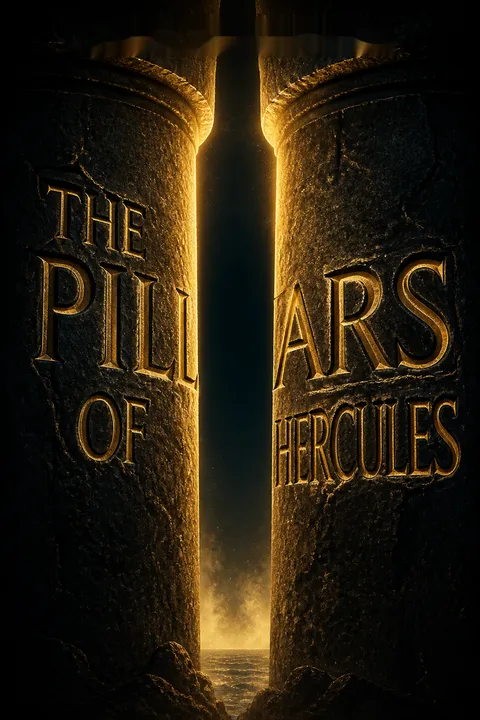
The Pillars of Hercules chronicles Paul Theroux's journey around the Mediterranean coast from Gibraltar to Morocco in the mid-1990s. Reviews are polarized: admirers praise his sharp observations, dry wit, cultural insights, and encounters with locals and writers like Mahfouz and Bowles. Critics cite his negativity, arrogance, laziness, alleged antisemitism, and misanthropic attitude. Many note his disdain for tourists while being one himself. Readers appreciate his unfiltered commentary on war-torn regions, dictatorships, and cultural contrasts, though some find him judgmental and the narrative uneven, particularly through Western Europe versus conflict zones.
People Also Read

Download PDF
Download EPUB
.epub digital book format is ideal for reading ebooks on phones, tablets, and e-readers.








































