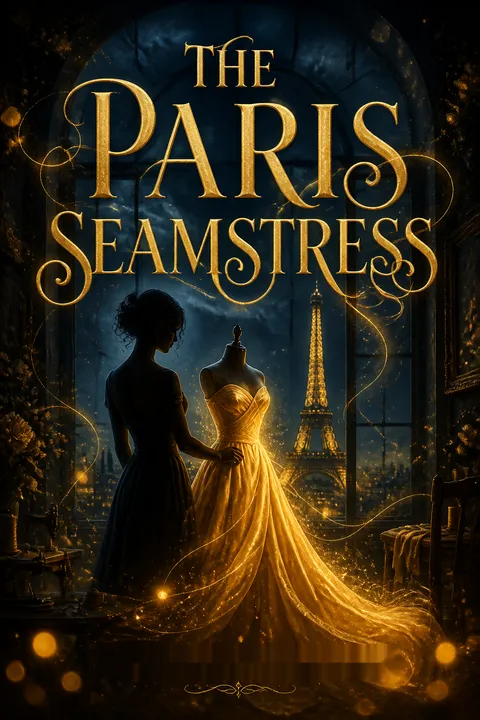

Plot Summary
Gold Silk and Shadows
In 1940 Paris, Estella Bissette pours her soul into gold silk, crafting exquisite flowers for couture houses, while the city teeters on the edge of German invasion. Her mother, Jeanne, clings to hope and resistance, but Estella senses the darkness closing in. The atelier is a haven of beauty and camaraderie, yet secrets swirl—her mother's whispered meetings, Monsieur Aumont's mysterious activities. Estella's longing for creative freedom and her mother's safety is palpable, but both are trapped by circumstance and history. As the city empties and fear grows, Estella's gold dress becomes a symbol of defiance and longing—a fleeting moment of light before the storm. The chapter pulses with tension, love, and the ache of impending loss, setting the stage for a journey shaped by courage and hidden truths.
Secrets in the Night
Estella's world fractures when she's drawn into clandestine resistance work. After a night of music and laughter, she's thrust into peril by Monsieur Aumont, who, wounded and desperate, entrusts her with secret maps. Navigating Paris's shadowy streets, Estella delivers the maps to a stranger at the Théâtre du Palais-Royal—a man whose charm and mystery unsettle her. The city's beauty is now laced with fear, every face a potential threat. Returning home, Estella confronts her mother's involvement in the resistance and the reality that their lives are no longer safe. The emotional weight of sacrifice, the terror of betrayal, and the fierce love between mother and daughter drive Estella toward an impossible choice: to stay and risk everything, or to flee into the unknown.
Flight from Paris
Bombs fall, and Paris is lost. Jeanne insists Estella must escape, revealing a shattering secret: Estella was born in America, her father not the French soldier she believed, but an American. Armed with forged papers and heartbreak, Estella boards the last train out, leaving her mother and everything she knows behind. The journey south is a tableau of suffering—families torn apart, refugees streaming through a devastated landscape. On the SS Washington, Estella is adrift, haunted by loss and uncertainty. Yet, amid strangers and fear, she finds unexpected friendship with Sam, a cutter, and Clarice, a nurse. The crossing is fraught with danger, but also with the fragile hope that new beginnings might be possible, even as the past clings like a second skin.
Atlantic Crossings
The Atlantic voyage is a crucible of anxiety and connection. Threatened by a German U-boat, Estella and her companions confront mortality and the randomness of fate. In the lifeboats, courage and kindness surface—Clarice's bravery, Sam's gentle humor, Estella's own resilience. The gold dress, once a symbol of Parisian dreams, becomes a talisman of survival and transformation. Arriving in New York, Estella is both liberated and lost, carrying the weight of her mother's love and the scars of exile. The city's energy is intoxicating, but Estella's heart aches for home, for purpose, and for the chance to create something meaningful from the ruins of her old life.
New York, New Dreams
New York is a world of opportunity and disappointment. Estella's skills as a designer are undervalued in a city obsessed with copying Parisian fashion. She endures exploitation, rejection, and the indignities of the Garment District, but finds solace in friendship with Janie, an irrepressible Australian model, and Sam, whose loyalty never wavers. Together, they dream of a label—Stella Designs—that will celebrate originality and empower women. Estella's journey is marked by setbacks and small victories, her determination fueled by memories of her mother and the conviction that beauty and courage can coexist. The city's relentless pace tests her, but also sharpens her vision and her will to succeed.
Copycats and Courage
Estella's refusal to compromise her artistic integrity leads to repeated firings and financial hardship. The American fashion industry's obsession with imitation stifles her creativity, but she persists, learning the mechanics of mass production and the realities of survival. Janie's pursuit of love and security mirrors Estella's own search for belonging, while Sam's quiet support anchors her. The trio's camaraderie is a lifeline, their shared ambition a beacon in a world that rewards conformity. Estella's gold dress, once a symbol of Parisian glamour, becomes an emblem of her refusal to be ordinary. The chapter is a testament to resilience, friendship, and the slow, painful birth of a new kind of fashion.
Sisterhood Revealed
A chance encounter with Lena, a woman who looks exactly like Estella, unravels the fabric of her identity. Their connection is more than coincidence—twin daughters of a hidden scandal, separated by fate and the machinations of others. Lena's life, marked by abuse and privilege, is a dark mirror to Estella's own struggles. Together, they confront the legacy of their parents—Evelyn Nesbit, John Barrymore, and the monstrous Harry Thaw. The revelation of their shared blood is both a wound and a gift, forcing Estella to reckon with the pain of abandonment, the complexities of forgiveness, and the possibility of healing through sisterhood. The house in Gramercy Park, a double of the Parisian mansion, becomes a stage for reckoning and reconciliation.
Love and War's Toll
Estella's relationship with Alex, the enigmatic spy, is a dance of longing and restraint. Their love is forged in danger, tested by secrets, and haunted by the ghosts of war. Lena's tragic fate—her life destroyed by Harry Thaw and the indifference of the world—casts a shadow over Estella's happiness. The war's brutality is ever-present: betrayals, roundups, and the constant threat of loss. Estella's courage is matched by her vulnerability, her desire for love tempered by the fear that her past will poison her future. The chapter is a meditation on the costs of survival, the price of truth, and the redemptive power of connection.
The House of Doubles
The twin houses—one in Paris, one in New York—are symbols of divided lives and unresolved histories. Estella and Lena's reunion is fraught with longing and regret, their bond deepened by shared trauma and the hope of redemption. The house becomes a sanctuary and a prison, a place where secrets are unearthed and new beginnings are forged. Estella's work flourishes in this space, her designs infused with the spirit of resilience and the memory of those she has lost. The chapter is a tapestry of memory, grief, and the stubborn persistence of hope.
Betrayals and Beginnings
The revelation of Estella's parentage—her mother's rape by Harry Thaw, the abandonment of Lena, the lies that shaped her life—threatens to destroy her. Overwhelmed by shame and the fear of inheriting madness, Estella pushes Alex away, convinced she is unworthy of love. Yet, through the support of friends and the arrival of Xander, Lena and Alex's son, Estella finds a new purpose. She chooses to raise Xander, honoring Lena's memory and Alex's legacy. The act of mothering becomes an act of healing, a way to reclaim agency and rewrite the narrative of her life. Forgiveness, though hard-won, becomes possible.
The Price of Survival
Estella's ascent in the fashion world is marked by sacrifice and compromise. She builds Stella Designs into a beacon of originality, empowering women and challenging the status quo. The work is grueling, the competition fierce, but Estella's vision is unwavering. The memory of Lena, the lessons of her mother, and the love she still harbors for Alex infuse her creations with meaning. The price of survival is high—estrangement, loneliness, and the constant threat of loss—but Estella's triumph is hard-earned and deeply felt. The chapter is a celebration of ambition, resilience, and the transformative power of art.
Letters Across Time
Decades later, Fabienne, Estella's granddaughter, inherits not just a fashion empire but a box of secrets. Through letters, photographs, and memoirs, she pieces together the tangled history of her family—the betrayals, the courage, the love that survived against all odds. Fabienne's own journey mirrors Estella's: the struggle to define herself, the fear of not living up to a legacy, the longing for connection. The past is both a burden and a guide, its lessons shaping Fabienne's choices as she steps into her grandmother's shoes. The emotional resonance of the letters bridges time, offering solace and wisdom.
The Legacy of Lena
Fabienne's discovery that she is not Estella's biological granddaughter, but the child of Lena and Alex, is both devastating and liberating. The revelation forces her to confront questions of belonging, worth, and the true nature of family. Through Estella's final letter, Fabienne learns that love is not defined by blood, but by the choices we make and the lives we touch. The legacy of Lena—her suffering, her strength, her sacrifice—becomes a source of inspiration and responsibility. Fabienne's acceptance of her complicated heritage is an act of courage, a testament to the enduring power of love and forgiveness.
Threads of Forgiveness
As Fabienne prepares to launch her first collection for Stella Designs, she is haunted by the ghosts of the past and the weight of expectation. The deaths of Estella and Melissa, the pain of lost love, and the pressure to succeed threaten to overwhelm her. Yet, through the support of Will, her own creative vision, and the wisdom of those who came before, Fabienne finds the strength to forgive herself and others. The act of creation becomes an act of healing, a way to honor the past while embracing the future. The chapter is a quiet triumph, a celebration of resilience and renewal.
The Final Collection
Fabienne's debut collection is both a homage to Estella and a bold statement of her own identity. Drawing on the lessons of history, she infuses her designs with originality, practicality, and beauty. The show is a success, but more importantly, it is an act of self-assertion—a declaration that she is worthy of her inheritance. The applause is not just for the clothes, but for the journey that brought her here, for the generations of women who refused to be defined by their suffering. The collection is a tapestry of love, loss, and hope, woven from the threads of memory and ambition.
Ghosts in Gramercy Park
In the quiet aftermath of triumph, Fabienne is visited by the ghosts of her family—Estella, Lena, Alex, Sam—whose lives and choices shaped her own. The house in Gramercy Park, once a place of secrets and sorrow, is now a sanctuary of joy and possibility. Fabienne's love for Will, her acceptance of her past, and her commitment to the future are the final gifts of those who came before. The chapter is a benediction, a release, and a promise: that love endures, that forgiveness is possible, and that the patterns we inherit can be transformed by the lives we choose to lead.
Reunion and Release
Estella's return to Paris, her reunion with Alex, and the revelation of Xander's parentage are moments of profound catharsis. The house on the Rue de Sévigné, once a place of pain, becomes a home filled with music, laughter, and love. The war's end brings both relief and sorrow, the losses endured balanced by the hope of new beginnings. Estella and Alex's love, tested by time and tragedy, is finally fulfilled, their family complete. The chapter is a celebration of survival, the healing of old wounds, and the joy of finding one's place in the world.
Love Beyond the Pattern
The story closes with Fabienne's triumph, both personal and professional. Her collection is a success, her love for Will a source of strength and joy. The ghosts of the past are honored and released, their lessons woven into the fabric of her life. The final message is one of hope: that love, in all its forms, is the pattern that shapes us, the thread that binds generations, and the force that enables us to forgive, to create, and to begin again. The Paris Seamstress is ultimately a testament to the resilience of women, the power of art, and the enduring promise of love.
Analysis
The Paris Seamstress is a sweeping, multi-generational tale that explores the intersections of art, trauma, and identity through the lens of women's lives in the twentieth and twenty-first centuries. At its core, the novel is a meditation on the power of creation—both literal and metaphorical—as a means of survival, resistance, and self-definition. Through its dual timelines, mirrored houses, and interwoven narratives, the book examines how the wounds of the past echo through generations, shaping destinies and demanding reckoning. The legacy of violence, particularly against women, is confronted with unflinching honesty, yet the story refuses to be defined by suffering alone. Instead, it celebrates the resilience, ingenuity, and solidarity of its heroines, who transform pain into beauty and loss into legacy. The novel's ultimate message is one of hope: that love, in all its forms, is the thread that binds us, the pattern that endures beyond the ravages of history. In a world still marked by injustice and uncertainty, The Paris Seamstress offers a vision of healing rooted in courage, forgiveness, and the relentless pursuit of joy.
Review Summary
The Paris Seamstress receives an overall rating of 4.1/5, with many readers praising its strong female characters, rich historical detail, and emotional depth. Fans particularly loved the dual timeline structure, vivid fashion descriptions, and the sweeping WWII setting. Critics noted issues with coincidences, underdeveloped characters, and clunky narrative transitions. The romance was seen as formulaic by some, while others found it deeply moving. The present-day storyline featuring Fabienne divided readers, with some finding it unnecessary compared to Estella's compelling wartime journey.
People Also Read






Characters
Estella Bissette
Estella is the heart of the novel—a gifted seamstress and designer whose life is shaped by war, exile, and the search for identity. Raised by her mother Jeanne in Paris, Estella's world is upended by the German invasion and the revelation of her American heritage. Her journey from Paris to New York is marked by loss, resilience, and the relentless pursuit of creative freedom. Estella's relationships—with her mother, her friends Janie and Sam, her twin sister Lena, and the enigmatic Alex—are fraught with longing, betrayal, and the hope of redemption. Her artistry is both a refuge and a weapon, her courage tested by the secrets she uncovers. Estella's evolution—from a young woman defined by others' expectations to a leader who shapes her own destiny—is a testament to the power of love, forgiveness, and self-discovery.
Lena Thaw
Lena is Estella's mirror and shadow—a woman marked by privilege, abuse, and the legacy of her notorious guardian, Harry Thaw. Raised in wealth but deprived of love, Lena's life is a study in trauma and endurance. Her relationship with Estella is both a source of pain and a path to healing, their shared blood a bond that transcends suffering. Lena's tragic fate—her inability to escape the ghosts of her past, her sacrifice in the face of war—casts a long shadow over the narrative. Yet, through her, the novel explores the complexities of forgiveness, the cost of survival, and the possibility of redemption. Lena's legacy is both a warning and a gift, her story a reminder that even the most broken lives can inspire courage and compassion.
Alex Montrose
Alex is the novel's enigmatic hero—a British intelligence officer whose life is defined by secrecy, sacrifice, and the scars of a brutal childhood. His relationship with Estella is a crucible of passion, trust, and vulnerability, their love forged in the fires of war and loss. Alex's work in the resistance is both a calling and a curse, his sense of duty often at odds with his longing for connection. The revelation of his paternity—father to Xander, Lena's son—adds layers of complexity to his character, forcing him to confront the consequences of his choices. Alex's journey is one of atonement and hope, his ultimate reunion with Estella a hard-won victory over the forces that sought to destroy them both.
Jeanne Bissette
Jeanne is Estella's anchor and her greatest mystery—a woman shaped by loss, resilience, and the burden of unspoken truths. Her decision to send Estella away, her involvement in the resistance, and her concealed past as the daughter of Evelyn Nesbit and the victim of Harry Thaw's violence are acts of both love and desperation. Jeanne's choices reverberate through generations, her silence both a shield and a wound. Her final letter to Estella is an act of courage and contrition, offering the wisdom that survival is not enough—that one must also learn to forgive, to love, and to begin again.
Sam
Sam is Estella's loyal friend and collaborator—a talented cutter whose quiet strength and unwavering support are a constant in her tumultuous life. His own journey, from medical student to fashion professional, mirrors Estella's in its search for purpose and belonging. Sam's unrequited love for Estella is handled with grace and dignity, his eventual partnership with her in Stella Designs a testament to the power of friendship and mutual respect. As a surrogate father to Xander and a pillar of the Stella Designs family, Sam embodies the virtues of kindness, humility, and quiet heroism.
Janie
Janie is the novel's comic relief and emotional ballast—a vivacious Australian model whose zest for life is matched by her vulnerability. Her friendship with Estella and Sam is a source of joy and support, her own struggles with love and identity reflecting the broader themes of the novel. Janie's journey—from runaway to wife, from model to muse—is marked by resilience, humor, and the courage to reinvent herself. Her presence in the narrative is a reminder that happiness is often found in unexpected places, and that true friendship endures even in the face of disappointment.
Fabienne
Fabienne is Estella's granddaughter (biologically Lena's daughter), a modern woman grappling with the weight of legacy and the search for self. As a curator and designer, Fabienne is both a steward of history and a creator of the future. Her journey—uncovering family secrets, navigating love with Will, and stepping into leadership at Stella Designs—is a mirror of Estella's own struggles. Fabienne's psychological arc is one of acceptance and integration, her willingness to embrace both the pain and the beauty of her inheritance a model for healing and growth.
Will Ogilvie
Will is Fabienne's partner, a gifted designer at Tiffany & Co. whose life is marked by loss and the struggle to find meaning. His devotion to his terminally ill sister Melissa, his patience with Fabienne's fears, and his own creative journey are woven into the novel's exploration of love, grief, and renewal. Will's relationship with Fabienne is a source of healing for them both, their union a testament to the possibility of joy after sorrow. Will's character is defined by empathy, resilience, and the courage to love deeply in the face of uncertainty.
Melissa Ogilvie
Melissa is Will's beloved sister, a woman facing terminal illness with humor, honesty, and dignity. Her friendship with Fabienne is brief but profound, her acceptance of mortality a catalyst for Fabienne's own growth. Melissa's presence in the novel is a reminder of the fragility of life and the importance of seizing joy where we find it. Her death is a moment of collective grief, but also of release and transformation for those she leaves behind.
Harry Thaw
Harry Thaw is the novel's most chilling figure—a real historical character whose crimes against women, including Evelyn Nesbit and Jeanne Bissette, cast a long shadow over the narrative. His presence is felt in the trauma of Lena, the shame of Estella, and the generational wounds that shape the family's history. Thaw's impunity and cruelty are a commentary on the failures of justice and the enduring impact of abuse. His eventual irrelevance—rendered powerless by Estella's courage and the solidarity of women—is a hard-won victory, but the scars he leaves remain a cautionary tale.
Plot Devices
Dual Timelines and Generational Echoes
The novel employs a dual timeline structure, alternating between Estella's journey during World War II and Fabienne's contemporary quest to uncover her family's secrets. This device allows for a rich exploration of how trauma, love, and ambition reverberate across generations. Letters, memoirs, and artifacts serve as bridges between eras, their revelations reshaping the characters' understanding of themselves and their place in the world. The mirroring of experiences—exile, creativity, loss, and reconciliation—creates a tapestry of emotional resonance, inviting readers to consider the ways in which history shapes identity and the possibility of healing through storytelling.
The House as Symbol
The twin houses in Paris and New York are more than settings—they are embodiments of the characters' fractured identities and unresolved histories. Their symmetry and duplicity echo the lives of Estella and Lena, the secrets hidden within their walls paralleling the secrets kept by their inhabitants. The houses are sites of both trauma and transformation, their restoration a metaphor for the healing of old wounds and the forging of new beginnings. The motif of the house underscores the novel's themes of belonging, inheritance, and the search for home.
Fashion as Agency and Metaphor
Fashion is both the medium and the message of the novel—a means by which Estella, Fabienne, and their circle assert agency, challenge norms, and express identity. The act of designing, sewing, and wearing clothes is imbued with emotional and political significance, a way to reclaim power in a world that seeks to diminish and control women. The evolution of Stella Designs, from a dream to a legacy, mirrors the characters' journeys toward self-acceptance and empowerment. The recurring motif of the gold dress, the peony embellishments, and the act of creation itself are metaphors for resilience, transformation, and the enduring beauty of hope.
Letters, Artifacts, and Unreliable Narration
The use of letters, birth certificates, memoirs, and sketches as narrative devices allows the story to unfold gradually, with each revelation prompting new questions and emotional responses. The unreliability of memory, the gaps in the historical record, and the subjectivity of personal testimony create a sense of mystery and suspense. The process of uncovering the truth is as important as the truth itself, inviting readers to engage in the work of interpretation and empathy. The artifacts are not just clues—they are touchstones of love, loss, and the longing for connection.
Trauma, Forgiveness, and the Cycle of Healing
The novel's structure and plot are shaped by the cycles of trauma and healing experienced by its characters. Betrayals, abuse, and loss are not simply obstacles to be overcome—they are wounds that must be acknowledged, mourned, and, ultimately, forgiven. The process of healing is nonlinear, marked by setbacks and breakthroughs, and is often facilitated by acts of creation, acts of love, and the willingness to confront painful truths. The narrative's emotional arc is one of catharsis and renewal, offering readers both the ache of sorrow and the balm of hope.


Download PDF
Download EPUB
.epub digital book format is ideal for reading ebooks on phones, tablets, and e-readers.








































