
Key Takeaways
1. A Priest's Nationalist Roots and Early Ruthlessness
‘The family lore was what my mother did as a youngster, and I was captivated by her stories; it was like I was back there with her, watching and listening out for the enemy.’
Formative influences. Patrick Ryan's childhood in County Tipperary was deeply shaped by his mother, Mary Ann Ryan, a staunch Irish republican. Her vivid accounts of standing guard for IRA men during the Irish War of Independence instilled in him a profound anti-British sentiment and a commitment to Irish nationalism from a young age. This familial legacy became a foundational element of his identity.
Early pragmatism. Beyond his mother's stories, Ryan developed a ruthless pragmatism through his childhood hobby of poaching. Nicknamed "Paddy the Skinner" for his efficiency in preparing rabbits, he learned to detach himself from the unpleasant aspects of his pursuits. This early experience in manipulating nature for a desired outcome foreshadowed his later ability to apply technical ingenuity to achieve his goals, regardless of the moral implications.
Vocation and status. Ryan's decision to enter the priesthood at fourteen, joining the Pallottine Fathers, brought significant social status to his family in Catholic Ireland. While he excelled academically, particularly in philosophy and mathematics, and was a disciplined student prefect, his true motivations for the priesthood were complex. He saw it as a path to education and influence, rather than purely spiritual devotion, and his studies in philosophy equipped him with intellectual rigor that he would later apply to very different ends.
2. Missionary Pragmatism and Disillusionment with the Church
‘In all of my days in Africa, I had no notion whatsoever of what lay in store for me.’
African awakening. After his ordination in 1954, Father Patrick Ryan was sent to Tanganyika (now Tanzania) as a missionary priest. This experience profoundly shaped his practical skills and worldview. He built schools and health clinics, drilled for water, and even learned to fly a two-seater plane to deliver vital medicine across vast distances, demonstrating remarkable ingenuity and self-sufficiency.
Colonial observations. During his time in East Africa, Ryan encountered British Army officers involved in suppressing the Mau Mau uprising in Kenya. He observed their confidence and, at times, their unease with the brutality of colonial conflict. These interactions, combined with his seminary studies on the history of colonization, solidified his anti-imperialist views and a growing skepticism towards established authorities, including the Church.
Clash with authority. Ryan's pragmatic approach to missionary work, prioritizing tangible development over traditional catechism, often put him at odds with his ecclesiastical superiors. His frustration with Bishop Winters' insistence on learning to fly, which nearly cost them their lives, ultimately led him to seek a transfer. This experience reinforced his desire for autonomy and his belief that he was more effective when operating independently, setting the stage for his eventual departure from conventional priestly duties.
3. The Troubles Ignite a New, Unconventional Calling
‘Something deep had been unleashed and it could not be put back in a box.’
Return to a changed Ireland. Ryan returned to Ireland in 1969, ostensibly to care for his ailing mother and collect funds for the Pallottine missions. However, his return coincided with the outbreak of the Troubles in Northern Ireland, a conflict that deeply resonated with his ingrained nationalist sentiments. Reports of violence and displacement, particularly the burning out of Catholic homes, stirred his conscience.
Diverting funds. Witnessing the escalating conflict, Ryan made a pivotal decision: he began to divert funds collected for the Pallottine missions to republican causes in Northern Ireland. This act marked his initial, clandestine involvement with the IRA, driven by a conviction that nationalism superseded his religious vows. He saw it as a necessary response to what he perceived as British oppression.
A new path. After his mother's death in November 1969, Ryan formally broke with his ecclesiastical superiors, refusing to return to England or take up a parish. He sought to work for the IRA, but on his own terms. He explicitly refused to join the organization, demanding autonomy and the right to withdraw his services if funds or materials were misused. This established his unique role as an independent operator, leveraging his priestly status for access while maintaining a critical distance from the IRA's internal politics.
4. Forging the IRA's Crucial Libyan Lifeline
‘I set out to go around the world and discover the enemy of my enemy, the Brits, and make their enemy my friend.’
Gaddafi's patronage. Following the IRA's need for weapons and finance, Patrick Ryan became instrumental in establishing a direct link with Colonel Muammar Gaddafi's Libyan regime in the early 1970s. Gaddafi, a fervent anti-imperialist, publicly supported groups fighting against perceived colonial powers, making Libya a natural, oil-rich benefactor for the IRA. Ryan's diplomatic skills and ability to navigate complex international relations proved invaluable.
The Claudia debacle. Ryan's first major operation involved the failed Claudia arms shipment in March 1973, where a vessel carrying five tons of Libyan weapons was intercepted by the Irish Navy. Despite the operational failure, Ryan's quick thinking helped salvage a significant sum of cash that had been thrown overboard. This event, and his subsequent meticulous drying of the money with Marcus Fogarty, solidified his reputation for resourcefulness and earned him the nickname "the Padre."
IRA's man in Tripoli. The Claudia incident, which led to the arrest of IRA leaders Joe Cahill and Denis McInerney, left Ryan as the primary, and often sole, intermediary between the IRA and Libya. He cultivated deep contacts within the Libyan intelligence apparatus, ensuring a continuous flow of funds and, later, weapons. His ability to operate discreetly and gain the trust of Gaddafi's regime made him an indispensable asset, even as he maintained his independent status from the IRA's formal structure.
5. Revolutionizing IRA Bombing with Swiss Precision
‘The Memo Parks were the little timers that made all the difference.’
A critical problem. In the early 1970s, the IRA faced significant challenges with its improvised explosive devices (IEDs). Crude and unreliable timing mechanisms, often modified alarm clocks or clothes pegs, frequently led to premature detonations, resulting in "own goals" that killed or injured IRA bomb-makers. This inefficiency and danger spurred Ryan to seek a more reliable solution.
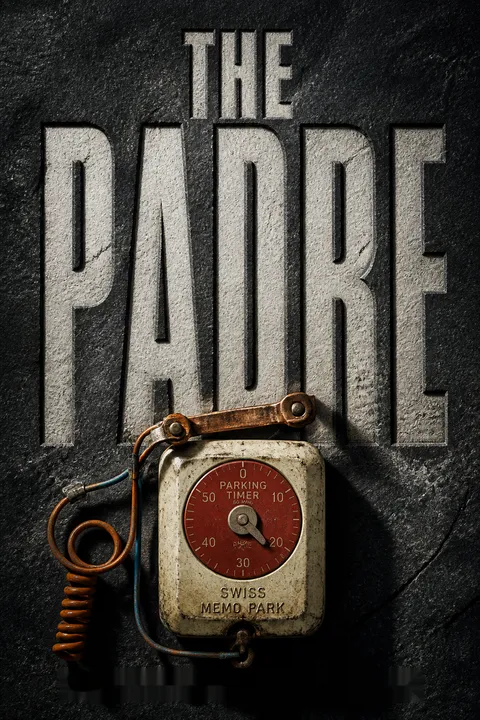
Swiss ingenuity. While in Geneva in 1975, Ryan discovered Memo Park timers, small mechanical devices used by motorists to track parking meter expiry. Recognizing their potential, he purchased a large quantity and, through his technical ingenuity, re-engineered them. He attached a metal arm to the dial that, upon rotation, completed an electrical circuit, triggering a detonator. He also added a safety mechanism using a bicycle wheel valve.
Transformative impact. Ryan's modified Memo Park timers, incorporated into Time Power Unit (TPU) kits, revolutionized the IRA's bombing capabilities. They provided:
- Reliability: Foolproof timing, reducing accidental detonations.
- Safety: A "safe to arm" switch, protecting bomb-makers.
- Versatility: Adaptable for car bombs, mortars, and landmines.
- Long-delay capability: Enabling bombs to be set days or months in advance.
This innovation significantly increased the lethality and operational reach of IRA attacks, becoming a hallmark of their devices for decades.
6. Clandestine European Operations and Strategic Manipulation
‘The camper van allowed Ryan to stay relatively under the radar for however long he needed.’
A mobile base. After the Claudia incident, Ryan decided to operate primarily outside Ireland, establishing a base in Benidorm, Spain, and using a camper van for travel across Europe. This allowed him to move discreetly, avoid scrutiny, and maintain his independence from the IRA's internal politics. His ability to blend into tourist crowds and cultivate contacts was key to his success.
Cultivating contacts. Ryan was adept at identifying and manipulating individuals for his purposes. He befriended long-distance Irish lorry drivers for intelligence on customs checks and used his charm to gain access to British Consulate staff in Benidorm. His goal was always to find what people "wanted badly" and then provide it, thereby securing their unwitting assistance.
Passport procurement. A significant aspect of his European operations was acquiring lost passports from British Consulate staff. He recognized the value of these documents for IRA operatives needing to travel under assumed identities. This resourcefulness, combined with his ability to exploit bureaucratic rivalries and personal grievances, made him a valuable asset in facilitating clandestine travel for the republican movement.
7. Unmasking Surveillance: The Christine Gambit
‘I knew that the moment she set foot in England she’d be pulled in by the Branch and I would see how she turned out.’
A loyal helper. Ryan reconnected with Christine, a former parishioner from East London, who had fallen in love with him during his time as a curate. He leveraged her loyalty and trust, initially convincing her to act as a money mule by telling her the cash was for a house they would build together in Ireland. Christine proved to be "rock solid," making numerous trips across the English Channel without incident.
Testing the waters. As Ryan's operations grew, he suspected he was under British surveillance. To confirm this, he deliberately set up Christine to be intercepted. He arranged a meeting with her in Zurich, knowing that British intelligence, likely monitoring his phone calls, would tip off Swiss authorities. He then observed the Swiss secret service shadowing them throughout their visit.
A calculated risk. Ryan's plan was a calculated risk: he knew Christine would be arrested upon her return to London, but he trusted her to keep his secrets. Her successful navigation of police questioning, maintaining the fabricated story about the house in Ireland, confirmed her loyalty and resilience. This episode provided Ryan with invaluable intelligence: he was indeed being watched, necessitating even greater caution in his future operations.
8. High-Stakes Operations and Deadly Errors
‘It went horribly wrong. The banker must have been turning his car.’
Expanding targets. Ryan's intelligence gathering in Europe extended to identifying "high value" targets for IRA active service units. He used his social connections, particularly through Lucie Ninane in Brussels, to gather information on British diplomats. His rationale was ruthless: target those at the top of the "colonizing power" rather than "one poor man's son killing another poor man's son."
The Brussels blunder. In March 1979, the IRA, acting on Ryan's intelligence, attempted to assassinate Paul Holmer, the Deputy British Ambassador to NATO, in Brussels. However, in a tragic case of mistaken identity, they shot and killed André Michaux, a Belgian central banker who lived on the same street. Ryan learned of the error from Belgian radio, describing it as a "major calamity." This incident highlighted the inherent dangers and potential for catastrophic mistakes in clandestine operations.
Hyde Park connection. The switches Ryan sourced from an Englishman in Tripoli were later forensically linked to the Hyde Park bombing in July 1982, which killed four British soldiers and seven horses. A fragment of a circuit board, an FX401, found at the scene, matched components from an IRA arms dump in Salcey Forest, which contained switches from the same batch Ryan had procured. Ryan later expressed a chilling regret: "The only regret that I have was that I wasn’t more effective; that the bombs made with the components I supplied, didn’t kill more."
9. A Principled Break with IRA Leadership
‘I was done with the IRA leadership. The deal I had originally agreed was that I offered my services freely, but that they could be withdrawn at any time.’
Shifting priorities. By 1982, the IRA leadership, particularly Martin McGuinness, was increasingly focused on political engagement following the 1981 hunger strikes. This shift clashed with Ryan's purely military and anti-colonial objectives. He observed a growing disconnect between the leadership's public rhetoric and their actions, leading him to question their commitment to the armed struggle.
The "Duty Man" incident. A pivotal moment occurred when Ryan was tasked with facilitating a trip to Libya for an IRA operative known as "Duty Man." During a dinner with Libyan intelligence officials in Paris, Duty Man enthusiastically preached about "peace" and "politics," much to the Libyans' visible displeasure. Despite Ryan's attempts to discreetly intervene, Duty Man's pronouncements led the Libyans to refuse him entry, deeming him better suited for politics in Belfast than military engagement in Tripoli.
A final confrontation. This failure, combined with McGuinness's attempt to claim a personal monetary gift from Libya intended for Éamon McGuire, led to a furious confrontation in St Stephen's Green, Dublin. Ryan, incensed by what he perceived as a "sell-out" and a breach of his agreed terms, decided to sever his direct ties with the IRA leadership. He returned to Europe, vowing to continue his work for the Libyans and quietly assist the IRA on his own terms, but no longer under their command.
10. The Ryan Affair: A Diplomatic Firestorm
‘The Brit that was sent over to escort me home was sitting in his seat and as I was passing by, he says, “We’ll be seeing you in London soon.” I gave his ear a gentle tug and I said, “Yes, but just remember there is a fair chance you won’t be.”’
Arrest in Belgium. In June 1988, Patrick Ryan was arrested in Brussels by Belgian anti-terrorism police, who, at Britain's request, had been monitoring him. Although British intelligence only wanted him shadowed, the Belgians, fearing a terrorist attack related to Queen Elizabeth II's impending visit to the Netherlands, moved in. No weapons were found, but Ryan was charged with illegal entry and false passport possession.
Extradition battle. British authorities, recognizing Ryan's significance, formally sought his extradition on charges including conspiracy to murder and explosives offenses. This initiated a high-profile diplomatic and legal battle. Ryan's "Fr Paddy Ryan Justice Committee" in Ireland, led by his brother Joe, campaigned vigorously against extradition, portraying him as a politically persecuted priest.
Hunger strike and repatriation. As the Belgian courts leaned towards extradition, Ryan launched a hunger and thirst strike, vowing to die rather than face a British trial. This tactic, combined with intense lobbying and fears of IRA reprisals, pressured the Belgian government. Despite a court recommendation for extradition, the Belgian cabinet, against British wishes, decided to repatriate Ryan to Ireland, flying him on a military plane that deliberately avoided British airspace.
Thatcher's fury. Ryan's return to Ireland as a free man, after the Irish Attorney General refused Britain's extradition request citing prejudice and the impossibility of a fair trial, ignited a diplomatic firestorm. Margaret Thatcher publicly denounced the Irish government's "abject surrender" and "lack of resolve," accusing them of allowing a "very wicked man" to escape justice. Ryan, in turn, gleefully claimed Thatcher's own words had "blown" the extradition case.
11. An Unrepentant Legacy of Nationalist Zeal
‘My work for the IRA, if we’re to judge it by Thatcher’s rage, was effective. The only regret that I have was that I wasn’t more effective; that the bombs made with the components I supplied, didn’t kill more. That is my one regret.’
Dismissal and defiance. In January 1990, Patrick Ryan was formally dismissed from the Pallottine Fathers, losing his permission to offer Mass or administer sacraments. This ecclesiastical sanction, however, held little sway over him. He viewed his nationalism as paramount, stating, "my nationalism was more important to me than the Catholic Church." His actions were driven by a deep-seated anti-British sentiment inherited from his mother.
Unwavering conviction. Despite the human cost of the Troubles and his indirect involvement in numerous bombings, Ryan remained unrepentant. He saw his role as a "fixer" and "runner" for the IRA as a patriotic duty, believing his efforts were effective in challenging British rule. His only regret was that the bombs, including those using his modified timers, did not achieve greater lethality against British targets.
A complex figure. Ryan's story reveals a man of profound contradictions: a priest who facilitated violence, an idealist driven by a pragmatic ruthlessness, and an independent operator who profoundly impacted a major paramilitary organization. His journey from a Tipperary farm to a global network of arms dealing and intelligence, all while maintaining a detached, almost philosophical view of his actions, cemented his legacy as one of the most enigmatic figures of the Troubles.
People Also Read

Download PDF
Download EPUB
.epub digital book format is ideal for reading ebooks on phones, tablets, and e-readers.








































