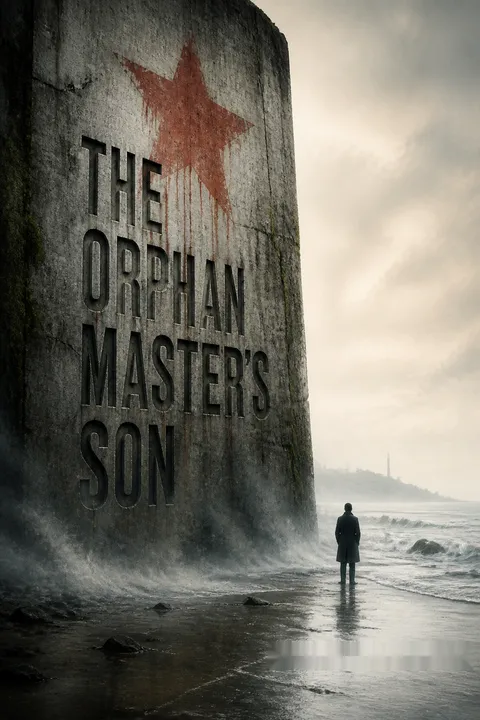

Plot Summary
Orphan's Beginnings, Father's Absence
Pak Jun Do grows up in a North Korean orphanage, the only child with a living parent—his father, the Orphan Master. His mother, a singer, is absent, her fate a mystery that haunts both father and son. Jun Do's childhood is defined by deprivation, harsh discipline, and the constant reminder that he is different, yet not special. The orphanage is a world of arbitrary punishments and fleeting camaraderie, where names are assigned from a list of revolutionary martyrs. The absence of love and the presence of state ideology shape Jun Do's psyche, teaching him to survive by blending in, obeying, and never hoping for more. The emotional landscape is one of longing, confusion, and the slow hardening of a boy who learns that in North Korea, the personal is always political, and the past is a wound that never heals.
Tunnels, Kidnappings, and Loss
As a teenager, Jun Do is conscripted into a unit specializing in zero-light tunnel warfare beneath the DMZ, where he learns to fight and sense others in total darkness. His skills lead to a new assignment: kidnapping Japanese citizens from their beaches for the regime. The missions are brutal and senseless, stripping Jun Do of any remaining innocence. He witnesses the arbitrary cruelty of his superiors and the terror of the abducted, haunted by the memory of a dog's endless howling for its vanished master. Each act of violence distances him further from his own humanity, yet he clings to the hope that his suffering might one day be rewarded. The emotional toll is immense—guilt, shame, and the numbing realization that in North Korea, survival often means becoming complicit in the suffering of others.
Sea of Secrets and Survival
Jun Do's next role is as a radio operator on a fishing vessel, eavesdropping on foreign broadcasts and reporting to the state. The sea offers a strange freedom, a respite from the constant surveillance of land, but also a new kind of loneliness. He becomes obsessed with the voices he hears—American rowers, confessions, and coded transmissions—imagining lives beyond the regime's reach. The camaraderie of the crew is tinged with suspicion and fear, as everyone knows that a single misstep can mean death or disappearance. When the ship is boarded by Americans, Jun Do is forced to invent a heroic story to save himself and his crewmates, learning that in North Korea, truth is malleable and stories are weapons. The sea becomes a metaphor for the unknown, for the possibility of escape, and for the depths of the self that remain hidden even from oneself.
Ghost Broadcasts and Shark Encounters
The radio brings Jun Do into contact with the world's ghosts—voices from space, confessions from prisoners, and the endless chatter of those who are free. These broadcasts become a lifeline, a reminder that another reality exists. Yet, the dangers of the sea are ever-present: shark attacks, storms, and the constant threat of betrayal. Jun Do's tattoo of the actress Sun Moon, given to him as a mark of belonging, becomes both a shield and a brand, tying him to a woman he has never met. The emotional arc is one of yearning—for connection, for understanding, for a place in a world that seems determined to erase individuality. The sharks, both literal and metaphorical, are always circling, and Jun Do learns that survival requires both cunning and the willingness to sacrifice others.
The American Interlude
Jun Do is selected to join a diplomatic mission to Texas, tasked with retrieving a stolen device and spinning a story of American aggression. The trip is surreal—a collision of cultures, values, and expectations. Jun Do is both fascinated and bewildered by American openness, the abundance of food, and the casual intimacy of strangers. The delegation's every move is a performance, designed to manipulate and impress their hosts. Jun Do's own story is rewritten by his superiors, and he learns that in both North Korea and America, the truth is less important than the narrative that serves those in power. The emotional impact is disorienting, as Jun Do glimpses the possibility of another life, only to be reminded that he is a tool of the state, his fate always in the hands of others.
The Price of Stories
Back in North Korea, Jun Do is interrogated about his experiences, forced to craft a story that will satisfy his superiors and protect his crewmates. The process is brutal—pain, humiliation, and the constant threat of death. He learns that stories are currency, that the right narrative can mean the difference between life and death. Yet, the cost is high: the loss of self, the betrayal of friends, and the knowledge that the truth is always secondary to the needs of the regime. The emotional arc is one of resignation, as Jun Do accepts that his life is not his own, that he is both the author and the victim of his own story.
Becoming Commander Ga
Through a series of events, Jun Do assumes the identity of Commander Ga, a national hero and the husband of the actress Sun Moon. The transformation is both physical and psychological—he must learn to inhabit another man's life, to perform the role of husband, father, and minister. The stakes are higher than ever, as any mistake could mean death for himself and those he has come to care for. The emotional tension is palpable, as Jun Do struggles to reconcile his own desires with the demands of his new identity. The masquerade becomes a form of resistance, a way to carve out a space for love and agency in a world that seeks to erase both.
Sun Moon's Household
As Commander Ga, Jun Do enters the household of Sun Moon, a woman broken by loss and the whims of the regime. Their relationship is fraught—she is wary, he is desperate to prove himself. The children are traumatized, the house is filled with secrets, and the ever-present threat of the state looms over every interaction. Yet, in the small rituals of daily life—meals, music, stories—Jun Do finds moments of connection and hope. The emotional arc is one of tentative trust, as love begins to grow in the cracks of fear and suspicion. The household becomes a microcosm of North Korea itself: a place of beauty and terror, of longing and resignation.
Love, Loyalty, and Betrayal
Jun Do and Sun Moon's relationship deepens, moving from suspicion to intimacy. They share secrets, dreams, and the pain of their pasts. Yet, the specter of betrayal is always present—by the state, by friends, by themselves. The children's innocence is both a shield and a vulnerability, as they are drawn into the web of adult fears and hopes. The emotional stakes are raised as Jun Do must choose between his own survival and the safety of those he loves. The possibility of escape becomes both a hope and a threat, as the cost of freedom is revealed to be higher than anyone imagined.
The Machinery of Oppression
The narrative shifts to the perspective of the interrogators, revealing the inner workings of Division 42, where biographies are written, confessions extracted, and lives destroyed. The process is both scientific and brutal, designed to strip away individuality and replace it with the needs of the state. The interrogators themselves are trapped, their own stories shaped by fear and ambition. The machinery of oppression is relentless, grinding down both victim and perpetrator. The emotional arc is one of despair, as the possibility of resistance seems ever more remote.
Escape Plans and Promises
Jun Do and Sun Moon plot their escape, aided by unlikely allies and driven by the hope of a new life. The plan is fraught with danger, requiring deception, sacrifice, and the willingness to abandon everything familiar. The emotional tension is acute, as the line between hope and delusion blurs. Each character must confront their own fears, their own capacity for betrayal, and the possibility that freedom may be an illusion. The promise of escape becomes a test of love, loyalty, and the limits of endurance.
The Crow's Shadow
As the day of escape approaches, the regime's surveillance intensifies. The metaphorical crow—symbol of the state's watchfulness—circles ever closer, ready to swoop down on any sign of dissent. Friends become suspects, allies become threats, and the boundaries between truth and fiction dissolve. The emotional arc is one of mounting dread, as the characters realize that in North Korea, there is no such thing as a private life, no refuge from the gaze of power.
The Final Performance
The escape unfolds as a carefully choreographed performance, with Sun Moon playing her final role for the regime. The airport becomes a stage, the crowd an audience, and every gesture is fraught with meaning. The plan is executed with precision, but not without loss. The emotional climax is both triumphant and tragic, as love and sacrifice are revealed to be inseparable. The final performance is both an act of defiance and a surrender to the forces that shape every life in North Korea.
The Vanishing Act
In the aftermath of the escape, the regime moves quickly to erase all traces of Sun Moon and Commander Ga. Propaganda replaces reality, and the official story becomes the only story. Those left behind must navigate a world where the past is constantly rewritten, and the future is always uncertain. The emotional arc is one of grief and resilience, as the survivors find ways to endure, to remember, and to hope.
The Last Biography
The interrogator, now alone, reflects on his own life, his failures, and the stories he has collected. The act of writing becomes both a confession and a form of resistance, a way to assert the value of individual lives in a system designed to erase them. The emotional arc is one of acceptance, as the interrogator comes to terms with his own complicity and the impossibility of redemption. The last biography is both an ending and a beginning, a testament to the power of stories to survive even in the darkest of times.
The Stadium and the Brand
Commander Ga is brought to the soccer stadium, where he is to be branded as a traitor before the assembled citizens. The event is both a warning and a performance, designed to reinforce the regime's absolute authority. Yet, even in this moment of humiliation, there is a sense of defiance—a refusal to be defined by the state's narrative. The emotional arc is one of pain and dignity, as Ga endures the ultimate punishment with the knowledge that he has given Sun Moon and her children a chance at freedom.
The Gilded Lie
The regime crafts a new story, transforming the messy reality of escape and betrayal into a myth of heroism and sacrifice. Commander Ga becomes both villain and martyr, Sun Moon both victim and symbol. The official narrative is broadcast to the nation, erasing the truth and replacing it with a lie that is more useful, more comforting, and more enduring. The emotional impact is one of bitter irony, as the characters' real lives are subsumed by the needs of the state.
Endings and Beginnings
In the aftermath, those who remain must find ways to live with loss, to remember what has been erased, and to hope for a future that may never come. The story ends as it began—with longing, with the search for connection, and with the knowledge that even in the darkest places, the human spirit endures. The final note is one of quiet defiance, a reminder that stories matter, that love survives, and that every ending is also a beginning.
Analysis
Adam Johnson's The Orphan Master's Son is a profound meditation on the nature of identity, power, and the human capacity for endurance in the face of totalitarian oppression. Through the intertwined stories of Pak Jun Do, Sun Moon, and the interrogator, the novel explores how individuals are shaped—and often broken—by the narratives imposed upon them by the state. The shifting perspectives and unreliable narrators reflect the instability of truth in a world where reality is constantly rewritten to serve those in power. The novel's use of propaganda, biography, and confession as plot devices underscores the central lesson: in North Korea, stories are both weapons and shields, tools of survival and instruments of control. Yet, amid the brutality and despair, Johnson finds moments of beauty, love, and resistance. The relationship between Jun Do and Sun Moon, the small acts of kindness in the camps, and the persistence of memory in the face of erasure all testify to the resilience of the human spirit. Ultimately, the novel asks what it means to be free—not just in the political sense, but in the deeper sense of owning one's own story, of loving and being loved, of choosing, even in the smallest ways, who we are. The lesson is both sobering and hopeful: even in the darkest places, the act of telling one's story is an act of defiance, a way to assert one's humanity against the machinery of oppression.
Review Summary
The Orphan Master's Son received widespread acclaim for its imaginative portrayal of North Korean life under totalitarian rule. Readers praised Johnson's meticulous research, vivid prose, and complex characters, particularly the protagonist Jun Do. Many found the novel haunting, darkly humorous, and deeply affecting, though some struggled with its bleakness. The book's exploration of identity, propaganda, and survival in an oppressive regime resonated strongly. While a few readers found parts implausible, most considered it a powerful, thought-provoking work deserving of its Pulitzer Prize.
People Also Read









Characters
Pak Jun Do / Commander Ga
Pak Jun Do is the novel's central figure, a man whose life is defined by absence, deprivation, and the relentless demands of the North Korean state. Born in an orphanage, he is marked from childhood as both an outsider and a tool of the regime. His journey from orphan to tunnel fighter, kidnapper, radio operator, and finally to the assumed identity of Commander Ga is a testament to his adaptability and resilience. Jun Do's relationships—with his father, with his crewmates, with Sun Moon and her children—are fraught with longing and betrayal. Psychologically, he is a man who learns to survive by erasing parts of himself, yet he never loses the capacity for love, guilt, and hope. His transformation into Commander Ga is both a masquerade and a form of resistance, allowing him to carve out a space for agency and connection in a world designed to crush both. Jun Do's arc is one of tragic heroism, as he sacrifices himself to give others a chance at freedom, embodying the paradoxes of loyalty, love, and survival in a totalitarian state.
Sun Moon
Sun Moon is North Korea's most celebrated actress, a woman whose life is both privileged and imprisoned. She is the object of desire for the Dear Leader, the wife of Commander Ga, and the mother of two traumatized children. Sun Moon's beauty is both her shield and her curse, granting her a measure of protection while making her a pawn in the regime's games. Psychologically, she is complex—wounded by loss, wary of intimacy, yet capable of great courage and tenderness. Her relationship with Jun Do evolves from suspicion to love, as they share secrets, dreams, and the pain of their pasts. Sun Moon's ultimate act of defiance—her escape with her children—reveals her as a figure of quiet strength, willing to risk everything for a chance at freedom. She is both a victim and a survivor, a woman who learns to reclaim her story in a world determined to write it for her.
The Dear Leader (Kim Jong Il)
Kim Jong Il is both a real historical figure and a mythic presence in the novel, embodying the contradictions of North Korean power. He is charming, manipulative, and deeply insecure, obsessed with loyalty and the performance of devotion. His relationship with Sun Moon is both paternal and possessive, and his interactions with Jun Do are marked by a mixture of amusement, suspicion, and cruelty. Psychologically, the Dear Leader is a master of narrative, constantly rewriting reality to suit his needs. He is both the architect and the prisoner of the system he has created, a man whose need for control is matched only by his fear of betrayal. His presence looms over every character, shaping their choices and their fates.
The Interrogator
The unnamed interrogator of Division 42 is both a functionary of the regime and a secret rebel, obsessed with collecting and preserving the stories of those who pass through his hands. He is methodical, intelligent, and deeply conflicted, aware of his own complicity in the machinery of oppression. His relationships—with his parents, with his interns, with Commander Ga—are marked by a longing for connection and understanding. Psychologically, he is haunted by the knowledge that his work both saves and destroys, that every biography he writes is also an act of erasure. His arc is one of growing disillusionment, as he comes to see the limits of his own power and the futility of seeking redemption in a system designed to crush individuality.
Comrade Buc
Comrade Buc is a procurement officer, a man whose job is to obtain whatever the regime requires, no matter the cost. He is resourceful, pragmatic, and outwardly cheerful, yet beneath the surface he is haunted by the loss of his family and his own complicity in the system. His relationship with Jun Do is complex—part friendship, part rivalry, part mutual dependence. Psychologically, Buc is a survivor, willing to do whatever it takes to protect himself and those he loves, yet unable to escape the guilt of his actions. His arc is one of gradual disillusionment, as he comes to see that loyalty to the regime is a dead end, and that true freedom requires both sacrifice and the willingness to betray the system that has betrayed him.
The Interrogator's Parents
The interrogator's parents are minor characters, but their presence is deeply felt. They are old, blind, and terrified of the regime, yet they cling to each other and to the rituals of daily life. Their relationship with their son is marked by both love and suspicion, as they struggle to reconcile their fear of the state with their desire to protect him. Psychologically, they embody the survival strategies of ordinary North Koreans—obedience, denial, and the careful management of secrets. Their arc is one of quiet endurance, a testament to the ways in which love persists even in the most oppressive circumstances.
The Girl Rower (Allison Jensen)
The American rower is both a literal and symbolic figure—a woman kidnapped by the regime, held as a bargaining chip, and ultimately used as a pawn in the final act of the story. Her endurance, her longing for home, and her brief connection with Sun Moon and Jun Do serve as reminders of the world beyond North Korea, of the possibility of escape and the persistence of hope. Psychologically, she is resilient, resourceful, and ultimately triumphant, as her release becomes the catalyst for Sun Moon's own escape.
Commander Park
Commander Park is a military figure, marked by both physical and psychological scars. He is a friend and rival to Commander Ga, a man whose loyalty to the regime is absolute. His role is to enforce the will of the Dear Leader, to punish dissent, and to maintain order. Psychologically, he is both brutal and vulnerable, a man whose own suffering has made him both dangerous and pitiable. His arc is one of increasing desperation, as he becomes the instrument of the regime's final acts of violence.
Q-Kee
Q-Kee is the first female intern in Division 42, a woman determined to prove herself in a male-dominated world. She is intelligent, resourceful, and willing to do whatever it takes to succeed. Her relationship with the interrogator is complex—part mentorship, part rivalry, part unspoken longing. Psychologically, she is both a victim and a perpetrator, caught between her own ambitions and the demands of the system. Her arc is one of hardening, as she learns that survival requires both strength and the willingness to betray others.
Mongnan
Mongnan is an old woman in Prison 33, a survivor who becomes a mentor and protector to Jun Do. She is resourceful, compassionate, and deeply knowledgeable about the ways of the world. Her relationship with Jun Do is maternal, offering him both practical advice and emotional support. Psychologically, she is a figure of resilience, embodying the possibility of dignity and kindness even in the most dehumanizing circumstances. Her arc is one of quiet heroism, as she helps Jun Do survive and ultimately escape the prison that would have destroyed him.
Plot Devices
Shifting Identities and Narrative Control
The novel's structure is built on the constant shifting of identities—Jun Do becomes Commander Ga, the interrogator becomes both biographer and confessor, and every character is forced to perform roles assigned by the state. This device underscores the central theme that in North Korea, identity is not fixed but imposed, and that survival requires the ability to adapt, to lie, and to reinvent oneself. The use of propaganda broadcasts, official biographies, and confessions as narrative tools highlights the regime's control over truth and memory. The novel's alternating perspectives—first Jun Do's, then the interrogator's, then the omnipresent voice of the state—create a sense of disorientation, mirroring the characters' own struggles to distinguish reality from fiction. Foreshadowing is used throughout, as small details—tattoos, stories, objects—take on greater significance as the plot unfolds. The final act, in which the official story replaces the messy reality of escape and betrayal, is both a narrative and a political device, demonstrating the regime's ultimate power to define the meaning of every life and every death.
Download PDF
Download EPUB
.epub digital book format is ideal for reading ebooks on phones, tablets, and e-readers.








































