
Résumé de l'intrigue
Orsenna's Sleepwalkers Awaken
Orsenna, once a mighty Mediterranean power, now drifts in a state of elegant decay, its people lulled by centuries of peace and tradition. The city's ancient families, including Aldo's, live in the shadow of past glories, their energies spent on ritual and reminiscence. The war with Farghestan, officially ongoing for three hundred years, has become a myth, a backdrop for poetry and ceremony rather than action. Yet beneath the surface, a sense of unease stirs—a recognition that the city's inertia is not eternal, and that the boundaries separating Orsenna from the unknown are more fragile than they seem. The city's youth, restless and disillusioned, seek meaning in diversions, but a deeper longing for change simmers beneath their ennui.
Exile to the Edge
Disenchanted with his privileged but empty life, Aldo, a young aristocrat, requests a posting to the remote province of Syrtes, Orsenna's southernmost outpost. The journey south is a passage into desolation: the land grows barren, the air heavy with the scent of abandonment. Syrtes is a place of exile, a purgatory for those the city wishes to forget. At the crumbling Admiralty, Aldo meets Captain Marino and his small, isolated crew. The fortress, surrounded by marshes and ruins, is a relic of Orsenna's lost power, its routines reduced to farce. Yet Aldo senses a latent tension beneath the surface, a secret waiting to be revealed in the silence of the empty sea.
The Map Room's Spell
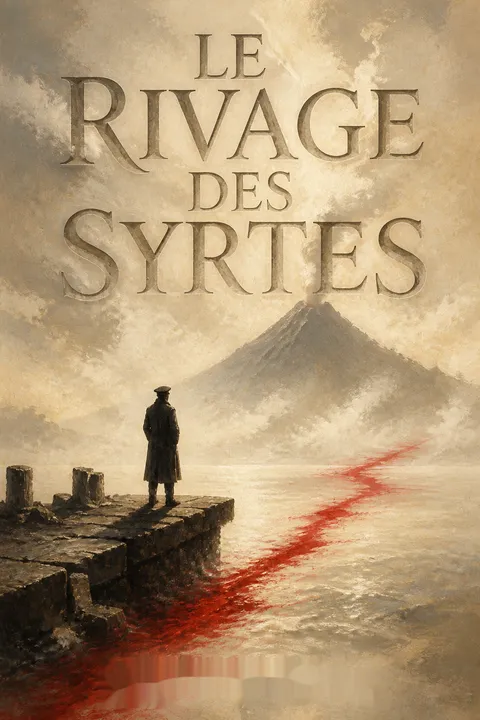
In the heart of the fortress lies the map room, a sanctuary of dust and memory. Here, Aldo becomes entranced by the maps of the Syrtes coast, especially the red line marking the forbidden waters beyond which Farghestan lies. The room exerts a hypnotic pull, its silence thick with the weight of history and possibility. Aldo's visits become clandestine rituals, watched with silent disapproval by Marino. The boundary on the map becomes a symbol of all that is denied, all that Orsenna refuses to confront. The allure of transgression grows, and Aldo's sense of self becomes entwined with the fate of the sleeping city.
Bonds Forged in Boredom
Life at the Admiralty is marked by monotony and camaraderie. Aldo befriends Fabrizio and the other young officers, sharing in their idle pursuits and rituals. Yet beneath the surface, suspicion lingers—Aldo is an outsider, a potential spy, and his solitary explorations set him apart. Conversations with Fabrizio reveal the unease that pervades the outpost: everyone senses that something is about to change, but no one can name it. The bonds between the men are both a refuge and a source of tension, as each struggles with the weight of expectation and the fear of what lies beyond the known.
Vanessa: The Forbidden Shore
Memories of Vanessa Aldobrandi, a woman of ambiguous lineage and dangerous allure, haunt Aldo. Their encounters in Orsenna's secret gardens were charged with longing and exile; Vanessa, marked by her family's history of rebellion and banishment, embodies the city's fascination with the forbidden. Now, in the fevered atmosphere of Maremma, Vanessa reappears, drawing Aldo into a web of intrigue and desire. Her presence blurs the boundaries between loyalty and betrayal, love and destruction. She becomes both a guide and a temptation, urging Aldo toward the transgression that will define his fate.
The Lure of Transgression
As Aldo settles into life at Syrtes, the rituals of the outpost take on a new significance. The annual ceremony for the dead, the restoration of the fortress, and the clandestine visits to the map room all become charged with meaning. Rumors of unrest in Farghestan and strange happenings in Maremma circulate, feeding a growing sense of crisis. Aldo's obsession with the forbidden line intensifies, and he finds himself drawn into secret conversations and dangerous liaisons. The city's inertia is revealed as a fragile mask, easily shattered by the first act of will.
Sagra's Hidden Boat
During a solitary excursion to the ruins of Sagra, Aldo stumbles upon a hidden boat, freshly maintained and guarded by a stranger of foreign aspect. The boat's presence suggests clandestine contact with Farghestan, and Aldo's suspicions are confirmed by Vanessa's evasive answers. The discovery becomes a turning point: the boundary between Orsenna and its enemy is not as absolute as it seems. The possibility of action, of crossing the line, becomes real. Aldo is both frightened and exhilarated, sensing that he is being swept into a current larger than himself.
Maremma's Fevered Nights
In Maremma, the fever of anticipation reaches its peak. The city is alive with gossip, prophecy, and clandestine gatherings. Vanessa's palace becomes a center of intrigue, drawing together exiles, conspirators, and agents of the Signory. The boundaries between friend and enemy, truth and rumor, dissolve in the heat of the night. Aldo is both participant and observer, caught between his duty to Orsenna and his desire for Vanessa. The city's collective longing for change becomes a kind of madness, a prelude to catastrophe.
Vezzano: Crossing the Line
Vanessa lures Aldo on a secret voyage to the island of Vezzano, the closest point to Farghestan. Disguised and exhilarated, they cross the forbidden waters, consummating their love in the island's hidden ravine. The journey is both a personal and political transgression, a symbolic crossing of the line that has defined Orsenna's existence. The sight of the distant Tängri volcano, rising from the sea, becomes an omen of impending change. The return to Syrtes is marked by a sense of inevitability: the act has been committed, and the consequences cannot be avoided.
The Tängri's Shadow
Emboldened by his crossing, Aldo leads the Redoubtable on a patrol that deliberately violates the forbidden line. The ship approaches the coast of Farghestan, and the Tängri looms on the horizon. Suddenly, the silence is broken: cannon fire erupts from Rhages, the enemy's port. The shots miss, but the message is clear—the long sleep is over, and the war that was only a myth is now real. The crew returns to Syrtes in shock, and Aldo is left to face the consequences of his actions.
The Envoy's Ultimatum
A mysterious envoy from Farghestan arrives at the Admiralty, delivering an ultimatum: Orsenna must disavow the incursion or face war. The conversation is both a negotiation and a confrontation, laden with irony and unspoken threats. Aldo realizes that the machinery of history has been set in motion, and that neither side can now retreat. The envoy's visit is a mirror to Aldo's own journey—a crossing of boundaries, a test of will. The city's fate hangs on the answer that will be sent, but the time for hesitation is past.
The City's Secret Will
Summoned to Orsenna, Aldo meets with Danielo, the enigmatic leader of the Council. In a night of confessions, Danielo reveals the city's secret will: the desire for an end, for a release from the burden of history. The decision to provoke war was not Aldo's alone; it was the culmination of a collective longing, a pact with destiny. The machinery of the state, the inertia of tradition, and the fever of the people have all conspired to bring about the catastrophe. Aldo is both agent and victim, chosen and condemned.
The End of Waiting
As news arrives of Farghestan's advancing armies, Orsenna is swept by a final wave of anticipation and dread. The city's leaders, its people, and its exiles all sense that the long period of waiting is over. The boundaries that once protected Orsenna have become its prison, and the only escape is through destruction. Aldo, now both witness and participant, understands that the true enemy was not Farghestan, but the city's own refusal to change. The final act is not a battle, but a surrender to the forces that have been gathering for centuries—a crossing of the ultimate shore.
Analysis
A meditation on decadence, transgression, and the longing for catastropheThe Opposing Shore is a profound exploration of the psychology of waiting, the allure of boundaries, and the dangers of inertia. Gracq's Orsenna is a city paralyzed by its own history, unable to act yet obsessed with the possibility of action. The novel's central lesson is that the refusal to confront change, to cross the forbidden line, is itself a form of death-in-life. Yet the act of transgression, when it finally comes, is not a liberation but a catastrophe—the awakening of the will is inseparable from destruction. Through Aldo's journey, Gracq examines the seductive power of the unknown, the ways in which individuals and societies conspire in their own undoing. The novel is both a critique of nostalgia and a warning against the romanticization of defeat. In a modern context, it speaks to the dangers of complacency, the need to recognize when waiting has become a form of complicity, and the tragic consequences of awakening too late. The Opposing Shore remains a timeless meditation on the costs of crossing boundaries—personal, political, and existential.
Résumé des avis
The Opposing Shore is a haunting, atmospheric novel set in an imaginary land. Many readers praise Gracq's lush, poetic prose and the dreamlike quality of the story, though some find it overly verbose. The plot revolves around a centuries-long dormant war and explores themes of stagnation, change, and human nature. While some consider it a masterpiece of 20th century literature, others struggle with its slow pace and dense writing style. Overall, it's seen as a challenging but rewarding read for those who appreciate literary fiction.
Les lecteurs ont aussi lu

Characters
Aldo
Aldo, the novel's protagonist, is a young aristocrat of Orsenna, marked by intelligence, sensitivity, and a profound sense of ennui. Disillusioned with the city's stagnant rituals, he seeks meaning in exile at Syrtes, where his role as Observer becomes both literal and symbolic. Aldo's psychological journey is one of awakening: from passive witness to active transgressor. His obsession with boundaries—geographical, emotional, and moral—mirrors the city's own paralysis. Through his relationships with Marino, Fabrizio, and especially Vanessa, Aldo is drawn into a web of complicity and desire. Ultimately, he becomes the agent through which Orsenna's latent will is realized, crossing the forbidden line and setting in motion the city's destruction. His arc is one of tragic self-discovery, as he learns that to awaken the will is also to invite ruin.
Captain Marino
Marino, the commander of the Syrtes outpost, embodies the virtues and limitations of Orsenna's old order. Stoic, dutiful, and deeply attached to routine, he maintains the fortress as a relic of past glory, resisting change with quiet determination. Marino's relationship with Aldo is complex: paternal, wary, and ultimately affectionate. He senses the danger in Aldo's restlessness, fearing the disruption of the fragile balance he has preserved. As events accelerate, Marino is both a victim and a symbol of the city's inability to adapt. His tragic end—disappearing into the lagoon, swallowed by the very waters he guarded—underscores the futility of resisting the tide of history. Marino's psychological depth lies in his mixture of strength and vulnerability, his loyalty to a world that no longer exists.
Vanessa Aldobrandi
Vanessa is the novel's most enigmatic figure, a woman whose beauty and lineage place her at the intersection of Orsenna's past and its forbidden future. Daughter of a family marked by rebellion and scandal, she is both insider and outsider, at home in the city's salons and its margins. Vanessa's relationship with Aldo is charged with longing, danger, and complicity; she becomes the embodiment of the forbidden shore, luring him toward transgression. Her psychological complexity lies in her simultaneous vulnerability and power—she is both muse and manipulator, victim and instigator. Vanessa's actions are driven by a desire to break free from the city's suffocating embrace, even if it means courting destruction. She is the catalyst for Aldo's awakening, and her fate is inseparable from the city's own.
Fabrizio
Fabrizio, one of the young officers at Syrtes, serves as both friend and foil to Aldo. Restless and eager for adventure, he is drawn to Aldo's charisma and shares in his longing for change. Fabrizio's psychological arc is one of imitation and complicity—he follows Aldo across the forbidden line, participating in the fateful voyage that triggers the city's downfall. Yet he remains more innocent, less burdened by self-awareness. His loyalty and enthusiasm highlight the generational divide between those who accept the city's inertia and those who seek to escape it. Fabrizio's fate is a testament to the dangers of following without understanding, of being swept up in forces beyond one's control.
Danielo
Danielo, the leader of Orsenna's Council, is a figure of immense authority and inscrutable will. A scholar turned statesman, he embodies the city's hidden intelligence and its capacity for self-destruction. Danielo's relationship with Aldo is marked by a strange intimacy—he recognizes in the young man both a tool and a kindred spirit. His psychological depth lies in his awareness of the city's doom and his willingness to facilitate it. Danielo's confessions reveal a man who has grown weary of power, who seeks not to preserve the city but to deliver it to its destiny. He is both judge and accomplice, orchestrating the final act with a mixture of resignation and satisfaction.
Giulio Belsenza
Belsenza, the Signory's agent in Maremma, is a minor but significant character. Jaded, intelligent, and perpetually ill at ease, he serves as a counterpoint to the fevered atmosphere of the city. Belsenza's investigations into the rumors and conspiracies swirling around Maremma reveal the limits of reason in the face of collective madness. His interactions with Aldo are marked by irony and mutual suspicion. Psychologically, Belsenza represents the impotence of the rational mind when confronted by the irrational forces of history and desire. He is both a witness to and a victim of the city's unraveling.
Old Carlo
Carlo, the patriarch of the Syrtes countryside, is a figure rooted in tradition and the rhythms of the earth. His death marks the passing of an era, the end of a way of life that valued endurance and stability. Carlo's conversations with Aldo are filled with resignation and wisdom; he senses the coming storm but is powerless to prevent it. Psychologically, he represents the city's unconscious, the deep layers of memory and habit that underlie its surface rituals. His burial in Orsenna's soil is both a tribute and a farewell to the world that is about to vanish.
The Farghestan Envoy
The envoy from Farghestan is a figure of ambiguity and menace, both courteous and implacable. His visit to the Admiralty is a turning point, transforming the abstract threat of war into a concrete ultimatum. The envoy's conversation with Aldo is a duel of wits, laden with irony and unspoken understanding. Psychologically, he serves as a mirror to Aldo—a fellow traveler across boundaries, an agent of fate. His presence signals the collapse of the old order and the arrival of the unknown.
Roberto and Giovanni
Roberto and Giovanni, Marino's lieutenants, represent the rank-and-file of Orsenna's outposts. Loyal, practical, and attached to routine, they provide a counterweight to Aldo's restlessness. Their reactions to the unfolding crisis are marked by confusion and resignation; they are swept along by events they cannot control. Psychologically, they embody the city's inertia, the collective habits that both sustain and doom it.
Old Aldobrandi
Vanessa's father, Old Aldobrandi, is a figure of scandal and intrigue, a survivor of the city's many upheavals. His return to favor in Orsenna signals the city's willingness to embrace its own contradictions. Aldobrandi's presence in Maremma and his role in the city's salons highlight the porousness of boundaries and the ease with which old enemies become new allies. Psychologically, he represents the adaptability of the decadent, the ability to thrive in times of crisis by abandoning principle for survival.
Plot Devices
The Dormant War
The central plot device is the three-century "war" between Orsenna and Farghestan—a conflict that exists more in language and ritual than in reality. This dormant war serves as a metaphor for the city's paralysis, its refusal to confront change or acknowledge its own decline. The war's ambiguous status allows for both denial and obsession, providing a backdrop for Aldo's personal journey and the city's collective fate. The device is used to explore the psychological effects of suspended action, the dangers of living in a perpetual state of waiting.
The Forbidden Line
The red line on the map, marking the limit of Orsenna's patrols, is both a literal and symbolic boundary. It represents the city's fear of the unknown, its need to maintain order by denying the existence of the other. The line becomes an object of obsession for Aldo, a test of will and identity. The act of crossing it is both a personal and political transgression, a moment of self-revelation that triggers the city's downfall. The device is used to explore themes of temptation, taboo, and the consequences of breaking with tradition.
Foreshadowing and Ritual
The novel is structured around rituals—ceremonies for the dead, restoration of the fortress, clandestine visits to the map room—that both sustain and undermine the city's stability. These rituals are laden with foreshadowing, their repetition creating a sense of inevitability. The use of ritual as a plot device highlights the tension between habit and change, between the comfort of the known and the lure of the unknown. The gradual intensification of these rituals mirrors the city's movement toward crisis.
The Double and the Mirror
Throughout the novel, characters serve as doubles or mirrors for one another: Aldo and the Farghestan envoy, Aldo and Vanessa, Marino and Danielo. These pairings are used to explore the psychological dynamics of complicity, rivalry, and self-discovery. The device allows for a deepening of the novel's themes, as each character's actions and desires are reflected and refracted through the others. The mirror motif also underscores the city's inability to see itself clearly, its tendency to project its fears and desires onto the other.
The Machinery of Fate
The narrative structure is marked by a gradual acceleration, as the machinery of the state and the collective will of the people converge to produce catastrophe. Individual actions—Aldo's crossing, Vanessa's intrigues, Danielo's decisions—are both personal choices and expressions of a larger, impersonal destiny. The use of fate as a plot device allows the novel to explore the limits of agency, the ways in which history both enables and destroys the individual. The sense of inevitability is heightened by the use of foreshadowing, repetition, and the gradual collapse of boundaries.
Télécharger le PDF
Télécharger l'EPUB
.epub digital book format is ideal for reading ebooks on phones, tablets, and e-readers.








































