
Key Takeaways
1. The Plenty Paradox: Overabundance Fuels Unhappiness
Yet according to survey reports, people are less happy, more depressed, and more anxious today than they were thirty years ago.
Abundance as stressor. Despite having basic survival needs met and unprecedented access to luxury, leisure, and pleasure, modern society faces rising rates of addiction, depression, anxiety, and suicide. This phenomenon, termed the "Plenty Paradox," suggests that overabundance itself acts as a stressor, contributing to a decline in overall well-being. Our world is engineered to be constantly reinforcing, accessible, novel, and potent—in essence, addictive.
Global unhappiness trends. Data from the World Happiness Report and other studies reveal a concerning trend: wealthier nations often report lower happiness scores and higher rates of mental health issues. For instance, the U.S. saw a decrease in happiness between 2008 and 2018, a pattern mirrored in other high-income countries. This indicates a fundamental flaw in our approach to mental health, where constant exposure to quick pleasures alters our brains in detrimental ways.
Societal and planetary costs. The "druggified" ecosystem disproportionately affects the poor in wealthy nations, who have easy access to high-reward substances but lack adaptive rewards like meaningful work or quality education, leading to "deaths of despair." Furthermore, this overconsumption is depleting natural resources and increasing carbon emissions, threatening the planet's future. Addressing this paradox requires individual and collective action to reshape our relationship with pleasure.
2. Dopamine's Double-Edged Sword: The Pleasure-Pain Balance
One of the most important discoveries in the field of neuroscience in the past seventy-five years is that pleasure and pain are processed in the same parts of the brain.
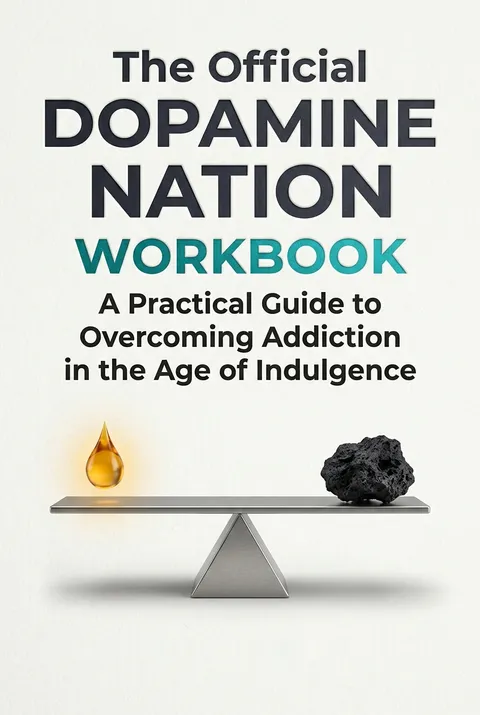
Neuroadaptation in action. Our brains strive for balance, or homeostasis, between pleasure and pain. When we experience pleasure, dopamine—our reward neurotransmitter—is released, tipping the balance. However, the brain quickly adapts by "downregulating" dopamine receptors, causing the balance to tip to the side of pain. This "opponent-process mechanism" is the biological basis of the hangover or comedown after a pleasurable experience.
The gremlin metaphor. Imagine tiny "neuroadaptation gremlins" hopping onto the pain side of a teeter-totter to restore balance after a pleasure surge. If we repeatedly seek pleasure, these gremlins multiply and permanently camp out on the pain side, shifting our "hedonic set point." Now, we need our "drug" not to feel good, but just to feel normal, experiencing anxiety, irritability, insomnia, and craving when we stop—the universal symptoms of withdrawal.
Dopamine deficit state. Chronic overexposure to high-dopamine rewards leads to a "dopamine deficit state." The initial pleasure response becomes weaker and shorter, while the subsequent pain response becomes stronger and longer. This explains tolerance (needing more to get the same effect) and why people relapse even when they know their lives are better without the drug. Our primitive wiring, designed for scarcity, is ill-equipped for today's abundance.
3. Identify Your "Drug of Choice": Beyond Traditional Addictions
Most of us are not dealing with life-threatening addictions, but nearly all of us are struggling with some form of compulsive overconsumption.
Broadening the definition. Addiction isn't just about alcohol or illicit drugs; it's "the continued, compulsive use of a substance or behavior despite harm to self and/or others." In our modern world, almost anything can become addictive because it's engineered to be reinforcing, novel, plentiful, and accessible. This includes seemingly innocuous activities that can cause subtle, cumulative harm.
Examples of compulsive overconsumption:
- Digital Media: Social media, video games, endless scrolling, online shopping, celebrity gossip.
- Food: Sugar, caffeine, ultra-processed foods, bingeing, restrictive dieting.
- Work/Achievement: Work obsession, public recognition, social media likes, investing, material acquisition.
- Relationships/Body: Love, sex, pornography, self-cutting, obsessive worrying.
- Adrenaline/Games: Sports betting, skydiving, speeding, getting into fights.
Harm as the differentiator. The key distinction between a passion, a habit, and an addiction is whether the behavior causes harm. This harm might not be immediately obvious, either because we minimize it, others can't see it, or it's culturally celebrated (like work or money). Recognizing this harm is the first crucial step toward change.
4. Uncover Your "Why": The Gap Between Intention and Outcome
Oftentimes, highly reinforcing substances and behaviors lead to the subjective feeling of having a certain outcome but in reality don’t achieve that goal.
Rationalizing irrationality. We typically engage in addictive behaviors for two main reasons: to have fun or to solve a problem. Even seemingly irrational behaviors have underlying motivations. However, in the later stages of use, our "drug of choice" often fails to deliver on its promise, creating a significant "gap" between our desired objective and the actual outcome.
Subjective vs. objective reality. Our brains, caught in the dopamine vortex, can deceive us. We might feel more creative after using cannabis, but objective reality might show a decrease in actual creative output. Similarly, obsessive worrying might feel like good parenting, but it can alienate children and increase their anxiety. This self-deception is hard to overcome without conscious effort and honest feedback.
Insight through pause. Appreciating this gap requires careful analysis and radical honesty. Sometimes, the only way to truly gain insight is to take a break from the substance or behavior—a "dopamine fast"—to reset reward pathways. This pause allows us to observe our behavior from a detached perspective and see the true impact of our consumption on our lives and relationships.
5. The Dopamine Fast: Resetting Your Reward Pathways
Dopamine fasting involves eliminating our substance or behavior of choice for a period of time long enough to reset reward pathways and return to healthy levels of dopamine firing.
The four-week reset. For those safely able to stop, a four-week abstinence period is recommended. This duration is manageable for most and aligns with clinical experience, which suggests it takes about four weeks for neuroadaptation gremlins to dissipate and homeostasis to be restored. Less time may only bring the pain of withdrawal without the benefits of recovery.
Scientific backing. Research supports this approach. Studies show that heavy drug use leads to a "dopamine deficit state" in the brain, resembling clinical depression, which can persist for at least two weeks after cessation. A study by Marc Schuckit found that 80% of depressed daily alcohol drinkers no longer met depression criteria after one month of abstinence, highlighting the profound impact of resetting reward pathways.
Anticipate and plan. The first 10-14 days of a dopamine fast can be brutal, marked by anxiety, irritability, insomnia, depression, and intense cravings. Planning is crucial:
- Choose a specific quit date.
- Inform your social network if quitting social media.
- Plan healthy alternative activities.
- Focus on one problematic substance/behavior, unless there's a "Stepping-Stone Effect."
- Anticipate withdrawal symptoms and remind yourself that "the sun will come out again."
6. Self-Binding: Creating Barriers to Temptation
Self-binding is the art of creating literal and metacognitive barriers between ourselves and our drug of choice so that we’re not constantly being triggered to use, and so we can press the pause button between desire and consumption.
Willpower is finite. Relying solely on willpower is often insufficient, as it wanes throughout the day. In a dopamine-overloaded world where "drugs" chase us, self-binding creates necessary distance. The Homeric tale of Odysseus and the Sirens illustrates this: he bound himself to the mast to resist temptation, acknowledging his limitations.
Three strategies for self-binding:
- Chronology (Time): Committing to a set abstinence period (e.g., the four-week dopamine fast). Knowing there's an end date makes commitment easier.
- Geography (Space): Physically separating yourself from your drug of choice. Examples:
- Unplugging the TV and putting it in a closet.
- Deleting social media apps.
- Having a partner set screen time passcodes.
- Quitting a gym membership to avoid extreme exercise environments.
- Category (Meaning): Using a "concentric circles of recovery" model:
- Inner circle: Drug of choice (abstain).
- Middle circle: Triggers (avoid, e.g., YouTube videos about video games).
- Outer circle: Healthy coping strategies (approach, e.g., playing with a dog, studying).
"If-then" contingency plans. Anticipate triggers and create specific "if-then" statements to manage cravings. For example, "If I get bored while working, then I will take a deep breath and look out the window." This creates a pause between desire and action, allowing for intentional choices.
7. Asceticism (Hormesis): Embrace Discomfort for Dopamine
It turns out that intentionally exposing ourselves to painful stimuli is a way to increase dopamine and other feel-good chemicals in our brain.
Gremlins on the pleasure side. Just as excessive pleasure tips the balance to pain, intentionally leaning into discomfort can tip it to the pleasure side. This is the science of "hormesis," where mild to moderate doses of aversive stimuli (like exercise or cold exposure) increase feel-good neurotransmitters without the subsequent crash. We get dopamine indirectly, paying for it upfront.
The benefits of hormesis:
- Physical: Exercise (in moderation), ice-cold water plunges, intermittent fasting.
- Mental: Meditation, prayer, cognitive challenges, creative endeavors, tolerating discomfort.
- Everyday "unplugged" activities: Cooking, gardening, spending time with children, cleaning.
"Note to future self." Our brains forget the pleasure that follows pain. Write a note to your future self, reminding them of the positive feelings after a challenging activity (e.g., "Dear Anna, get out of bed! If you exercise, you'll feel happier and see the sunrise."). This helps overcome initial resistance.
Avoid the "work hard-play hard" trap. Be cautious not to overdo pain or get addicted to it (e.g., self-cutting, overexercising). Also, avoid the cycle of intense stress followed by excessive reward (e.g., working too much then bingeing on digital media). Stress can reflexively trigger compulsive behaviors, so managing stressors is key to maintaining balance.
8. Mindfulness: Observe Cravings, Conquer Boredom
Mindfulness is the act of observing our own thoughts and feelings with nonreactive curiosity and compassion and, equally important, without trying to escape those thoughts and feelings.
Watching your mind. Practiced during the dopamine fast, mindfulness is a skill that involves observing your thoughts and feelings without judgment or the urge to escape them. It reveals that our minds are busy, thoughts and emotions arise spontaneously, and they are fleeting. This detachment helps tolerate the intense anxiety, irritability, and craving of withdrawal.
Countering craving narratives. During withdrawal, your brain will generate elaborate stories to rationalize ending the fast ("This is stupid," "You deserve it"). Mindfulness helps you recognize these "voices of craving" as mere thoughts, not commands. Develop "counternarratives" to remind yourself of your original intentions and the long-term benefits of abstaining.
Embracing boredom. Boredom, often a trigger for relapse, is a profound emotion that can mask existential terror. Instead of escaping it, welcome boredom as an opportunity:
- Slow down: Forces you to sit in the moment.
- Reorder priorities: Creates space for new ideas and aligns life with goals/values.
- Gateway to creativity: Necessity is the mother of invention, boredom is its midwife.
Learning to sit quietly without external stimuli, even with mundane tasks, can be a powerful mindfulness practice in our overstimulated world.
9. Radical Honesty: The Path to Insight and Intimacy
Radical honesty is a commitment to telling the truth at all times, even about things that seem insignificant or inconsequential, with a special focus on avoiding lies that attempt to cover up our own mistakes and/or manipulate other people’s impressions of us.
The lying habit. Compulsive overconsumption often goes hand-in-hand with a "lying habit," starting with covering up addictive behaviors but extending to trivial matters. This reflexive dishonesty, often outside conscious awareness, prevents us from seeing true cause and effect and the harm we cause.
Honesty and the brain. Telling the truth, especially about shortcomings, is a recurring theme in recovery. It strengthens the prefrontal cortex, the brain region involved in future planning, emotion regulation, and delayed gratification. Neuroscientist Christian Ruff's research suggests that stimulating the prefrontal cortex increases honesty, implying that practicing honesty can strengthen these neural circuits.
Benefits of truth-telling:
- Insight: Truthful narratives provide better road maps for decision-making.
- Intimacy: Vulnerability fosters deeper connections; forgiveness releases oxytocin, enhancing dopamine.
- Plenty Mindset: Reliability and truth-telling from others (and ourselves) create confidence in the future, promoting delayed gratification (Stanford marshmallow experiment).
- Prosocial Shame: Telling the truth in a supportive community metabolizes destructive shame, leading to belonging and a path to amends, rather than isolation.
10. Retrospective Honesty: Learning from Your Past
The ‘Step 4 Inventory’ involves looking at past events and trying to be honest about the ways our own character defects, shortcomings, and fears have contributed to things going wrong in our lives, especially the ways we’ve harmed others, intentionally or not.
The "Step 4 Inventory." Adapted from Alcoholics Anonymous, this exercise involves a deep, honest look at past events where things went wrong. It begins by listing people, places, and things you resent, then detailing what they did to you, how it affected you, and most crucially, what you contributed to the problem.
Uncovering character defects. The goal is to move beyond anger at others to identify underlying shame and self-loathing, and to recognize recurring "character defects"—maladaptive ways we try to protect ourselves. For example, blaming an ex-wife for custody issues might reveal a deeper theme of prioritizing personal image over honesty and engagement.
Self-awareness for future. By honestly examining our past actions and motivations, we gain clarity on our patterns of self-protection and how they contribute to our problems. This understanding empowers us to make better decisions going forward, breaking cycles of self-sabotage and fostering personal growth.
11. Plan Your Next Steps: Sustaining Change Post-Fast
Most of them will want to go back to using their substance or behavior of choice, but they want to use differently; they want to use less.
Pros and cons of the fast. As your dopamine fast nears its end, reflect on the experience by listing its pros and cons. Typically, patients report more pros, such as improved mood, better relationships, increased energy, reduced anxiety/shame, and a renewed sense of hope. Cons might include missing social groups or feeling restless.
Re-establishing a healthier relationship. For the 80% who experience significant benefits, the goal is often not permanent abstinence but a healthier, more moderate relationship with their substance or behavior. The fast resets reward pathways, allowing them to use less and appreciate more modest rewards. This is where the ongoing work of long-term recovery begins.
Moderation vs. continued abstinence. For some, moderation is achievable. For others, especially those with severe addiction or co-occurring mental illness, continued abstinence might be necessary. If the fast didn't bring improvement, it's crucial to explore other causal factors like underlying mental health conditions or the need for professional support. The journey is about finding sustainable balance.
Review Summary
The Official Dopamine Nation Workbook receives mixed reviews (3.98/5). Many readers praise its practical exercises for addressing addictive behaviors and compulsions, calling it a valuable companion to the original book. Positive reviews highlight the structured approach and clear explanations. However, critics note excessive repetition from the first book, lack of novelty, and overly general exercises. Some find it commercially motivated rather than genuinely helpful. Most reviewers recommend reading the original "Dopamine Nation" first for better context and understanding.
People Also Read



About the Author
Download PDF
Download EPUB
.epub digital book format is ideal for reading ebooks on phones, tablets, and e-readers.








































