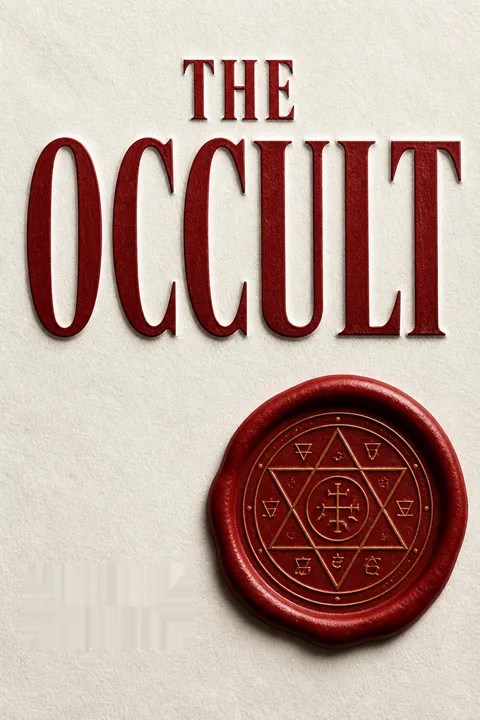

Key Takeaways
1. Magic as the Future Science: Expanding Human Potential
Magic was not the 'science' of the past. It is the science of the future.
Redefining Magic. The book challenges the conventional view of magic as a primitive attempt at science, positing instead that it represents the science of the future. This perspective suggests that the human mind is on the cusp of developing new powers, once considered magical, that will revolutionize our understanding of reality.
Faculty X. The author introduces the concept of "Faculty X," a latent human potential for grasping reality beyond the limitations of our senses. This faculty is linked to creativity, intuition, and psychic sensitivity, and its development is crucial for the next stage of human evolution.
Power and Knowledge. Knowledge is fundamentally driven by the need for power, not just over others, but over oneself. By connecting with the subconscious mind, we can tap into a source of power, meaning, and purpose that transcends personal preoccupations and unlocks our hidden energies.
2. The Occult 5%: Leadership, Sensitivity, and Latent Powers
One person in every twenty possesses them [occult powers] in some form.
Dominant Minority. The book draws a parallel between the "occult 5%" and the "dominant 5%" found in various social and biological contexts, suggesting that leadership and psychic sensitivity may be linked. This minority possesses a greater ability to focus, concentrate will, and access subconscious powers.
Deep-Trance Subjects. Deep-trance hypnotism reveals that only 5% of people are "deep-trance subjects," capable of accessing the subconscious mind to an unusual degree. This further supports the idea that a small segment of the population has heightened access to latent mental powers.
Instinct and Intellect. The development of intellect has led to a decline in instinctive powers, but these powers have not vanished. By recovering these lost abilities, we can achieve a more balanced and complete understanding of the universe.
3. The White Goddess: Poetry, Intuition, and the Lunar Realm
The most important single fact in the early history of Western religion and sociology was undoubtedly the gradual suppression of the Lunar Mother-goddess's inspiratory cult...
Lunar vs. Solar. Robert Graves's theory of poetry links creativity with "psychic" sensitivity, associating "muse poetry" with the White Goddess of primitive lunar cults and "Apollonian poetry" with intellect and reason. The suppression of the lunar goddess has led to a dominance of rational thought, but a recovery of the "lunar" forces is necessary for balance.
Poetic Intuition. Graves's discovery of the White Goddess mythology was driven by poetic intuition and a series of strange coincidences, revealing a universal symbol in pre-Christian poetry and mythology. This underscores the power of intuition in accessing hidden knowledge.
The Tree Alphabet. The White Goddess mythology is connected to an ancient Celtic tree alphabet, which served as both an alphabet and a sacred calendar. This alphabet represents a knowledge system as complex as modern physics, but based on "lunar" rather than "solar" forces.
4. Tapping the Subconscious: Techniques and Dangers
In the great crises of life, when existence itself is threatened, the soul attains transcendent powers.
Conscious Control. The book explores the possibility of conscious control over the subconscious mind, drawing examples from telepathy, astral projection, and the "evil eye." While these powers may seem mysterious, they can be developed through training and auto-suggestion.
Emotional Upset. Serious emotional upset can stimulate psychic faculties, as seen in the case of playwright Strindberg, whose mental crisis led to involuntary astral projection. This highlights the connection between emotional intensity and access to hidden powers.
Psychic Self-Defense. Dion Fortune's theory of "psychic self-defense" suggests that the human mind can repel hostile psychic forces and that a healthy, optimistic mind can ward off misfortune. This underscores the importance of mental and emotional well-being in protecting oneself from negative influences.
5. The I Ching: A System for Understanding Change
The universe is a total construction of waves and vibrations whose inner content is "meaning"...
The Book of Changes. The I Ching, or Book of Changes, is an ancient Chinese system of oracles and wisdom based on the interplay of Yin and Yang, representing the positive and negative, or solar and lunar, principles. It is a tool for understanding the patterns of change in the universe and human life.
Hexagrams and Archetypes. The I Ching uses sixty-four hexagrams, each composed of six Yin and Yang lines, to represent archetypal situations and conditions in human life. By consulting the oracle, one can gain insight into the present situation and guidance for the future.
Beyond Fortune-Telling. While the I Ching can be used for fortune-telling, its true value lies in its wisdom and its ability to connect the individual with the broader patterns of the universe. It is a tool for self-understanding and personal growth.
6. The Tarot: A Map of the Subconscious
The important difference between a man and his dog is not only that the dog is colour-blind, but that the man has a wider range of response in almost every field.
Symbolic Language. The Tarot pack, with its seventy-eight cards and rich symbolism, is a map of the subconscious mind. The twenty-two trump cards, or Major Arcana, represent archetypal figures and situations, while the Minor Arcana depict the everyday aspects of life.
Intuition and Interpretation. The Tarot is not a tool for predicting the future, but for stimulating intuition and gaining insight into the present. By studying the cards and their meanings, one can develop a deeper understanding of oneself and the world.
The Importance of Meaning. The power of the Tarot lies in its ability to evoke "meanings" that are not apparent to ordinary consciousness. By engaging with the cards, one can tap into a deeper level of understanding and gain access to hidden knowledge.
7. Evolution Beyond the Physical: Purpose and Meaning
Man must believe in realities outside his own smallness, outside the 'triviality of everydayness,' if he is to do anything worthwhile.
Inward Evolution. Human evolution is not just a physical process, but an inward journey toward greater subtlety and depth. This involves turning to the hidden levels of our being, to the "occult," and grasping meanings and vibrations that have so far been too fine to grasp.
The Role of Meaning. Man lives and evolves by "eating" significance, as a child eats food. The deeper his sense of wonder, the wider his curiosity, the stronger his vitality becomes, and the more powerful his grip on his own existence.
Evolutionary Appetite. Man has a "latent sense" or "evolutionary appetite," the desire to make contact with reality. This sense, labeled Faculty X, is the key to all poetic and mystical experience, and its awakening brings a new, poignant quality to life.
8. The Problem of Negativity: Hypertension and the Loss of Meaning
Boredom is lack of the capacity for registering subtle vibrations.
Triviality of Everydayness. The main trouble with human beings is their tendency to become trapped in the "triviality of everydayness," in the suffocating world of their personal preoccupations. This leads to a loss of meaning and a decline in vitality.
Subconscious Hypertension. Civilized man tends to suffer from subconscious hypertension, a state of permanent vigilance and anxiety that prevents him from registering subtle vibrations and grasping deeper meanings. This is a disease of consciousness, not just of civilization.
The Importance of Interest. To counteract hypertension, it is necessary to cultivate interest and attention to detail. By concentrating on small tasks and finding joy in the present moment, we can release the tension in our minds and renew our vital springs.
9. The Power of Symbols: Unlocking Subconscious Forces
The universe is a total construction of waves and vibrations whose inner content is "meaning"...
The Psychic Ether. The fundamental proposition of magic or occultism is that there is a kind of "psychic ether" that carries mental vibrations. This ether connects all things and allows for the transmission of thoughts and feelings.
Symbols and the Subconscious. The subconscious mind can be trained to respond to certain formulae or symbols. By using symbols that are charged with meaning, we can tap into the hidden powers of the subconscious and influence our reality.
The Importance of Belief. The exact wording of a magical invitation is of more importance to the magician than to the forces being invoked. The magician must believe in the objective validity of what he is doing in order to control the release mechanism of his power.
10. The Importance of Balance: Solar and Lunar Knowledge
Civilisation cannot evolve further until 'the occult' is taken for granted on the same level as atomic energy.
Solar and Lunar. There should not be a conflict between "lunar" and "solar" knowledge systems, for all knowledge must be either true or false. The conflict arises from the narrow dogmatism of "scientific" modes of thought.
The Two Drivers. Man is like a car with two drivers: the conscious personality and the subliminal impulses. In civilized man, the role of the subliminal "driver" is relatively automatic, but in "magical" societies, it is just as important.
The Need for Integration. If man is really to evolve, then he must develop depth, and power over his own depths. He must somehow return to the recognition that he is potentially a "mage," one of those magical figures who can hurl thunderbolts or command spirits.
11. The Role of the Poet: Bridging the Conscious and Subconscious
A poet is simply a man in whom the links with our animal past are still strong.
Poetic Sensibility. The poet is a man in whom Faculty X is naturally more developed, allowing him to tap into subconscious forces and perceive meanings that are not apparent to ordinary consciousness. He is a bridge between the conscious and subconscious realms.
The Psychic Ether. The fundamental proposition of magic or occultism is that there is a kind of "psychic ether" that carries mental vibrations as the "luminiferous ether" is supposed to carry light. This is the foundation of telepathy and other psychic phenomena.
Multi-Mindedness. The poet cultivates "multi-mindedness," passing out of his own identity into that of people or even objects. This allows him to achieve direct contact with the "psychic ether" and access the vast, strange forces that surround us.
Review Summary
The Occult receives mixed reviews, with praise for its comprehensive history and Wilson's engaging writing style. Critics appreciate the book's extensive research and fascinating anecdotes but note Wilson's credulity towards supernatural claims. Some find his "Faculty X" theory intriguing, while others dismiss it as unsupported. Readers value the book as an introduction to occult history but caution against accepting all claims uncritically. Wilson's breadth of knowledge and ability to connect diverse topics are highlighted, though some find the work dated and lacking scientific rigor.
People Also Read

FAQ
What is The Occult by Colin Wilson about?
- Comprehensive exploration of the occult: The book investigates the history, philosophy, and phenomena of the occult, including magic, witchcraft, psychic powers, and spiritualism.
- Focus on consciousness and evolution: Wilson argues that occult phenomena are linked to latent human faculties and the evolution of consciousness.
- Bridges science and mysticism: The book connects occult experiences with modern scientific ideas, such as cybernetics, psychology, and the concept of an intelligent universe.
- Historical and contemporary cases: Wilson uses both historical accounts and modern examples to illustrate the reality and complexity of occult phenomena.
Why should I read The Occult by Colin Wilson?
- Thought-provoking synthesis: The book combines detailed historical research with Wilson’s personal philosophical insights, making it both informative and intellectually stimulating.
- Challenges conventional thinking: It encourages readers to question the limits of rationalism and consider the potential of human consciousness and latent powers.
- Bridges disciplines: Wilson connects science, psychology, literature, and mysticism, offering a unique perspective for readers interested in any of these fields.
- Relevance to personal growth: The book provides practical advice for expanding consciousness and developing one’s own latent faculties.
What are the key takeaways from The Occult by Colin Wilson?
- Occult as future science: Wilson argues that magic and occult phenomena are not superstitions but represent a science of the future, tied to expanding human consciousness.
- Faculty X concept: He introduces "Faculty X," a latent human power to perceive deeper reality and purpose, which underlies all occult experience.
- Evolution of consciousness: The book traces the development of human consciousness from instinct to intellect, suggesting that lost powers can be reactivated.
- Practical methods: Wilson offers advice on concentration, use of symbols, and maintaining an active will to access deeper levels of reality.
What is the main thesis of The Occult by Colin Wilson?
- Primitive wisdom vs. rationalism: Wilson contends that primitive beliefs in unseen forces were closer to truth than modern rationalism, which narrows human consciousness.
- Need for expanded consciousness: He argues that developing new faculties of perception is essential for human evolution and understanding the occult.
- Occult as latent potential: The occult is not about superstition but about unlocking human potential and integrating it with rational thought.
- Science and magic convergence: Wilson sees magic as a science of the future, destined to merge with advances in physics and psychology.
What is "Faculty X" in The Occult by Colin Wilson and why is it important?
- Definition of Faculty X: Faculty X is a latent human faculty that allows direct perception of deeper reality, purpose, and the interconnectedness of all things.
- Already present but unconscious: Wilson argues that humans already possess Faculty X but are largely unaware of it due to everyday trivial consciousness.
- Key to occult experience: Faculty X underlies all genuine occult phenomena and is essential for the next stage of human evolution.
- Path to higher awareness: Developing Faculty X involves concentration, will, and the use of symbols to bridge conscious and subconscious minds.
How does The Occult by Colin Wilson explain the relationship between magic, science, and consciousness?
- Magic as future science: Wilson claims that magic is not outdated superstition but a science that will eventually integrate with modern disciplines like atomic physics and cybernetics.
- Intelligent universe concept: He discusses the idea of the universe as a form of cosmic programming, aligning with both occult intuitions and scientific theories.
- Consciousness as the bridge: The expansion of human consciousness is seen as the key to understanding and harnessing occult phenomena.
- Critique of reductionism: Wilson criticizes scientific dogma for ignoring purpose and teleology, which he sees as essential for understanding life and consciousness.
What are the most significant historical and modern examples of occult phenomena in The Occult by Colin Wilson?
- Premonitions and psychic abilities: Wilson cites cases like Nicos Papapetrou’s prophetic dreams and the tested abilities of Peter Hurkos and Gerard Croiset.
- Mediumship and spiritualism: The book details the extraordinary feats of mediums like Daniel Dunglas Home, whose phenomena were witnessed under strict conditions.
- Multiple personalities and poltergeists: Wilson discusses cases such as Christine Beauchamp’s multiple personalities and poltergeist activity linked to subconscious psychic energy.
- Vampirism and werewolves: He explores these as manifestations of psychic vampirism and thought-forms, rather than mere folklore.
How does The Occult by Colin Wilson describe the evolution of human consciousness and magic?
- From instinct to intellect: Wilson traces humanity’s journey from primitive telepathic and instinctive powers to the development of rational intellect, which narrowed but also advanced consciousness.
- Magic as lost powers: Ancient abilities like second sight and premonition have gone underground but can be reawakened through conscious effort.
- Role of will and purpose: The book emphasizes the importance of will and intentionality in evolving consciousness and regaining occult faculties.
- Critique of scientific reductionism: Wilson argues that science’s neglect of purpose and teleology hinders human evolution.
What is the significance of the I Ching and Tarot in The Occult by Colin Wilson?
- I Ching as symbolic system: Wilson presents the I Ching as a profound system for expanding consciousness, based on the interplay of Yin and Yang.
- Tarot as Western counterpart: The Tarot is described as a set of symbols reflecting archetypes and facilitating communication between conscious and subconscious minds.
- Tools for self-development: Both systems are seen as practical tools for stimulating the subconscious and accessing deeper levels of awareness.
- Bridging rational and intuitive: Engaging with these symbols helps bridge the gap between rational thought and intuitive insight.
Who are the key historical figures discussed in The Occult by Colin Wilson, and what are their contributions?
- Cagliostro: Portrayed as a genuine magician with both real occult gifts and elements of charlatanism, involved in scandals like the Affair of the Diamond Necklace.
- Helena Blavatsky: Founder of the Theosophical Society, blending Eastern and Western mysticism and inspiring later occult movements.
- Aleister Crowley: Known as "The Beast," Crowley was a controversial magician who emphasized the subconscious will and ritual magic.
- George Gurdjieff: Developed the "Fourth Way," a system for awakening higher consciousness through intentional work and self-remembering.
What practical advice or methods does The Occult by Colin Wilson offer for expanding consciousness and developing latent faculties?
- Concentration and stillness: Wilson recommends training the mind to focus and achieve stillness, similar to learning a skill or memorizing a poem.
- Use of symbols and rituals: Engaging with systems like the I Ching, Tarot, or ritual practices can help bridge conscious and subconscious minds.
- Active will and interest: Maintaining an active will and avoiding boredom is crucial, as psychic powers diminish with passivity.
- Learning from artists and mystics: Poets and artists, who naturally access deeper faculties, serve as models for developing one’s own latent powers.
What is the general theory of occult phenomena proposed in The Occult by Colin Wilson?
- Life as a vital force: Wilson sees life as a force struggling against matter, evolving through consciousness and the development of higher faculties.
- Consciousness as divided: Ordinary consciousness is sub-normal and divided, causing passivity and stagnation; occult powers are latent faculties awaiting development.
- Evolution through mental concentration: The next stage of evolution involves developing "mental muscles" (Faculty X) for higher awareness and control.
- Integration of rational and occult: Wilson advocates for integrating occult faculties with rational consciousness to achieve unity and personal evolution.
What are the best quotes from The Occult by Colin Wilson and what do they mean?
- "Magic was not the 'science' of the past. It is the science of the future." Wilson suggests that what we now call magic will eventually be understood and integrated into scientific knowledge.
- "We need to develop another kind of consciousness... This is Faculty X." He emphasizes the importance of awakening latent faculties to perceive deeper realities.
- "Civilisation cannot evolve further until 'the occult' is taken for granted on the same level as atomic energy." Wilson argues that accepting and understanding occult phenomena is essential for human progress.
- "The poet is a man whom Faculty X is naturally more developed than in most people." He highlights the role of artists and poets in accessing and expressing deeper truths through their developed faculties.
About the Author

Download PDF
Download EPUB
.epub digital book format is ideal for reading ebooks on phones, tablets, and e-readers.








































