
Plot Summary
Aftermaths and Echoes
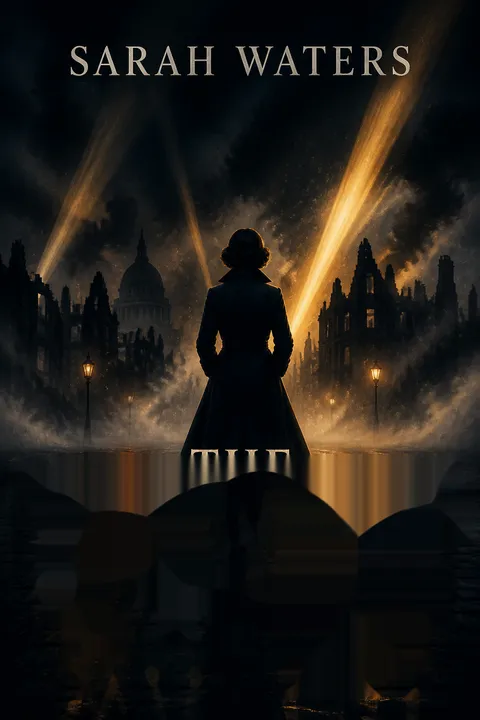
In 1947, London is a city of ruins and recovery, its people haunted by the war's aftermath. Kay Langrish, once an ambulance driver, now drifts through her days, isolated and adrift, her sense of purpose lost in peacetime. She watches the world from her attic window, a ghost among the living, her masculinity and gallantry now out of place. Around her, others try to rebuild: Viv, working at a marriage bureau, hides her own heartbreak; Helen, her colleague, is consumed by anxiety and jealousy in her relationship with Julia, a successful novelist. Duncan, Viv's brother, lives quietly with Mr Mundy, his "uncle," their home a relic of the past. The war is over, but its echoes shape every moment, every relationship, every secret.
Fragments of Ordinary Lives
The characters' lives intersect in mundane ways—at work, in rented rooms, on city streets—yet beneath the surface, each carries invisible scars. Kay's days are empty, her only company the parade of Mr Leonard's patients. Viv and Helen's work at the bureau is a parade of lonely hearts, their own desires and disappointments reflected in their clients. Duncan, gentle and sensitive, finds solace in small rituals and objects, his past a mystery to those around him. The city itself is a patchwork of bombed-out buildings and new beginnings, a place where the ordinary is always shadowed by loss and longing.
Secrets in the Shadows
Repression and secrecy are the currency of survival. Kay's sexuality, once a source of pride and usefulness, is now a cause for ridicule. Viv's affair with Reggie, a married man, is a source of both excitement and shame, leading her to desperate measures when she becomes pregnant. Helen's relationship with Julia is fraught with jealousy and fear, her need for reassurance clashing with Julia's independence. Duncan's imprisonment during the war is a secret that shapes his every interaction, the reason for it only gradually revealed. Each character is haunted by what they cannot say, by the truths they must hide from others—and from themselves.
Love in Wartime London
The war, for all its horrors, offered moments of liberation and intensity. Kay and Mickey, her friend and fellow ambulance driver, recall the camaraderie and purpose of their work, the way danger made every feeling sharper. Helen and Julia's love is both a refuge and a battleground, their intimacy threatened by Helen's insecurity and Julia's restlessness. Viv's love for Reggie is reckless and consuming, a rebellion against the constraints of her life. Even Duncan, in the bleakness of prison, finds moments of connection—with Fraser, his cellmate, and with Mr Mundy, whose kindness is both a comfort and a complication. Love is a lifeline, but also a source of pain.
The Weight of Shame
Shame is a constant presence, shaping choices and relationships. Viv's pregnancy is a crisis not just of circumstance but of identity; her decision to seek an illegal abortion is driven by fear of disgrace and the desire to protect her family. Helen's jealousy is a form of self-torment, her love for Julia twisted by the fear of abandonment. Kay's sense of failure is both personal and societal; she is no longer needed, her heroism now a liability. Duncan's shame is both public and private, the reason for his imprisonment a source of speculation and misunderstanding. The characters punish themselves as much as they are punished by others.
Unraveling Connections
Coincidence and connection are the threads that bind the characters. Kay and Viv share a past, their lives once briefly and intensely linked. Helen and Viv work together, their friendship complicated by secrets and unspoken desires. Duncan's relationship with Mr Mundy is both familial and ambiguous, shaped by the traumas of prison and the need for belonging. Fraser's reappearance in Duncan's life is a catalyst for change, forcing both men to confront their pasts. The city itself is a web of chance encounters and overlapping histories, each character's story touching and altering the others in ways they cannot always see.
The Cost of Survival
Survival in wartime and after demands hard choices. Viv's abortion is a harrowing ordeal, her body and spirit scarred by the experience. Kay's willingness to break rules, to risk her own safety for others, is both her strength and her undoing. Helen's compromises—her silence, her willingness to accept less than she wants—are a form of self-preservation. Duncan's survival in prison depends on his ability to adapt, to find small comforts and connections. The war has blurred the lines between right and wrong, courage and cowardice, love and selfishness. Each character must decide what they are willing to give up—and what they cannot live without.
Forbidden Longings
Desire is both a source of liberation and a cause for fear. Kay's masculinity, her love for women, is both a badge of honor and a mark of difference. Helen's longing for Julia is intense and consuming, but always shadowed by doubt. Viv's passion for Reggie is a rebellion against the expectations of her class and gender, but it leads her into danger. Duncan's feelings for Fraser are complex, a mix of friendship, admiration, and something deeper. The war allowed for moments of freedom, for the breaking of taboos—but in peacetime, the old constraints return, and desire must once again be hidden or denied.
The Breaking Point
Each character reaches a moment of crisis. Viv's abortion nearly kills her, the experience both physically and emotionally shattering. Helen's jealousy erupts, threatening her relationship with Julia. Kay, desperate to save Helen during a bombing, risks everything, only to find herself powerless. Duncan, confronted by Fraser about the truth of his past, must finally face what he has done—and what he has lost. These moments of confrontation are both destructive and transformative, forcing the characters to reckon with themselves and with each other.
The Night's Watch
The title's metaphor runs through the novel: the night watch is both literal—the ambulance drivers, the wardens, the prisoners—and symbolic, a state of waiting, of watching over the past and the future. Kay's sleeplessness, her sense of haunting, is shared by all the characters in different ways. They are all on watch, guarding their secrets, their memories, their hopes. The war has made them vigilant, but also weary; they long for rest, for peace, for the chance to stop watching and start living again.
Choices and Consequences
The novel's reverse chronology reveals the causes behind the effects, the choices that led to the present. Viv's decision to have an abortion, Duncan's actions during the war, Helen's pursuit of Julia, Kay's acts of bravery and recklessness—all are shown in their full complexity, their consequences rippling outward. The structure forces the reader to reconsider what they thought they knew, to see the characters' present pain in light of their past choices. There are no easy answers, no simple resolutions; every action has its price.
The Past Revealed
As the narrative moves backward, secrets are uncovered and mysteries explained. The reason for Duncan's imprisonment is finally revealed: his involvement in a suicide pact with his friend Alec, a desperate act of protest and despair. Viv's relationship with Kay, once a source of comfort, is shown in its full, painful context. Helen's love for Julia is traced to its beginnings, its intensity both beautiful and destructive. The past is not just prologue; it is the key to understanding the present, the source of both trauma and hope.
The Price of Courage
The novel interrogates traditional notions of courage. Kay's heroism is both celebrated and punished; in peacetime, her bravery is no longer needed, her difference no longer tolerated. Duncan's refusal to fight, Fraser's conscientious objection, are acts of moral courage, but also sources of shame and isolation. Viv's decision to end her pregnancy is both an act of desperation and of strength. Helen's willingness to risk everything for love is both brave and foolish. The war has changed what it means to be courageous, to be good, to be true to oneself.
The End of Illusions
By the novel's end (and its beginning), the characters are stripped of their illusions. Kay must accept her loneliness, her outsider status. Viv faces the reality of her choices, the loss of her dreams. Helen and Julia's love, for all its intensity, cannot escape the constraints of the world around them. Duncan, finally honest with himself and with Fraser, must find a way to live with what he has done. The war is over, but the struggle to find meaning, to build a life, goes on.
The Shape of the Future
Despite everything, the novel ends on a note of tentative hope. The characters are battered but not broken, their connections to each other fragile but real. The city is still standing, its people still moving forward. The past cannot be undone, but it can be understood; the future is uncertain, but not without promise. The night watch continues, but dawn is possible.
Analysis
Sarah Waters' The Night Watch is a masterful exploration of the ways war disrupts, reshapes, and ultimately reveals the hidden lives of ordinary people. By telling the story in reverse, Waters invites us to reconsider the nature of cause and effect, to see how trauma, love, and shame are not just the products of dramatic events but the accumulation of small choices, secrets, and accidents. The novel's focus on queer relationships, forbidden desires, and the costs of survival challenges traditional narratives of wartime heroism, offering instead a portrait of courage that is messy, ambiguous, and deeply human. Waters asks what it means to be brave—not just in the face of bombs, but in the struggle to be honest with oneself and others. The lessons of the book are both personal and political: that the past cannot be escaped, only understood; that love is both a refuge and a risk; and that the search for meaning, for connection, is what endures when the night is finally over. In a world marked by loss and uncertainty, The Night Watch offers a vision of hope rooted not in grand gestures, but in the quiet persistence of ordinary lives.
Review Summary
The Night Watch receives mostly positive reviews (3.71/5 stars) for its compelling backward narrative structure, moving from 1947 to 1941 London during WWII. Readers praise Waters' vivid historical detail, complex characters, and exploration of LGBTQ lives during wartime. The reverse chronology divides opinion—some find it brilliant, others confusing. Common criticisms include excessive length, slow pacing (especially the first 100 pages), underdeveloped male characters, and lack of resolution for 1947 storylines. Many appreciate Waters' portrayal of women's wartime freedoms and post-war constraints, though some find certain relationships frustrating, particularly Viv's affair with Reggie.
People Also Read

Characters
Kay Langrish
Kay is the novel's most striking figure: tall, androgynous, and once heroic, she is now adrift in postwar London. During the war, her masculinity and courage were assets; she found purpose and belonging as an ambulance driver, risking her life nightly. In peacetime, she is marginalized, her difference now a source of ridicule. Kay's relationships are marked by longing and loss—her love for Helen, her friendship with Mickey, her brief connection with Viv. She is both a protector and a ghost, unable to find a place in the new world. Her psychological depth lies in her sense of dislocation, her struggle to reconcile her past heroism with her present irrelevance, and her yearning for connection in a world that no longer needs her.
Viv Pearce
Viv is a young woman whose life is shaped by desire and secrecy. Her affair with Reggie, a married man, is both a source of joy and a cause for despair. When she becomes pregnant, her fear of disgrace and her desire to protect her family lead her to seek an illegal abortion—a traumatic, nearly fatal experience. Viv is devoted to her brother Duncan, protective of her father, and loyal to her friends, but she is also impulsive and self-destructive. Her psychological complexity lies in her struggle to balance her own needs with the expectations of others, her capacity for both love and self-punishment, and her longing for a life she cannot have.
Helen Giniver
Helen is a woman caught between desire and fear. Her relationship with Julia is intense and consuming, but also fraught with insecurity and jealousy. Helen's need for reassurance clashes with Julia's independence, leading to cycles of closeness and conflict. She is kind and thoughtful, but also prone to self-doubt and self-sabotage. Her friendship with Viv is a source of comfort, but also a reminder of her own secrets. Helen's psychological depth lies in her vulnerability, her capacity for both love and self-torment, and her struggle to find a sense of belonging in a world that does not fully accept her.
Julia Standing
Julia is a successful writer, admired for her beauty and intelligence, but emotionally distant and restless. Her relationship with Helen is passionate but unstable, her independence both attractive and threatening. Julia's past with Kay adds another layer of complexity, as does her ambiguous friendship with Ursula Waring. She is both a source of comfort and a cause of pain for those who love her. Julia's psychological complexity lies in her refusal to be defined by others, her need for freedom, and her struggle to balance intimacy with autonomy.
Duncan Pearce
Duncan is Viv's younger brother, a sensitive and introspective young man whose life is shaped by a secret: his imprisonment during the war for his involvement in a suicide pact with his friend Alec. Living with Mr Mundy, he finds comfort in small rituals and objects, but remains haunted by guilt and shame. Duncan's relationships—with Viv, with Fraser, with Mr Mundy—are marked by both affection and distance. His psychological depth lies in his vulnerability, his longing for acceptance, and his struggle to forgive himself for the past.
Reggie Nigri
Reggie is Viv's lover, a married man whose affection is genuine but whose loyalty is divided. He is charming, funny, and passionate, but also self-serving and evasive. His relationship with Viv is intense but ultimately unsustainable, leading to heartbreak and crisis. Reggie's psychological complexity lies in his ability to compartmentalize, his fear of responsibility, and his capacity for both tenderness and cowardice.
Mr Mundy
Mr Mundy is Duncan's "uncle," a former prison officer who provides shelter and care after Duncan's release. His relationship with Duncan is both paternal and ambiguous, marked by kindness but also by a certain possessiveness. Mr Mundy's own life is shaped by routine and memory, his sense of purpose tied to his role as caretaker. His psychological depth lies in his need for connection, his capacity for empathy, and his struggle to let go of the past.
Mickey Carmichael
Mickey is Kay's closest friend and fellow ambulance driver, a small, boyish woman whose humor and pragmatism are a source of strength. She is fiercely loyal, protective of Kay, and unafraid to speak her mind. Mickey's own desires are hinted at but never fully explored; her role is that of confidante and anchor. Her psychological complexity lies in her resilience, her capacity for friendship, and her ability to adapt to changing circumstances.
Robert Fraser
Fraser is Duncan's former cellmate, a conscientious objector whose reappearance in Duncan's life forces both men to confront their pasts. He is intelligent, articulate, and passionate about his beliefs, but also haunted by doubt and guilt. Fraser's relationship with Duncan is complex, marked by both affection and tension. His psychological depth lies in his struggle to reconcile his ideals with the realities of the world, his need for connection, and his capacity for both courage and fear.
Ursula Waring
Ursula is a BBC producer and friend of Julia's, a sophisticated, slightly enigmatic figure who moves easily between different social worlds. She is both an observer and an instigator, her presence unsettling to Helen and others. Ursula's psychological complexity lies in her self-assurance, her ability to navigate ambiguity, and her role as a catalyst in the lives of those around her.
Plot Devices
Reverse Chronology
The novel's most distinctive device is its reverse chronology: it begins in 1947, then moves back to 1944, and finally to 1941. This structure forces the reader to experience the characters' lives as a series of effects before causes, to see the aftermath before the events that shaped it. The result is a deepening sense of mystery and revelation, as secrets are gradually uncovered and relationships recontextualized. The reverse order also mirrors the characters' own struggles to make sense of the past, to understand how they became who they are.
Interconnected Lives
The novel is built on a web of connections—some obvious, some hidden—between its characters. Chance encounters, shared histories, and overlapping relationships create a sense of fate and inevitability. The use of coincidence is subtle, reinforcing the idea that in wartime London, everyone's life touches everyone else's, and that no one's story is entirely their own.
Secrets and Repression
Secrecy is both a plot device and a theme. Characters hide their desires, their pasts, their true selves from others and from themselves. The gradual revelation of these secrets—Viv's abortion, Duncan's imprisonment, Helen's affair with Julia—drives the narrative and deepens the emotional impact. The motif of repression is reinforced by the social context: wartime and postwar Britain, with its strict codes and taboos.
Symbolism of Night and Watchfulness
The title's metaphor runs throughout: the night is a time of danger, secrecy, and transformation, but also of waiting and watching. The "night watch" is literal (ambulance drivers, wardens, prisoners) and symbolic (the vigilance required to survive, the burden of memory, the longing for dawn). The motif of watchfulness underscores the characters' inability to rest, their constant state of alertness—emotional as well as physical.
Foreshadowing and Irony
Because the story moves backward, what would be foreshadowing in a traditional narrative becomes a kind of dramatic irony: the reader knows the outcome before the cause. This creates a sense of inevitability and tragedy, as characters move toward choices and events the reader already understands will shape their futures. The device also allows for moments of poignant recognition, as small details in the past take on new meaning in light of the present.
About the Author

Download PDF
Download EPUB
.epub digital book format is ideal for reading ebooks on phones, tablets, and e-readers.








































