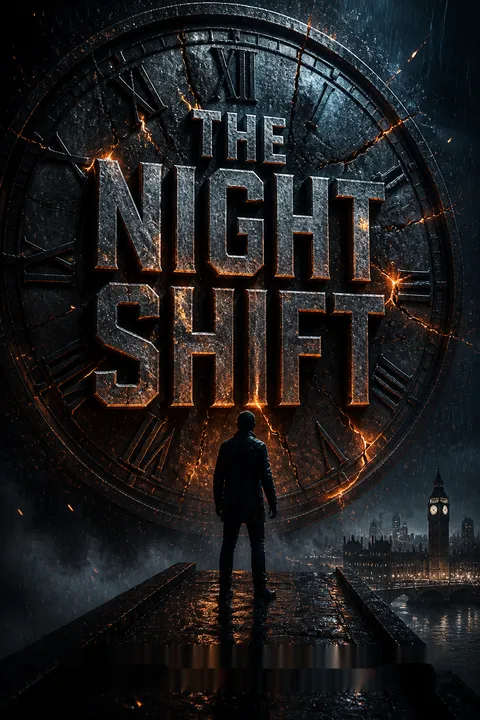

Plot Summary
Justice Denied, Vengeance Awakened
Chris Morton, a loathsome criminal, is acquitted of rape on a technicality, leaving his victim and her family shattered. The courtroom is thick with disgust, but Chris is unrepentant, his freedom a mockery of justice. Yet, his own criminal associates, led by the menacing Frank Jackson, are less forgiving—Chris's actions threaten their code and reputation. As Chris is escorted to a criminal safehouse, the underworld's own brand of justice looms. Meanwhile, a silent observer, Samuel Pope, watches the proceedings, his own sense of right and wrong deeply disturbed. The stage is set for a reckoning, as the system's failure plants the seed for a more personal, violent form of retribution.
The Soldier's Quiet Grief
Samuel Pope, once a decorated sniper, now lives in isolation, estranged from his wife and son after a traumatic military past and a personal tragedy. His days are marked by routine, his nights by insomnia and regret. He works in the police archives, surrounded by the city's unsolved horrors, finding solace in order and anonymity. Sam's only connection to his former life is the promise to his son to read more, a small act of hope amid the darkness. The emptiness of his flat mirrors his internal void, and the memory of his lost family is a wound that never heals. Yet, beneath the surface, a sense of duty and justice still simmers, waiting for a cause.
The Night Shift Begins
Outraged by Morton's acquittal, Sam follows him to a criminal hideout. That night, masked and armed, Sam infiltrates the building, bypassing security with military precision. He brutally beats Morton, delivering the punishment the courts denied. This act is not just vengeance—it's a declaration of war against the system's failures. Sam's actions are methodical, his violence controlled, but the emotional toll is evident. He spares the innocent, but for the guilty, he is merciless. As he disappears into the night, leaving behind a battered criminal and a shaken underworld, Sam's transformation from broken man to avenging force is complete. The "night shift" has begun.
Vigilante in the Shadows
The next day, the police are abuzz with rumors of Morton's attack. Sam, blending into the background, is summoned for questioning by DCI Pearce, a sharp, dogged investigator from Internal Affairs. Pearce suspects an inside job—someone with access, skills, and motive. The interview is a tense chess match, with Sam revealing nothing, but Pearce's instincts are piqued. Meanwhile, the city's criminal elite, led by Frank Jackson, sense a threat to their operations. The lines between law and crime blur, as both sides hunt for the vigilante. Sam's dual life grows more precarious, and the cost of his crusade begins to mount.
Corruption in Blue
As the investigation deepens, it becomes clear that corruption runs through the police force. DS Mayer, ambitious and ruthless, is entangled with Jackson's criminal empire, manipulating cases and officers for personal gain. Officers like Harding are compromised, their loyalties bought or coerced. The justice system is revealed as a rigged game, with the powerful shielding themselves and sacrificing the innocent. Sam, through his archive work, uncovers patterns of cover-ups and silenced victims. The sense of betrayal is profound—those sworn to protect are often the most dangerous. The city's rot is not just in its criminals, but in its guardians.
Marathon Massacre
The London Marathon, a symbol of unity and hope, becomes the scene of horror when a bomb detonates, killing civilians and a young police officer, Jake Howell. The attack is quickly blamed on terrorists, but the truth is murkier. Jake's death devastates his uncle, Inspector Howell, and shakes the police to its core. The city reels in fear and anger, demanding justice and retribution. Yet, beneath the surface, the bombing is a calculated move in a larger game—one orchestrated by those within the system for profit and power. The tragedy becomes a tool for manipulation, and the true culprits remain hidden.
Aftermath and Guilt
The bombing's aftermath is a blur of funerals, media frenzy, and internal investigations. Inspector Howell is consumed by guilt and loss, while DS Mayer seizes the opportunity to consolidate power. Sam, haunted by the senseless violence, feels the pull to act but is restrained by his promise to his son. Therapy sessions with Amy Devereux reveal his inner turmoil and the depth of his trauma. Meanwhile, Harding's suspicious "suicide" raises more questions—was it grief, or a silencing? The city's wounds fester, and the search for truth becomes more urgent, even as the forces of corruption close ranks.
Therapy, Triggers, and Promises
Sam's mandated therapy sessions with Amy Devereux become a battleground between his need for healing and his compulsion for justice. Amy, compassionate yet professional, tries to reach the man behind the scars, but Sam's pain is layered and deep. He struggles with the promises he made to his son—to read, to not kill—and the reality of a world that demands action. The therapy sessions are intercut with memories of war, loss, and fleeting moments of happiness. As the city's violence escalates, Sam's resolve is tested, and the line between healing and vengeance blurs.
The System's Rot
The investigation into the bombing and Harding's death reveals a web of deceit. Amy is pressured to falsify reports, and when she resists, she and her husband become targets. Sam's suspicions are confirmed—those in power will stop at nothing to protect themselves. The criminal underworld and corrupt police work in tandem, silencing witnesses and eliminating threats. The city's institutions are hollowed out, their facades maintained by fear and violence. Sam realizes that justice cannot be found within the system—it must be taken by force. The stakes are now life and death, and no one is safe.
Suicide or Silencing
Harding's apparent suicide is staged, a warning to others who might speak out. Amy narrowly escapes an assassination attempt, saved only by Sam's timely intervention. The attack is brutal, leaving her husband wounded and Amy traumatized. Sam, now fully committed, becomes both protector and avenger. The police, manipulated by Mayer and Jackson, intensify their hunt for Sam, painting him as a dangerous fugitive. The city becomes a battleground, with Sam hunted by both sides. The cost of truth is blood, and the body count rises.
The Web Tightens
Sam's closest allies—Amy, her husband, and his old friend Theo—are drawn into the conflict. Theo's home becomes a sanctuary, then a warzone, as Jackson's men launch a violent assault. Theo is gravely wounded, sacrificing himself to save Amy and her husband. The attack is a turning point, stripping Sam of his last connections and fueling his rage. Inspector Howell's betrayal is exposed—he sanctioned his own nephew's murder to protect his criminal ties. The depth of the conspiracy is laid bare, and Sam's mission becomes one of total destruction. The lines between justice and revenge vanish.
Hostage Night
Amy's abduction and the assault on her home are harrowing, pushing her to the brink. Sam's rescue is swift and lethal, showcasing his skills and resolve. The violence is intimate and personal, a microcosm of the larger war raging in the city. Amy's trauma is palpable, her gratitude mixed with fear of what Sam has become. The night is a crucible, forging unbreakable bonds and irrevocable scars. The city's darkness is now inside their very homes, and survival depends on trust and courage.
Escape and Betrayal
With the police and criminals closing in, Sam orchestrates a daring escape for Amy and her husband, entrusting them to Theo's care. He confronts Mayer, exposing his duplicity, but the system's inertia protects the guilty. Sam's own past is weaponized against him, and he becomes the city's most wanted man. Pearce, torn between duty and conscience, becomes an uneasy ally, helping Sam navigate the treacherous landscape. The boundaries between friend and foe blur, and every decision carries mortal risk.
The Gent's Empire
Frank "the Gent" Jackson, the city's criminal overlord, is revealed in full—his rise from poverty, his twisted code of manners, and his ruthless enforcement. His High-Rises are sanctuaries for the powerful and depraved, protected by violence and corruption. As Sam's war encroaches on his empire, Jackson's veneer of civility cracks, revealing the monster beneath. The criminal and the vigilante are on a collision course, their fates intertwined by blood and betrayal. The city's soul hangs in the balance.
Allies and Enemies
Theo's death is a devastating blow, a reminder of the price of standing up to evil. Sam's grief is raw, fueling his determination to see justice done. Pearce, now fully committed, risks his career and life to aid Sam. Amy, forever changed, becomes a symbol of the innocent caught in the crossfire. The city's underbelly is exposed, its protectors and predators indistinguishable. The final alliances are forged in desperation and hope, as the endgame approaches.
The Manhunt
Sam becomes the target of a massive manhunt, pursued by police, criminals, and corrupt officials. Every resource is mobilized to capture or kill him, but Sam's training and resolve keep him one step ahead. The chase is relentless, a test of endurance and will. Along the way, Sam uncovers the full extent of the conspiracy—murders staged as suicides, evidence destroyed, and lives ruined. The city itself becomes a labyrinth of danger, and Sam's only hope is to bring the truth to light before he is silenced forever.
Truths and Confessions
Sam confronts Inspector Howell, extracting a confession of his role in the conspiracy and the murder of his own nephew. The encounter is explosive, ending in violence and betrayal. The true nature of the city's rot is revealed—not just in its criminals, but in its leaders. Sam's own past, including the loss of his son and the collapse of his marriage, is laid bare. The personal and the political collide, and the cost of justice becomes unbearably high. The only way forward is through fire.
The Cost of War
The narrative returns to Sam's military past, his friendship with Theo, and the trauma that shaped him. The parallels between war abroad and war at home are stark—violence begets violence, and the innocent suffer most. Theo's funeral is a moment of reckoning, as Sam mourns not just his friend, but the life he lost and the man he became. The city's wounds are mirrored in Sam's own, and the possibility of healing seems remote. Yet, in grief, there is also resolve—a determination to end the cycle, whatever the cost.
The Final Stand
Armed and prepared for war, Sam storms Jackson's High-Rise, cutting down guards and henchmen with ruthless efficiency. The building becomes a battleground, its opulence stained with blood. Sam confronts Mark, Jackson's enforcer, in a brutal fight to the death, avenging Theo's murder. The final confrontation with Jackson and Howell is swift and merciless—Sam dispenses the justice the system could not. Pearce arrives, bearing witness to the carnage and offering Sam a chance at escape. The empire of corruption falls, but at a terrible price.
Redemption and Farewell
In the aftermath, Pearce helps clean up the mess, exposing the corruption and honoring the fallen. Amy and her husband find safety, and the city begins to heal, though scars remain. Sam attends Theo's funeral from afar, reconnects briefly with his ex-wife, and finally lets go of his son's last message—a symbolic act of acceptance and release. Mayer, the architect of much of the evil, is hunted down and executed by Sam, tying up the last loose end. Sam disappears into the shadows, a man changed by violence but driven by a relentless need to do what is right. The city is safer, but the war is never truly over.
Analysis
In The Night Shift, Robert Enright crafts a relentless, emotionally charged thriller that interrogates the boundaries between justice and vengeance, law and lawlessness, healing and harm. At its core, the novel is a meditation on trauma—personal, institutional, and societal. Through the journey of Samuel Pope, a man broken by war and personal tragedy, the story explores how systems designed to protect can become complicit in harm, and how individuals are forced to navigate the ruins of trust. The narrative's unflinching portrayal of violence is both cathartic and cautionary, asking whether true justice is ever possible in a world so thoroughly compromised. The book's structure—alternating between action, investigation, and introspection—mirrors the psychological fragmentation of its protagonist, while the city of London becomes both battleground and character, its rain-soaked streets reflecting the story's moral ambiguity. Ultimately, The Night Shift is a call to action: a reminder that the fight for justice is never over, that healing requires both courage and sacrifice, and that even in the darkest hours, the choice to do what is right—however costly—remains the most powerful act of all.
Review Summary
The Night Shift by Robert Enright receives polarizing reviews with a 4.28 overall rating. Critics frequently cite poor writing quality, excessive clichés, awkward metaphors, and factual errors regarding British military and police procedures. Many reviewers abandoned the book early due to sophomoric prose and lack of editing. However, positive reviews praise the fast-paced plot, engaging protagonist Sam Pope—a former sniper turned vigilante—and compare the series favorably to Jack Reacher novels. Supporters appreciate the action-packed narrative despite acknowledging predictability and occasional flaws in execution.
Characters
Samuel Pope
Sam Pope is the emotional and moral core of the story—a former elite sniper whose life was shattered by war and the tragic death of his young son. His marriage collapses under the weight of grief and guilt, leaving him isolated and adrift. Sam's sense of justice is absolute, but his faith in the system is destroyed by personal loss and institutional corruption. He channels his pain into a crusade against the city's worst criminals, operating in the shadows as a vigilante. Sam is methodical, disciplined, and lethal, but also deeply wounded, struggling with PTSD and the promises he made to his son. His journey is one of reluctant heroism, as he seeks redemption through violence, ultimately risking everything to protect the innocent and expose the truth.
Amy Devereux
Amy is Sam's mandated therapist, tasked with helping him process his trauma and reintegrate into society. Compassionate and insightful, she becomes a confidante and, eventually, a target of the conspiracy. Amy's own ordeal—being held hostage and nearly killed—tests her resilience and forces her to confront the limits of her professional detachment. Her relationship with Sam is complex, blending empathy, fear, and gratitude. Amy represents the possibility of healing and the cost of bearing witness to violence. Her survival and eventual escape from the city's darkness are a testament to her strength and the impact of Sam's protection.
Adrian Pearce
DCI Pearce is a veteran of Internal Affairs, known for his integrity and tenacity. Initially suspicious of Sam, he becomes an unlikely partner as the depth of the city's corruption is revealed. Pearce is methodical, skeptical, and unafraid to challenge authority, but he is also weary from years of fighting a losing battle against institutional rot. His alliance with Sam is born of necessity and mutual respect, and he ultimately risks his career to help bring down Jackson and Howell. Pearce's journey is one of disillusionment and renewed purpose, as he chooses to do what is right, even when the system resists.
Frank "the Gent" Jackson
Frank Jackson is the city's criminal overlord, a man who rose from poverty to power through a combination of charm, violence, and a twisted sense of manners. He rules his empire with an iron fist, demanding loyalty and punishing betrayal with brutality. Jackson's High-Rises are sanctuaries for the elite's darkest desires, protected by corrupt officials and enforcers. His veneer of civility masks a monstrous core, and his downfall is as much a result of his hubris as Sam's vengeance. Jackson embodies the seductive, corrosive nature of power and the illusion of order in chaos.
DS Colin Mayer
Mayer is the head of the Counterterrorism Squad and a key player in the conspiracy. Driven by ambition and greed, he orchestrates murders, cover-ups, and terror attacks to serve his interests and those of his criminal patrons. Mayer is cunning but ultimately weak, relying on others to do his dirty work. His downfall is brutal and fitting, as he is betrayed and executed by those he once served. Mayer represents the moral decay at the heart of the city's institutions and the dangers of unchecked ambition.
Inspector Michael Howell
Inspector Howell is initially portrayed as a pillar of the police force, mourning the loss of his nephew Jake in the marathon bombing. However, his grief masks a deeper corruption—he is complicit in the conspiracy, sanctioning murders to protect his own interests. Howell's betrayal is devastating, both personally and symbolically, as he embodies the collapse of trust in authority. His eventual exposure and downfall are a cautionary tale about the corrosive effects of power and the cost of compromise.
Theo Walker
Theo is Sam's closest friend from their military days, a medic who dedicates his postwar life to helping at-risk youth. Theo's home becomes a refuge for Sam and his allies, and his ultimate sacrifice—defending Amy and her husband from an armed assault—underscores the story's themes of loyalty and the cost of doing what is right. Theo's death is a turning point for Sam, fueling his final rampage and deepening his sense of loss. Theo represents the best of humanity, a counterpoint to the story's pervasive darkness.
Mark Connor ("Grant Mitchell")
Mark is Jackson's chief enforcer, feared for his violence and unwavering loyalty. He is a formidable opponent, both physically and psychologically, and his personal vendetta against Sam culminates in a brutal, climactic fight. Mark's code is simple—loyalty to Jackson and the rules of the underworld—but his capacity for friendship and grief adds depth to his character. His death is both a victory and a tragedy, marking the end of an era in the city's criminal hierarchy.
Chris Morton
Morton's acquittal for rape is the spark that ignites Sam's crusade. He is a symbol of the system's failure, a man who exploits legal loopholes and shows no remorse for his crimes. Morton's brutal punishment at Sam's hands is both cathartic and disturbing, setting the tone for the story's exploration of justice and retribution. His fate is a warning to others, but also a reminder of the limits of violence as a solution.
Amy's Husband, Andy Devereux
Andy is drawn into the conflict through his marriage to Amy, suffering a gunshot wound and enduring trauma as a result. His vulnerability and survival highlight the indiscriminate nature of violence and the ripple effects of corruption. Andy's recovery and escape with Amy offer a glimmer of hope amid the chaos, underscoring the importance of protecting the innocent.
Plot Devices
Duality of Justice and Vengeance
The central plot device is the tension between institutional justice and personal vengeance. The story repeatedly asks: What happens when the system fails? Sam's transformation from grieving father to vigilante is both a response to personal loss and a commentary on the inadequacy of legal remedies. The narrative structure alternates between procedural investigation and action-driven retribution, blurring the lines between hero and antihero. Foreshadowing is used extensively—early failures of justice hint at the escalation to violence, and therapy sessions reveal the psychological toll of Sam's choices. The motif of "the night shift" encapsulates the idea of unseen, necessary work done in the shadows, outside the bounds of law.
Corruption and Conspiracy
The plot is driven by a web of corruption that links police, politicians, and criminals. The use of cover-ups, staged suicides, and manipulated investigations creates a sense of paranoia and mistrust. Characters are often forced to choose between loyalty and conscience, with betrayals serving as key turning points. The narrative structure employs multiple perspectives—Sam, Pearce, Amy, and others—allowing the reader to piece together the conspiracy alongside the protagonists. The gradual revelation of the true villains, especially Howell's betrayal, is achieved through careful layering of clues and confrontations.
Trauma and Memory
Sam's psychological state is explored through flashbacks to his military service, therapy sessions, and memories of his son. These devices humanize the violence, showing its roots in trauma and loss. The motif of promises—to not kill, to read more—serves as a measure of Sam's internal struggle. The use of voicemail messages and personal artifacts (books, medals) grounds the narrative in emotional reality, contrasting the external action with internal pain.
Action-Thriller Structure
The story is structured as a high-stakes thriller, with each chapter building towards a major confrontation—Morton's beating, the marathon bombing, the assault on Theo's house, the final siege of the High-Rise. Cliffhangers and reversals keep the tension high, while moments of quiet (therapy, funerals, memories) provide emotional depth. The use of military tactics, weaponry, and hand-to-hand combat is detailed and realistic, reflecting Sam's background and the story's grounding in gritty realism.
Symbolism and Motifs
The recurring imagery of rain and darkness symbolizes both cleansing and corruption, while the city itself is portrayed as a living, breathing entity—beautiful and brutal, hopeful and hopeless. The High-Rise serves as a microcosm of the city's rot, a place where power and depravity intersect. The motif of "manners" (from Jackson's code) is used ironically, highlighting the gap between appearance and reality.
Download PDF
Download EPUB
.epub digital book format is ideal for reading ebooks on phones, tablets, and e-readers.








































