
Plot Summary
Snowfall and Shadows
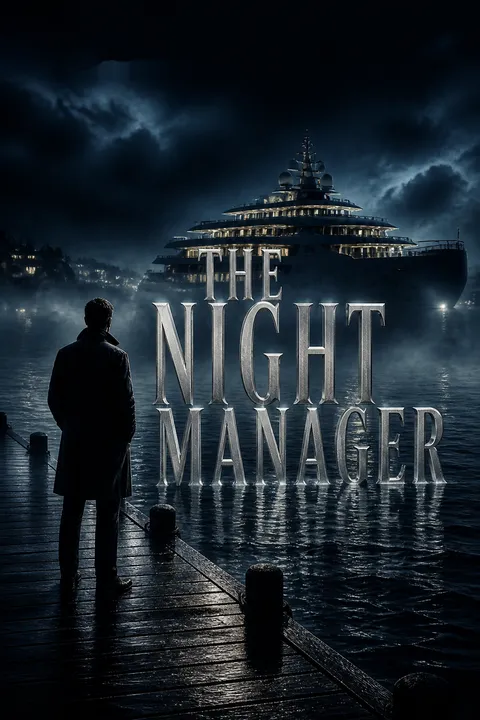
Jonathan Pine, night manager at the Meister Palace in Zurich, stands watch as a blizzard rages outside. The world is on edge with the Gulf War's outbreak, but Pine's anxiety is personal: the infamous arms dealer Richard Roper is due to arrive. Pine's past as a soldier and his haunted conscience surface as he prepares to greet a man whose name is synonymous with corruption and violence. The hotel's opulence contrasts with Pine's inner turmoil, and the arrival of Roper's entourage—glamorous, dangerous, and utterly self-assured—signals the beginning of a new, perilous chapter in Pine's life. The snow outside mirrors the coldness and secrecy that will soon envelop him.
Cairo's Deadly Secrets
Pine's mind drifts back to Cairo, where he once managed the Queen Nefertiti Hotel. There, he met Sophie, the enigmatic mistress of a wealthy Egyptian, who entrusted him with documents implicating Roper in illegal arms deals. Pine's decision to pass these documents to British intelligence sets off a chain of betrayal and violence. Sophie's vulnerability and Pine's sense of duty collide, leaving him tormented by guilt and longing. The city's heat and chaos contrast with the cold calculation of the arms trade, and Pine's actions, though well-intentioned, have fatal consequences for Sophie. This chapter establishes the moral ambiguity and personal stakes that will drive Pine's journey.
Betrayal in the Night
Sophie is brutally murdered, her death a direct result of Pine's attempt to do the right thing. The Egyptian authorities cover up the crime, and Pine is left to grapple with the consequences of his actions. His sense of responsibility is overwhelming, and he is haunted by memories of Sophie's trust and the violence that claimed her. The betrayal is not just of Sophie, but of Pine's own ideals and the system he serves. This trauma becomes the crucible in which Pine's future choices are forged, and his determination to bring Roper to justice is solidified, even as he recognizes the personal cost.
The Worst Man Arrives
Roper's arrival at the Meister Palace is both theatrical and chilling. He commands attention, exuding charm and menace in equal measure. Among his entourage is Jed, a beautiful and troubled young woman who immediately captivates Pine. The interplay between Roper, Jed, and Pine is charged with tension—sexual, moral, and existential. Roper's world is one of privilege and impunity, where rules are bent and lives are expendable. Pine is drawn in, both repelled and fascinated, sensing that his own fate is now entwined with these dangerous figures. The stage is set for a high-stakes game of deception and desire.
Sophie's Fate Sealed
The fallout from Sophie's death reverberates through Pine's life. He is consumed by grief and anger, but also by a sense of unfinished business. British intelligence, personified by the dogged Leonard Burr, recognizes Pine's potential as an asset against Roper. The machinery of espionage grinds into motion, with Pine at its center. His military background, linguistic skills, and personal vendetta make him the perfect candidate for infiltration. Yet, the emotional scars of betrayal and loss remain raw, fueling his determination but also threatening to undo him. The personal and the political are now inseparable.
The Watchers and the War
Leonard Burr, a principled and relentless intelligence officer, becomes obsessed with bringing down Roper. He assembles a small, underfunded team and navigates the treacherous waters of Whitehall politics, where rival agencies and vested interests conspire to protect the status quo. Burr's crusade is both professional and personal, a battle for the soul of British intelligence as much as for justice. The narrative shifts between the corridors of power and the shadowy world of arms dealers, highlighting the moral compromises and institutional rot that enable men like Roper to thrive. Burr's faith in Pine becomes a beacon amid the darkness.
Burr's Crusade Begins
Burr recruits Pine, offering him a chance at redemption and revenge. The process is grueling: Pine must shed his old identity and assume a new one, complete with a fabricated criminal past. He is trained in tradecraft, surveillance, and the art of deception. The psychological toll is immense, as Pine is forced to confront his own demons and the possibility of failure. Burr's mentorship is both supportive and demanding, pushing Pine to the limits of endurance. The transformation is not just external; Pine's sense of self is fundamentally altered, and the line between role and reality begins to blur, embodying the duality of identity.
The Making of a Spy
To establish his cover, Pine is sent to a remote Cornish village under the alias Jack Linden. He befriends locals, forms a relationship with a vulnerable young woman, and becomes embroiled in a staged crime that cements his reputation as a man on the run. The isolation and constant performance take their toll, but Pine's resolve never wavers. The village becomes a microcosm of the larger world, with secrets, loyalties, and betrayals playing out on a smaller scale. The success of this operation paves the way for Pine's entry into Roper's inner circle, but at the cost of further emotional detachment, deepening the duality of identity.
A New Identity Forged
Pine flees to Canada, adopting yet another identity and finding work in a remote hotel. Here, he meets Yvonne, a woman whose intelligence and warmth offer a brief respite from his double life. Their affair is passionate but doomed, as Pine's past and the demands of his mission catch up with him. The constant threat of exposure and the need to maintain his cover strain every relationship. Pine's ability to adapt and survive is tested to the limit, and the shadow of Roper looms ever larger. The personal and professional stakes are now inextricably linked.
Into Roper's World
Pine successfully infiltrates Roper's organization, posing as a trusted lieutenant with a criminal past. He navigates a world of luxury, danger, and moral ambiguity, earning Roper's trust through a combination of competence and calculated risk-taking. Jed, increasingly isolated and disillusioned, becomes both an ally and a liability. The relationship between Pine and Jed deepens, fueled by mutual attraction and shared trauma. Roper's suspicions are ever-present, and the threat of exposure is constant. The tension between loyalty and betrayal, love and duty, reaches a fever pitch as Pine moves closer to his ultimate goal.
The Seduction of Jed
Pine and Jed's relationship becomes the emotional core of the narrative. Their love is fraught with danger, secrecy, and the knowledge that discovery would mean death for both. Jed's gradual awakening to the reality of Roper's crimes mirrors Pine's own journey from innocence to experience. Their moments together are stolen and bittersweet, offering solace but also amplifying the risks. The interplay of trust and deception, vulnerability and strength, defines their bond. As the net tightens around Roper, Pine and Jed must decide how much they are willing to sacrifice for each other and for the greater good, exemplifying love as redemption and risk.
The Web Tightens
Roper orchestrates a massive arms-for-drugs deal with South American cartels, using Pine as the front man. The operation is a masterpiece of criminal ingenuity, exploiting legal loopholes and institutional blind spots. Burr and his team race to gather evidence and secure international cooperation, but bureaucratic inertia and internal sabotage threaten to derail the mission. Allies become enemies, and the true extent of corruption within the intelligence community is revealed. Pine's position becomes increasingly precarious, as Roper's paranoia grows and Jed's safety is imperiled. The sense of impending catastrophe is palpable.
The Deal of the Century
The climactic exchange takes place in Panama and Curaçao, with Pine orchestrating the transfer of weapons and drugs under Roper's watchful eye. The scale of the operation is staggering, involving millions of dollars, multiple jurisdictions, and a cast of international criminals. Pine's every move is scrutinized, and the margin for error is nonexistent. The tension between personal loyalty and professional duty reaches its zenith, as Pine must choose between saving Jed and completing his mission. The operation's success or failure will determine the fate of everyone involved, and the cost of victory is measured in blood and broken lives.
Love and Lies
Jed's growing awareness of Roper's true nature and Pine's real mission leads to a crisis of conscience and identity. Her attempts to help Pine are thwarted by Roper's increasing brutality and Corkoran's vindictiveness. Pine is captured, tortured, and left for dead, his silence a final act of defiance. Jed's love becomes both his salvation and his undoing, as their connection is used against them. The boundaries between truth and deception, love and betrayal, are obliterated in the crucible of violence and fear. The emotional and physical toll is devastating, but the possibility of redemption remains, highlighting love as redemption and risk.
The Fall of the Protectors
As the operation unravels, the true extent of corruption within British and American intelligence is laid bare. Burr's allies are betrayed, and the forces of darkness—personified by Geoffrey Darker and his cabal—move to protect their own interests. Whistleblowers are silenced, evidence is buried, and the machinery of justice grinds to a halt. The idealism that motivated Burr and Pine is crushed by the weight of institutional self-preservation. Yet, in the midst of defeat, acts of courage and solidarity persist, offering a glimmer of hope that the truth will eventually prevail.
The Price of Loyalty
The aftermath of the failed operation is marked by loss and disillusionment. Pine and Jed, battered but alive, retreat to obscurity, their love a fragile refuge from the world's brutality. Burr, sidelined and discredited, reflects on the cost of loyalty and the futility of fighting a system designed to protect itself. The personal sacrifices made by all are acknowledged, but the larger battle remains unresolved. The narrative closes on a note of ambiguity, with justice only partially served and the forces of darkness still at large. Yet, the resilience of the human spirit endures.
The Endgame Unfolds
In the final reckoning, Pine and Jed seize a narrow window of opportunity to escape Roper's grasp. Their flight is desperate and fraught with danger, but their determination and resourcefulness see them through. Roper, exposed but unpunished, retreats into the shadows, his empire shaken but not destroyed. Burr, though defeated, finds solace in small victories and the knowledge that he fought for what was right. The story ends with Pine and Jed beginning a new life together, scarred but unbroken, their love a testament to the possibility of redemption in a world where justice is often elusive.
Analysis
John le Carré's The Night Manager is a masterful exploration of the intersection between personal morality and institutional corruption, set against the backdrop of the post-Cold War arms trade. Through the character of Jonathan Pine, the novel interrogates the possibility of doing good in a world where the lines between right and wrong are blurred by self-interest, bureaucracy, and the seductive power of evil. The story's emotional arc is one of loss, betrayal, and the search for redemption, with love serving as both a source of vulnerability and a means of salvation. Le Carré's critique of the intelligence community is both scathing and nuanced, exposing the ways in which noble intentions are subverted by systemic rot and the pursuit of power. The novel's enduring relevance lies in its refusal to offer easy answers, instead inviting readers to grapple with the complexities of loyalty, justice, and the cost of doing what is right in a world that rewards compromise and punishes integrity. Ultimately, The Night Manager is a testament to the resilience of the human spirit, the possibility of change, and the enduring struggle to find meaning and connection in a world defined by shadows.
Review Summary
Reviews of The Night Manager are mixed, averaging 3.85/5. Many praise le Carré's sophisticated prose, complex characters, and intricate plot involving arms dealing, corruption, and espionage. Jonathan Pine and villain Dicky Roper are widely appreciated, though women characters are criticized as underdeveloped and overly sexualized. Common complaints include a slow start, an unsatisfying ending, and excessive complexity. Notably, multiple reviewers felt the BBC television adaptation surpassed the novel, citing a more compelling ending and stronger tension.
People Also Read



Characters
Jonathan Pine
Jonathan Pine is the novel's protagonist, a former British soldier turned hotel night manager, whose life is defined by loss, guilt, and a restless search for meaning. Orphaned young and shaped by the discipline of military life, Pine is both emotionally guarded and fiercely principled. His involvement with Sophie and the subsequent betrayal that leads to her death become the crucible for his transformation into a spy. Pine's psychological complexity is marked by a deep sense of responsibility, a capacity for love that is both his strength and his vulnerability, and a relentless drive to atone for past mistakes. His journey is one of self-discovery, as he navigates the treacherous worlds of espionage and organized crime, ultimately finding a measure of peace in love and sacrifice.
Richard Onslow Roper
Roper is the novel's antagonist, a suave and ruthless arms dealer whose charm masks a profound amorality. Born into privilege and accustomed to getting his way, Roper is both seductive and terrifying, capable of great generosity and unspeakable cruelty. His relationships are transactional, and his loyalty extends only as far as his interests are served. Roper's psychological profile is that of a narcissist, driven by a need for control and a belief in his own invincibility. He is both a product and a beneficiary of institutional rot, thriving in the gray areas where law and morality break down. His dynamic with Pine is one of mutual fascination and enmity, a high-stakes game in which only one can prevail.
Jed (Jemima Marshall)
Jed is Roper's mistress and Pine's lover, a woman caught between worlds and identities. Her beauty and vulnerability make her both a prize and a pawn in the games of powerful men. Raised in privilege but marked by trauma and loss, Jed seeks meaning and agency in a world that constantly seeks to define her. Her relationship with Pine is transformative, awakening her to the realities of Roper's crimes and her own complicity. Jed's psychological journey is one of awakening and self-assertion, as she moves from passivity to action, ultimately risking everything for love and truth. Her fate is intertwined with Pine's, and together they embody the possibility of redemption amid corruption.
Leonard Burr
Burr is the intelligence officer who recruits and guides Pine, driven by a fierce sense of justice and a deep-seated loathing for men like Roper. His Yorkshire roots and outsider status make him both a maverick and a target within the bureaucratic labyrinth of British intelligence. Burr's psychological makeup is defined by stubbornness, empathy, and a willingness to fight against overwhelming odds. He serves as both mentor and surrogate father to Pine, pushing him to confront his demons and fulfill his potential. Burr's own journey is one of disillusionment and resilience, as he battles institutional inertia and betrayal, ultimately finding solace in the knowledge that he fought for what was right.
Sophie
Sophie is the catalyst for Pine's transformation, a woman whose trust and vulnerability are exploited by forces beyond her control. Her relationship with Pine is marked by tenderness and mutual need, but also by the fatal consequences of betrayal. Sophie's murder becomes the defining trauma of Pine's life, haunting him and shaping his every decision. She represents the human cost of the arms trade and the moral compromises of espionage. In death, she becomes Pine's conscience and guide, a presence that both torments and sustains him as he navigates the dangers of his mission.
Major Corkoran (Corky)
Corkoran is Roper's right-hand man, a former soldier whose talents for deception and violence are put to use in the service of crime. His relationship with Roper is one of dependency and resentment, marked by a desperate need for approval and a willingness to do whatever is required. Corkoran's psychological profile is that of a survivor, shaped by disappointment and a sense of exclusion. He is both comic and tragic, a man who recognizes his own corruption but is powerless to escape it. His interactions with Pine and Jed are fraught with jealousy and suspicion, and his ultimate fate is a testament to the costs of loyalty to the wrong cause.
Sandy Langbourne
Langbourne is Roper's legal adviser and a member of the British aristocracy, whose charm and intelligence mask a deep sense of inadequacy. He is both participant and observer in Roper's schemes, torn between loyalty and self-preservation. Langbourne's psychological complexity lies in his need to matter, to be more than a bystander in the dramas of power and crime. His relationship with Roper is ambivalent, marked by admiration, envy, and fear. Langbourne's actions are often self-serving, but he is not without conscience, and his ultimate choices reflect the ambiguities of complicity.
Frisky and Tabby
Frisky and Tabby are Roper's bodyguards and enforcers, men whose loyalty is bought and maintained through fear and reward. They are the instruments of Roper's will, carrying out acts of violence and intimidation with professional detachment. Their psychological makeup is defined by a lack of empathy and a willingness to follow orders without question. They serve as reminders of the ever-present threat of violence in Roper's world, and their interactions with Pine are marked by a mixture of respect and hostility. Their ultimate downfall is a consequence of their inability to adapt when the balance of power shifts.
Leonard Goodhew
Goodhew is a senior civil servant committed to reforming the intelligence services and rooting out corruption. His idealism and integrity make him both a force for good and a target for those invested in the status quo. Goodhew's psychological journey is one of hope and disillusionment, as he confronts the limits of his power and the resilience of institutional rot. His relationship with Burr is one of mutual respect and shared purpose, but his ultimate fate is a cautionary tale about the dangers of challenging entrenched interests.
Harry Palfrey
Palfrey is a lawyer and intelligence officer whose career is marked by compromise and betrayal. His willingness to play all sides makes him both valuable and expendable, and his actions have devastating consequences for those around him. Palfrey's psychological profile is that of a man undone by his own duplicity, unable to reconcile his need for approval with the demands of conscience. His tragic end is a reflection of the costs of institutional failure and the personal toll of a life spent in the shadows.
Plot Devices
Duality of Identity
The novel's central plot device is the duality of identity, embodied in Pine's transformation from soldier to hotelier to criminal to spy. This constant reinvention is both a survival mechanism and a source of psychological strain. The tension between appearance and reality, role and self, is mirrored in the broader world of espionage, where truth is always provisional and trust is a luxury. The device is used to explore themes of loyalty, betrayal, and the search for authenticity in a world built on deception.
Moral Ambiguity
Le Carré employs moral ambiguity as a driving force, refusing to offer easy answers or clear distinctions between heroes and villains. Pine's actions, though motivated by conscience, have unintended and often tragic consequences. Roper, for all his villainy, is charismatic and at times sympathetic. The institutions meant to uphold justice are themselves compromised, and the pursuit of the greater good often demands personal sacrifice. This ambiguity is heightened by the use of unreliable narrators, shifting perspectives, and the constant threat of betrayal.
Institutional Corruption
The novel's narrative structure is shaped by the pervasive corruption of the institutions tasked with protecting society. Burr's crusade is hampered at every turn by rival agencies, political interference, and the self-serving actions of those in power. The plot is driven by the tension between individual integrity and systemic rot, with the forces of darkness often indistinguishable from those of light. Foreshadowing is used to hint at the inevitability of betrayal, and the ultimate resolution is marked by ambiguity and compromise.
Love as Redemption and Risk
The relationship between Pine and Jed serves as both a source of hope and a vector of danger. Their love is forbidden, fraught with risk, and ultimately redemptive. It humanizes both characters, offering a counterpoint to the cynicism and brutality of their world. At the same time, it exposes them to greater peril, as their connection becomes a weapon in the hands of their enemies. The interplay of love and betrayal is a recurring motif, underscoring the novel's exploration of trust, sacrifice, and the possibility of redemption.
The Machinery of Espionage
Le Carré meticulously details the mechanics of espionage—the creation of legends, the use of surveillance, the manipulation of information. These devices serve to create an atmosphere of paranoia and uncertainty, where no one is ever truly safe and every action is fraught with consequence. The illusion of control is constantly undermined by chance, error, and the unpredictability of human behavior. The narrative structure is nonlinear, with frequent flashbacks and shifts in perspective, reflecting the fragmented and uncertain nature of the world it depicts.
About the Author


Download PDF
Download EPUB
.epub digital book format is ideal for reading ebooks on phones, tablets, and e-readers.








































