
Key Takeaways
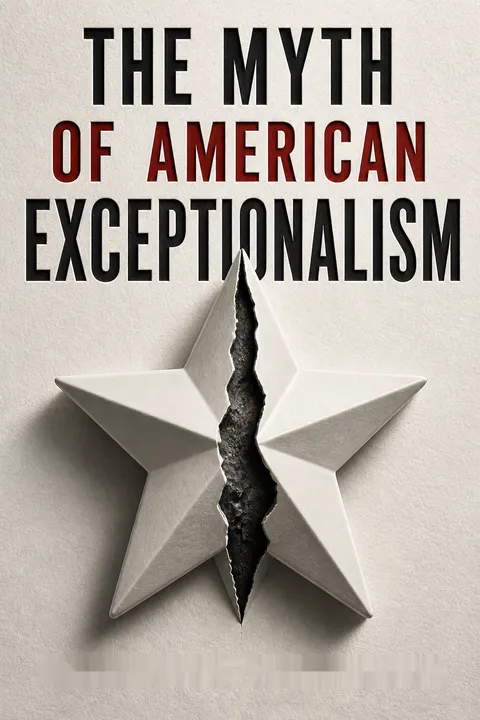
1. American Exceptionalism is a Myth Built on Misinterpretations
That is, however, a serious misunderstanding of who Winthrop was, of what he was saying, and of what he probably had in mind.
Foundational myths questioned. The cherished narratives of American exceptionalism, often rooted in historical texts like John Winthrop's "City upon a Hill" sermon or Crèvecoeur's "new man" concept, are frequently based on misinterpretations or anachronisms. Winthrop, an Englishman, was addressing fellow Englishmen about a colonial endeavor, not prophesying the future of a non-existent United States, and Crèvecoeur, a French nobleman, ultimately returned to aristocratic life in Europe, not the Jeffersonian simplicity he praised. These figures, often cited as "Ur-texts" of American identity, were products of European thought and circumstances, not uniquely American visions.
Contextualizing early claims. Similarly, John Quincy Adams's portrayal of the Mayflower Compact as a unique "social compact" is anachronistic; it was a practical agreement among storm-tossed English subjects facing mutiny and legal ambiguity, not a blueprint for a future constitution. Even Perry Miller's influential "Errand into the Wilderness" thesis, while acknowledging Puritan motivations, overstates the "uniqueness of the American experience" by projecting Cold War ideological needs onto 17th-century settlers. Such interpretations serve to equip the U.S. with an official ideology, rather than accurately reflecting historical realities.
Dangers of self-congratulatory history. This selective and distorted historical narrative, often taught in schools, fosters a self-congratulatory myth that exaggerates American virtue and uniqueness. It minimizes the contributions of other nations and cultures to democratic ideals and the rule of law, creating a sense of national superiority that can be both misleading and dangerous. This approach to history, while morale-building, prevents a nuanced understanding of America's place in a broader global context.
2. U.S. History is Intertwined with Global Processes, Not Isolated
American history, and therefore American society, has always been part of a larger reality, first European, then oceanic, and now global.
Global forces shaped America. From its earliest settlements, America's development was inextricably linked to vast international historical processes. The European expansion, the African slave trade, the Reformation, the Enlightenment, and global competitions between European powers like Britain and France all profoundly shaped the American experience. To view American history in isolation is to ignore the deep currents of global change that influenced its birth and growth.
European origins of American ideals. The political ideas of the American Revolution, championed by figures like Franklin, Paine, Madison, and Jefferson, were not original American concepts but were deeply rooted in European thought. They drew from the English Revolution, the Whig tradition, the English, Scots, and French Enlightenments, and the principles of English Common Law. The military success of the colonists, aided by French allies, allowed these progressive European ideas to be implemented in the new republic, demonstrating a continuity rather than a radical break from European intellectual heritage.
Westward expansion and European politics. Even America's westward expansion, often seen as a uniquely American "manifest destiny," was significantly enabled by European politics. The Louisiana Purchase, the acquisition of Florida, and the Mexican War were all direct consequences of European conflicts and power shifts, such as Napoleon's wars and the collapse of Spanish authority. This expansion, while driven by American settlers, was a product of international contingencies, not solely an isolated American impulse.
3. Early American Exceptionalism Was Comparative, Not Absolute
The American Revolution did indeed create a state that was in significant ways very different from any that the world had seen before up to that time.
A unique republican experiment. The period immediately following the American Revolution, particularly the half-century after the Constitution's ratification, represented America's most genuinely exceptional era. The U.S. established the world's first large republic based on the explicit consent of the governed, a novel political ideology of republicanism that proclaimed universal human equality and rights. This was a significant departure from the monarchical and aristocratic systems prevalent in Europe, offering a new model for political organization.
Broader participation and opportunity. During this time, political participation, land ownership, and educational opportunities were indeed more widespread in America than in most contemporary European societies, at least for white males. The availability of vast, relatively cheap land, coupled with policies like the Homestead Act, allowed many to achieve landownership, a prerequisite for freedom according to Noah Webster. While not universal, the franchise was also more inclusive than in Britain for nearly a century, and the ideal of universal public education was widely held.
Limitations and European parallels. However, this early exceptionalism was comparative, not absolute, and had significant limitations. Slavery persisted, denying liberty to millions, and class conflicts, though different from Europe's, were present in American politics. Furthermore, Europe itself was undergoing an "Age of Liberalism," with expanding franchises, progressive ideas, and movements for social justice. While America led in some aspects, many of its values and aspirations were shared with, and often derived from, a changing Europe, making its "uniqueness" a matter of degree rather than kind.
4. Post-Civil War America Converged with European Industrial Societies
The United States was feeling the impact of essentially the same forces that were also transforming Europe and eventually large tracts of the world: the forces of steam, steel, and money, of intellectual skepticism and social discontent.
Shared industrial challenges. After the Civil War, America, despite its rapid development and belief in special providence, became less distinct from Europe. Both continents experienced the profound impacts of industrialization, urbanization, and unregulated capitalism, leading to similar "social questions" concerning poverty, inequality, and social justice. This era marked the first age of globalization, where new technologies and economic forces created parallel challenges and opportunities across the Atlantic.
Rise of inequality and social movements. The late 19th century saw growing inequality in America, with stark disparities between the wealth of plutocrats and the misery of immigrant slums, mirroring conditions in European cities. This period fostered a wave of social reform movements—from the Social Gospel to Progressivism—that questioned the justice of unchecked capitalism, much like their European counterparts. The idea that class conflicts were absent in American politics, a cherished exceptionalist claim, is challenged by historical research showing significant working-class movements and agrarian rebellions.
International intellectual and political responses. The intellectual and political responses to these challenges were also strikingly similar across the Atlantic. Thinkers in both America and Europe, influenced by the Enlightenment and new scientific discoveries, sought to reconcile economic development with social justice. Social democratic ideas, advocating for state intervention to protect workers and alleviate poverty, gained momentum in Germany, Britain, France, and the U.S., demonstrating a shared, international effort to address the consequences of industrial capitalism.
5. World Wars Fueled a Material and Militaristic Exceptionalism
The United States did not enter the first war for two and a half years, and did not enter World War II for two years and a quarter.
Wars as economic boons. The 20th century presented a unique form of American exceptionalism: the U.S. emerged from two devastating World Wars not impoverished, but significantly enriched and strengthened, unlike its European rivals. By entering late and suffering comparatively light casualties, America's economy boomed, doubling its GNP during WWII and becoming the world's financial and industrial leader, while Europe lay in ruins. This material advantage became a cornerstone of a new, more tangible exceptionalism.
Rise of the national security state. The Cold War further solidified this material and militaristic exceptionalism. The U.S. transformed into a "national security state," with massive rearmament, quadrupled defense spending, and a global network of military bases. This unprecedented military buildup, justified by the ideological struggle against communism, profoundly reshaped American society and its economy, creating a powerful military-industrial complex that Eisenhower famously warned against.
Prosperity and the "liberal consensus." The Cold War years were a period of sustained economic growth and widely distributed prosperity in the U.S., fostering a "liberal consensus" that blended social democratic domestic policies with staunch anti-communism abroad. This era saw millions of Americans achieve a middle-class standard of living, with unionized workers gaining unprecedented benefits. This perceived economic success, often contrasted with the struggles of other nations, reinforced the belief in America's unique abundance and superiority, even as other developed nations began to close the economic gap.
6. The Shift to Conservative Ascendancy Redefined Exceptionalism
So while the sacred texts and the public rhetoric of exceptionalism have drawn on a common bank of ideas and phrases, when the public philosophy of Americans changed, so did the character of their exceptionalism.
From liberal to conservative dominance. The period from 1960 to 2000 witnessed a decisive shift in American public philosophy, moving from a "liberal consensus" to a "conservative ascendancy." This transformation redefined American exceptionalism, moving away from an emphasis on social equality and government intervention towards a focus on unregulated capitalism, individual wealth accumulation, and a more aggressive, unilateral foreign policy. The term "liberal" itself became a pejorative, reflecting a broader ideological realignment.
Distrust of government and market populism. A key aspect of this new conservative mood was an intensified suspicion of government, epitomized by Ronald Reagan's assertion that "government is the problem." This sentiment, coupled with "market populism"—the belief that business serves public interests better than politicians—led to a decline in support for government-led social programs. Corporate management also shifted towards a tougher, profit-driven style, weakening organized labor and increasing the share of wealth for capital owners.
Southernization and ideological polarization. The growing political influence of the South, particularly evangelical Christianity, further shaped this conservative shift, contributing to a "southernization" of American political life. This era saw increasing ideological polarization, with the Republican Party becoming dominated by conservatives and the Democratic Party, under pressure, yielding ideological ground. This created a political landscape where exceptionalism was increasingly articulated through a conservative lens, emphasizing national strength, traditional values, and a more assertive global role.
7. "Negative Exceptionalism" Reveals U.S. Shortcomings
In the past few years, less friendly observers, in America as well as abroad, have pointed out another kind of American exceptionalism: fields in which American practice or performance seem to be exceptional in another way, by falling below international standards.
Exceptional incarceration and gun violence. Contrary to the traditional narrative of American superiority, the U.S. exhibits "negative exceptionalism" in several critical areas. It has the highest incarceration rate in the world, with over 2.1 million Americans in prison, and a stark racial imbalance within its correctional system. Furthermore, American gun crime and the widespread availability of firearms are exceptional among developed democracies, with gun ownership fiercely defended by powerful lobbies despite frequent mass shootings.
Inequality and declining social mobility. While once admired for its equality, the U.S. is now the most unequal developed nation in terms of income and wealth distribution. The gap between the very rich and the rest of the population has grown dramatically, challenging the notion of America as a land of unparalleled opportunity. This inequality, exacerbated by tax policies favoring the wealthy, makes it harder for many to escape poverty, a situation less prevalent in other developed countries with stronger social safety nets.
Mediocre healthcare and educational outcomes. Despite high per capita spending, American healthcare performance is mediocre by international standards. The U.S. ranks poorly in life expectancy and child mortality compared to other developed nations, and a significant portion of its population lacks health insurance. Similarly, American high school education has fallen behind international standards, particularly in science and mathematics, and while elite universities excel, the broader public education system faces challenges, contributing to a decline in overall learning performance.
8. Corrupted Exceptionalism Leads to Dangerous Foreign Policy
My thesis is not that American exceptionalist thought is intrinsically corrupting or that it was destructive in the past, but that what has been essentially a liberating set of beliefs has been corrupted over the past thirty years or so by hubris and self-interest into what is now a dangerous basis for national policy and for the international system.
Hubris and self-interest. The traditional, often beneficent, American exceptionalist creed has been corrupted over recent decades by hubris and self-interest, transforming into a dangerous foundation for national and international policy. This shift, particularly evident since the end of the Cold War, has led to an aggressive, unilateral approach to foreign affairs, replacing the caution and cooperation that once characterized U.S. leadership. The belief in America's unique virtue has justified actions that undermine its own stated ideals.
The Iraq War as a prime example. The invasion and occupation of Iraq exemplify this corrupted exceptionalism. Driven by a neoconservative coterie and the Bush administration's conviction that the U.S. had a sacred mission to impose democracy on the Middle East, the decision to invade was based on flawed intelligence and a disregard for international consensus. This intervention, justified by a "calling from beyond the stars," was a disastrous miscalculation that damaged America's reputation and destabilized the region, demonstrating the perils of an overweening sense of destiny.
Erosion of global trust. This aggressive, unilateral stance, coupled with actions like the rejection of international treaties, the use of torture, and the disregard for international law, has eroded global trust in the United States. Once seen as the indispensable guarantor of the international system, America's perceived arrogance and "exemptionalism"—exempting itself from standards it imposes on others—have led to a significant decline in admiration and political support worldwide. The world now questions whether American democracy, as practiced, deserves to be exported.
9. The Influence of Money and Ideologues Undermines American Democracy
As the twenty-first century gets under way, the imbalance of wealth and democracy in the United States is unsustainable.
Money's growing political influence. The integrity of American democracy is increasingly threatened by the growing influence of money in politics, coupled with declining public participation. Presidential and congressional elections have become astronomically expensive, forcing politicians to prioritize fundraising from wealthy individuals and organized lobbies. This dependence on financial contributions grants preferential access and influence to special interests, distorting the democratic process and leading to policies that favor the rich.
Rise of an unelected elite. A new, ideologically driven intelligentsia of the Right, supported by well-financed conservative foundations and think tanks, has gained considerable power. This unelected coterie, often recruited through networks of personal contact and cronyism, promotes dogmas that demonize elected government, advocate for tax abolition, and express indifference to the poor. Their influence has contributed to a "democratic deficit," where political decisions are increasingly shaped by a narrow, self-serving elite rather than the broader public will.
Constitutional abuses and partisan ferocity. The integrity of the U.S. Constitution itself has been called into question by unrestrained political conflict and partisan ferocity. Executive power has expanded, with presidents claiming broad authority and, at times, defying Congress. Legislative processes have been curtailed, with limited debate and increased use of "earmarks" for special interests. This erosion of constitutional propriety, exacerbated by a sharply polarized political system, suggests that American democracy, far from being a global model, faces significant internal challenges.
10. Reclaiming Trust Requires Humility and Adherence to Core Values
Nothing is more passionately to be hoped for than that the American government will once again hold before it the values that inspired Jefferson and Madison, Lincoln and Roosevelt.
Return to foundational ideals. To regain global admiration and ensure its domestic health, the United States must return to the foundational values that inspired its greatest leaders: liberty, popular sovereignty, equality before the law, and constitutional rule. This requires shedding the hubris and self-interest that have corrupted its exceptionalist creed, and instead embracing a spirit of humility and cooperation. The U.S. must once again see itself as "first among equals," rather than a master race imposing its will through military might.
Rejecting arrogance and unilateralism. The disastrous consequences of recent foreign policy, particularly the Iraq War, underscore the urgent need for a change in America's approach to the world. Unilateralism, bullying, and a disregard for international norms have alienated allies and fueled resentment. True leadership, as demonstrated by past administrations, involves working with other nations, respecting their dignity and interests, and upholding common decencies in international behavior, rather than dictating terms from a position of perceived moral superiority.
Renewing democracy at home. This transformation abroad must be mirrored by a renewal of democracy at home. Americans must recapture their political system from the undue influence of money and ideologues, reasserting their healthiest instincts for justice and fairness. By addressing issues like inequality, improving healthcare and education, and ensuring the integrity of its constitutional processes, the U.S. can once again embody the ideals it professes. Only then can it hope to inspire the world, not through boasting or coercion, but through the genuine example of a thriving, just, and democratic society.
Review Summary
The Myth of American Exceptionalism receives mixed reviews, averaging 3.46 stars. Critics acknowledge the book's important thesis—that American superiority is overstated and often contradicted by evidence in healthcare, education, and wealth inequality. However, readers consistently complain about repetitive arguments, dry writing style, and unfocused structure. Many note the author undermines his own thesis by backtracking and praising America despite presenting critical evidence. Reviewers appreciate the outsider British perspective and historical context but wish for more concise, balanced presentation. Several suggest the content would work better as a short essay than a full book.
Download PDF
Download EPUB
.epub digital book format is ideal for reading ebooks on phones, tablets, and e-readers.








































