
Plot Summary
Vinyl Lives, Not CDs
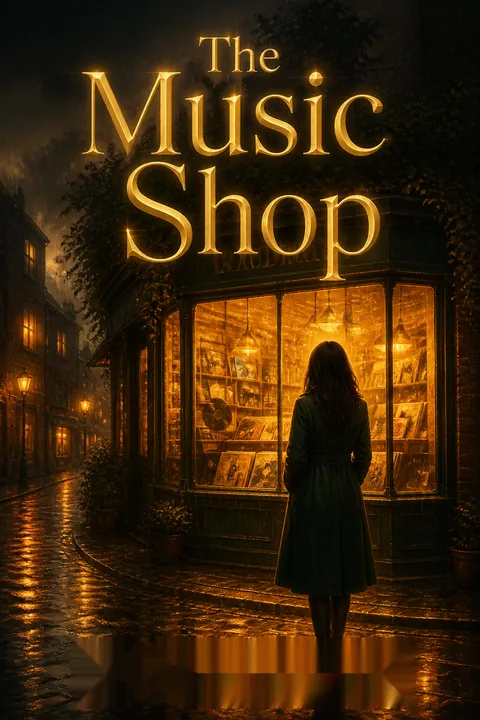
Frank runs a small music shop on Unity Street, refusing to sell anything but vinyl—no CDs, no tapes, ever. His shop is messy, rambling, and filled with every genre, but what sets him apart is his gift: he knows exactly what record a customer truly needs, often before they know it. The shop sits as a sanctuary for an oddball community—Father Anthony, the ex-priest; Maud, the tattooist; Kit, the awkward assistant; and a cast of frequent regulars bewildered by modernity and facing extinction in the age of chain stores. Frank is haunted yet comforted by the music's permanence, fiercely holding to it as everything else around him—including his neighborhood—seems destined to fade.
Fainting on Unity Street
On a frosty day in 1988, a stranger in a green coat, Ilse Brauchmann, peers into Frank's window and then abruptly faints on the pavement. The community rushes to help; Frank is the first to touch her, checking her pulse, caught off guard by her enigmatic aura. When she awakens, their eyes meet in a moment charged with silent connection and unresolved longing. Ilse utters a few words, then disappears into the night, leaving her handbag behind and a sense of wonder and mystery clinging to the shop and everyone inside. Frank is captivated, unsettled—the ordinary upturned by the extraordinary.
Listening as Salvation
Frank's unusual intuition flashes into the spotlight: he listens to people, finds the pain or longing behind their words, and prescribes a record. Whether a man devastated by heartbreak or a regular wrestling with loneliness, Frank guides them gently to the right song—Aretha, Chopin, or Motown—to unlock what's trapped inside. This listening is not just about music; it's an avenue to empathy and healing, an unspoken contract to see and soothe each person's hurts. In this haven, music becomes a surrogate for love, connection, and even therapy—especially for Frank himself.
Ilse's Enigma
Ilse returns, asking Frank not to sell her a record, but instead to tell her about it—specifically, Vivaldi's "Four Seasons." She confesses she does not listen to music, an admission that bewilders the music-loving Unity Street crowd. Frank is both fascinated and alarmed; Ilse is present yet keeps herself hidden, full of secrets. The shop's regulars speculate over her odd presence, her gloves, her accent, her falling. When she leaves her green bag behind, the tension of her mystery deepens: she draws Frank, and everyone, into a pursuit of meaning in silence.
Notes from the Past
Through vivid memories of Peg, his unconventional mother, Frank's story reveals itself: his earliest understandings of music, the taste for vinyl, the solace he drew from the records and stories Peg offered instead of affection or stability. Music and silence are intertwined for him—"music is made in the spaces between notes," Peg tells him—and Frank's adulthood becomes a repetition: connecting, then hiding, letting music speak what he cannot. As he builds his shop's family, echoes of his own childhood loneliness and Peg's abandonment haunt all his relationships and choices.
The Green Bag Mystery
With Ilse's bag left behind, the Unity Street community mobilizes: Kit crafts lost-bag posters, Maud grows defensive, and Father Anthony confesses hope that Ilse will return. Each character's relationship to Frank is revealed—acceptance, jealousy, camaraderie—showing music as the unifying thread. Ilse's silence, her refusal to say "yes" to Frank's invitations, and her veiled hands all become symbols for secrets and vulnerability. Meanwhile, the neighborhood is battered by change: shops close, opportunities vanish, and the threat of outside developers looms as an existential threat.
Teaching Music, Healing Wounds
Ilse asks Frank for music lessons—not in playing, but in understanding what he hears in records. Their secret meetings in a cheerful local café become confessional spaces: Frank tells Ilse about Beethoven, Chopin, punk, and soul, always attempting to show music's emotional geography, not just notes or history. Ilse listens, learns—and so does Frank. But each is tangled in wounds: Ilse's mysterious gloved hands, admissions of engagement to a distant fiancé, and Frank's refusal to open himself fully. Their lessons become rituals of approaching, never quite touching, vulnerability and desire.
Silence and Secrets
Frank and Ilse's connection deepens, even as both hold back. Frank is paralyzed by old losses and the fear of being loved; Ilse is haunted by her hands, her past, and a hesitant longing to belong. Both are skilled at abandonment: he pushes her away, she flees. The shop becomes a battleground for these silences, punctuated by small acts of bravery—Ilse helps repair things, Frank admits to needing her. But misunderstandings and pride keep them apart. Their friends try to push them together, but ultimately both must confront their secrets alone.
Love and Self-Sabotage
Unity Street's slow collapse accelerates: fires, graffiti, and developer buy-outs erode hope. Frank invests his future in a shop remodel and a "vinyl renaissance," desperate to salvage meaning, while Ilse wavers, her family's illnesses and the pain in her hands threatening to pull her back to Germany. Their mutual affection is undeniable during music lessons—boat rides, walking in the rain—but both sabotage happiness. When Ilse's secret is finally revealed—she is an accomplished violinist, now unable to play due to arthritis—Frank, unable to believe in love or his own worth, self-destructs, and they part.
Fire and Ashes
The music shop catches fire. Frank loses most of his records, his livelihood, his identity as a helper. Kit, his assistant, is badly burned; the community's loss feels total. Unity Street collapses into boarded-up shops, scattered lives, and unresolved grief. Frank flounders through menial work; his musical magic seems gone. Most crucially, the beautiful connection with Ilse is lost amid the wreckage of misunderstanding and self-doubt, and both disappear from each other's worlds—Ilse to Germany, Frank to obscurity, nursing wounds that seem impossible to heal.
Lost, Found, and Flash Mob
Decades pass. Vinyl dies, then is reborn. Ilse, now a music teacher in Germany after her parents' deaths, feels a restless pull to her lost English life. Drawn by the memory of Frank and their unfinished song, she returns to the city to find only ghosts—Unity Street is gone, the shop burned out, everyone scattered. She tracks down old friends: Maud the florist, Kit now a radio DJ, Father Anthony in a care home. Together, they hatch a bold plan to find Frank and burst his shell: a "flash mob" of the "Hallelujah Chorus," the one song he could never bear to play.
Resurrection in Music
The plan is risky and full of longing: gather old customers, random city-dwellers, and music lovers for a spontaneous performance in the city's shopping mall, where Frank, now a broken man making cheese and onion flavoring, eats lunch every Saturday. At the appointed hour, ordinary and eccentric people rise from the crowd and sing. Frank at first remains unmoved, unseeing—until Ilse, with battered hands, takes up a violin and plays, imperfectly and bravely. The music, the community, the tangible love in the present finally crack open his shell. Amid applause, Ilse and Frank, after years apart, see and embrace each other—music, once again, saves, heals, and brings lost things home.
Analysis
A modern fable of how connection—with ourselves, others, and the past—rests in our willingness to truly listen
The Music Shop pivots on the tensions between vulnerability and retreat, between modern efficiency and messy, analog beauty. Rachel Joyce proposes that healing is not about fixing or masking wounds, but about bringing them into communal light, through ritual, kindness, and above all, music. The story critiques the commodification of life, cautioning against replacing community and tradition (the "vinyl" of life) with surface-level convenience (CDs, chain stores, hiding one's pain). It urges the embrace of imperfection—records that scratch, hands that ache, communities on the brink—over the illusory promise of being undamaged. Ultimately, the novel suggests we become whole not by escaping loss, but by letting others help us turn that loss into harmony. Through the healing magic of listening, both literal and figurative, love and hope can be remade, no matter how irrevocably the original has been lost.
Review Summary
The Music Shop is a warmly received novel set in 1988 London, earning an overall rating of 3.84/5. Readers praise its charming, quirky characters, nostalgic atmosphere, and heartfelt celebration of music across genres. Frank's gift for matching customers with the perfect vinyl record resonated deeply with music lovers. The blossoming romance between Frank and the mysterious Ilse Brauchmann drew both admiration and mild criticism. Common critiques include pacing issues and an abrupt time jump, though most agreed the tender conclusion made the journey worthwhile.
People Also Read



Characters
Frank
Frank is a bear-like, chronically single record shop owner whose gift for sensing people's emotional needs and prescribing "the music they need" makes him an inadvertent counselor and confessor to the Unity Street community. Raised by the mercurial Peg, he grew up learning music as an act of survival and solace but also as a buffer against personal pain. Frank's psyche is a maze of empathy for others and terror of intimacy for himself—he flourishes when fixing others yet shrinks from being vulnerable or loved. Encounters with Ilse force him to risk his defenses, yet shame, old losses (especially Peg's betrayal), and fear of abandonment hold him back. Frank's journey is the central arc: from magical helper, to broken man, to someone rescued by the community and love he once offered others.
Ilse Brauchmann
Ilse, a German woman who arrives on Unity Street, is outwardly reserved, aristocratic, and mysterious. Blessed and cursed with musical brilliance, she was once a first violinist before illness (arthritis) forced her to abandon her career—and, for years, music itself. Ilse's relationships are shaped by her trauma: she hides her hands, distances herself, and avoids music except through Frank's lessons. Her desire to reconnect with music and, ultimately, herself, draws her to Frank and Unity Street. Through the story, she transforms from passive disappearance to brave reclamation—by the end, she risks everything to help Frank, and herself, find healing.
Maud
Maud, the tattooist next door, hides her deep feelings for Frank behind sarcasm, aggression, and a snarl. She too is an isolate, shaped by her own traumas and the sharpness of living outside convention. Maud's love for Frank is both a comfort and a curse—she wants him to wake, to love her, but ultimately loves him enough to help connect him with Ilse. She symbolizes the loyalty, anger, and bittersweetness of unrequited love.
Kit
Kit, Frank's shop assistant, is neurodiverse, naïve, and perennially eager to help but often causes disasters. He is driven by a need to belong and to pattern himself after Frank. Kit is both comic relief and emotional glue; his simple openness and unconditional loyalty frequently prompt breakthroughs among the others. As an adult, he becomes a radio DJ who—fittingly—dispenses amateur therapy via music.
Father Anthony
Once a Catholic priest, Father Anthony was undone by guilt over an illicit love. Now he runs a religious gifts shop and is Unity Street's elder conscience, offering wisdom, compassion, and a link to the sacred. His journey from self-destruction to healing closely mirrors Frank's: music becomes his salvation and he, more than anyone, yearns for the community's survival.
Peg
Frank's mother, Peg, is a glamorous, impulsive, and unreliable presence who shapes his view of music as both solace and risk. She loves deeply but cannot stay; abandonment is her legacy. Her stories, rituals, and love of records become Frank's spiritual inheritance, both inflaming his fear of closeness and teaching him the preciousness of music and connection.
The Williams Brothers
Twin undertakers on Unity Street, the Williams brothers hold tight to their family's legacy. Their business, hands, and gentle humor represent the routine of death and the struggle to maintain continuity while the world changes. Their joint exit from the street marks the death of an era.
Mrs. Roussos
The aging Greek woman across the street is both vulnerable and resilient, embodying the shop's role as a social lifeline and bearer of stories. Her periodic musical requests and eventual death stand for the fading of the old world Unity Street represented.
Ilse's Hands
The mysterious, gloved hands that Ilse hides represent physical and emotional wounds intertwined. The progressive arthritis that destroyed her performing career becomes the external emblem of loss, shame, and the fear of being unlovable—until finally revealed to Frank as the hinge of her identity and suffering.
Richard (Ilse's "Fiancé")
Richard, mentioned but never present, is the notional fiancé whose existence keeps Ilse and Frank apart. Ultimately, he is an excuse—her way of keeping hope at a safe distance and convincing herself, and Frank, that she is not free to love.
Plot Devices
Music as Healing and Communication
The entire novel's structure is built on the principle that music can do what words cannot—connect, heal, reveal, and unite. Every pivotal moment turns on a record played, a song heard, or a lesson in listening. Frank's intuition delivers the "right" record to each person, healing them; Ilse's journey is to first recover her ability to feel music before daring to perform again. The plot's turning points—the fainting, the lessons, the confession, the flash mob—are all staged and underscored by musical encounters, making music the chief dramatic engine.
Mystery and Slowly Revealed Secrets
The story draws tension from secrets—Ilse's hands, her past as a violinist, Frank's fear of commitment, even the seemingly benign green handbag. Suspense builds as each character's true wound is slowly uncovered, often only after misunderstandings and heartbreak. This withholding fuels both reader and character desire for final catharsis.
Community and Erosion
The physical decay of Unity Street—shop closures, fire, developer threats—mirrors the erosion of connection and belonging. The community's struggle against outside forces echoes the struggle of the main characters to hold onto (or finally accept) love, self, and history. The loss and attempted recovery of Unity Street dramatizes the societal challenge of maintaining meaning in changing times.
Flash Mob as Climax
The novel's emotional and narrative climax—a flash mob performance of the "Hallelujah Chorus"—is built on the power of collective healing and intervention. It matches the themes of music, community, and unexpected grace: only by assembling friends and strangers to make shared art can Frank (and Ilse) be "woken up" from despair.
Dual Timeline Structure
With Part D leaping forward decades, the narrative shows the enduring effects of loss, trauma, memory, and hope. The parallel examination of both the original story and its aftermath, as well as the ultimate reunion, gives the novel a sense of circular time and hard-won redemption.
Download PDF
Download EPUB
.epub digital book format is ideal for reading ebooks on phones, tablets, and e-readers.








































