
Plot Summary
Chance, Inheritance, and Abandonment
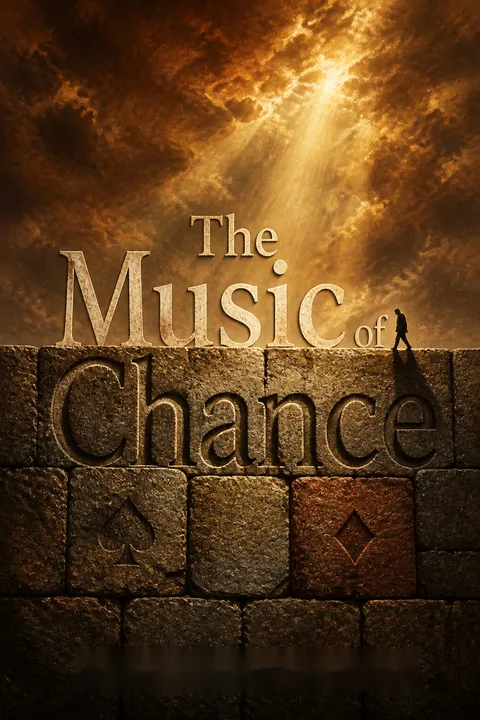
Jim Nashe, a former fireman, receives an unexpected inheritance after a lifetime of estrangement from his dying father. This sudden windfall comes too late to fix his broken marriage or reunite him with his daughter Juliette, whom he had left with his sister to ensure a better life. The money does not heal anything, only exposes how irrevocably his life has spun out of his control. As Nashe contemplates his next steps, haunted by the logic of cause and effect, he acts on increasing impulses—embodying the randomness of chance that defines his life and the novel's core. With nothing to hold him back, Nashe gives in to the call of the open road, discarding the remnants of his past as he creates a hollow freedom for himself, marking the beginning of a journey shaped by fate and desperate hope.
Road Fever, Freedom, and Isolation
Nashe's new life is defined by endless, aimless driving across America. His inheritance buys not just movement, but self-erasure: each mile takes him further from obligations, identity, and pain. He visits his daughter only periodically, always recognizing that he is a ghost in her life, unable to cross the gap he created. Encounters are fleeting, people disposable, and music fills the space left by meaning. No matter how far he travels, he cannot stop; the road becomes addiction, his only form of meaning. The money's slow depletion is both a countdown and a cage—each act of freedom brings him closer to the edge of nothingness. In these rootless months, Nashe both escapes and pursues himself, unsettled until fate delivers him an unexpected passenger.
Pozzi: The Unlikely Partner
When Nashe impulsively picks up Jack Pozzi—a battered, desperate young gambler—everything shifts. Pozzi embodies a different kind of chaos: streetwise bravado and vulnerability, a mosaic of wounds both physical and psychological. Pozzi's story intertwines luck, abandonment, and the perpetual search for agency in a world ruled by randomness and betrayal. Nashe connects with him as both a surrogate child and a reflection of himself: two men driven by loss, attempting to remake their lives on the fly. Pozzi offers Nashe "one last big score"—an invitation into a high-stakes poker game against a pair of eccentric millionaires, promising both men an escape from dead ends. Their alliance, founded on mutual need and coincidence, is instantly charged with the novel's central tension between chance and control.
The Poker Proposition
The prospect of the game with Flower and Stone draws both men together in a pact of hope and risk. Pozzi, hungry to prove his skills and reclaim his luck, convinces Nashe to bankroll the venture with his last remaining funds. Nashe is drawn by a mix of curiosity, fatalism, and the seductive logic of all-or-nothing stakes. Their partnership is cemented by the strange recognition of kinship in shared loss and hunger. As they prepare for the critical match, shopping for clothes and testing Pozzi's poker prowess, an undercurrent of foreboding builds. Every detail—from Pozzi's story of parental abandonment to Nashe's internal disquiet—amplifies the uncertainty lurking beneath the surface of their planned "final chance." Fate, once again, is poised to deal its hand.
The Mansion of Eccentric Millionaires
When Nashe and Pozzi arrive at the rural mansion, they are ushered into a surreal universe governed by the whims of lottery-winning partners Flower and Stone. The house brims with oddities: model cities reflecting delusions of order and control, a jumble of historical artifacts collected for no apparent reason, and a project to reconstruct a ruined Irish castle as a pointless monument—a wall of ten thousand stones. Flower's aggressive hospitality and Stone's soft-spoken detachment veil something menacing beneath the facade of childish eccentricity. As Nashe and Pozzi tour the grounds and listen to the millionaires' stories, they register the imbalance of power and the sense that everything here is a rigged game. The fateful poker match looms, set in a domain where chance and control blur, threatening to undo anyone who believes he is in charge.
The Castle Stones Gambit
The much-anticipated poker game begins. Nashe, now a mere spectator, watches Pozzi face off against Flower and Stone, with his life's remainder riding on the cards. The early hands are balanced, and for a while Pozzi's skills control the table. Alcohol, exhaustion, and the millionaires' unfathomable energy wear down Pozzi's composure. Writes and wrongs blur; patterns repeat and collapse. Nashe is aware that the rules and stakes may be shifting underneath them, as Flower and Stone reveal their own disciplined cunning. The night drags on, punctuated by moments of hope and devastating setbacks. By dawn, Pozzi is broke, Nashe's car has been gambled away, and a final, utterly random cut of the cards seals their ruin. The game is over, but their real ordeal has just begun.
The Poker Game's Cruel Hand
After their crushing loss, Nashe and Pozzi face an impossible debt they cannot settle. Flower and Stone, feigning benevolence, propose a "fair" solution: the two men will remain on the estate as indentured laborers, building the monumental wall out of the castle's disassembled stones, earning their freedom back stone by stone—according to terms that shift subtly in the millionaires' favor. Nashe coldly rationalizes the injustice as a kind of penance; Pozzi rages against their captors and the apparent inevitability of their suffering. As contract turns to captivity, they are stripped not only of their possessions but of status, autonomy, and hope. The meadow, isolated and encircled by barbed wire, becomes their entire world—a prison disguised as a second chance.
Enslaved by the Wall
The wall is both a Sisyphean task and a symbol of punishment. Each stone is heavy labor and existential reckoning. Nashe and Pozzi adapt to the new survival routine, working long, bone-breaking days overseen by Murks, the foreman—a figure as bland and unyielding as the wall itself. The prison is maintained not by overt violence but by rules, bureaucracy, and shifts in "employment" status. Their relationship deepens under duress, oscillating between grim humor, mutual care, and helplessness. Pozzi flails against submission, venting rage and plotting futile escapes, while Nashe turns inward, numbing himself with routine and reluctant acceptance. The men slowly realize that the contract is only a mask for the whims and sadism of their captors, who have vanished, leaving them with empty promises and crushing reality.
Patterns of Submission and Rebellion
Pozzi's spirit breaks under unending labor and the futility of their situation. He becomes obsessed with the poker loss, convinced they were cheated; he plots rebellion, erupts in futile violence against Murks, and dreams of fighting back. Nashe labors at both wall and friendship, trying to keep Pozzi from self-destruction, even as he questions the meaning of work, freedom, and punishment. Their labor produces not just a wall but a growing awareness of their own complicity, powerlessness, and the illusory nature of choice in a world ruled by arbitrary authority. The rules change to suit Flower and Stone's moods, and the morale-destroying effect of uncertainty becomes as damaging as any physical barrier.
Pozzi's Spiraling Despair
As Pozzi fragments under pressure, he oscillates between manic dreams and despondency, clinging to the idea that Nashe's "betrayal" or the theft of model figurines has cursed them. Desperate for release, Pozzi fixes on escape—attempted with Nashe's complicity through a hole under the fence. The scheme fails; Pozzi is recaptured and left battered, nearly dead, on Nashe's doorstep. The devastation of seeing his only friend undone by the hopelessness of their predicament strips Nashe of his last illusions. Pozzi's ultimate fate—his brain-damaged, possibly dead, or simply vanished state—serves as a brutal indictment of the system: luck and effort count for nothing and random cruelty has the last word.
Dream, Defeat, and Madness
Left utterly alone, Nashe endures a bleak stretch of isolation and mental disintegration: hallucinations, obsessive thoughts, a fixation on routine and numbers. The wall becomes the measure of his existence, the only fact left to control or record. Interactions with Murks grow ambiguous—gifts and information arrive, but trust is impossible. Occasional glimpses of humanity or kindness are suffocated by the relentless inhumanity of their imprisonment. Nashe's grip on meaning loosens; distinctions between victim and collaborator blur. He survives, but at the cost of self-abnegation, unable to escape the realization that he has become as hollow and determined by chance as anyone else in this closed world.
The Final Gamble
With the wall finished and the debt "cleared," Nashe finds the terms have shifted again: expenses and food are retroactively deducted, trapping him in a further cycle of servitude. When presented with a fleeting taste of past freedom, driving his old car out with Murks and Floyd, Nashe is overcome by a sense of final emptiness—a void where hope, purpose, and identity used to be. In a moment of fatal clarity, he accelerates into the night, toward the blinding lights of an oncoming car. The novel's final, ambiguous gesture is not one of rescue or redemption, but an embrace of the inescapable music of chance: a plunge into oblivion that is neither freedom nor defeat, but the end point of a life conducted by random notes and unfinished songs.
Analysis
Paul Auster's The Music of Chance is an existential parable about the chaos that undergirds the American promise of self-definition and the myth of mastery over one's fate. On the surface, it is the story of two men trying to escape their failures through a high-stakes gamble, only to become prisoners—first of the system, then of themselves. But more profoundly, it treats life as a series of arbitrary events masquerading as meaningful narrative: inheritance arrives too late; a chance encounter rewrites destiny; loss, not gain, is the rule. The wall they build is emblematic: it is work without purpose, punishment masquerading as redemption, the straight line that divides freedom from captivity. The millionaire jailers cloak their sadism in legality and contracts, turning institutional cruelty into ordinary business, while the protagonists' only real choices are the stories they tell themselves—constantly revised, always incomplete. The novel confronts the reader with the limits of agency: chance determines everything, and the urge to control fate collapses into submission or self-destruction. In the end, freedom proves to be an illusion, and the only music left is the random, unresolved harmony of chance—the eternal suspension between hope and its undoing. This is not just a cautionary tale of bad luck but a bleak meditation on the human condition: no matter how furiously we drive, the road always leads back to zero, and only the music endures.
Review Summary
Readers largely praise The Music of Chance as a compelling, philosophical fable exploring fate, freedom, and randomness. Many consider it among Auster's finest works, admiring its deceptively simple premise—two men building a wall to repay a gambling debt—which unfolds into a Kafkaesque meditation on captivity and existential meaning. The prose is consistently described as clean and restrained yet deeply humanistic. Some critics find the ending abrupt or unsatisfying, and a few readers felt the narrative too abstract or contrived, but most agree the novel provokes significant reflection long after reading.
People Also Read
Characters
Jim Nashe
Jim Nashe is a former firefighter whose life is shaped and hollowed out by abandonment, loss, and the seductive logic of chance. Nashe's deep passivity coexists with suppressed rage and a yearning for control—qualities inherited from both his estranged father and his failed marriage. Psychologically, Nashe is a man who tries to find solace in freedom and movement, convinced that expanse and randomness will heal the void inside him. Ironically, the more he flees, the more he arrives at predetermined consequences, unable to break the chain of cause and effect. His relationship with Pozzi is layered: part fatherly, part fraternal, and part competitive; he sees in Pozzi both a possible future self and the echo of his own disappointed dreams. Over the course of the novel, Nashe's psychological arc is from restless seeker to resigned captive: chance and decision become indistinguishable, and he ends as both perpetrator and victim of his own story, unable to find meaning except in the act of erasure.
Jack Pozzi (Jackpot)
Pozzi is a wiry, young professional gambler whose entire identity is staked on cunning, bluff, and the belief in personal agency—over luck, over fate, over the narratives others try to impose. Scarred by abandonment and poverty, Pozzi's bravado covers a deep vulnerability and a desperate need to win—not merely money, but respect and control. His charm and recklessness expose a survival mechanism attuned to a world where the rules are always stacked against him. His bond with Nashe is both transactional and intimate: Pozzi is the son Nashe abandoned and the partner Nashe both saves and destroys. As captivity wears him down, Pozzi's illusions of control shatter: his energy sours into paranoia, defeatism, and, ultimately, submission or destruction. His fate mirrors the larger theme: in a world ruled by indifferent chance and institutionalized cruelty, skill and spirit matter little.
Flower
Flower is one of the two eccentric millionaires who won the lottery and now presides over his estate with childish malice and a desire to control fate itself. Obsessive and verbose, he is alternately warm and cruel, always quick to manipulate rules and moral justifications to suit his needs. Flower's collection habits, his creation of a monument to the past (the wall), and his manipulation of contracts all point to a pathological need to dominate randomness by transforming it into spectacle and punishment for others. He is both a parody of the self-made man and a symbol of how absolute wealth breeds capricious authority.
Stone
Stone, the thinner and more introspective partner to Flower, is obsessed with his miniature "City of the World," a utopian model forever incomplete. Stone appears gentler and almost childlike, but his devotion to abstract order masks an acceptance of punishment and exclusion. Psychologically, he is a stand-in for both the deluded idealist and the compliant technocrat: he perpetuates the rules of the house while believing he is outside and above them. His silence is a form of complicity: he is the quiet architect of a world where suffering is meant to produce enlightenment but delivers only futility.
Calvin Murks
Murks, the estate's foreman, is at first a bland, almost faceless functionary, but his implacable enforcement of the millionaires' will, his indifference to suffering, and his hidden capacities for cruelty reveal the banality of evil. He maintains order through contracts, routines, and eventually the threat of violence (his gun), never questioning the morality of his superiors. Psychologically, Murks represents the danger of bureaucratic power without empathy: he enacts injustice because "that's his job." His faint gestures of concern are always subordinated to the hierarchy and logic of the system—a faithful servant whose lack of imagination is his weapon.
Louise
The estate's maid appears briefly but leaves a resonant impression: her recognition of Nashe and Pozzi's changed status (from honored guests to "hired help") is instantaneous and absolute. Louise's refusal to display warmth or pity mirrors the house's broader moral emptiness. She represents the community's silent, complicit majority, seeing and judging, but never intervening.
Floyd
Floyd is large, naïve, and eager to please Murks, serving as muscle when Pozzi is punished and providing the most obvious threat of violence. He is devoid of independent will or malice, a human tool in the system's machinery, highlighting how easily "good intentions" can serve cruelty and oppression—a childlike man who does grave harm.
Juliette
Nashe's young daughter is only glimpsed in memory; she inhabits the role of both hope and regret—the future Nashe has sacrificed, and the innocence he cannot regain. Her absence magnifies his loneliness and colors every choice he makes, her image tied to the possibility of meaning that is always just out of reach.
Tiffany
Tiffany embodies the ambiguous possibilities of deliverance, intimacy, and illusion. To Pozzi, she is a momentary reward; to Nashe, an object of longing and a hoped-for messenger who fails to effect rescue. Her existence is transactional, her warmth conditional and fleeting—a mirror of Nashe's wish for transcendence and his powerlessness to achieve it.
Pozzi's Father
Known only through Pozzi's stories, his father's repeated disappearances and false promises shape Pozzi's personality: mistrustful, hungry for recognition, always seeking a windfall or lucky break. His legacy is not just material loss but spiritual impoverishment—a demonstration of how abandonment corrupts every subsequent chance.
Plot Devices
The Language of Chance
The novel is structured around the unpredictable intersection of fate and free will. Nashe's life unravels along a chain of accidents (inheritance timing, missed turn, picking up Pozzi) that seem at once arbitrary and inevitable. Poker, lotteries, and walls are literalized metaphors for risk, payoff, and the desperate human urge to outwit chance. Even the stories characters tell themselves (about fathers, about justice, about plans) are revealed as attempts to rationalize randomness, turning sequence into narrative—or refusing to see that the world may have no sequence at all.
The Prison of Contracts and Rules
Flower and Stone's estate is governed not by overt violence but by contracts, "fair" proposals, and shifting rules. The slow transformation of Nashe and Pozzi from guests to prisoners is enabled by a legalistic framework meant to seem benevolent or even just, but actually serves to trap, silence, and punish. Rules are constantly changed post facto, nullifying effort and choice. The wall itself—pointless, backbreaking, endless—is a metaphor for the futility of playing by rules in a rigged system.
Doubling and Mirrors
The novel is filled with doubles and echoes: Nashe and Pozzi's stories of abandonment and accidental fortunes; Flower and Stone as dual millionaires; the miniature city as a mirror-world of their captivity. Escape attempts repeat, failures repeat, and the cycle of hope turning to defeat repeats. These recursions blur the line between individual agency and mechanical fate, suggesting the arbitrariness of identity and outcome.
Model-Building and Metafiction
Stone's miniature "City of the World"—the recursive, never-finished project—reflects the novel's self-awareness about narrative, control, and the impossibility of total order. The repeated impulse to make or unmake meaning (construct the wall, burn the model figures, drive the car into oblivion) is the psychological underpinning of survival in an uncaring world.
The Unseen Threat
Flower and Stone vanish for most of Nashe and Pozzi's captivity, communicating only through contracts and intermediaries—their power is felt but never directly confronted. Authority is impersonal, unaccountable, unknowable. This absence increases paranoia, uncertainty, and the sense that resistance is impossible because there is no target for rebellion.
The Open Ending
The novel's ambiguous final scene—Nashe accelerating into the night toward a fatal collision—leaves the question of escape, defeat, and redemption unresolved. Neither justice nor catharsis is granted; the music of chance plays on, and every ending is simply a cut to the next uncertain possibility.
About the Author

Download PDF
Download EPUB
.epub digital book format is ideal for reading ebooks on phones, tablets, and e-readers.








































