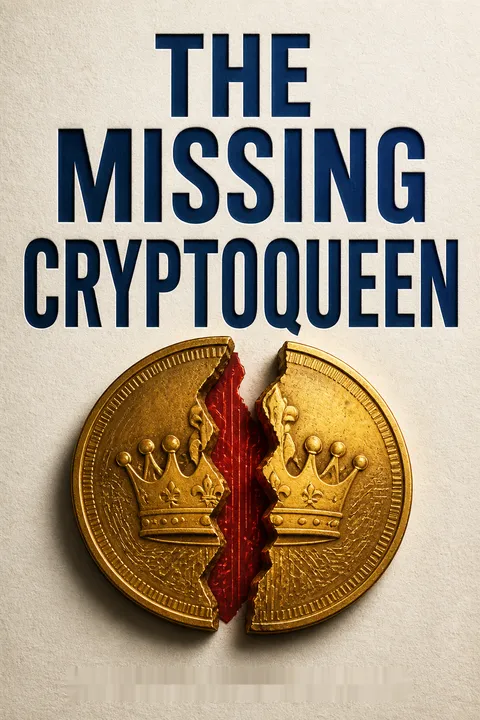

Key Takeaways
1. The Genesis of a Global Deception
"You as the magic sales machine—and me as someone who really can work with numbers, legal, and back you up in a good and professional way,” Ruja told him via email. “We could really make it big—like MLM meets bitch of wall street ;-)”
Ambitious beginnings. Dr. Ruja Ignatova, a brilliant but restless McKinsey consultant with a PhD from Oxford, yearned for wealth and influence beyond traditional finance. In 2013, she encountered Sebastian Greenwood, a charismatic Swedish multi-level marketing (MLM) expert, who introduced her to the lucrative world of network selling. Their combined talents—Ruja's financial acumen and Sebastian's sales prowess—formed the unlikely foundation of OneCoin.
A new cryptocurrency. Recognizing the burgeoning interest in Bitcoin, Ruja envisioned her own digital currency, OneCoin, positioned as the "Bitcoin killer" for the masses. She aimed to simplify cryptocurrency, making it accessible to ordinary people who found Bitcoin too complex. This vision, coupled with Sebastian's proposal to distribute OneCoin through an MLM model, promised exponential growth and a "financial revolution" for investors worldwide.
Strategic partnership. Their collaboration was a calculated blend of expertise. Ruja, the "bitch of Wall Street," would handle the complex financial and legal structures, while Sebastian, the "magic sales machine," would build the vast network of promoters. This division of labor, conceived in secret meetings in Hong Kong, laid the groundwork for a company that would quickly attract billions, despite its nascent technology and questionable product.
2. The Illusion of a Blockchain
But all they owned were meaningless entries on a database. A million people had bought Ponzi tokens. Monopoly money that was controlled not by computer code, but by Ruja.
The core deception. At the heart of OneCoin's operation was a fundamental lie: it lacked a genuine, decentralized blockchain, the immutable ledger that defines true cryptocurrencies like Bitcoin. While Ruja initially commissioned a blockchain in 2015, its rapid sales quickly outpaced its capacity, leading her to store "fake" coins on a simple SQL database—essentially a glorified Excel spreadsheet. This meant that the millions of coins investors believed they owned were merely entries on a centralized system, entirely controlled by Ruja.
Bjørn Bjercke's discovery. The truth was exposed by Bjørn Bjercke, an IT security specialist, who was offered a job to build OneCoin's "new blockchain" in late 2016, despite Ruja having publicly launched one months earlier. Bjørn's subsequent tests revealed that transactions between OneCoin wallets never appeared on the public "blockchain display," which was merely a pre-programmed script showing meaningless activity. This confirmed that the entire technological premise of OneCoin was a sham.
Consequences of the fake. Without a real blockchain, the "price" of OneCoin, which steadily climbed from €0.5 to €7.95, was entirely arbitrary, manipulated by Ruja to maintain investor confidence. The "mining" process was a fiction, and the "audits" were conducted by a company secretly owned by Ruja herself. This elaborate technical deception allowed Ruja to conjure up as many coins as needed, double investor holdings at will, and sustain the illusion of a legitimate, rapidly appreciating asset.
3. Mastering the Art of "Just-Good-Enough" Deception
The key to the OneCoin scam was Ruja’s genius for the just-good-enough. Everything about OneCoin was fake, but she somehow always made it appear plausible.
Plausible deniability. Ruja's brilliance lay in creating a veneer of legitimacy that was "just-good-enough" to convince millions. She understood that in a new, unregulated industry like cryptocurrency, appearances mattered more than substance. This strategy involved a meticulous orchestration of fake credentials, sponsored content, and carefully selected legal opinions to deflect scrutiny and build trust.
Fabricated credibility. Key elements of this deception included:
- Fake Forbes cover: Ruja purchased a multi-page advertisement in the Bulgarian edition of Forbes, designed to look like a genuine cover story, which was then circulated globally.
- Economist sponsorship: She paid to be a keynote speaker at an Economist conference, using the association to imply endorsement from a respected financial publication.
- Legal endorsements: She leveraged a network of lawyers, including her German lawyer Martin Breidenbach and later Hogan Lovells, to issue legal opinions that, despite caveats, were used to promote OneCoin's legitimacy.
- "Education" packages: The actual product sold was low-quality educational PDFs, a pseudo-compliance tactic to appear as an MLM selling a "real product" rather than an unregulated security.
Maintaining the illusion. Even when critical information emerged, Ruja countered it with dazzling new announcements. When the internal exchange (xcoinx) closed, she launched "Dealshaker," an e-commerce platform, and promised an Initial Public Offering (IPO). These "just-good-enough" imitations, despite their flaws, served to re-energize the network and provide a continuous stream of hope, allowing the scam to persist far longer than anticipated.
4. The Ponzi-Pyramid Hybrid: A Recipe for Exponential Growth
OneCoin’s Ponzi payout system sucked people in, but it was the pyramid recruitment that persuaded them to stick around.
Dual scam structure. OneCoin was a sophisticated hybrid, combining the unsustainable payout model of a Ponzi scheme with the recruitment-driven growth of a pyramid scheme. This dual approach allowed it to attract and retain millions of investors globally. The Ponzi aspect involved paying early investors with money from newer recruits, creating the illusion of high returns.
Pyramid recruitment. The MLM structure was crucial for rapid expansion. Promoters earned commissions not just from direct sales of "education packages" but also from the sales generated by their "downlines"—the network of people they recruited. This incentivized relentless recruitment, turning investors into unwitting salespeople. The compensation plan was designed to be simple and lucrative, with tiers like Sapphire, Ruby, and Diamond offering increasing rewards and status.
The payout illusion. OneCoin offered two primary "payouts":
- "Happy Monday" commissions: Weekly sales commissions, typically 10% of direct sales and 10% of downline sales, paid partly in Euros and partly in OneCoin. These were generally reliable, reinforcing belief.
- Xcoinx exchange: An internal exchange where investors could theoretically convert OneCoin into Euros. Despite daily withdrawal limits and frequent glitches, enough money (around €10 million weekly) was paid out to create a steady stream of "believers" who then evangelized to new victims.
This combination of reliable commissions for active recruiters and the tantalizing, albeit restricted, ability to "cash out" for passive investors, fueled a powerful cycle of greed and hope, making OneCoin one of the largest financial frauds in history.
5. Exploiting FOMO and Trust: The Psychology of the Scam
Most OneCoin investors who put money in around this time said the same thing: They didn’t understand the technology but they’d heard of Bitcoin and regretted having not invested.
The power of FOMO. OneCoin masterfully exploited the "Fear Of Missing Out" (FOMO) that gripped many after Bitcoin's meteoric rise. Stories of ordinary people becoming millionaires by investing early in Bitcoin created a powerful psychological trigger. OneCoin presented itself as the second chance, the "next Bitcoin," for those who had missed the first wave, appealing to a deep-seated desire for quick wealth without specialized knowledge.
Trust in perceived authority. Ruja cultivated an image of impeccable authority and expertise. Her Oxford PhD, McKinsey background, and "Businesswoman of the Year" awards lent an air of legitimacy that overshadowed technical skepticism. Investors, often non-technical, relied on these external markers of credibility rather than understanding the underlying technology. The presence of "well-spoken professionals" like lawyers and PR firms further solidified this trust, even if their advice was selectively used or ignored.
Community and social proof. The MLM model fostered a strong sense of community and social proof. Friends and family recruited each other, creating a powerful echo chamber where doubts were dismissed as "negative energy" or "fake news." The lavish corporate events, filled with cheering crowds and "millionaire" testimonials, reinforced the belief that success was inevitable. Admitting the scam would mean confronting not only personal financial ruin but also having inadvertently harmed loved ones, creating a strong disincentive to question the narrative.
6. The Unraveling: Betrayal, Paranoia, and Flight
"Exit strategy,” she’d written. “Disappear and let someone else take the blame.”
Mounting pressure. By 2017, despite OneCoin's massive scale, Ruja faced increasing pressure. Banks froze accounts, regulators issued warnings, and police investigations mounted in Germany and India. Her relationship with co-founder Sebastian Greenwood soured, and her MLM promoters became increasingly disobedient. The birth of her daughter also shifted her priorities, making her more anxious and less engaged with the day-to-day operations.
Gilbert Armenta's betrayal. The critical turning point came with her lover and money man, Gilbert Armenta. Ruja, suspicious of his loyalty, hired former spy Frank Schneider to bug his apartment. The recordings revealed not only Gilbert's infidelity but also his legal troubles with the FBI for extortion. Ruja realized that Gilbert, now cooperating with the FBI, would inevitably expose her.
The escape. Faced with imminent arrest, Ruja activated her long-planned "exit strategy." On October 25, 2017, she booked two flights from Sofia: one to Vienna and an earlier one to Athens. She took the Ryanair flight to Athens, where she was met by Russian-speaking men, and vanished. Her disappearance left her brother Konstantin, who had only recently become her personal assistant, to manage the crumbling empire and face the consequences.
7. The Aftermath: Arrests, Trials, and Lingering Hope
The scam was global, but law enforcement is still limited by borders and jurisdictions. OneCoin slipped through the cracks, and it took years for the law to catch up with it.
Legal net tightens. Despite Ruja's escape, the legal net slowly closed around her associates. Gilbert Armenta, cooperating with the FBI, pleaded guilty to multiple charges. Mark Scott, the corporate lawyer who laundered hundreds of millions through the Fenero Funds, was arrested in 2018 and found guilty of bank fraud and money laundering in 2019, largely due to Konstantin Ignatov's testimony. Sebastian Greenwood was arrested in Thailand in 2018 and extradited to the US, facing charges of wire fraud and money laundering. Frank Schneider, Ruja's security adviser, was arrested in France in 2021 and faces extradition.
Konstantin's cooperation. Konstantin Ignatov, arrested in Los Angeles in March 2019, initially maintained his innocence but eventually pleaded guilty to wire fraud and money laundering. Facing decades in prison, he agreed to become a state witness, providing crucial insider details about OneCoin's operations, Ruja's disappearance, and the fake blockchain. His testimony became central to the US prosecutions.
OneCoin persists. Despite the arrests and overwhelming evidence, OneCoin, rebranded as OneLife, continued to operate. Promoters, often unaware or unwilling to accept the truth, continued to sell packages, particularly in less regulated markets like Africa. Ruja's mother, Veska, even headlined events. The scam, like a monster from a horror movie, refused to die, sustained by the lingering hope of its victims and the decentralized nature of its recruitment.
8. The Elusive Cryptoqueen: A Life on the Run
But at the time of writing, the most plausible theory is also the most unbelievable. As her countless victims—the people who believed her promise of a financial revolution—face ruin and heartbreak, and as those who helped her to get away with it face serious jail time, the Cryptoqueen is floating somewhere on the high seas with a new name, a new face, and access to endless amounts of this strange new form of money.
A ghost in the machine. Ruja Ignatova, the "Missing Cryptoqueen," remains one of the world's most elusive fugitives. After her flight to Athens, theories abound:
- Bulgarian hideout: Initially, she may have laid low in Bulgaria, leveraging her powerful connections.
- Dubai sanctuary: Later sightings placed her in Dubai, where she owned a luxury mansion and penthouse, confident in the lack of extradition treaties. Konstantin's selfie from her Dubai mansion in early 2018 suggests she was there after her disappearance.
- Mediterranean yacht: The most compelling theory suggests she now lives on a superyacht in the Mediterranean, exploiting the "freedom of the sea" beyond national jurisdictions.
The Bitcoin fortune. A key factor in her continued evasion is her immense wealth. In 2015, Ruja acquired 230,000 Bitcoin in a deal with Sheikh al Qassimi. With Bitcoin's price skyrocketing to over €40,000 by 2021, this fortune could be worth over €9 billion, making her one of the richest criminals globally. This vast, untraceable wealth allows her to maintain a life of luxury, plastic surgery, and high-quality fake passports, making her virtually unrecognizable and uncatchable.
An enduring enigma. Ruja's disappearance leaves a trail of devastation for millions of victims, while those who aided her face justice. Yet, she remains a symbol of unchecked ambition and the dark side of financial innovation. Her ability to vanish, coupled with her potential Bitcoin fortune, paints a picture of a life lived in opulent secrecy, forever on the run, but free from the consequences of her monumental deception.
Review Summary
People Also Read







About the Author
Other books by Jamie Bartlett

Download PDF
Download EPUB
.epub digital book format is ideal for reading ebooks on phones, tablets, and e-readers.








































