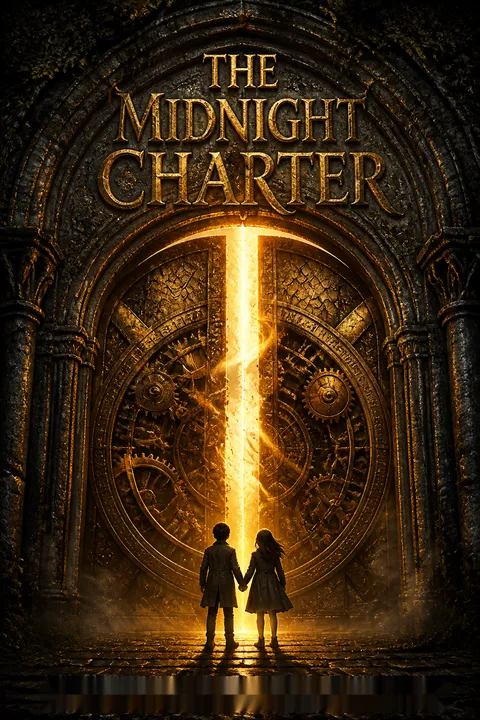

Plot Summary
Death's Door Opens
Mark, a young boy from the slums, wakes believing he is dead, shivering in a stone cell after the plague has claimed his family. The city of Agora, where every aspect of life is traded, is a place where even survival is a commodity. Mark's memories of his mother's stories about a better afterlife are shattered as he faces the reality of being sold by his own father. The mysterious Reaper, a figure both feared and misunderstood, comes for him, but instead of death, Mark is delivered into the hands of Dr Theophilus and Lily, a servant girl. This moment marks the beginning of Mark's journey from despair to a new, uncertain life, setting the tone of loss, hope, and the transactional nature of Agora.
Sold and Saved
As Mark recovers under Dr Theophilus's care, he discovers the harsh truth: his father sold him to the doctor in exchange for a chance at survival. Lily, the doctor's servant, becomes his guide, showing him the tower's many rooms and the strange customs of Agora. The city's rigid system of ownership and contracts is revealed—children are property until their twelfth birthday, when they receive a signet ring and the right to trade their own service. Mark's grief and confusion are tempered by Lily's practical kindness, and a fragile bond forms between them. The chapter explores the pain of abandonment and the first glimmers of belonging in a world where everything, even people, has a price.
Bonds of Survival
Mark and Lily, both survivors of Agora's unforgiving system, find solace in each other's company. Lily teaches Mark to read, using a treasured book as both a gift and a lesson in the city's contract-based exchanges. Their friendship deepens as they share stories and dreams, but the reality of their servitude looms. Mark's apprenticeship to Dr Theophilus offers hope, yet the threat of being discarded or traded away is ever-present. The chapter highlights the resilience of children forced to grow up too soon, and the small acts of kindness that become lifelines in a society obsessed with profit and status.
The City of Trades
The city of Agora is a labyrinth of contracts, trades, and social hierarchies. Mark learns to navigate its complexities, from the fearsome receivers who enforce debts to the Directory of Receipts that records every transaction. The city's elite are insulated from the suffering of the poor, and even acts of charity are rare and suspect. Mark's growing understanding of Agora's mechanisms is mirrored by his increasing sense of self-worth, symbolized by his signet ring. Yet, the city's indifference to suffering and its commodification of every human interaction cast a shadow over his newfound identity.
Title Day and Signets
On his twelfth birthday, Mark receives his signet ring, marking his transition from property to personhood. Lily, who has recently undergone the same rite, guides him through the ritual of exchanging gifts and contracts. The moment is bittersweet—freedom in Agora is conditional, and the right to trade one's service is both an opportunity and a burden. Mark's joy is tempered by the knowledge that survival depends on finding someone willing to buy his labor. The chapter explores the tension between autonomy and vulnerability, and the ways in which identity is shaped by the city's relentless logic of exchange.
The Deal That Divides
When the Count discovers Mark's presence in the tower, a crisis erupts. To avoid being cast out into the streets, Mark and Lily agree to swap contracts—Mark becomes the Count's servant, while Lily leaves with Dr Theophilus. The decision is wrenching, severing the bond that has sustained them. Each is thrust into a new world: Mark into the Count's cold, demanding service, and Lily into the uncertainty of the city beyond. The chapter captures the pain of separation, the courage required to seize uncertain opportunities, and the ever-present risk of falling through Agora's cracks.
Lily's Window to the World
Freed from the tower, Lily accompanies Dr Theophilus into the bustling, chaotic streets of Agora. She is awed by the Central Plaza, the bridges, and the diversity of people and trades. Yet, the city's beauty is marred by poverty, disease, and the constant pressure to barter for survival. Lily's encounter with Miss Devine, the glass-maker who trades in bottled emotions, exposes the city's most insidious commerce—the buying and selling of feelings. The experience leaves Lily shaken but determined, her sense of self sharpened by the realization that even emotions are not immune to Agora's market forces.
The Glass-Maker's Bargain
In Miss Devine's shop, Lily witnesses the extraction and sale of emotions, a process both fascinating and horrifying. When she trades her own disgust to help Dr Theophilus, she is left numb and vulnerable, only to have the emotion forcibly returned in a traumatic reversal. The episode underscores the dangers of commodifying the self, and the ways in which Agora's logic of trade can strip individuals of their humanity. Lily's subsequent encounter with Signora Sozinho, a once-great singer silenced by loss, offers a counterpoint—a reminder of the enduring power of art, memory, and unbought feeling.
Apprentices and Ambitions
As Mark becomes the Count's apprentice, he is drawn into the world of astrology and the city's elite. The Count's ambitions for revenge against his rival, Lord Ruthven, place Mark at the center of a political scheme. Meanwhile, Lily, now Dr Theophilus's apprentice, is inspired to dream of a better Agora—one where charity and compassion are not commodities. Both face new challenges: Mark must prepare for a public prophecy that could make or break him, while Lily grapples with the limits of kindness in a city that values only profit. Their parallel journeys set the stage for the coming conflict between self-interest and altruism.
The Festival's Prophecy
On Agora Day, Mark is thrust into the spotlight, tasked with delivering prophecies that have been engineered to humiliate Lord Ruthven. With the help of Snutworth, his cunning manservant, Mark orchestrates a series of events that make his predictions come true, earning him fame and the envy of the city's astrologers. Yet, the triumph is hollow—Mark learns he was a pawn in a larger game, and the cost of success is the loss of innocence. The festival's spectacle exposes the city's hunger for spectacle and the ease with which truth can be manipulated for power.
The Song of Reunion
While Mark's star rises, Lily engineers a reunion between Signor and Signora Sozinho, restoring the singer's lost voice and rekindling a love thought dead. The act is one of pure charity, untainted by expectation of reward, and it ripples through the city as a rare example of selfless giving. The event inspires Lily to found the Almshouse, a place where the poor and desperate can find food and shelter without payment. The chapter celebrates the transformative power of compassion, the possibility of redemption, and the hope that even in Agora, kindness can take root.
The Rise of Mark
Mark's success at the festival catapults him into the ranks of Agora's elite. With Snutworth's guidance, he amasses wealth, influence, and a reputation as a prodigy. Yet, the trappings of power come at a cost—Mark becomes increasingly isolated, his relationships with Lily and others strained by ambition and the demands of maintaining his status. The city's admiration is fickle, and the pressure to perform grows relentless. The chapter explores the seductive allure of success, the dangers of losing oneself in the pursuit of approval, and the fragility of reputation in a world built on appearances.
The Almshouse Idea
Lily's Almshouse flourishes, attracting patrons and volunteers drawn by the promise of doing good without expectation of return. The receivers, guardians of Agora's order, view the experiment with suspicion, fearing it will undermine the city's foundations. Inspector Greaves, a rare voice of reason, warns Lily of the risks but allows the Almshouse to continue. The chapter examines the tension between charity and commerce, the difficulty of sustaining altruism in a transactional society, and the ways in which small acts of kindness can inspire both hope and backlash.
The Price of Success
As Mark's businesses expand, he becomes entangled in deals that harm the city's most vulnerable, including the fishermen of the Piscean slums. His partnership with Snutworth and the pursuit of respectability lead him to an arranged engagement with Cherubina, the matron's daughter. Meanwhile, Lily confronts the unintended consequences of her own actions, as the Almshouse's success attracts envy and danger. The chapter delves into the moral compromises required by ambition, the ease with which good intentions can be corrupted, and the personal cost of climbing Agora's social ladder.
The Secret Society
Beneath Agora's surface, the Libran Society—a secretive order devoted to balance and the city's founding ideals—pulls strings and guards ancient secrets. Lord Ruthven, its leader, is revealed to have manipulated events, including the selection of Mark and Lily as potential agents of change. The society's obsession with the Midnight Charter, a mysterious document prophesying the city's testing, drives its members to desperate acts. The chapter exposes the dangers of dogma, the perils of unchecked authority, and the ways in which even the most well-intentioned visions can become instruments of oppression.
The Life Theft
The sudden, violent death of Gloria, Laud and Benedicta's sister, rocks the Almshouse and the city. The investigation, led by Inspector Greaves, uncovers a web of addiction, exploitation, and misplaced blame. Pete, a debtor and Mark's estranged father, is accused of the crime, but Lily suspects a deeper conspiracy. The tragedy forces all involved to confront the limits of justice in Agora, the ease with which the powerless are scapegoated, and the corrosive effects of a society that values profit over people. The chapter is a turning point, shattering illusions and demanding a reckoning.
The Trial and the Speech
At Pauldron's trial, Lily delivers a powerful speech rejecting vengeance and calling for compassion, even for the guilty. Her words sway the court and lead to the reopening of the Almshouse, but also mark her as a threat to the city's order. Mark, implicated in Gloria's death and betrayed by Snutworth, faces his own trial and downfall. The chapter is a meditation on justice, forgiveness, and the possibility of change. It asks whether true charity can survive in a world built on contracts, and whether individuals can transcend the roles assigned to them by fate and society.
The Fall of the Prodigy
Mark's world collapses as Snutworth, revealed as a master manipulator, engineers his downfall and seizes his wealth, position, and even his fiancée. Imprisoned and stripped of all status, Mark is forced to confront the emptiness of his achievements and the consequences of his choices. In the depths of despair, he is visited by Benedicta and reconciled with his father, finding a measure of forgiveness and hope. The chapter is a study in humility, the dangers of pride, and the redemptive power of human connection, even in the darkest of circumstances.
The Director's Truth
Lily, determined to uncover the truth behind the city's mysteries, secures an audience with the Director of Receipts. In a tense, symbolic encounter, she learns of the Midnight Charter and the roles she and Mark have been chosen to play as Antagonist and Protagonist—the city's destined judges. The Director offers her a choice: remain in Agora and accept a safe, ordinary life, or leave the city with Mark to seek the truth and fulfill the Charter's prophecy. The chapter is a culmination of the novel's themes—choice, destiny, and the search for meaning beyond the boundaries of a transactional world.
The Final Choice
Lily chooses to leave Agora, freeing Mark from prison and accepting the Director's challenge. Together, they step through a hidden door in the city walls, leaving behind everything they have known. The moment is both an ending and a beginning—a leap into uncertainty, driven by hope, curiosity, and the belief that a better world is possible. The chapter is a meditation on courage, the necessity of change, and the promise of transformation. It affirms that true value lies not in what can be traded, but in the willingness to risk everything for truth and freedom.
Beyond Agora's Walls
Mark and Lily, now exiles from Agora, face the vast unknown beyond the city's walls. The world outside is both terrifying and exhilarating, filled with possibilities and dangers they cannot yet imagine. Their friendship, tested and renewed, becomes the foundation for whatever comes next. The story ends on a note of hope and anticipation, as the two protagonists—no longer bound by the city's contracts—set out to discover who they are and what they can become. The final chapter is a celebration of resilience, the power of choice, and the enduring human quest for meaning and belonging.
Analysis
David Whitley's The Midnight Charter is a profound meditation on value, agency, and the human cost of a society built on relentless exchange. Through the intertwined journeys of Mark and Lily, the novel interrogates the limits of a world where every relationship is transactional and even emotions are commodities. The story's structure—mirroring the city's own logic of contracts and bargains—serves to both immerse the reader in Agora's seductive order and expose its underlying emptiness. The characters' psychological arcs, especially their struggles with loss, ambition, and forgiveness, offer a nuanced exploration of what it means to be human in a dehumanizing system. The novel's use of prophecy and secret societies adds layers of suspense and philosophical depth, inviting readers to question the nature of destiny, the possibility of change, and the true meaning of freedom. Ultimately, The Midnight Charter is a call to recognize the value of compassion, the necessity of choice, and the enduring power of hope—even, and especially, in a world that insists everything has a price.
People Also Read






Characters
Mark
Mark begins as a vulnerable boy, orphaned by plague and sold by his father in the desperate hope of survival. His journey is one of transformation—from frightened child to apprentice, prodigy, and ultimately, a fallen star. Mark's psychological arc is defined by his struggle to find self-worth in a city that measures value in contracts and commodities. His relationships—with Lily, Dr Theophilus, and his estranged father—are marked by longing, betrayal, and the search for forgiveness. Mark's rise to power exposes the emptiness of success built on exploitation, while his fall strips him of illusions and opens the way for genuine connection and redemption. His final choice to leave Agora with Lily signals a break from the city's logic and a step toward self-determined identity.
Lily (Lilith)
Lily, known as Lilith in her orphanage records, is a dark-skinned girl whose intelligence, resilience, and empathy set her apart. Orphaned and sold into servitude, she becomes Dr Theophilus's apprentice and Mark's closest friend. Lily's psychological journey is one of awakening—her innate sense of justice and her refusal to accept Agora's transactional norms drive her to found the Almshouse and challenge the city's values. Her encounters with the glass-maker, the Sozinhos, and the secretive Libran Society deepen her understanding of both the city's cruelty and its potential for change. Lily's greatest strength is her ability to see the humanity in others, even those who have wronged her. Her final decision to seek the truth beyond Agora's walls is an act of courage and hope, marking her as the story's true moral center.
Dr Theophilus
Dr Theophilus is a compassionate but weary physician, haunted by the suffering he cannot alleviate and the indifference of Agora's elite. His relationship with Lily is paternal and collaborative—he recognizes her potential and supports her ambitions, even as he fears for her safety. Theophilus's own past is marked by loss and estrangement from his powerful grandfather, Count Stelli. His psychoanalytic profile reveals a man torn between idealism and pragmatism, struggling to do good within a system that punishes kindness. His support of the Almshouse and his willingness to risk his reputation for Lily's sake underscore his quiet heroism.
Count Stelli
Count Stelli, Mark's master and Dr Theophilus's grandfather, is the city's greatest astrologer—a man obsessed with reputation, revenge, and the maintenance of order. His psychological rigidity and inability to adapt to change make him both formidable and tragic. Stelli's relationship with Mark is transactional and cold, yet his eventual downfall and decline into obscurity evoke pity. He embodies the dangers of clinging to status and the futility of seeking meaning in power alone. His estrangement from Theophilus and his ultimate dependence on the Almshouse highlight the city's capacity to discard even its most illustrious citizens.
Snutworth
Snutworth is Mark's manservant, a figure of wit, cunning, and hidden ambition. Outwardly loyal and indispensable, he is in fact a consummate opportunist, orchestrating Mark's rise and fall for his own gain. Snutworth's psychological profile is that of a sociopath—charming, calculating, and devoid of genuine attachment. His betrayal of Mark, seizure of his property, and marriage to Cherubina reveal a ruthless drive for advancement. Snutworth represents the dark side of Agora's meritocracy, where loyalty is a commodity and trust is a liability.
Laud
Laud, Gloria and Benedicta's brother, is a professional praiser—adept at flattery and advertising, yet deeply cynical about the city's values. His sharp tongue and critical eye mask a profound sense of loss and responsibility, especially after Gloria's death. Laud's relationship with Lily is complex—he admires her ideals but fears their consequences. His journey is one of gradual opening, as he learns to trust, grieve, and support the Almshouse's mission. Laud's skepticism is both a defense mechanism and a source of insight, making him a vital counterpoint to Lily's optimism.
Gloria
Gloria, Laud and Benedicta's sister, is a talented praiser whose descent into obsession with bottled emotions mirrors the city's commodification of the self. Her vulnerability is exploited by both her employers and the glass-maker, leading to her tragic death. Gloria's psychological arc is one of longing for meaning and connection, her enthusiasm and sincerity ultimately consumed by the demands of her profession. Her loss is a catalyst for the story's moral reckoning, forcing the characters to confront the human cost of Agora's system.
Benedicta
Benedicta, the youngest of the siblings, is characterized by her warmth, resilience, and capacity for joy even in adversity. Her role as a helper at the Almshouse and her unwavering support for Lily and Laud make her a symbol of the story's redemptive possibilities. Benedicta's ability to forgive, even in the face of profound loss, is a testament to the power of compassion. Her presence in Mark's darkest moments offers him a path to healing and reconciliation.
Inspector Greaves
Inspector Greaves is a receiver who stands out for his integrity, intelligence, and willingness to question the city's norms. His investigations are marked by fairness and a genuine desire to uncover the truth, even when it puts him at odds with his superiors. Greaves's relationship with Lily is one of mutual respect, and his interventions are crucial in both exposing corruption and protecting the vulnerable. He represents the possibility of reform from within, and the importance of individual conscience in a corrupt society.
Lord Ruthven
Lord Ruthven, head of the Libran Society and the city's chief justice, is a man torn between his devotion to Agora's ideals and his fear of change. His manipulation of the Midnight Charter and his attempt to control the city's destiny reveal a deep insecurity and a willingness to sacrifice others for the sake of stability. Ruthven's psychological arc is one of hubris and downfall—his inability to accept uncertainty leads him to betray his own principles. His confrontation with Lily and the Director exposes the dangers of dogmatism and the necessity of humility.
Plot Devices
The Contractual Society
The city's entire social, economic, and moral order is structured around contracts, signet rings, and the Directory of Receipts. Every relationship, from employment to friendship to charity, is mediated by formal agreements. This device serves as both a literal and metaphorical framework, illustrating the dehumanizing effects of reducing all value to trade. The narrative structure mirrors this system, with key plot points hinging on the making, breaking, and interpretation of contracts. The device is used to explore themes of autonomy, exploitation, and the search for meaning beyond transactional logic.
Bottled Emotions
The extraction, sale, and consumption of bottled emotions is a central motif, symbolizing the dangers of commodifying the self. The device is used to drive character arcs (Gloria's addiction, Lily's loss and recovery of disgust), to create moments of horror and wonder, and to critique the city's relentless pursuit of profit. Bottled emotions also serve as a form of foreshadowing, hinting at the ways in which even the most intimate aspects of identity can be manipulated and traded.
The Midnight Charter
The Midnight Charter, a mysterious document prophesying the city's testing by two chosen judges, is the story's central plot device. It provides both foreshadowing and a sense of inevitability, as Mark and Lily are gradually revealed to be the Protagonist and Antagonist. The Charter's ambiguity allows for multiple interpretations, driving the characters to question their roles and the meaning of fate. The device is used to explore the tension between free will and destiny, and to structure the story's climax and resolution.
Dual Protagonists
The narrative is structured around the intertwined arcs of Mark and Lily, whose contrasting responses to Agora's challenges illuminate the story's central themes. Their friendship, separation, and eventual reunion are used to explore the possibilities and limits of change, the importance of empathy, and the necessity of both resistance and adaptation. The device allows for a rich exploration of psychological development, as each character is forced to confront their own values and the consequences of their actions.
Secret Societies and Hidden Power
The presence of the Libran Society, the Director, and other hidden actors creates an atmosphere of intrigue and uncertainty. The gradual unveiling of secrets—about the city's founding, the Charter, and the true nature of power—serves as both a source of tension and a means of thematic exploration. The device is used to question the legitimacy of authority, the dangers of secrecy, and the possibility of genuine change in a world built on hidden bargains.
Download PDF
Download EPUB
.epub digital book format is ideal for reading ebooks on phones, tablets, and e-readers.








































