
Key Takeaways
1. From Humble Origins to Banking Powerhouse: Giovanni's Legacy
Self-consciousness in the late fourteenth century was still firmly rooted in medieval mores: people tended to regard themselves as members of a family, rather than as individuals.
Founding the Bank. The Medici family, originating from the Mugello valley, rose from money-changers to a prominent Florentine business family by the late 13th century. Giovanni di Bicci de’ Medici, head of the Cafaggiolo branch, established the great Medici Bank in 1397, building on cautious, efficient practices rather than innovation. His initial capital of 10,000 florins, with his controlling 5,500, quickly yielded profits, which he prudently diversified into farmland and city properties.
Strategic Alliances. Giovanni's most audacious move was loaning 10,000 ducats to the unscrupulous Baldassare Cossa, who later became Pope John XXIII. This gamble paid off when the Medici Bank secured the lucrative papal account, handling vast revenues from across Europe and establishing itself as a major financial institution. Giovanni's decision to pay Cossa's ransom after his deposition further demonstrated Medici loyalty and foresight, influencing future papal relations.
Laying Foundations. Giovanni's political modesty, coupled with his growing wealth and popularity among the popolo minuto, allowed him to gradually build a powerful network of supporters. His deathbed advice to his sons, "Never hang around the Palazzo della Signoria... Keep out of the public gaze, and never go against the will of the people," became a guiding principle for the family's subtle exercise of power. His public funeral, a grand display of civic affection, signaled the Medici's arrival as a dominant force in Florence.
2. Cosimo Pater Patriae: Architect of Medici Power and Renaissance Patronage
"I know the ways of Florence, within fifty years we Medici will have been exiled, but my buildings will remain."
Humanist Education and Political Acumen. Cosimo di Giovanni de’ Medici, educated in the new classical learning, combined his father's banking astuteness with a broader intellectual vision. He cultivated humanists like Niccolò Niccoli and Poggio Bracciolini, who rediscovered ancient texts, and established the first extensive public library in Europe, making Florence a hub of intellectual revival. His political rise was marked by strategic caution, avoiding overt displays of power while consolidating control through alliances and the catasto tax system.
Exile and Triumphant Return. Banished in 1433 by the rival Albizzi oligarchy, Cosimo strategically transferred Medici assets abroad and cultivated international support. His return a year later was a triumphal procession, publicly acknowledging him as Florence's de facto ruler. He then systematically dismantled opposition, using ruinous tax assessments to bankrupt rivals and ensure Medici dominance, establishing the pax Medici—a period of firm, if autocratic, government.
Godfather of the Renaissance. Cosimo's patronage transformed Florence, pouring over 660,000 gold florins into building projects like Brunelleschi's dome for Santa Maria del Fiore and the reconstruction of San Lorenzo. He supported artists like Donatello, whose homoerotic "David" became a symbol of Florentine republicanism and humanist ideals. Cosimo's discerning patronage, combined with his political stability, fostered an environment where art and learning flourished, indelibly linking the Medici name with the dawn of the Renaissance.
3. Lorenzo the Magnificent: The Renaissance Prince's Zenith and Trials
"How youth is beautiful / Yet also so ephemeral. / Waste not time on sorrow / For there’s no certain tomorrow."
A Prince in All but Name. Lorenzo de’ Medici, groomed for leadership from a young age, inherited a city where the Medici succession was openly acknowledged. Combining his mother Lucrezia's artistic temperament with his grandfather Cosimo's political acumen, Lorenzo became the embodiment of the Renaissance ideal. Despite his "unprepossessing" physical appearance, his charisma, intellect, and poetic talent earned him the epithet "il Magnifico."
Cultural Flourishing and Political Intrigue. Lorenzo's court was a vibrant center for humanists like Poliziano and Pico della Mirandola, and artists including Botticelli, Leonardo, and Michelangelo, many of whom lived in the Palazzo Medici. He balanced lavish public spectacles, like the spectacular 1469 joust, with astute diplomacy, maintaining peace in Italy as "the needle of the Italian compass." However, his rule was challenged by the Pazzi Conspiracy in 1478, a brutal assassination attempt that killed his brother Giuliano and led to a gruesome public reckoning for the conspirators.
The Price of Leadership. The Pazzi Conspiracy plunged Florence into war with Pope Sixtus IV and Naples. Lorenzo's daring solo mission to King Ferrante of Naples, though a gamble, secured peace and cemented his image as a national savior. Despite his personal charm and cultural brilliance, Lorenzo's financial management was less astute; the Medici Bank declined under his watch, and he resorted to diverting funds from the Florentine exchequer. His later years were marked by illness and the rising influence of Girolamo Savonarola, whose fiery sermons challenged Medici authority and foreshadowed a dramatic shift in Florence's spiritual and political landscape.
4. Medici Popes: Consolidating Power and Navigating a Divided Church
"God has given us the Papacy. Let us enjoy it."
Giovanni's Papal Ascent. Lorenzo the Magnificent's second son, Giovanni, became Cardinal Medici at 13, a testament to his father's ambition and influence. Despite his "slothful" nature, Giovanni possessed keen intelligence and political skill. After his family's exile from Florence, he strategically cultivated powerful cardinals in Rome, leading to his election as Pope Leo X in 1513. His papacy, marked by the declaration "Let us enjoy it," ushered in a new era of Medici power, extending their influence directly into the heart of the Catholic Church.
Nepotism and Grand Strategy. Leo X, the first agnostic pope, used his position to further Medici dynastic ambitions. He appointed family members to lucrative Church posts, made his nephew Lorenzo Duke of Urbino, and strategically allied with France, securing a foothold in European royalty. His cousin Giulio, an illegitimate son, was made Cardinal and Archbishop of Florence through a fabricated "secret marriage" ruling, a seemingly minor act that would have profound historical repercussions.
Challenges and Recklessness. Leo X's papacy was characterized by lavish spending, artistic patronage (supporting Raphael), and political maneuvering, often at the expense of the papal exchequer. His decision to fund the rebuilding of St. Peter's through the widespread sale of indulgences provoked outrage, culminating in Martin Luther's 95 Theses in 1517, which ignited the Protestant Reformation. Leo X's subsequent excommunication of Luther, and his betrayal of France for an alliance with Charles V, left the Church divided and Italy in turmoil, ultimately leading to his likely poisoning in 1521.
5. The Rise of Autocracy: Dukes of Florence and the End of Republicanism
"The Pope’s conscience was more deeply upset over this flagrant bribery than he was at the prospect of the end of the Papacy and Christendom in ruins."
Clement VII's Tumultuous Papacy. Cardinal Giulio de’ Medici, Leo X's cousin, became Pope Clement VII in 1523 after a protracted conclave. Despite his intelligence and deep understanding of art (patronizing Michelangelo's "Last Judgement"), Clement VII was plagued by indecisiveness and a "timid" nature. He faced immense challenges: the spread of Protestantism, the Ottoman threat, and the escalating conflict between France and the Holy Roman Emperor Charles V, which tore Italy apart.
The Sack of Rome and Medici Humiliation. Clement VII's shifting alliances and prevarication led to the catastrophic Sack of Rome in 1527 by imperial troops. Imprisoned in Castel Sant’Angelo, he endured humiliation and near-starvation. This event, which shocked Europe, transformed Clement VII into a devious and distrustful leader. It also led to the third Medici expulsion from Florence, where a "Republic of Christ" was briefly established, further eroding the family's power base.
Reinstatement and Autocratic Rule. To regain Florence, Clement VII allied with Charles V, leading to the brutal siege of Florence in 1529-1530. The city, weakened by war and famine, eventually surrendered, and Medici rule was reinstated under Clement VII's illegitimate son, Alessandro, as Duke of Florence. This marked the definitive end of Florence's republican traditions, as Alessandro abolished the Signoria and destroyed its bell, symbolizing the Medici's transformation from covert rulers to hereditary sovereigns.
6. Medici Queens of France: Royal Influence Amidst European Turmoil
"She is small and thin; her features are not delicate, and she has bulging eyes, like most of the Medici."
Catherine de Medicis: From Orphan to Queen Regent. Caterina de’ Medici, orphaned early and a hostage during the Siege of Florence, married Henri de Valois, second son of Francis I of France, in 1533. Despite being initially dismissed as "the tradesman's daughter" and facing a difficult, childless early marriage, Catherine's intelligence and tenacity, reminiscent of Lorenzo the Magnificent, allowed her to thrive at the French court. She eventually bore ten children, and upon her husband Henri II's death, became Queen Regent for her sickly sons, effectively ruling France for nearly three decades.
Cultural Legacy and Political Ruthlessness. Catherine introduced Italian Renaissance innovations to France, profoundly influencing French cuisine, ballet, and architecture (e.g., the Tuileries and Chenonceaux). However, her reign was dominated by the brutal French Wars of Religion. Her efforts to reconcile Catholic and Protestant factions culminated in the St. Bartholomew's Day Massacre in 1572, an event for which she was largely blamed and which cemented her reputation as a ruthless, Machiavellian ruler.
Dynastic Ambition and Decline. Catherine's relentless pursuit of dynastic power ensured Medici blood flowed through the veins of future French monarchs. Despite her political acumen, she could not prevent France's descent into chaos. Her death in 1589 was followed by the assassination of her son Henri III, leading to the Bourbon succession. Her distant cousin, Marie de Médicis, later married Henri IV, bringing a substantial dowry and securing the French succession, further embedding Medici influence in European royalty, though Marie's own reign as regent would be marked by extravagance and political missteps.
7. Galileo and the Scientific Renaissance: Medici as Patrons of New Truths
"The book of Nature is written in mathematical language. Its characters are triangles, cubes and other geometrical figures, without whose help . . . one wanders in vain through a dark labyrinth."
Birth of Modern Science. Galileo Galilei, born in Florence in 1564, inherited a rebellious spirit and a mathematical mind. Disillusioned with Aristotelian scholasticism at the University of Pisa, he pioneered experimental science, applying mathematics to physics to formulate laws of motion. His method, cimento (ordeal), emphasized practical observation and measurement over ancient authority, laying the foundation for modern scientific inquiry.
Medici Patronage and Astronomical Breakthroughs. In 1605, Galileo became tutor to Grand Duke Ferdinando I's son, Cosimo, and later secured a prestigious post as "first philosopher and mathematician" in Tuscany under Cosimo II. This Medici patronage provided him with the freedom and resources to pursue his groundbreaking astronomical observations with the newly invented telescope. His discoveries, detailed in "The Starry Messenger," revealed a new universe:
- Moon's imperfect, cratered surface, disproving Aristotelian "quintessence."
- Jupiter's satellites, named "Sidera Medicae" (The Medici Stars).
- Phases of Venus, providing "incontrovertible evidence" of heliocentrism.
- Sunspots, further challenging the notion of unchanging heavens.
Conflict with the Church and Lasting Legacy. Galileo's heliocentric ideas, which contradicted biblical interpretations and Church doctrine, led to his condemnation by the Inquisition in 1616 and 1633. Despite the protection of Grand Duke Ferdinando II, Galileo was forced to recant, spending his final years under house arrest. However, his work, including "The Two New Sciences," was smuggled out and published, profoundly influencing figures like Descartes and Locke, and establishing the Medici as unwitting godfathers of the scientific revolution that would transform Western thought.
8. The Twilight of the Dynasty: Decline and the End of Medici Rule
"There is no town where men live with less luxury than in Florence."
Cosimo III: Piety and Decline. Ferdinando II's son, Cosimo III, became Grand Duke in 1670, ruling for 53 years marked by piety, gloom, and the "long, slow and occasionally pitiful decline" of Tuscany. His marriage to the willful Marguérite-Louise of Orléans was a disaster, producing heirs but no happiness. Cosimo III's rigid religiosity led to severe social repression:
- Censorship of scientific and philosophical thought.
- Banning of festivals and strict moral policing.
- Increased public executions and persecution of minorities, including Jews.
This stifled enterprise, leading to a drastic population decline and economic stagnation, transforming Florence from a vibrant Renaissance hub into a "dull and provincial" city.
Dynastic Obsession and Political Irrelevance. Cosimo III's desperate attempts to secure the Medici succession through advantageous royal marriages for his children (Ferdinando, Anna Maria Luisa, Gian Gastone) were largely thwarted by their personal flaws and genetic predispositions, including syphilis and homosexuality. His foreign policy of "inert neutrality" rendered Tuscany politically irrelevant, though it spared the region from major European conflicts like the War of the Spanish Succession.
Gian Gastone: The Last Medici Grand Duke. Gian Gastone, Cosimo III's second son, ascended to the grand duchy in 1723. Despite his personal eccentricities and a scandalous private life, he initiated a brief period of reform, repealing oppressive laws, reducing taxes, and allowing the study of Galileo's works. However, his efforts were ultimately insufficient to reverse Tuscany's deep-seated decline. Gian Gastone, obese and reclusive, spent his final years in bed, surrounded by his "Ruspanti" companions, marking a poignant end to the once-magnificent Medici dynasty. With his death in 1737, the direct Medici line ended, and Tuscany passed to the House of Lorraine, concluding over three centuries of Medici rule.
Review Summary
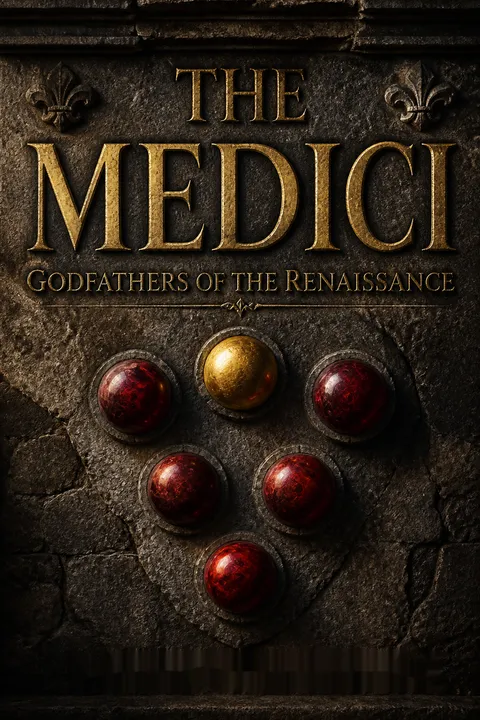
The Medici: Godfathers of the Renaissance by Paul Strathern chronicles the influential banking family from their rise through centuries of power in Florence. Readers praise the accessible, engaging narrative covering art patronage of masters like Leonardo, Michelangelo, and Donatello, alongside political intrigue and the family's lasting cultural impact. The book traces figures from Giovanni and Cosimo through Lorenzo the Magnificent to papal power and eventual decline. However, numerous reviewers criticize problematic language regarding homosexuality, women, and body weight, finding the author's personal biases intrusive and outdated, detracting from otherwise solid historical research.
People Also Read





About the Author

Download PDF
Download EPUB
.epub digital book format is ideal for reading ebooks on phones, tablets, and e-readers.








































