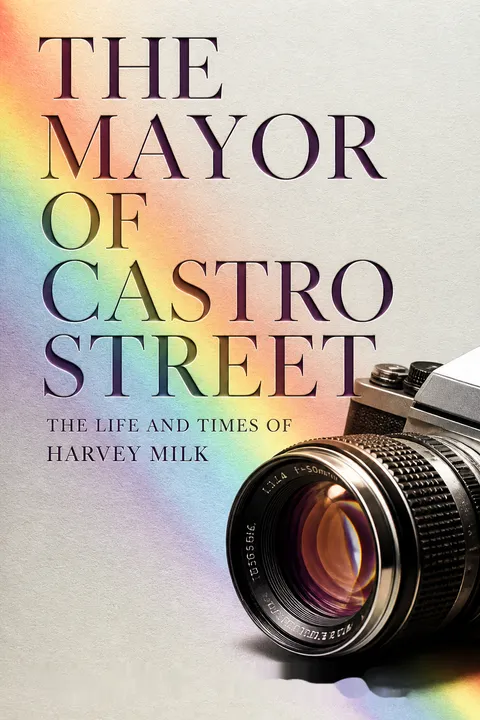

Key Takeaways
1. Harvey Milk's Secret Life and Early Activism
Am I going to grow up to be one of those men in dresses or end up hanging out at the Woodmere LIRR stop?
Hidden identity. Harvey Milk spent his early life, from childhood through college and military service, meticulously concealing his homosexuality, a common practice for men of his generation who faced societal condemnation and legal repercussions. Despite leading an active gay life from a young age, he maintained a conventional facade, fearing exposure would destroy his family and career. This internal conflict shaped his early relationships and professional choices, leading him to drift between careers and locations.
Early relationships. Milk's longest relationship was with Joe Campbell, a younger man he met in 1956, with whom he built a seemingly stable, middle-class life in New York. However, Milk's "protector" role and Campbell's eventual withdrawal from their sexual relationship led to their separation. Subsequent relationships, like with Craig Rodwell, exposed Milk to nascent gay activism, which he initially resisted, clinging to conservative political views and a desire for discretion.
Personal fatalism. Despite his outward joviality, Milk harbored a deep-seated fatalism, often telling friends he wouldn't live to be fifty and foresaw a violent end. This conviction fueled his desire to "live fast" and make a significant impact, even as he struggled to find his professional calling. His personal life was marked by a constant tension between his desire for conventionality and his undeniable sexual identity, a struggle that mirrored the broader societal repression of homosexuality.
2. San Francisco: A Beacon for Gay Liberation
Most gays of that time did not even have words to describe the longings they felt, much less any awareness that others like them existed.
A city of misfits. San Francisco, historically known as "Sodom by the Sea," attracted a diverse array of adventurers and nonconformists, fostering a clandestine gay underground long before World War II. The city's unique demographics, particularly the influx of men during the Gold Rush, created an environment where same-sex relationships, though hidden, were more prevalent than elsewhere. Early gay establishments, like the Black Cat bar, provided rare spaces for assembly, albeit under constant threat of police raids and harassment.
Wartime catalyst. World War II dramatically accelerated San Francisco's emergence as a gay center. The military's systematic identification and discharge of homosexuals led thousands of "blue discharge" recipients to settle in the city, unable to return to their hometowns. This created a critical mass of openly identified gays, who, for the first time, found community and began to organize.
- Military purges created a class of public homosexuals.
- San Francisco became a major debarkation point for the Pacific theater.
- Discharged servicemen often stayed in the city, forming a new community.
From silence to activism. The McCarthy era's anti-gay purges further swelled San Francisco's gay population, leading to the formation of early homophile organizations like the Mattachine Society and the Daughters of Bilitis (DOB). These groups, initially secret, cautiously pushed for social acceptance and legal reforms, laying the groundwork for future political action. Jose Sarria, a drag queen entertainer, became an early icon, pioneering public defiance against police harassment and inspiring the first openly gay political candidacy in 1961.
3. The Birth of "Gay Power" in the Castro
"I am forty-three years old now and I can do one of two things," Milk told a gay interviewer shortly after the announcement. "I can concentrate on making a lot of money while I enjoy perhaps another ten years of active gay life. Then, after fifty-three, I can just coast. Call the whole thing good. Or I can get involved and do something about the things that are wrong in this society."
A new hometown. In 1973, Harvey Milk, disillusioned with corporate life and seeking a new purpose, moved to San Francisco's Castro Street, a rundown Irish neighborhood rapidly transforming into a vibrant gay enclave. He opened Castro Camera, which quickly became an unofficial community center and a hub for local activism. Milk's vision was to create a visible, politically empowered gay community, a "Gay Main Street" where homosexuals could live openly and without fear.
Economic and political clout. Milk tirelessly promoted the Castro as a gay economic and political force, encouraging gay businesses and organizing the Castro Village Association (CVA). He championed "buy gay" campaigns and organized the highly successful Castro Street Fairs, demonstrating the neighborhood's burgeoning economic power. This strategy aimed to leverage gay consumerism into political influence, a novel approach at the time.
- Castro Camera became a de facto City Hall annex.
- Milk organized the Castro Village Association (CVA).
- Successful Castro Street Fairs showcased gay economic power.
Challenging the establishment. Milk's populist politics and flamboyant style immediately clashed with the city's entrenched gay moderates, who favored quiet lobbying and assimilation. Milk, however, believed in direct action and visibility, arguing that gays needed to "take" power, not be "given" crumbs. His confrontational approach, though alienating to some, resonated with the growing numbers of young, militant gays flocking to the Castro, who sought a more assertive voice in politics.
4. Milk vs. The Machine: The Fight for Representation
"You're never given power, you have to take it," he repeated over and over again.
The outsider's challenge. Harvey Milk's political career was defined by his relentless fight against the established "machine" of San Francisco politics, a system he believed favored downtown corporate interests over neighborhood needs. His first supervisorial campaign in 1973, though unsuccessful, demonstrated the existence of a significant gay voting bloc and solidified his populist image as a champion of the "little guy." He consistently advocated for district elections, believing they would empower marginalized communities.
Building unlikely alliances. Despite his "hippie" image and gay identity, Milk forged surprising alliances with conservative labor unions, such as the Teamsters and Fire Fighters, by championing their causes and demonstrating his commitment to working-class issues. This cross-constituency appeal, combined with his anti-establishment rhetoric, made him a formidable, albeit unconventional, political force.
- Supported labor unions against anti-union initiatives.
- Advocated for a commuter tax and higher business taxes.
- Opposed downtown development projects that displaced housing.
The 1976 Assembly race. Milk's bid for the State Assembly in 1976 pitted him directly against the powerful Democratic machine, led by figures like Speaker Leo McCarthy and Congressman Phil Burton, who had pre-arranged the seat for their aide, Art Agnos. Milk's "Harvey Milk vs. The Machine" campaign, though ultimately unsuccessful, garnered significant media attention and further cemented his image as an independent maverick. This race, despite his loss, proved his ability to mobilize a dedicated base and challenge entrenched power structures.
5. The Briggs Initiative: A National Battle for Hope
"A gay official is needed not only for our protection, but to set an example for younger gays that says the system works," Harvey implored. "We've got to give them hope."
A rising tide of opposition. The mid-1970s saw a national backlash against gay rights, spearheaded by figures like Anita Bryant and California State Senator John Briggs. Bryant's successful campaign to repeal Dade County's gay rights law in 1977, followed by similar defeats in other cities, galvanized fundamentalist opposition and led to Briggs's statewide initiative to ban gay teachers from public schools. This "moral crusade" threatened to roll back years of progress and instilled widespread fear within the gay community.
Milk's defiant leadership. Harvey Milk emerged as the most prominent and vocal opponent of the Briggs Initiative (Proposition 6), using his platform as a supervisor to rally gays and allies across California. He vehemently countered Briggs's rhetoric, which equated homosexuality with child molestation and moral decay, with humor and impassioned calls for visibility and self-acceptance. Milk's "hope speech" became his trademark, emphasizing the importance of coming out to friends and family as a powerful act of political resistance.
- Milk debated Briggs publicly, often on television.
- He urged gays to "come out" to dispel myths and build support.
- His "hope speech" became a rallying cry for the movement.
Victory against the odds. Despite initial polls showing strong support for Proposition 6, a broad coalition of gay activists, labor unions, civil rights groups, and even prominent conservatives (like Ronald Reagan) mobilized against it. Milk's grassroots organizing, combined with the initiative's overreaching language, led to its decisive defeat in November 1978. This victory, particularly strong in San Francisco, was a monumental triumph for the gay rights movement, demonstrating the power of organized resistance and the growing acceptance of gay people.
6. Politics as Theater: Milk's Media Mastery
"Harvey and newspapers were made for each other; they were bound to have a love affair," said Harvey's friend, Frank Robinson, later. "For the papers, it was like having their own Flo LaGuardia in their backyard."
A natural showman. From his first day in office, Harvey Milk treated San Francisco City Hall as his personal stage, transforming routine political events into media spectacles. His ceremonial swearing-in, leading a procession from Castro Camera to City Hall, was a deliberate act of political theater, designed to highlight the historic nature of his election as the nation's first openly gay city official. He understood the power of imagery and a good story.
Mastering the narrative. Milk possessed an uncanny ability to manipulate the press, turning every obstacle into a public relations advantage. He was always ready with a quotable quip, a dramatic gesture, or a humorous anecdote that ensured favorable coverage, even from conservative newspapers. His dogshit ordinance, a seemingly mundane issue, became a national story due to his theatrical demonstrations and philosophical pronouncements.
- Used stunts like human billboards and clown costumes.
- Delivered memorable one-liners and jabs in debates.
- Framed local issues with broader social and political significance.
Beyond gay issues. While fiercely advocating for gay rights, Milk strategically broadened his appeal by championing populist causes for all marginalized groups, including seniors, the disabled, and ethnic minorities. He cultivated an image as a "ward healer," focusing on practical neighborhood concerns like potholes and stop signs, demonstrating that a gay politician could effectively serve all constituents. This approach, combined with his media savvy, elevated him beyond being merely "the gay supervisor" to a respected, if unconventional, city leader.
7. The Dan White Assassinations: A Tragic Turning Point
"If a bullet should enter my brain, let that bullet destroy every closet door."
A fragile victory. Milk's election in 1977, alongside other progressive supervisors, shifted the balance of power in San Francisco City Hall, giving liberals a working majority. However, this victory was short-lived. Supervisor Dan White, a conservative former police officer and firefighter, resigned his seat in November 1978, citing financial hardship. His subsequent attempt to reclaim the position ignited a political firestorm, pitting White's traditional values against the city's progressive direction.
The mayor's dilemma. Mayor George Moscone, a liberal ally of Milk, initially indicated he would reappoint White but faced immense pressure from Milk and other progressive forces to choose a more aligned successor. Milk, having secured his "sixth vote" on the board with White's resignation, aggressively lobbied against White's reappointment, viewing him as a dangerous "closet case" and a symbol of the forces Milk opposed. This political maneuvering created a volatile atmosphere.
A day of horror. On November 27, 1978, Dan White, after learning Moscone would not reappoint him, entered City Hall through a basement window to avoid metal detectors. He shot and killed Mayor Moscone in his office, then reloaded his gun with hollow-point bullets and proceeded to Milk's office, where he shot and killed Supervisor Milk. The assassinations, coming just days after the Jonestown tragedy, plunged San Francisco into shock and grief, marking a devastating blow to the city's progressive movement and the nascent gay rights cause.
8. The White Night Riots: A Community's Outrage
"This means that in America, it's all right to kill faggots," Jones said.
The verdict's shockwave. On May 21, 1979, Dan White was convicted of voluntary manslaughter for the murders of Mayor Moscone and Supervisor Milk, a verdict that carried a maximum sentence of seven years and eight months. The "Twinkie defense," which argued White's diminished capacity due to depression and junk food consumption, outraged the gay community and many liberals. The verdict was widely perceived as a miscarriage of justice, implying that White's victims, particularly Milk, were somehow less worthy of justice.
"White Night" of rage. The verdict ignited immediate and furious protests. Thousands of angry gays and allies marched from the Castro to City Hall, chanting "Avenge Harvey Milk" and "Dan White was a cop." The peaceful demonstration quickly escalated into a riot as protesters clashed with police, smashing windows, setting police cars ablaze, and engaging in street battles. The "White Night Riots" were a raw, spontaneous outpouring of grief, anger, and frustration, demonstrating that the gay community, once docile, would no longer tolerate injustice.
- Protesters chanted "Avenge Harvey Milk" and "Dan White was a cop."
- Police cars were set on fire, and City Hall windows were smashed.
- The riots were a violent expression of collective outrage.
Police retaliation. The riots were followed by a brutal police crackdown in the Castro district, where officers, many of whom sympathized with White, indiscriminately beat gay men in bars and on the streets. This "police riot" further inflamed tensions and solidified the perception among gays that law enforcement was inherently biased against them. The events of that night, meticulously documented by media, highlighted the deep-seated homophobia that still permeated parts of society and the criminal justice system.
9. The Enduring Legacy of Harvey Milk
"You gotta give them hope."
A martyr's mantle. Harvey Milk's assassination transformed him into the first martyr of the modern gay rights movement, a symbol of struggle and hope for millions. His death, particularly in the context of the lenient verdict for Dan White, resonated deeply with the collective experience of discrimination and violence faced by homosexuals across the country. The narrative of a strong, visible gay leader who was killed for his identity became a powerful rallying cry.
Political transformation. Milk's political heirs, including Harry Britt and Cleve Jones, continued his work, leveraging his legacy to consolidate gay political power in San Francisco. The Harvey Milk Gay Democratic Club became a formidable force, adept at navigating the political landscape and ensuring gay representation. While some of Milk's populist ideals were tempered by the realities of power politics, his emphasis on visibility and grassroots organizing fundamentally reshaped the gay movement.
- The Harvey Milk Gay Democratic Club became a major political force.
- His aides and allies rose to positions of influence.
- His name became associated with various city institutions and memorials.
Hope and remembrance. Despite the tragic end to his life, Milk's message of hope endured. His "hope speech," delivered countless times, inspired countless individuals to come out and fight for their rights, demonstrating that one person could indeed change the world. His legacy is not just in the laws he helped pass or the political power he helped build, but in the profound shift in consciousness he inspired, making it possible for future generations to live with greater dignity and freedom.
Review Summary
The Mayor of Castro Street is widely praised as a powerful, deeply researched biography that brings Harvey Milk and the broader LGBT+ rights movement to life. Readers consistently highlight Shilts' gripping journalistic style and emotional depth, noting the book's ability to provoke both inspiration and outrage. Many appreciate its honest portrayal of Milk's flaws alongside his achievements. The detailed coverage of San Francisco politics occasionally overwhelms some readers, and minor writing inconsistencies are noted, but the majority consider it essential, affecting reading.
People Also Read
Download PDF
Download EPUB
.epub digital book format is ideal for reading ebooks on phones, tablets, and e-readers.








































